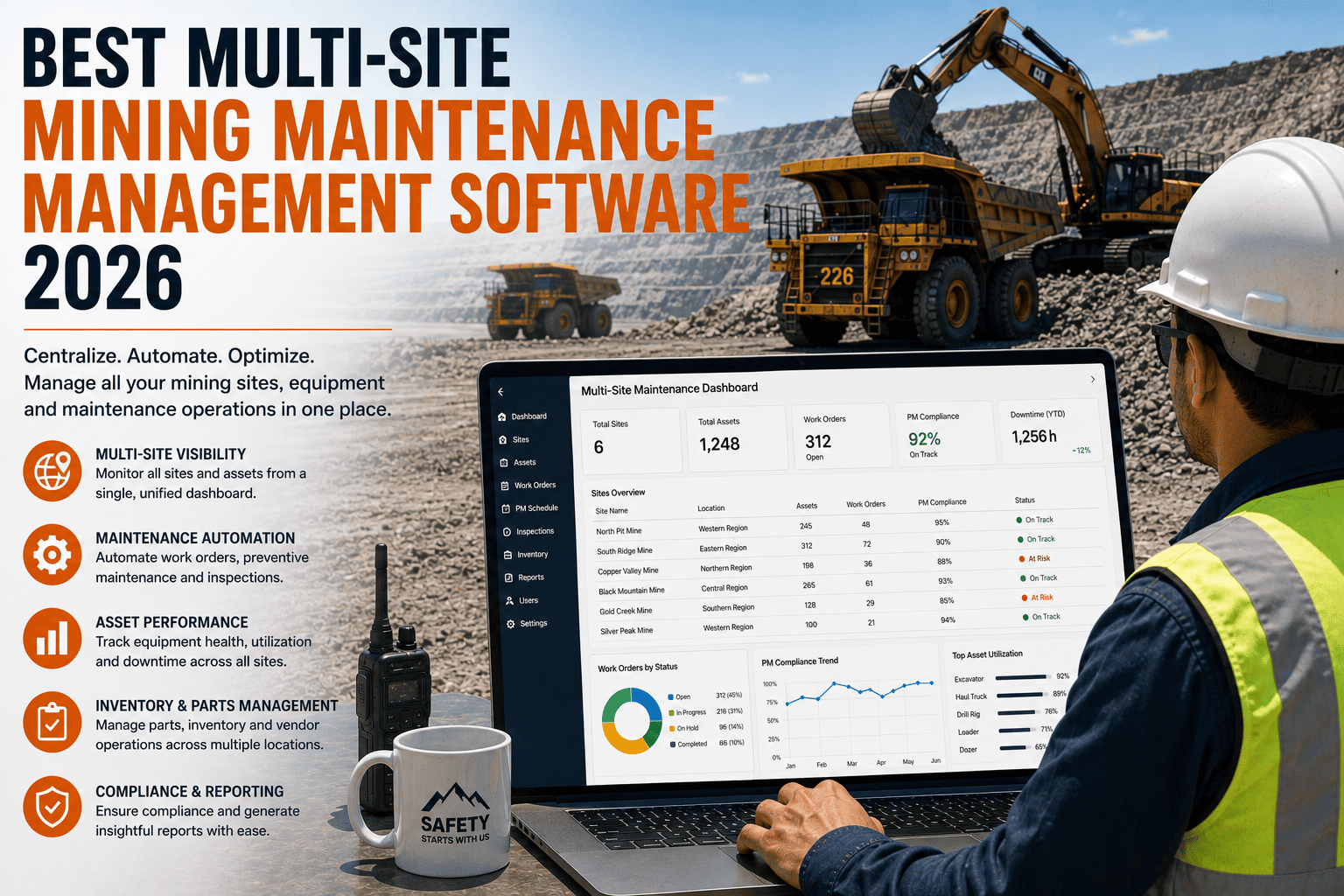
Run maintenance across three mine sites and you'll usually find three different versions of the same job. One site logs oil changes on a whiteboard, another runs a spreadsheet nobody updates past Wednesday, and a third has a technician who simply remembers which loader is due for service. None of that is wrong on its own. It's just impossible to see from head office, and it means the same haul truck model gets a different level of care depending on which pit it happens to work in. Multi-site mining maintenance management software exists to close exactly that gap, giving every location the same preventive maintenance standard while still letting site teams work the way their pit actually operates.
Multi-site mining maintenance management software centralizes work orders, preventive maintenance schedules, and inspection checklists across every mine location in one dashboard, while still letting each site customize daily workflows. 67 percent of multi-site operations run inconsistent maintenance standards, costing an average of 412,000 dollars a year in excess downtime and duplicated inventory. Sign up free to see your fleet's maintenance data unified across every site.
Why "Every Site Does It Their Own Way" Gets Expensive Fast
Most mining companies don't set out to run inconsistent maintenance. It happens gradually, one site at a time, as each operation hires its own team, buys its own parts, and builds its own habits. Head office ends up with a rough sense of fleet health instead of a real one, and that gap shows up as a missed engine-hour interval on one loader that snowballs into a 100,000 dollar repair nobody saw coming.
What Fragmented Maintenance Actually Looks Like
- Preventive maintenance intervals set differently at each site, some by engine hours, some by rough calendar guesses
- Spare parts sitting idle in one warehouse while a nearby site places an emergency rush order for the same item
- Inspection and safety checklists filled out on paper, if they're filled out consistently at all
- Head office reporting built from phone calls and spreadsheets stitched together once a month
- One PM template built once and pushed to every site, triggered automatically by engine hours or calendar rules
- Real-time parts visibility across every depot, so transfers happen before a rush order is even considered
- Digital inspection and lockout/tagout checklists completed on mobile, synced the moment connectivity returns
- A single rollup dashboard showing every site's maintenance compliance the moment you open it
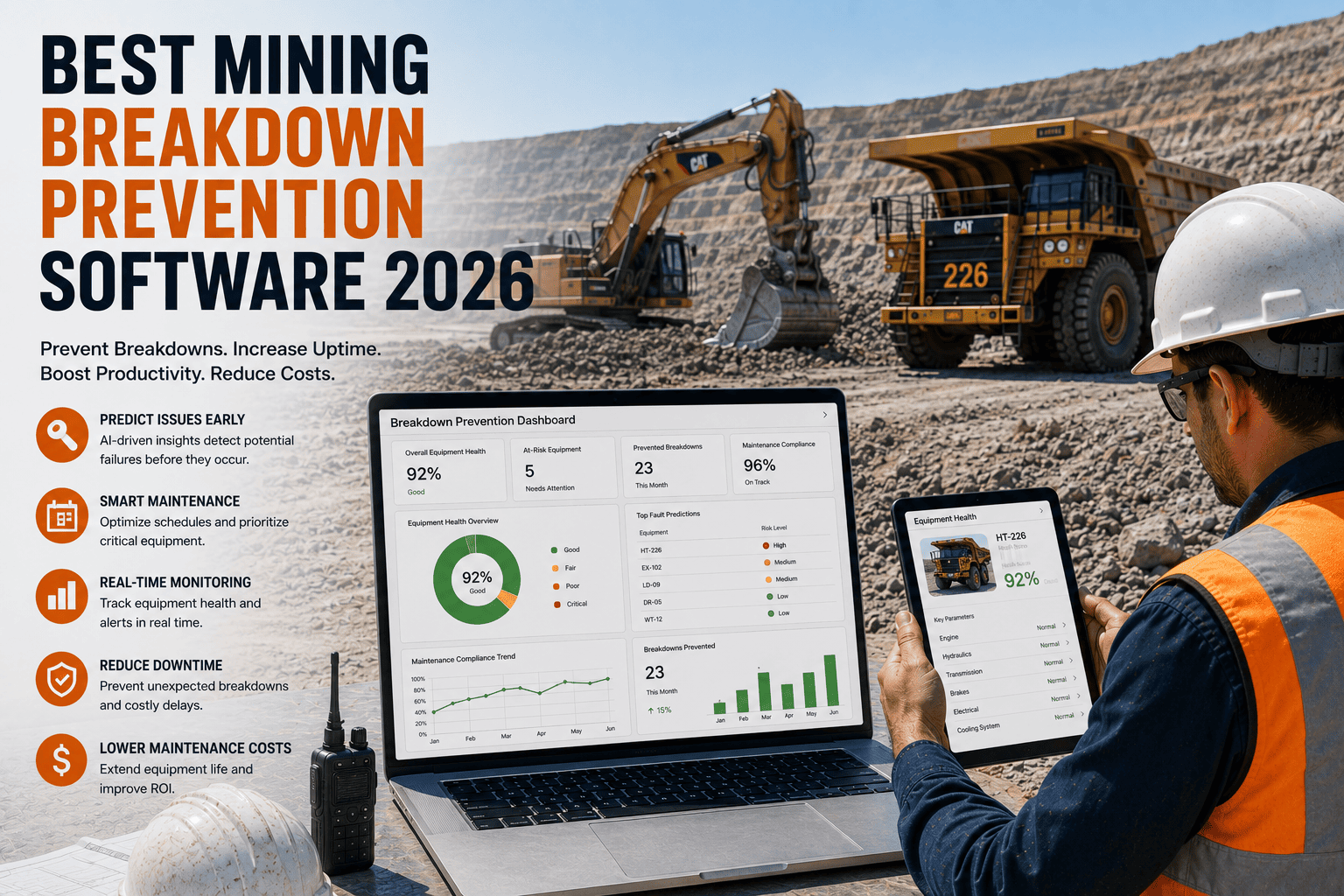
FleetRabbit rolls up work orders, preventive maintenance schedules, and inspection data from every mine location into a single live dashboard, so head office sees fleet-wide compliance without waiting for month-end.
The Four Pillars of Multi-Site Maintenance Standardization
A platform built for one facility rarely survives contact with a second one, let alone a fifth. Mining operations that get standardization right tend to build it around four consistent pillars, applied the same way at every site regardless of size or crew.
Create Once, Deploy Everywhere
PM procedures, checklists, and frequencies get defined once at the portfolio level and pushed to every site, so a haul truck in one pit gets the same care as the identical model three states away.
Site-Level Flexibility Preserved
Standardized templates still allow each location to adapt forms, approval flows, and daily scheduling to its own crew size and shift pattern without breaking the portfolio-wide standard.
Centralized Rollup Reporting
Executives see fleet-wide compliance and cost data in one view, while site managers filter down to just their own location's work orders and asset history in seconds.
Offline-Ready Field Execution
Technicians open, complete, and log work orders underground or out of signal range, with everything syncing automatically the moment connectivity returns.
Single-Site Tools vs. Multi-Site Mining Maintenance Platforms
A spreadsheet or a basic work order app can carry a single quarry for a while. It rarely survives a second site, a third asset type, or an auditor asking for consistent MSHA documentation across the whole portfolio.
| What You Need | Single-Site Tools | Multi-Site Maintenance Platform |
|---|---|---|
| PM Consistency | Set separately per site, drifts over time | Built once, deployed identically across every location |
| Parts Visibility | Limited to that site's warehouse | Real-time inventory visible across every depot |
| Compliance Reporting | Manually compiled per site, per audit cycle | Automatic, audit-ready rollup across the whole portfolio |
| Offline Field Access | Often unreliable underground or in remote pits | Full offline mode with automatic sync on reconnect |
| Executive Visibility | Requires manual consolidation across sites | One live dashboard covering every mine location |
Core Modules Every Platform Needs
What to Actually Check Before You Commit
Engine-Hour Based PM Scheduling
Maintenance triggers tied to real telematics data, not a rough calendar guess, so intervals never slip regardless of which site is running the asset.
Centralized Work Order Management
Every technician across every site logs work in the same system, with the same approval flow, creating one consistent history per asset.
Digital Inspection Checklists
Lockout/tagout, safety walk-arounds, and daily inspections completed on mobile devices, replacing paper logs that rarely make it back to head office.
Cross-Site Parts and Inventory Tracking
Visibility into every depot's stock levels, so a critical spare gets transferred instead of rush-ordered at a premium.
MSHA and OSHA Compliance Documentation
Digital audit trails built automatically as work happens, ready to hand over the moment an inspector asks for records.
What Standardization Is Actually Worth
The math on this is straightforward once you see it laid out. A missed preventive maintenance interval on a single excavator can snowball into a 100,000 dollar repair, while purpose-built mining maintenance software typically runs a small fraction of that per asset each month. Multiply that gap across a 20-truck operation running four sites, and the annual cost of staying fragmented starts to look a lot bigger than the cost of fixing it.
Beyond the direct repair savings, centralized maintenance data also shortens audit prep from weeks to days, since every site's compliance records already live in the same system. If you want to see exactly what that consolidation looks like against your own fleet's asset list, you can book a free demo before making any commitment.
FleetRabbit standardizes preventive maintenance, work orders, and inspections across every mine location while keeping the flexibility each site actually needs day to day.
Frequently Asked Questions
FleetRabbit brings preventive maintenance, work orders, and compliance documentation from every mine location into one live dashboard, so your fleet gets consistent care no matter which pit it's working in.