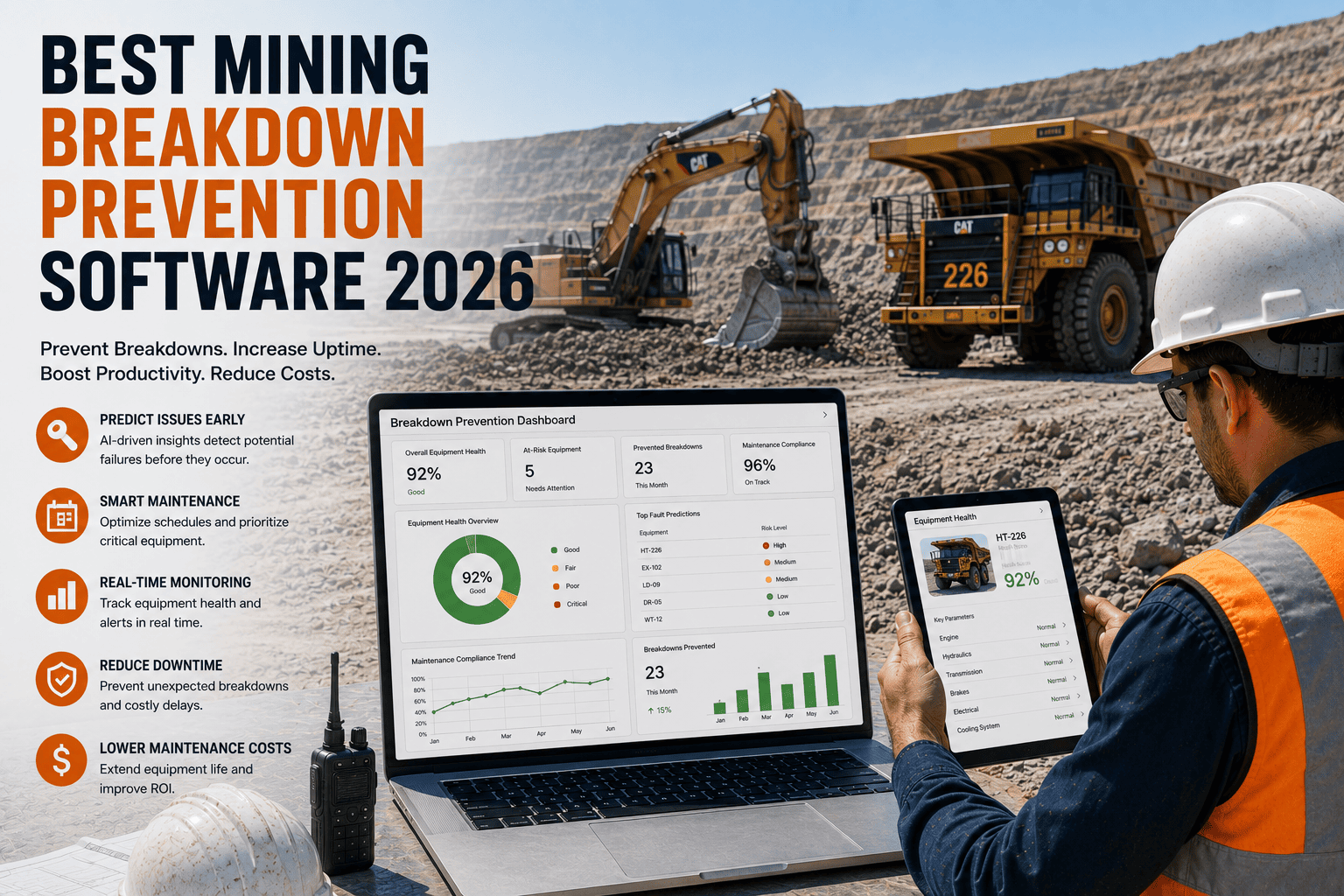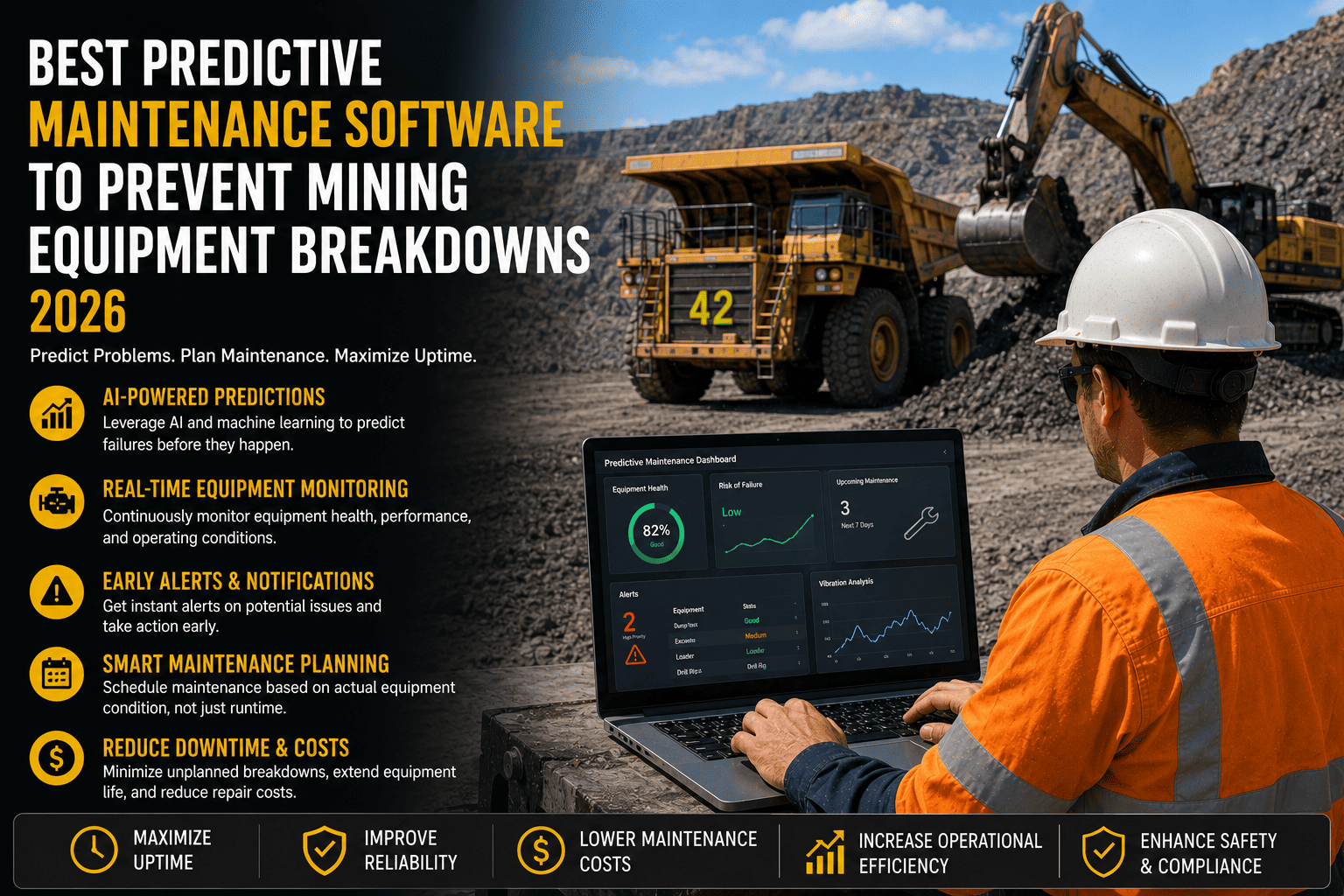
A haul truck gearbox rarely fails without warning. Weeks before it seizes on the haul road, it's already leaving evidence: a faint rise in vibration, a few extra metal particles in the oil, a temperature reading that's crept up half a degree at a time. The equipment isn't hiding the failure. Most maintenance programs just aren't listening for it yet.
That's the entire premise behind predictive maintenance. Instead of waiting for a breakdown or replacing parts on a fixed calendar whether they need it or not, the right software reads the signals your equipment is already producing and tells you exactly when a component is heading toward failure, often weeks before it happens.
The best predictive maintenance software for mining fuses vibration, oil analysis, thermal, and telemetry data into a single early-warning system that flags developing failures 2 to 4 weeks in advance with 70 to 80 percent accuracy. Mines using this approach report 15 to 20 percent less unplanned haul truck downtime and typically see return on investment within 6 to 12 months. Sign up free to see it running against your own fleet data.
Your Equipment Is Already Warning You
Every major failure leaves a trail before it happens. The challenge has never been whether the warning signs exist, it's whether anyone is monitoring them consistently enough to catch a developing fault before it becomes a haul-road breakdown. Different signals surface at different points in a failure's timeline.
FleetRabbit fuses vibration, oil analysis, thermal, and telemetry data into a single prioritized view, so a real developing fault stands out instead of getting lost across four separate reports nobody has time to cross-check.
Why One Signal Alone Isn't Enough
No single sensor tells the whole story. Vibration alone produces false alarms from normal duty-cycle noise. Oil analysis alone misses electrical and structural faults entirely. The value in predictive maintenance software comes specifically from fusing these signals together with equipment history, so a genuine developing fault rises above the noise instead of drowning in individual alerts.
Sensor Fusion Turns Noise Into a Verdict
When vibration, oil chemistry, and temperature all trend in the same direction on the same component, that agreement is what separates a real warning from a sensor hiccup. Software built for this cross-references every signal automatically instead of leaving a technician to notice the pattern manually.
Historical Failure Data Sharpens Every Prediction
A model trained only on generic thresholds produces more false positives than one trained on your fleet's actual failure history. The more inspection records, work orders, and past failures a platform has to compare against, the more precise its predictions get over time.
Where This Pays Off Fastest
Gearbox and differential failures on haul trucks are consistently the highest-value prediction target, since a single unplanned failure can cost 50000 to 150000 dollars in lost production and emergency repair logistics, making them the natural place to start a predictive program.
How the Three Maintenance Approaches Compare
Most mines run a mix of all three strategies today, often without realizing how much of their maintenance budget still sits in the most expensive category.
| Approach | When Repairs Happen | Typical Outcome |
|---|---|---|
| Reactive Maintenance | After the equipment has already failed | Highest cost, unplanned crew time, haul-road breakdowns |
| Preventive Maintenance | On a fixed calendar or hour interval, regardless of condition | Reduces surprises, but replaces healthy parts too early |
| Predictive Maintenance | When condition data shows a component is actually degrading | Repairs scheduled 2 to 4 weeks ahead, maximum component life used |
What Predictive Maintenance Software Should Actually Do
Plenty of platforms claim predictive capability but only deliver dashboards full of raw sensor charts. The difference between that and a system that actually prevents breakdowns comes down to a few specific capabilities.
Continuous Monitoring, Not Periodic Snapshots
Condition-based maintenance only works if the data streams in continuously. A monthly inspection can miss a fault that developed and worsened in the three weeks between visits.
Confidence Scores on Every Alert
Not every anomaly deserves the same urgency. Predictions should come with a confidence score and a recommended intervention window, so planners know which alerts need action this week and which can wait for the next scheduled service.
Automatic Work Order Generation
A prediction that just sits in a dashboard doesn't prevent anything. The moment a component crosses a risk threshold, the system should generate a work order automatically, routed to the right technician with the right parts already flagged.
FleetRabbit turns every flagged reading into a tracked work order the moment it crosses a risk threshold, with full traceability back to the sensor data that triggered it, so predictions turn into scheduled repairs instead of forgotten alerts.
What Rollout Looks Like in Practice
Predictive maintenance doesn't require replacing your fleet or waiting years for the data to become useful. Most operations see results within a single quarter.
Start With Your Highest-Value Assets
Haul truck gearboxes and differentials are the natural starting point given their repair cost, but any component with a documented failure history and existing telematics data is a strong candidate for an early pilot.
A Realistic First Quarter
Sensor and telemetry connections typically go live within days if OEM telematics already exist on the equipment. Baseline patterns build over the following weeks, and by the end of the first quarter, most fleets have caught at least one developing fault that would otherwise have become a haul-road breakdown. To see how this maps onto your specific fleet, you can book a demo and walk through it with our team.
Frequently Asked Questions
The warning signs are already sitting in your fleet's data. FleetRabbit fuses vibration, oil analysis, thermal, and telemetry signals into one prioritized view, turning developing faults into scheduled work orders weeks before they become haul-road breakdowns.