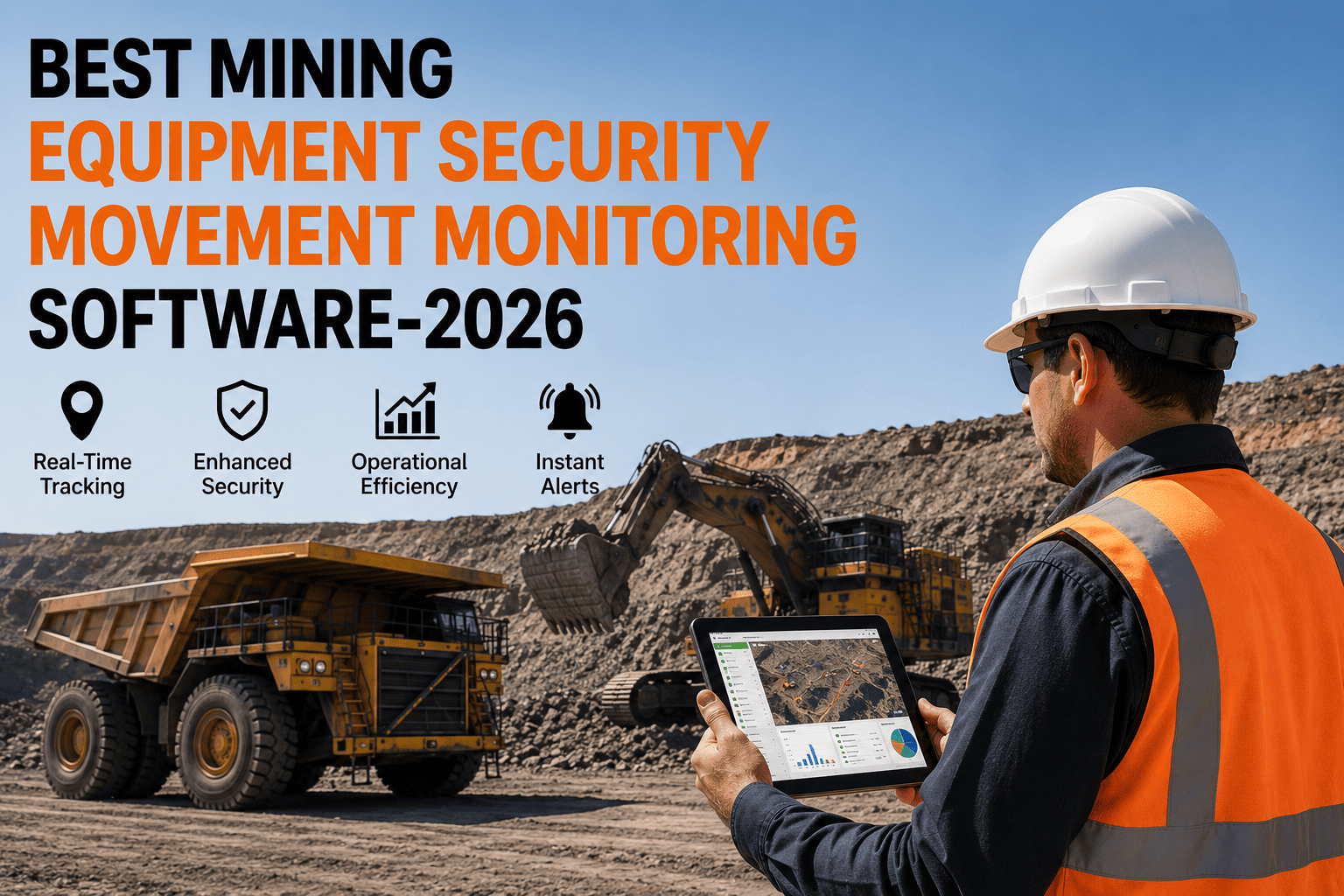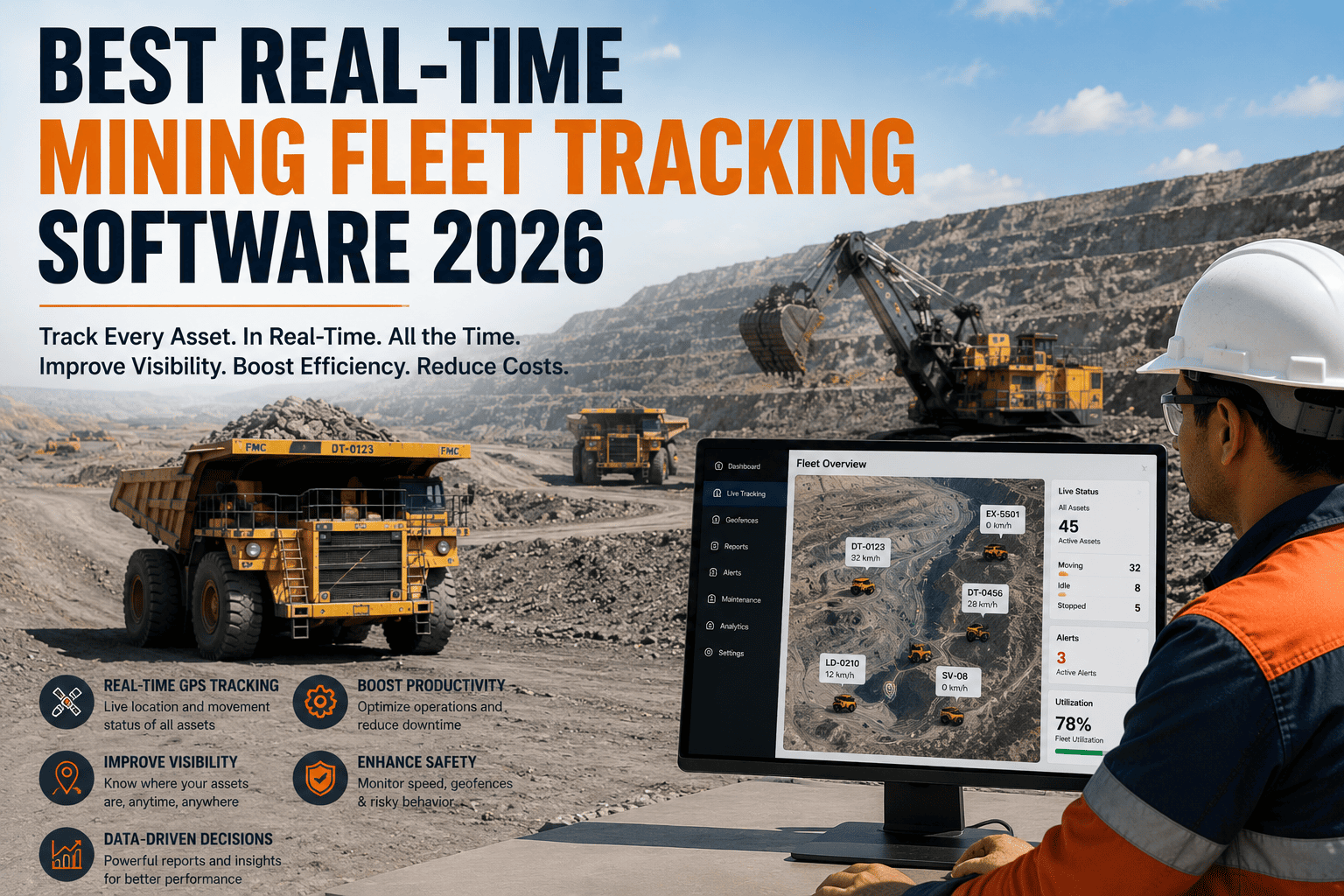
Somewhere on your mine site right now, a haul truck is idling behind a blast zone, a loader is sitting empty at the wrong pit, and dispatch is finding out about both through a radio call that came in ten minutes late. Real-time mining fleet tracking software closes that gap by putting the exact position, status, and utilization of every truck, loader, excavator, and drill rig on one live screen, updated as it happens instead of after a shift ends.
The best real-time mining fleet tracking software combines GPS and hybrid positioning, offline-first data capture for dead zones and underground pits, and instant geofence and idle alerts on one live dashboard. Sites switching from radio dispatch to live tracking commonly cut idle time by 15 to 25 percent within the first month. Start a free trial or book a demo to see your own fleet live on one map.
How Real-Time Tracking Actually Works On A Mine Site
Getting a fleet visible in real time is less complicated than most sites expect, once the platform is built for mining conditions instead of adapted from a trucking app.
Why Consumer GPS Tools Break Down On Mine Sites
Most GPS tracking products are built around one assumption: a clear view of the sky and steady cellular coverage. Mine sites break both assumptions constantly, which is why generic trucking-fleet trackers so often go dark exactly when they are needed most.
Signal Loss Underground And In Deep Pits
Steep pit walls, tunnels, and dense rock block standard GPS and cellular signal entirely. Software built for open highways has no fallback for this, leaving supervisors blind during exactly the shifts where visibility matters most.
Data That Disappears With The Connection
Basic trackers that only transmit live and discard anything sent during an outage leave permanent blind spots in utilization history. Offline-first platforms record locally and sync later, so a dead zone never becomes a data gap.
What This Means For Dispatch
When tracking is genuinely real-time and offline-resilient, dispatch can reroute a truck the moment it goes idle instead of waiting for a radio call that may or may not come in on time.
FleetRabbit tracks position, speed, idle status, and engine hours across surface and underground fleets, syncing automatically the moment signal returns. Most sites are fully live within a single business day.
Core Features That Separate Mining-Grade Tracking From Basic GPS
Before choosing a platform, compare it against the capabilities that actually hold up in mining conditions rather than a feature list that looks good in a demo.
| Feature | What It Tracks | Business Impact |
|---|---|---|
| Offline-First Recording | Position and status data stored locally during dead zones | Eliminates blind spots and preserves complete utilization history |
| Geofence Alerts | Boundary entry and exit for pits, haul roads, and restricted zones | Flags unauthorized movement and equipment misuse instantly |
| Idle Time Monitoring | Engine-on, non-productive time across every asset | Surfaces hidden fuel waste and dispatch inefficiency |
| Utilization Reporting | Scheduled hours versus actual working hours per asset | Reveals which equipment is overused or sitting underworked |
| Multi-Site Dashboard | Location and status across every pit, quarry, or region | Replaces spreadsheet stitching with one consistent live view |
What Changes When Tracking Becomes Truly Real-Time
The difference between delayed reporting and live tracking is not cosmetic. It changes how fast a site can react to problems that used to go unnoticed for hours.
Before: Radio Calls And End-Of-Shift Reports
Dispatch learns a truck has been idle for forty minutes only when the operator radios in, or worse, only when the end-of-shift report is reviewed the next morning. Decisions are made on information that is already hours old.
After: Instant Visibility And Faster Reroutes
With live tracking, an idle truck triggers an alert the moment it crosses the threshold, and dispatch can reroute it before the delay costs a full haul cycle. Supervisors compare utilization across every site from one login instead of waiting on separate reports from each pit.
Benchmarks Worth Tracking On Your Fleet
A few numbers reveal whether your current tracking setup is actually helping. Idle time as a percentage of total engine hours is the fastest signal; sites with strong live visibility typically keep it under 15 percent, while sites relying on radio dispatch often run 25 to 35 percent. Utilization rate, or actual working hours against scheduled hours, should sit above 80 percent for core haul assets. Time to detect an unauthorized zone entry should be measured in seconds with geofence alerts, not minutes or hours after the fact.
FleetRabbit connects every location into a single dashboard, with real-time position, utilization, and geofence alerts standardized across all your sites. Add equipment, draw geofences, and set utilization baselines in under an hour.
Frequently Asked Questions
Key Takeaways
Real-time mining fleet tracking software earns its place by replacing radio calls and delayed reports with live, continuous visibility across every haul truck, loader, and drill rig on site. The platforms that actually hold up are offline-first, sync automatically when signal returns, and put every site on one dashboard instead of forcing supervisors to stitch together separate systems. Sites that make the switch typically see idle time drop within the first month and utilization climb as dispatch starts reacting in real time instead of after the fact.
If your team is still finding out where equipment is through radio calls or next-day reports, it is worth seeing what a live dashboard looks like on your own fleet. Sign up for a free trial to get started in minutes, or book a short demo and walk through your site's specific tracking challenges with the FleetRabbit team.
FleetRabbit puts real-time position, utilization, and geofence alerts for your entire fleet on one live dashboard, built to keep working through dead zones and underground pits. See your equipment live within a day.