A sand and gravel pit runs on a different kind of wear and tear than a dry stone quarry, and most fleet software never accounts for the difference. Abrasive, waterlogged material moves through dredge pumps, wash plants, and conveyors all day, grinding down components that a dry crusher would never touch the same way. Add in a water table that shifts with the season, permits that dictate how deep an operator can dig, and equipment that spends half its life partially submerged or coated in slurry, and it becomes clear why a generic mining fleet tool, or worse, a spreadsheet, quietly lets wear and downtime pile up until a wash plant shutdown wrecks the week.
Unmanaged aggregate operations lose an estimated 127,000 dollars a year on average to missed maintenance, emergency repairs, and poor utilization visibility, and wet processing equipment tends to feel that gap even faster because abrasive slurry wears pump components far quicker than dry material wears crushing equipment. Dredge and slurry pump downtime frequently traces back to clogging, blockages, and component wear that scheduled inspection would have caught early. Real-time equipment tracking with geofenced zones for the pit face, wash plant, and stockpile typically improves utilization by 35 to 50 percent over radio calls and paper logs.
What Makes Sand & Gravel Pits Different From Dry Quarries
A dry stone quarry wears down its crusher through impact and friction on dry rock. A sand and gravel pit wears down its wash plant, dredge pumps, and screens through constant contact with wet, abrasive slurry, and that difference changes what a fleet platform actually needs to track well.
Abrasive Slurry Accelerates Component Wear
Sand and gravel are dense and abrasive once suspended in water, and that combination grinds down pump impellers, liners, and pipeline sections far faster than equivalent dry processing equipment. Tracking hours of run time against known wear rates for these components is the difference between a scheduled swap and an unplanned clog mid-shift.
Extraction Method Depends On Water Table And Permit
Whether a pit runs a dragline, an excavator, or a full dredge often comes down to how deep the permit allows digging and where the water table sits. Utilization and cycle time data by extraction method helps a pit manager see which approach is actually the most productive for current site conditions, not just the one chosen at startup.
Wet Processing Creates Its Own Downtime Pattern
A wash plant shutdown from a clogged screen or a failed slurry pump backs up the entire production chain the same way a crusher outage does at a dry quarry, except the failure often builds up gradually through wear rather than announcing itself with a single dramatic breakdown.
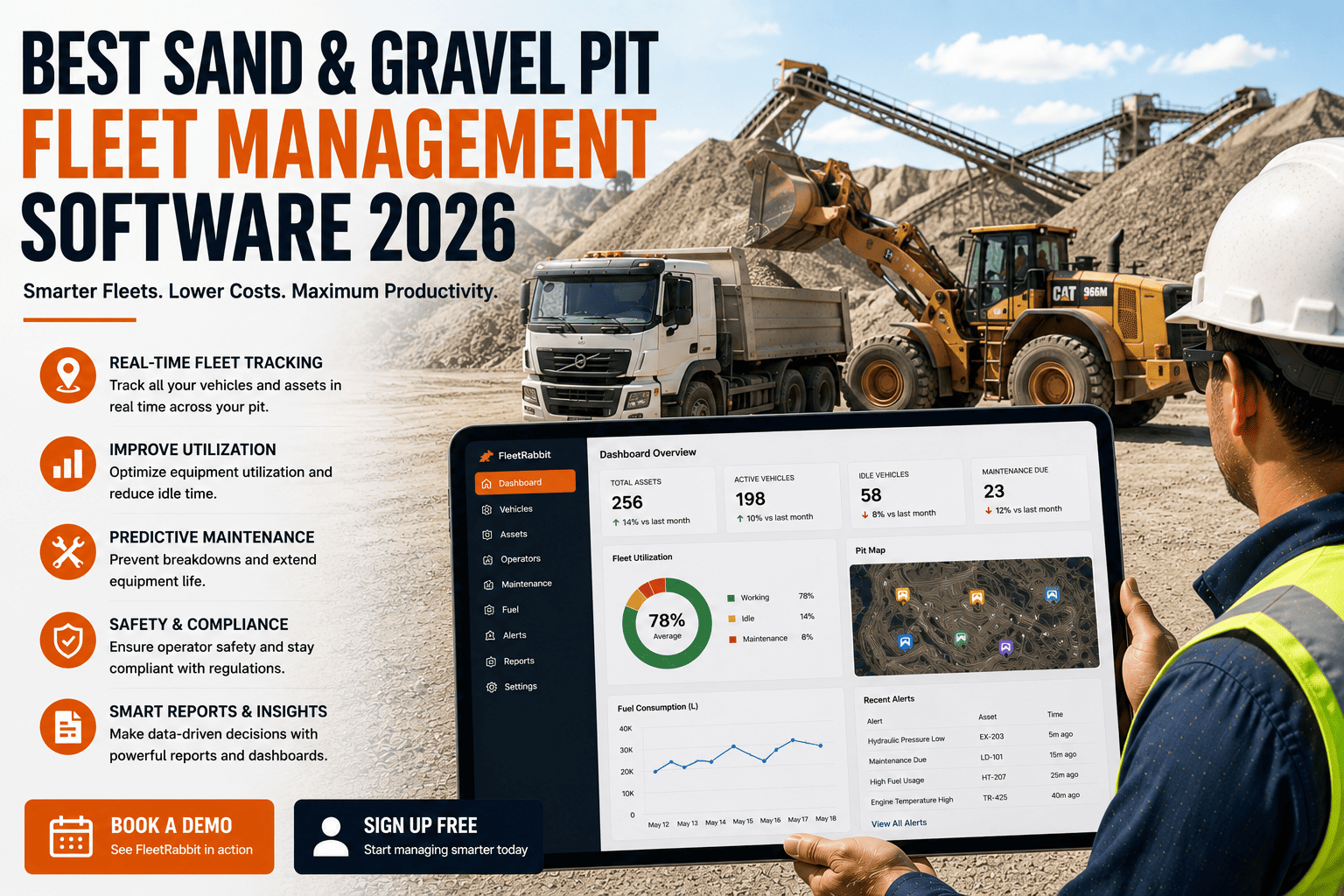
FleetRabbit tracks run-hour based wear on wash plant components and routes defects straight to work orders before a clogged pump turns into a full shutdown. You can sign up here to see it running on your own equipment, or book a demo built around your pit.
Equipment Coverage A Sand & Gravel Fleet Platform Needs
A sand and gravel operation blends extraction equipment, wet processing assets, and haul vehicles, and the best software tracks all three instead of treating wash plant components as an afterthought.
| Equipment Type | Role On Site | What To Track |
|---|---|---|
| Draglines & Excavators | Extracting sand and gravel at the pit face or pond edge | Cycle times, bucket and undercarriage wear, hour-based service intervals |
| Dredges | Pumping material from deeper water where excavation isn't practical | Pump run hours, cutter and impeller wear, pipeline condition, output volume |
| Wash Plants & Screens | Separating, washing, and grading sand and gravel by size | Screen deck condition, water flow rates, clog frequency, throughput by grade |
| Conveyors | Moving wet material between extraction, wash, and stockpile stages | Belt wear, roller condition, alignment, moisture-related corrosion checks |
| Wheel Loaders & Haul Trucks | Moving finished product to stockpile and load-out | Cycle times, payload per load, tire condition, hour-based PM |
Core Capabilities The Best Sand & Gravel Fleet Software Needs
Run-Hour Wear Tracking
Maintenance and wear part scheduling tied to actual pump, screen, and conveyor run hours instead of a fixed calendar date.
Geofenced Zone Utilization
Automatic tracking of time spent at the pit face, wash plant, and stockpile to see where cycle time is actually being lost.
Digital Pre-Shift Inspection
Mobile checklists built for wet-site equipment, with mandatory defect photos and offline capability near the water's edge.
Automatic Defect Routing
A logged issue on a pump, screen, or loader becomes a scheduled work order immediately, not a note lost at shift change.
Cost Per Ton By Product Grade
Fuel, maintenance, and downtime rolled into a per-ton figure by sand or gravel grade, showing which products are truly profitable.
Why Wear Rate Data Matters More Here Than Elsewhere
A slurry pump that fails mid-shift doesn't just stop pumping, it usually backs up the wash plant and stalls everything feeding into it. Because wear on these components is driven by abrasive material contact rather than a predictable mileage or hour curve alone, tracking actual run-hours against known component lifespans is what turns a wash plant shutdown from a surprise into a scheduled swap.
Building A Wear Baseline For Your Own Site
Every pit's slurry composition and grain size is a little different, which means industry averages for pump and screen wear are a starting point, not a guarantee. Tracking your own equipment's failure history against run hours over a season or two builds a wear baseline specific to your site's actual material.
FleetRabbit connects draglines, dredges, wash plants, and haul equipment into a single view of utilization, wear, and cost per ton. Start free and connect your first assets today, or book a walkthrough to see your own site's data.
What Sand & Gravel Pits Typically See After Implementation
Frequently Asked Questions
The Bottom Line For Sand & Gravel Pit Fleet Management
A sand and gravel pit's biggest risk isn't the same as a dry quarry's, it's the wash plant, the dredge, and the slurry pumps quietly wearing down until a clog stops production without warning. The best sand and gravel pit fleet management software in 2026 tracks extraction, wet processing, and haul equipment as one connected system, ties maintenance to real run hours instead of a calendar guess, and turns utilization and cost per ton into numbers the whole team can see and act on. That combination is what keeps material moving from the pit face to the stockpile without losing a shift to a preventable breakdown.
Every hour of wash plant downtime and every reactive pump failure is a cost your pit doesn't have to keep absorbing. FleetRabbit connects draglines, dredges, wash plants, conveyors, and haul equipment into one live view of utilization, wear, and cost per ton. Sign up free and connect your first assets today, or book a short demo to see it built around your specific site.