Sand and gravel pits run on wet ground, not dry rock faces, and that single difference changes almost everything about how the equipment needs to be managed. Dredges and draglines pull material out of ponds, wash plants and log washers run around the clock separating clay from usable product, and every pump, screen, and conveyor sits in a permanently damp, abrasive environment that chews through seals and bearings far faster than a dry quarry ever would. Sand and gravel pit fleet management software has to account for that reality instead of treating a wash plant like a dry-side crusher.
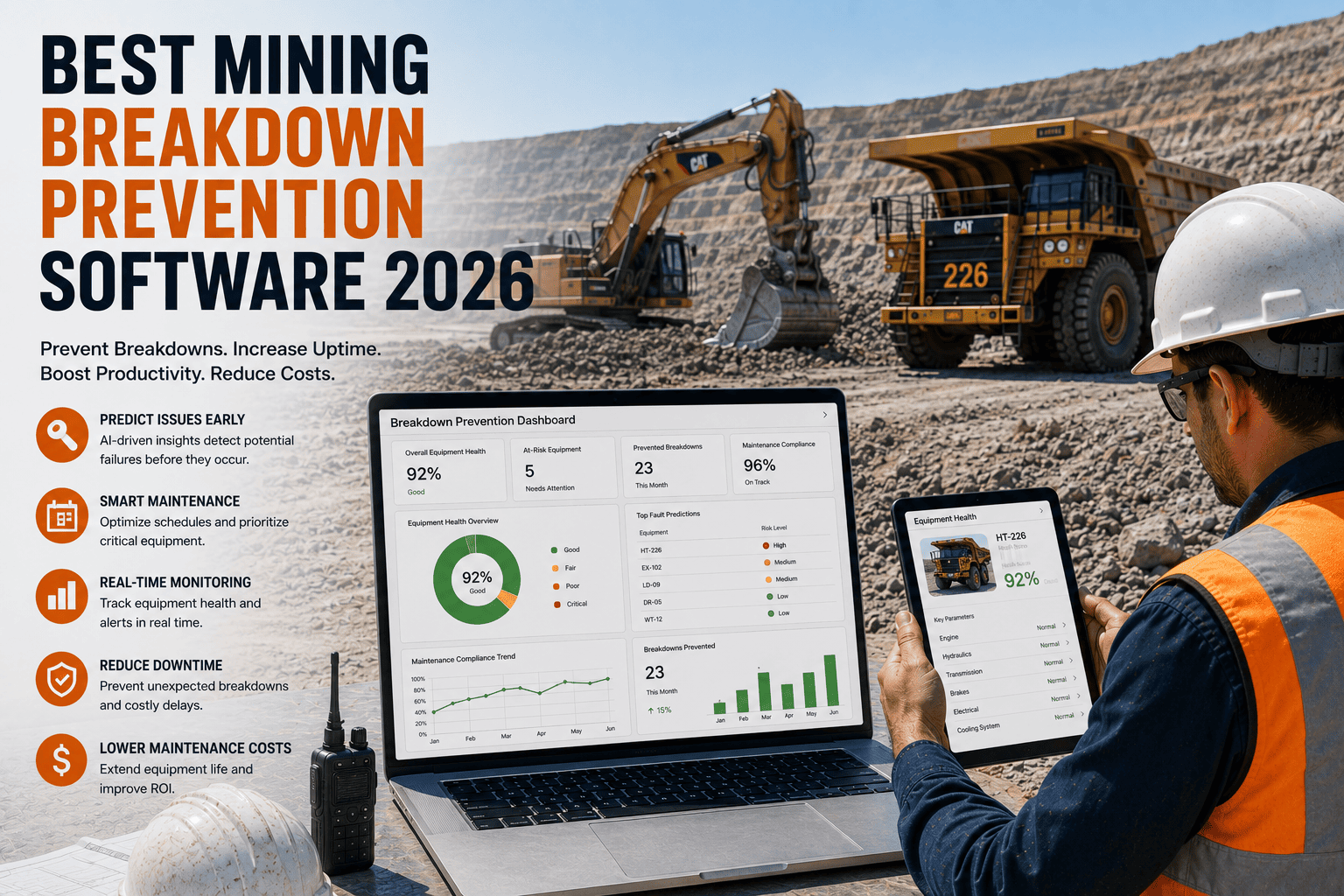
Unplanned wash plant downtime at a mid-size sand and gravel operation costs 4000 to 12000 dollars per day in lost saleable product. Dredge pump seal failures caused by moisture and abrasive wear account for 25 to 35 percent of all unplanned maintenance events on wet-mined sites. Operations using condition-based maintenance and equipment utilization tracking cut unplanned wash plant and dredge downtime by 30 to 40 percent within the first season of use.
Why Wet-Mined Sand And Gravel Pits Need Different Software
Most fleet software on the market was built around dry-side equipment: haul trucks, loaders, and crushers running on solid ground. A sand and gravel operation adds an entirely different equipment category on top of that. Dredges and draglines work directly in water. Wash plants, log washers, attrition scrubbers, and dewatering screens run continuously to strip clay and silt out of raw material. Slurry and gravel pumps move material through pipe runs that are constantly exposed to abrasive, waterborne sediment. Every one of these assets fails differently than a dry crusher or haul truck, and a maintenance plan built only around engine hours misses the moisture and abrasion factors that actually drive failure on a wet site.
That is why sand and gravel operators need software that separates wet-side processing equipment from dry-side hauling equipment instead of forcing both into the same maintenance template. Teams that want to see how that separation actually works on a dashboard can book a demo and walk through their own wash plant and haul fleet side by side.
Wet-Side Equipment Wears On A Different Clock
Pump seals, screen decks, and scrubber liners degrade based on hours of exposure to abrasive slurry, not calendar time or engine hours alone. A dredge pump that runs three extra hours during a high-demand week can wear through a seal weeks ahead of its scheduled replacement, and a fixed calendar-based PM schedule will miss that entirely.
Dry-Side Haulage Still Needs Its Own Rules
Haul trucks and loaders moving processed material from the wash plant to stockpiles still run on standard engine-hour based maintenance, closer to a typical quarry fleet, which means the software needs to run both models at once without forcing one to compromise the other.
FleetRabbit tracks dredges, wash plants, pumps, screens, loaders, and haul trucks with maintenance rules built around how each actually wears, not a single generic schedule. Start free with 3 assets and see your first utilization report within days.
Signs Your Pit Is Ready For Fleet Management Software
Sand and gravel operators usually know something needs to change well before they act on it. These are the patterns that show up most often right before an operation moves off paper logs and spreadsheets.
Matching Maintenance Rules To Sand And Gravel Equipment
Because sand and gravel operations run both wet-side processing equipment and dry-side hauling equipment, the software needs a maintenance rule set for each category rather than one generic schedule applied everywhere. The table below shows how these needs typically break down across a working pit.
| Equipment Type | Primary Wear Factor | Downtime Cost Range | Recommended Maintenance Approach |
|---|---|---|---|
| Dredge Or Dragline | Cable wear, hydraulic seal degradation, submerged component corrosion | 3000 to 8000 dollars per incident | Runtime-hour tracking with scheduled seal and cable inspections |
| Wash Plant And Screens | Screen deck wear, motor bearing failure, water flow imbalance | 4000 to 12000 dollars per day | Condition-based alerts tied to throughput and vibration data |
| Slurry And Gravel Pumps | Seal and impeller abrasion from waterborne sediment | 2000 to 6000 dollars per incident | Runtime-hour based seal replacement scheduling |
| Loaders And Haul Trucks | Standard engine wear, undercarriage stress on wet haul roads | 400 to 900 dollars per hour idle | Engine hour based PM triggers with mobile inspections |
| Settling Pond And Dewatering Equipment | Sediment buildup, pump clogging, seasonal capacity strain | 1500 to 5000 dollars per incident | Scheduled inspection tied to seasonal production ramp-up |
Planning For Seasonal Operation
Many sand and gravel pits scale production up and down with construction season demand, which means equipment often sits partially idle for weeks or months at a time. Dredges, wash plants, and pumps that sat unused over a slow period need a proper reactivation inspection before returning to full production, not just a visual check and a start button. Skipping that step is one of the most common causes of early-season failures, since seals and gaskets that sat dry or partially submerged for months are exactly the components most likely to fail under the first week of full-speed operation.
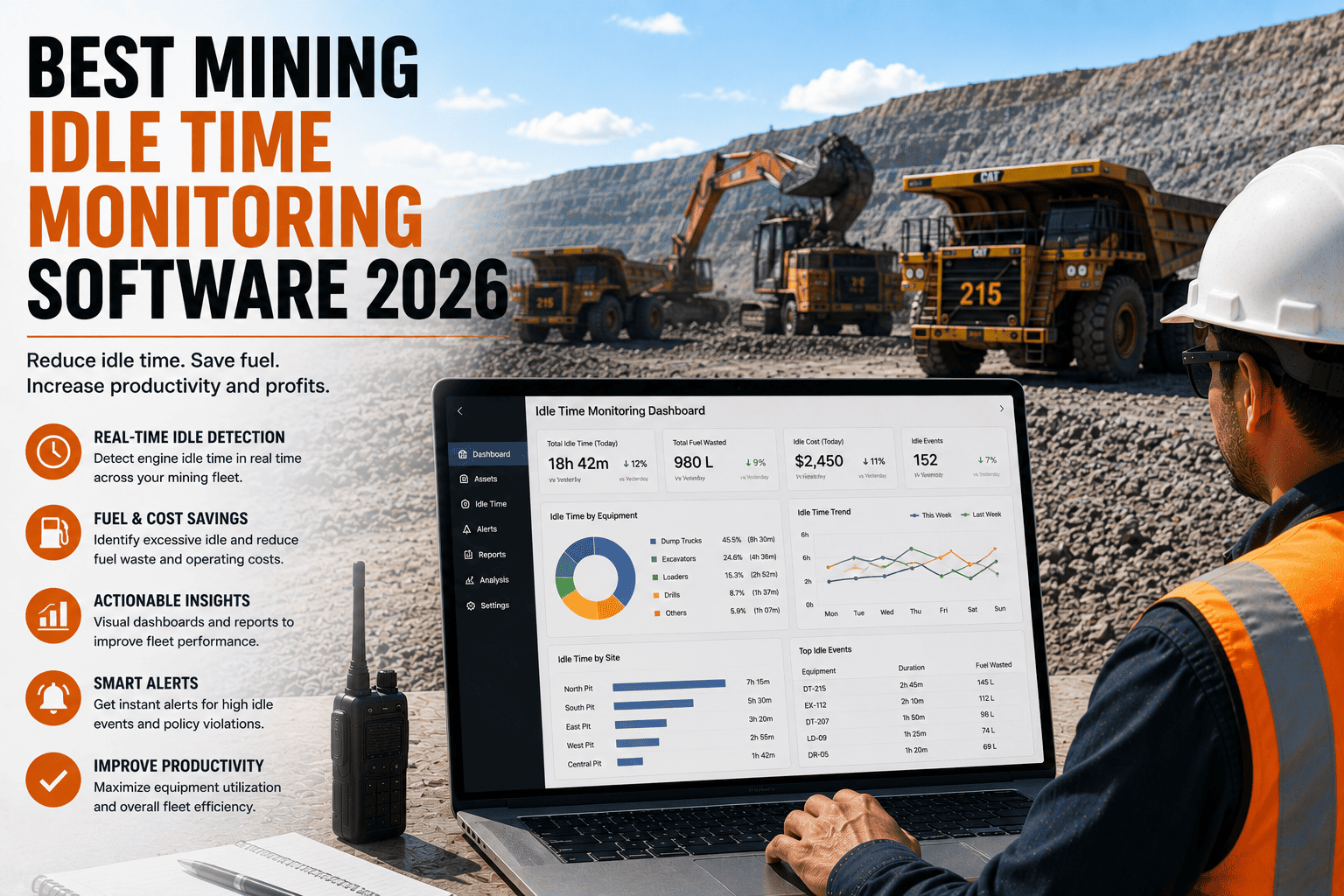
Fleet software that tracks idle periods alongside runtime hours gives maintenance teams a clear signal for when a reactivation inspection is due, rather than relying on someone remembering how long a specific pump sat unused. Operators managing multiple sites with staggered seasonal schedules benefit even more from this visibility, since it prevents the same reactivation gap from repeating at every location every year. If your pit runs a seasonal schedule, it's worth bringing that pattern into a conversation and you can book a demo to see how idle-time tracking would apply to your specific ramp-up calendar.
Return On Investment For Sand And Gravel Operations
Sand and gravel pits calculating return on investment for fleet software should weigh both wet-side and dry-side savings together. A mid-size operation running one wash plant, two dredge or dragline units, and 8 to 10 haul trucks that spends 15000 to 22000 dollars annually on a platform like FleetRabbit typically prevents 5 to 9 unplanned wash plant or pump failures per year. At an average of 6000 dollars in combined lost production and repair cost per incident, that is 30000 to 54000 dollars in direct annual savings, before counting the value of avoided seasonal reactivation failures.
Additional Value From Utilization Data
Beyond avoided breakdowns, tracking runtime hours across dredges and wash plants typically reveals underused equipment that could be reassigned or scaled back, and overused equipment that is quietly running past its safe service interval. Both findings translate directly into cost savings once identified.
Frequently Asked Questions
The Bottom Line For Sand And Gravel Producers
Wet-mined sand and gravel operations carry a maintenance burden that dry quarries never have to deal with, from seal wear on submerged dredge equipment to seasonal reactivation risk on wash plants that sat idle for months. Treating that equipment with a generic maintenance schedule built for dry-side haul trucks leaves the most failure-prone assets on the entire site under-managed. Purpose-built fleet software separates wet-side and dry-side maintenance logic so both categories get the attention they actually need.
If your pit is still tracking pump hours and wash plant service on paper or in a shared spreadsheet, it is worth seeing what a connected system looks like against your own equipment and seasonal schedule. You can start a free trial with a few assets, or book a demo to walk through your dredge, wash plant, and haul fleet with the FleetRabbit team.
FleetRabbit connects dredges, wash plants, pumps, loaders, and haul trucks into one dashboard with maintenance rules built for how each asset actually wears. See downtime start dropping within your first working season. No credit card required to start.