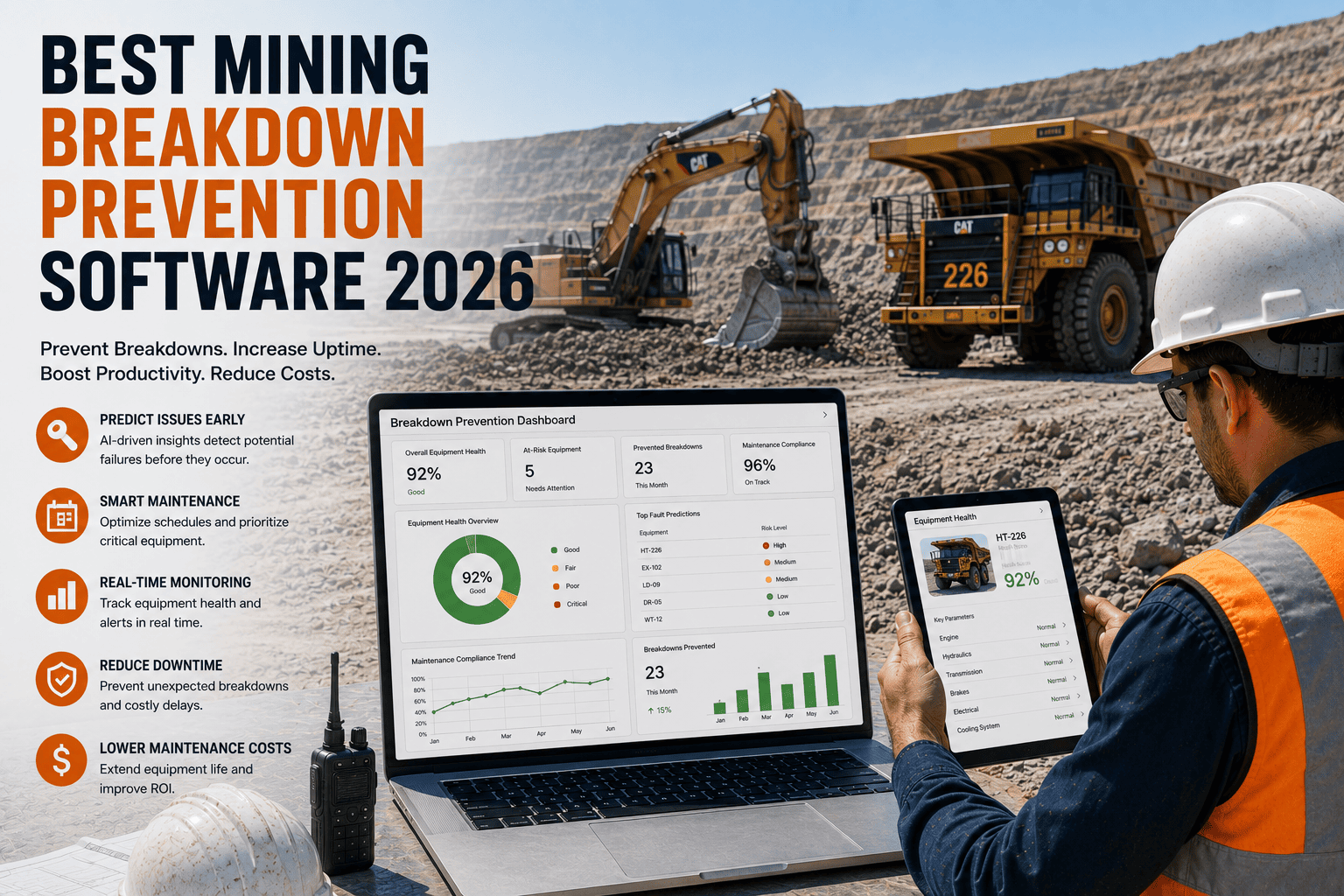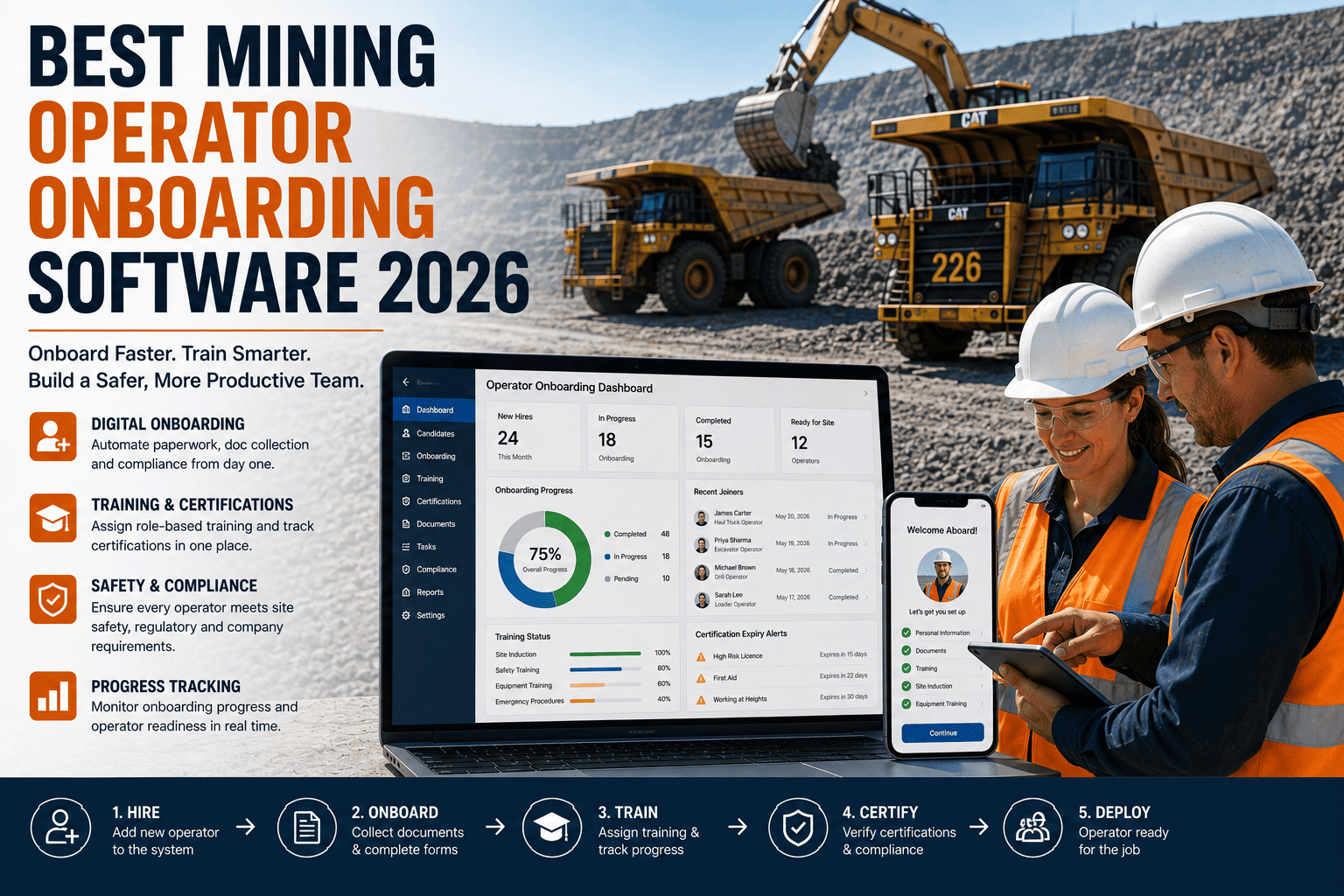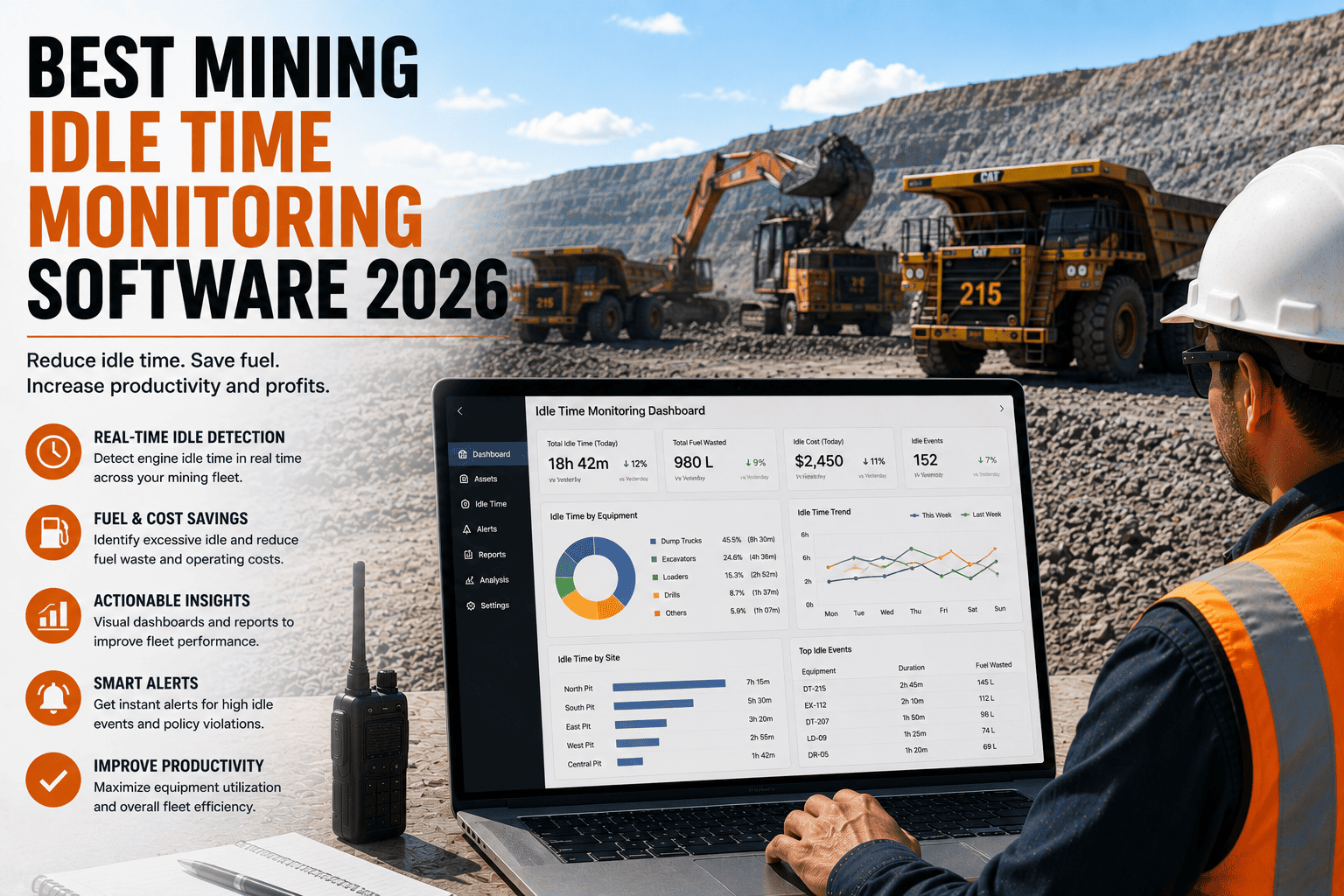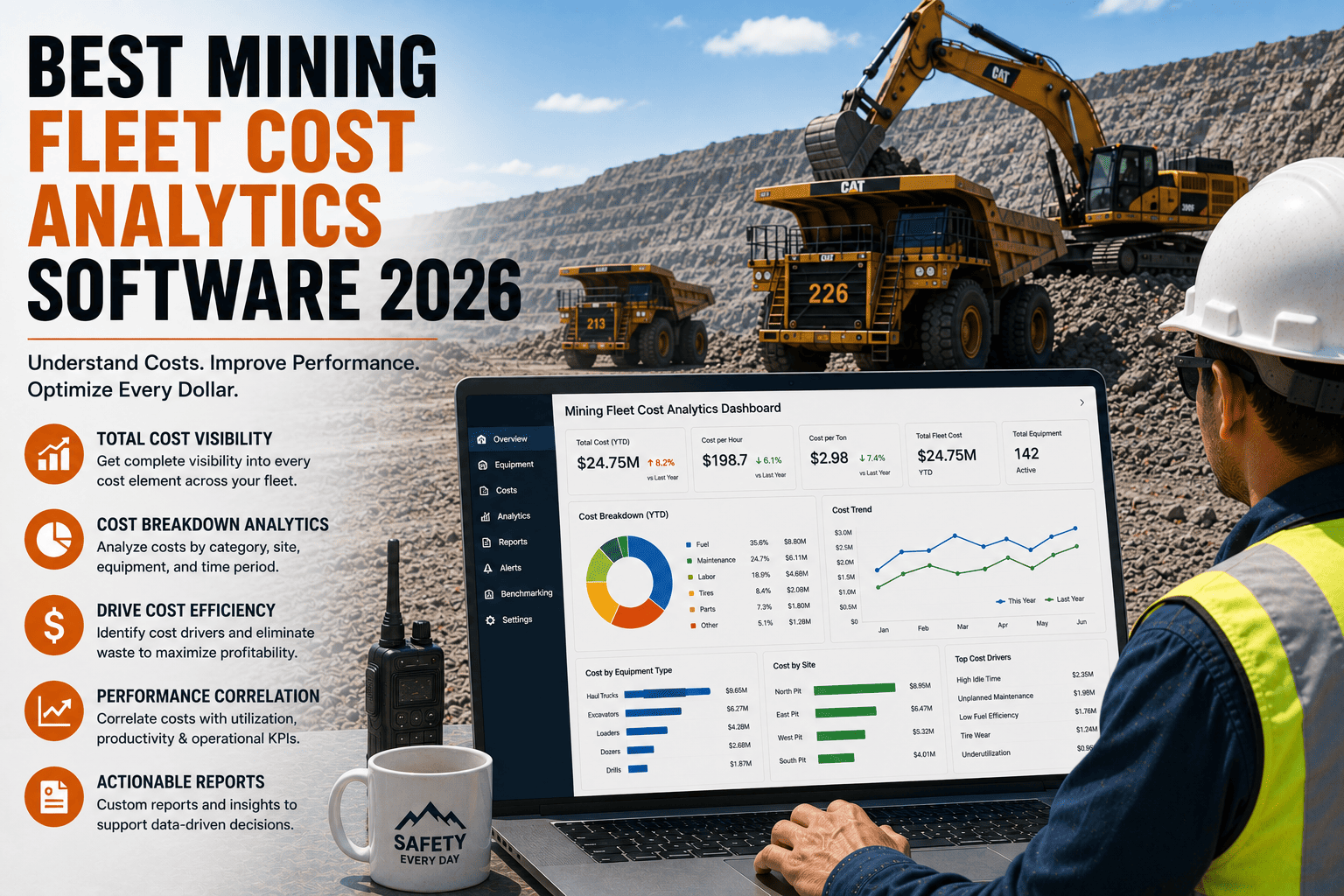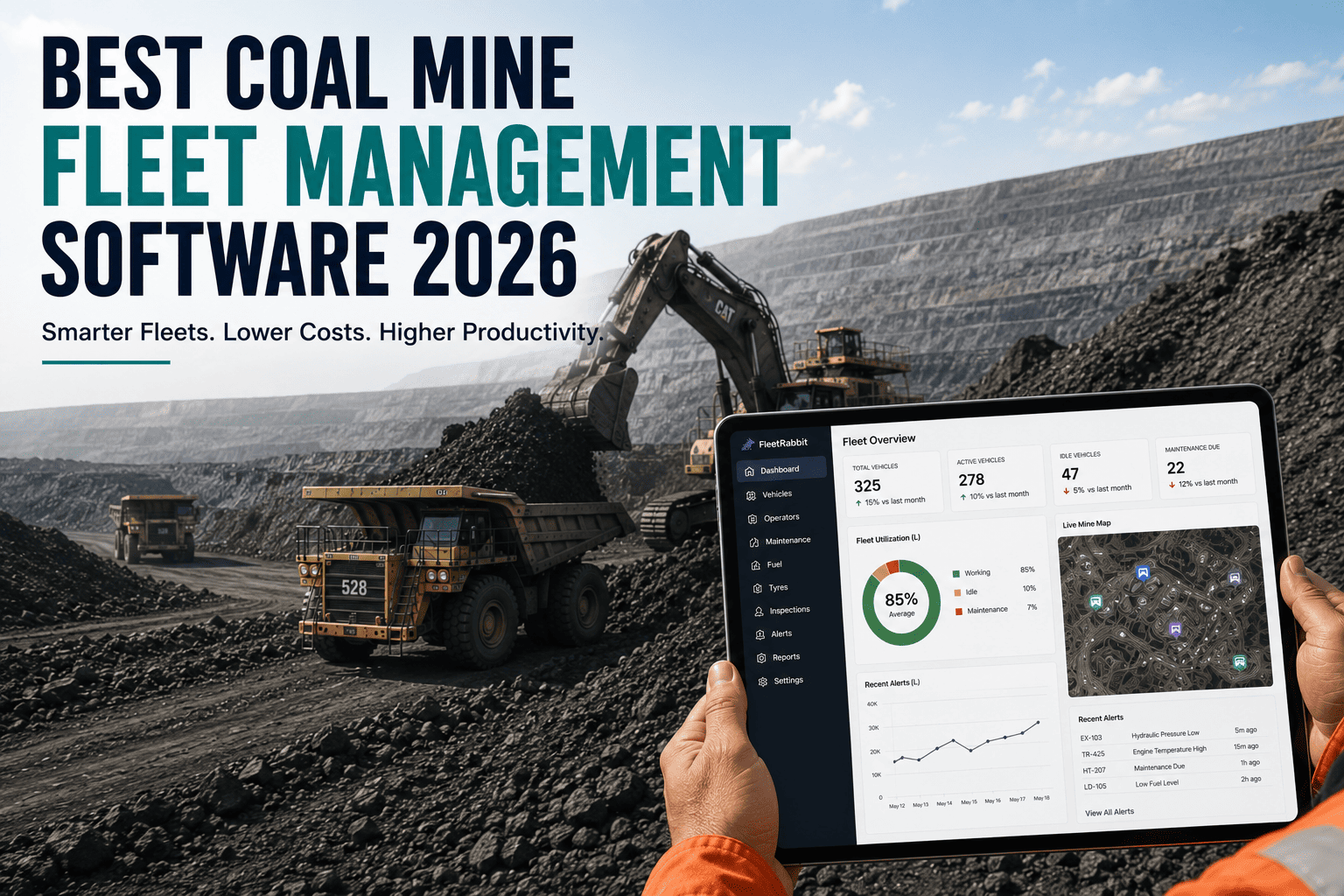
A coal mine doesn't run like a delivery fleet, and software built for one rarely survives contact with the other. A haul truck at a surface pit is a multi-million-dollar asset that never really stops moving, a highwall miner is cutting coal in conditions no paved-road telematics system was designed for, and every inspection, defect, and repair has to hold up if an MSHA inspector asks for the record tomorrow morning. Picking fleet management software for a coal operation means picking something that was actually built around those realities, not a general trucking platform with a mining logo bolted on.
Unplanned downtime on a large haul truck commonly costs between 5,000 and 20,000 dollars per hour, and a single major breakdown can reach 2 million dollars in lost production in a day. Unmanaged fleets at smaller mines lose an estimated 127,000 dollars a year to missed maintenance and compliance gaps combined, while a single serious MSHA citation averages 70,000 dollars or more. Mines that automate preventive maintenance and pre-shift inspection see haul truck availability improve by roughly 35 percent within the first quarter of use.
Why Coal Mining Needs Purpose-Built Fleet Software
Coal operations run on a mix of surface pits, highwall sections, and sometimes underground workings, each with its own equipment list, its own duty cycle, and its own section of MSHA regulation. Software designed for a paved commercial route assumes steady cell coverage, predictable routes, and a fairly uniform vehicle type. None of that holds true a few hundred feet into an open pit or along a highwall face.
Surface Mining Duty Cycles Are Brutal On Equipment
Haul trucks, dozers, and water trucks at a surface coal mine run continuous, heavy-load cycles across unstructured terrain, which wears components far faster than a comparable vehicle on the road. Maintenance scheduling built around calendar dates instead of real engine hours misses this entirely, and that gap is exactly where unplanned failures come from.
Highwall Operations Add Their Own Compliance Layer
Highwall mining equipment operates in a category of its own, with inspection requirements and safety protocols distinct from standard surface fleet vehicles. Software that treats a highwall miner like a generic piece of equipment misses the specific pre-shift checks that keep both the machine and the crew working that face protected.
Connectivity In The Pit Is Not Optional To Plan For
Deep in an open pit, along a highwall, or anywhere cell signal drops out, inspection and maintenance software has to keep working offline and sync automatically once a connection returns. A platform that assumes constant connectivity simply stops functioning exactly where a coal mine needs it most.
FleetRabbit runs haul truck, dozer, water truck, and highwall equipment inspections fully offline and syncs the moment signal returns, with every record ready for an MSHA review. You can sign up here to explore it yourself, or book a demo to see it mapped to your specific mine site.
Coal Mine Equipment And What Each Type Needs Tracked
A coal fleet is rarely just haul trucks. The best software covers every asset class with inspection templates built for that specific machine, not a generic checklist stretched to fit.
| Equipment Type | Primary Role | Key Tracking Need |
|---|---|---|
| Haul Trucks | Moving coal and overburden across the pit | Engine-hour based PM, tire condition, payload cycles, pre-shift inspection |
| Highwall Miners | Extracting coal along the exposed highwall face | Structural and cutting-head inspection, method-specific safety checks |
| Dozers & Graders | Site prep, haul road maintenance, reclamation work | Undercarriage wear, hydraulic system checks, hour-based service intervals |
| Water Trucks | Dust suppression across haul roads and active pit areas | Tank and pump inspection, route coverage tracking, service scheduling |
| Drills & Support Equipment | Blast hole preparation and general site support | Component-level condition monitoring, certification and defect logging |
Five Capabilities The Best Coal Mine Fleet Software Needs
Not every feature that looks good in a demo actually moves the numbers at a coal site. These five consistently do.
Hour-Based Preventive Maintenance
PM scheduling tied to real engine hours instead of calendar dates, with tiered intervals and site-specific adjustments for severe duty cycles.
Digital Pre-Shift Inspection
Mobile checklists built per equipment type, with mandatory defect photos and a record that stands up the moment MSHA asks for it.
Automatic Defect-To-Work-Order Routing
A logged defect becomes a scheduled repair immediately, so problems get fixed during planned downtime instead of discovered mid-shift.
Downtime And Cost Analytics Per Asset
Cost per operating hour by machine, combining fuel, maintenance, and downtime, so repair-versus-replace decisions are backed by data.
Offline-First Field Operation
Full functionality deep in a pit or along a highwall with no signal, syncing automatically the moment connectivity returns.
Why MSHA Compliance Has To Be Built In, Not Bolted On
Operations running paper-based pre-shift inspections average completion rates as low as 60 to 70 percent, and that gap is exactly where citations come from. Software that builds MSHA pre-shift requirements directly into each equipment template, and stores every inspection and defect as an exportable audit trail, turns compliance from a scramble into something that's already done by the time an inspector walks in.
What An Audit-Ready Record Actually Includes
A defensible compliance record covers inspection completion by equipment and shift, open defect status with timestamps, photo evidence, and certification history, all pulled automatically instead of assembled by hand the night before a review.
FleetRabbit routes defects straight to work orders and tracks cost per operating hour by machine, so your team plans repairs instead of chasing them. Start free and connect your coal fleet today, or book a walkthrough built around your mine.
What Coal Mines Typically See After Implementation
Frequently Asked Questions
The Bottom Line For Coal Mine Fleet Management
A coal mine's fleet is too expensive, too safety-critical, and too tightly regulated to run on software that was designed for a different industry and adapted after the fact. The best coal mine fleet management software in 2026 covers every equipment type from haul trucks to highwall miners, keeps working when the signal doesn't, and builds MSHA compliance into the daily workflow instead of a scramble before an inspection. That combination is what turns fleet management from a cost center into the reason a mine consistently hits its production targets.
Every hour of unplanned haul truck downtime and every incomplete pre-shift record is a cost your mine doesn't have to keep absorbing. FleetRabbit connects haul trucks, dozers, water trucks, drills, and highwall equipment into one offline-capable, MSHA-ready platform. Sign up free and connect your first vehicles today, or book a short demo to see it built around your specific mine site.