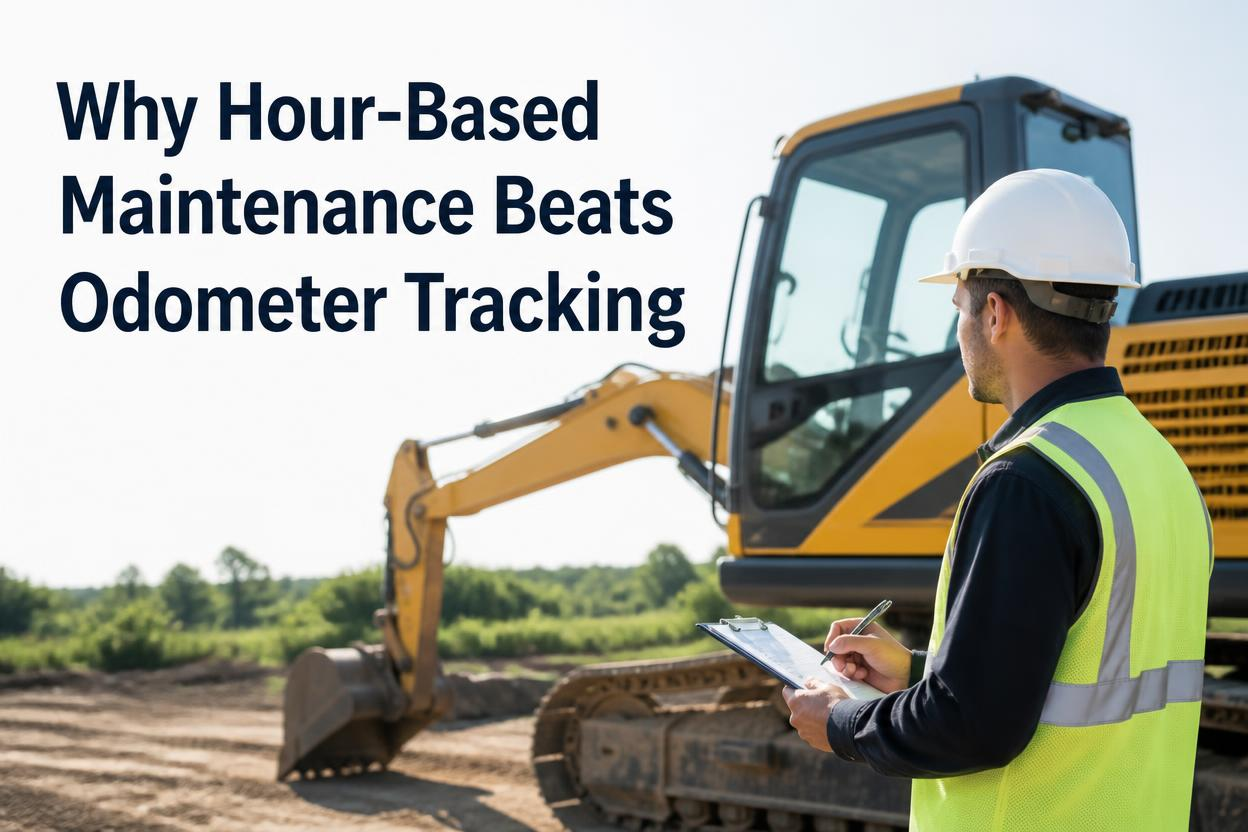
An odometer tells you how far a machine traveled. On a mine site, that number is almost meaningless. An excavator can sit in one spot for ten hours moving overburden and never register a single mile, while its engine, hydraulics, and undercarriage absorb a full shift of continuous load. If your maintenance schedule is still built around mileage or a calendar date, you are servicing the wrong variable. Hour-based maintenance fixes that by tying every service interval to the number your equipment actually accumulates wear against: engine hours.
Two Ways to Measure Wear, One Big Difference
Odometer tracking assumes distance equals wear. That assumption holds for a delivery van on a highway. It falls apart completely for a loader, dozer, or haul truck that spends its life working hard within a few hundred meters. Hour-based tracking measures the thing that actually correlates with component fatigue: how long the engine has been running under load.
Measures Distance Traveled
- Assumes low mileage means low wear
- Blind to stationary heavy-load work
- Built for highway vehicles, not pit equipment
- Leads to missed or premature services
Measures Actual Engine Load
- Reflects true operating time under load
- Captures stationary digging, hauling, idling
- Matches OEM service design standards
- Triggers service at the correct interval, every time
Why Mileage Fails Off-Road Equipment
Mining and heavy equipment rarely travel far, but they work brutally hard while standing still. An excavator's engine, hydraulic pumps, and undercarriage all wear based on hours of continuous load, not distance covered. This gap between distance and wear is why odometer-based scheduling routinely under-services the equipment that needs it most.
Load Beats Distance Every Time
A haul truck idling at a crusher for two hours generates real engine wear and fuel burn with zero mileage added. A dozer pushing material all shift covers almost no ground but racks up a full day of hard hours. Engine hours capture both scenarios accurately. An odometer captures neither.
Mining Conditions Accelerate Wear Beyond the Manual
Continuous vibration, abrasive dust, high heat, and maximum payload cycles accelerate component wear by roughly 20 to 40 percent compared to normal operating assumptions. Mining equipment also logs 5,000 to 7,000 hours a year, two to three times what a typical construction machine sees in the same calendar period. Following a generic time-based or mileage-based schedule in these conditions leaves critical components under-serviced long before the next scheduled date arrives.
The Undercarriage Problem
On tracked machines like excavators and dozers, the undercarriage alone typically accounts for 50 to 60 percent of total maintenance cost over the equipment's life. Undercarriage wear is driven almost entirely by hours of ground contact under load, not distance traveled, which makes it one of the clearest examples of why hour-based tracking exists in the first place.
Put Real Engine Hours Behind Every PM Trigger
FleetRabbit pulls engine hours directly from your equipment's ECM data and fires maintenance alerts at the exact interval each machine needs. You can sign up and start a free trial today, or book a demo to see it running on your own fleet data.
What the Numbers Actually Show
The financial case for hour-based maintenance is not theoretical. Fleets that make the switch see measurable improvement across cost, reliability, and asset life within a single operating year.
Setting Engine-Hour Intervals by Equipment Type
Most manufacturers publish baseline hour intervals, and hour-based systems should treat those numbers as a starting point rather than a fixed rule. Mining conditions on your specific site usually justify tightening the interval further.
| Service Type | Typical Hour Interval | What Triggers It |
|---|---|---|
| Fluid and Filter Check | 250 hours | Baseline OEM interval for most haul trucks and excavators |
| Oil and Filter Change | 500 hours | Standard interval, tightened further under high-dust or high-heat conditions |
| Hydraulic and Undercarriage Inspection | 1,000 hours | Wear-prone systems that drive the majority of lifetime maintenance cost |
| Major Component Service | 2,000 hours | Transmission, engine overhaul checkpoints, and structural inspections |
Making the Switch to Hour-Based Maintenance
Moving from odometer or calendar scheduling to hour-based scheduling is a process, not a flip of a switch. These four steps cover what it actually takes.
Step 1: Pull Engine Hours Automatically
Connect each machine's ECM or OEM telematics feed, such as Cat VisionLink or Komatsu KOMTRAX, so hour readings update without anyone typing in a number by hand.
Step 2: Set Intervals Per Equipment Class
A haul truck running continuous 24-hour shifts needs tighter intervals than an excavator on a single daytime shift. Configure PM triggers by machine class instead of applying one blanket schedule.
Step 3: Layer in Condition Data
Oil analysis and vibration monitoring catch developing problems that a fixed hour interval alone can miss, letting you adjust individual machines rather than the whole fleet.
Step 4: Automate the Alerts
Once hours are flowing automatically, maintenance reminders should fire on their own well before a due-soon threshold, giving your team time to schedule the service during planned downtime instead of a live shift.
Stop Guessing When Service Is Actually Due
Manual hour-meter logging leads to missed intervals and premature services on machines that did not need them yet. Sign up for FleetRabbit and automate every PM trigger from real engine-hour data, or book a demo to see your fleet's intervals mapped out live.
Frequently Asked Questions
Give Every Machine the Maintenance Schedule Its Hours Actually Earned
Odometer and calendar-based scheduling leaves your hardest-working equipment under-serviced and your lightly used machines over-serviced. FleetRabbit automates engine-hour PM triggers across your entire fleet, so every service happens exactly when the equipment needs it.