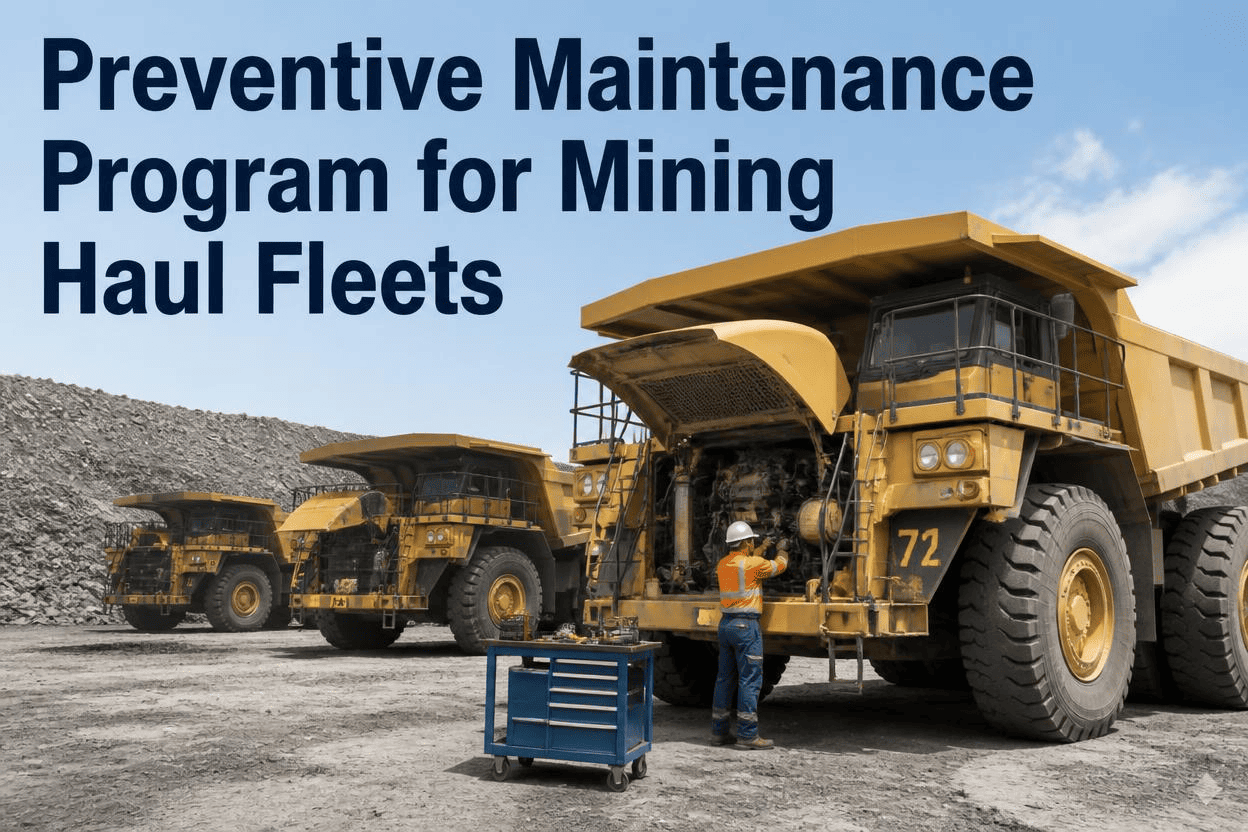
A haul truck doesn't care about your maintenance calendar, it cares about engine hours. Mining sites run these machines at maximum load, around the clock, through dust and heat that accelerate wear far beyond anything a highway truck ever sees. A preventive maintenance program built on real engine hours, not guesswork or a generic monthly checklist, is what separates a fleet that hits 92 percent availability from one that's constantly pulling trucks off the pit for emergency repairs.
A preventive maintenance program for mining haul fleets uses tiered service intervals, typically at 250, 500, 1,000, and 2,000 engine hours, tightened for severe duty conditions like dust, heat, and constant maximum load. Unplanned downtime on a single haul truck can cost between 5,000 and 20,000 dollars per hour, while an emergency repair runs close to five times the cost of the same job done on schedule. A properly run program can push a haul truck to 100,000 or more hours before major overhaul.
What Skipping Preventive Maintenance Actually Costs
Every fleet manager has heard "we'll catch it next service," and on a mining haul truck that sentence is expensive. When a component fails mid-shift instead of during a planned window, the cost isn't just the repair, it's the lost production, the diverted crew, and the rushed parts order at premium pricing.
These numbers compound quickly. A fleet running ten haul trucks that averages just one unplanned breakdown per truck each year is looking at hundreds of thousands of dollars in avoidable cost, before factoring in the ripple effect on shovels, loaders, and the rest of the production chain waiting on that truck.
Building a Tiered PM Schedule Around Engine Hours
Calendar-based scheduling, servicing every 30 or 90 days regardless of usage, fails haul trucks because two machines on the same site can log very different hours depending on shift assignment. A truck running double shifts hits its next service threshold in half the time of one running a single shift, so hour-triggered scheduling is what actually protects the equipment.
Why Severe Duty Sites Need Tighter Intervals
OEM intervals are a starting point, not a rulebook. Mining conditions push wear rates 20 to 40 percent faster than standard duty, so many operations tighten their 250-hour tier to 200 hours, or add extra oil sampling between intervals during hot, dusty seasons. The goal is matching the schedule to how the truck is actually being worked, not to a number printed in a manual written for average conditions.
Adjusting for Site Conditions
Altitude, temperature swings, and haul road grade all affect how fast fluids break down and components wear. Sites running steep grades or extreme heat should treat oil analysis results as a trigger in their own right, shortening the interval whenever contamination or wear metal readings trend upward, rather than waiting for the next scheduled hour threshold.
FleetRabbit pulls engine hours straight from your telematics and fires work orders the moment a truck approaches its next tier, so nothing slips through on a spreadsheet. Sign up free and connect your first haul truck in minutes.
The Systems That Deserve Extra Attention
Not every component fails at the same rate, and a preventive maintenance program that treats them all equally wastes attention on low-risk parts while under-servicing the ones most likely to strand a truck. Focus the tightest intervals on the systems below.
| System | Failure Risk If Missed | Recommended Trigger |
|---|---|---|
| Final Drives | Catastrophic failure, replacement near 200,000 dollars | Oil sampling every 250 hours, full inspection at 1,000 |
| Braking System | Safety risk and forced downtime for repair | Pressure and pad inspection every 500 hours |
| Tires (TKPH) | Heat-driven blowouts and premature tread loss | Continuous load and speed monitoring, checked every shift |
| Engine and Transmission | Reduced power, contamination-driven wear | Oil analysis every 250 hours, comprehensive service at 1,000 |
| Cooling System | Overheating in high ambient temperatures | Inspection every 500 hours, tighter in peak heat season |
Reactive Tracking vs Automated PM Triggers
Most fleets don't lack maintenance knowledge, they lack a system that applies it consistently across every truck, every shift, every site. The gap between a paper-based reactive process and an automated preventive maintenance program shows up clearly once you compare them side by side.
- Service dates tracked on spreadsheets or paper logs
- Hours estimated instead of pulled from telematics
- Issues found only after a breakdown occurs
- Parts ordered after the failure, causing delays
- Work orders fire automatically at each hour threshold
- Engine hours sync live from OEM telematics
- Predictive alerts flag developing faults days in advance
- Parts reorder triggers keep components on-site before needed
Where Predictive Maintenance Fits In
Automated hour-based scheduling handles the routine, but predictive analytics goes a step further, using telematics data to flag developing faults before they show up on any checklist. Fleets using this layer catch problems anywhere from three to twenty-eight days ahead of failure, giving maintenance teams enough lead time to schedule the repair during planned downtime instead of reacting to a breakdown mid-shift.
FleetRabbit tracks PM compliance across every truck and flags anything falling behind before it turns into downtime. Book a demo and we'll walk through your current fleet data together.
Getting Your Program Off the Ground
Start by pulling engine hours for every haul truck from whatever telematics system you already run, whether that's Cat MineStar, Komatsu KOMTRAX, or Volvo CareTrack. Map each truck to a tiered schedule, then track PM compliance as a single number, targeting 90 percent or higher, so any gap is visible immediately instead of buried in a maintenance folder nobody opens until something breaks. Once the tiers are automated, the conversation with your team shifts from chasing paperwork to reviewing trends, which is where a preventive maintenance program actually starts paying for itself. You can start a free trial today to connect your telematics, or book a short demo if you'd rather walk through it with your team first.
Frequently Asked Questions
Every hour a haul truck sits down unexpectedly is money your operation won't get back. FleetRabbit automates tiered PM scheduling off real engine hours so your team stays ahead of failures instead of chasing them. Start free with no credit card required.