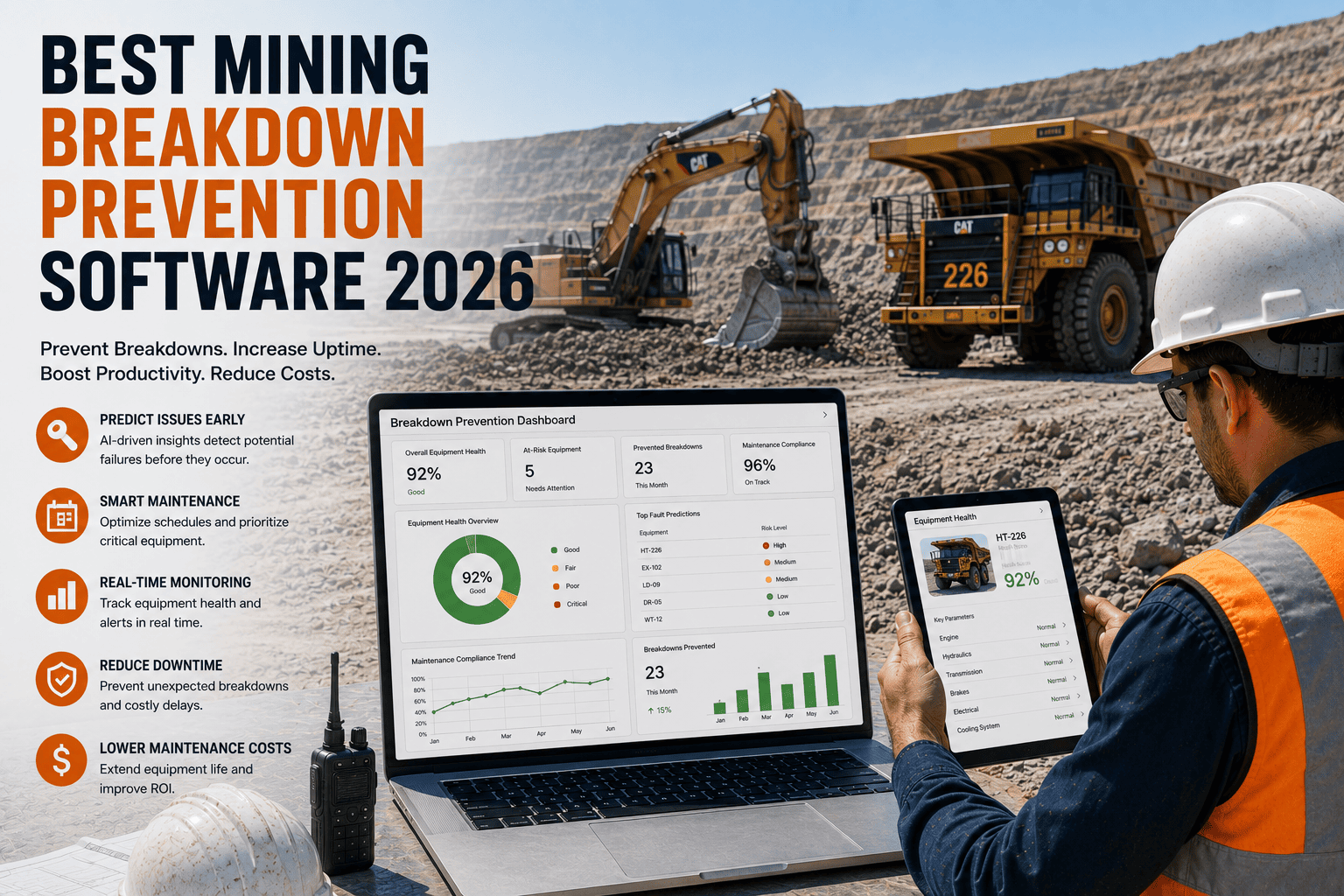
A stalled haul truck doesn't just sit quietly waiting for a technician. It backs up the loader behind it, slows the crusher feed, and by the end of the shift the entire pit is running behind schedule. Mining is one of the few industries where a single piece of down equipment can halt production across an entire site, which is exactly why reducing mining equipment downtime has become one of the highest-leverage moves a fleet manager can make.
Mining operations reduce equipment downtime most effectively by combining predictive maintenance, real-time fleet tracking, digital pre-shift inspections, smart spare parts planning, and operator training. Predictive approaches alone have shown reductions of 30 to 50 percent in unplanned downtime, and some operations using continuous condition monitoring report cutting unscheduled stoppages by as much as 75 percent. A single percentage point of uptime recovered across a large site can translate into millions in additional annual revenue.
Why Downtime Hits Mining Harder Than Other Industries
In a factory, a stopped line can often be buffered by inventory. In mining, there's no buffer, extraction, hauling, and processing are locked together in real time. Industry data shows the average equipment failure incident costs approximately 180,000 dollars once repairs, lost production, and crew idle time are combined, and high-production assets can lose 130,000 dollars for every hour they sit down.
Even a small uptime gain matters at scale. In a large operation, a 1 percent improvement in equipment availability can translate into roughly 250,000 additional tonnes of production a year, which for many commodities means well over 15 million dollars in recovered revenue.
5 Proven Strategies to Cut Downtime
These five strategies consistently show up across the highest-uptime mining fleets. None of them require replacing your equipment, they require better visibility into how it's already performing.
FleetRabbit combines real-time tracking, predictive alerts, and digital inspections in a single dashboard, so your team spends less time chasing paperwork and more time keeping equipment running. Sign up free to connect your fleet today.
What Predictive Maintenance Looks Like on a Real Site
These aren't theoretical numbers. Mining operations running condition monitoring at scale have documented measurable results that hold up across different sites and equipment types.
| Operation Type | What Changed | Result |
|---|---|---|
| Open-Pit, Remote Monitoring | Deployed condition-based monitoring across haul trucks | 53% increase in mean time between failure |
| Same Site, Early Detection | Coolant pressure drop flagged before failure | Prevented catastrophic engine failure, saving 250,000 dollars |
| Global Operations, Asset Management | Sensor-based predictive maintenance across sites | Up to 75% reduction in unplanned downtime |
| Multi-Site Fleet | Standardized spare parts forecasting | 40% reduction in repair delays from missing parts |
Where Most Fleets Leave Savings on the Table
The biggest gap isn't a lack of sensors, it's disconnected systems. Maintenance teams see equipment condition, dispatch sees location and utilization, and inventory sees parts levels, but none of it talks to each other. Downtime often starts the moment visibility is lost, not the moment a part actually fails.
Connecting the Three Layers
Tracking hours and cycles tells you when a machine needs service. Condition monitoring tells you what's about to fail. Parts forecasting tells you whether you're ready to fix it fast. Fleets that connect all three consistently outperform those tracking only one.
A Simple Roadmap to Get Started
You don't need to overhaul your entire maintenance program in one step. Most fleets see the fastest wins by rolling changes out in phases.
Every site is different, so we'll walk through your current setup and show exactly where FleetRabbit fits. Book a demo and bring your equipment list.
The mines seeing the biggest downtime reductions aren't running newer equipment, they're running better visibility. If you want to see what that looks like on your own fleet, you can start a free trial today, or book a short demo and we'll walk through your current downtime data together.
Frequently Asked Questions
Every hour of unplanned downtime is production your site never gets back. FleetRabbit brings tracking, predictive alerts, and maintenance workflows into one place so your team catches problems before they become breakdowns. Start free with no credit card required.