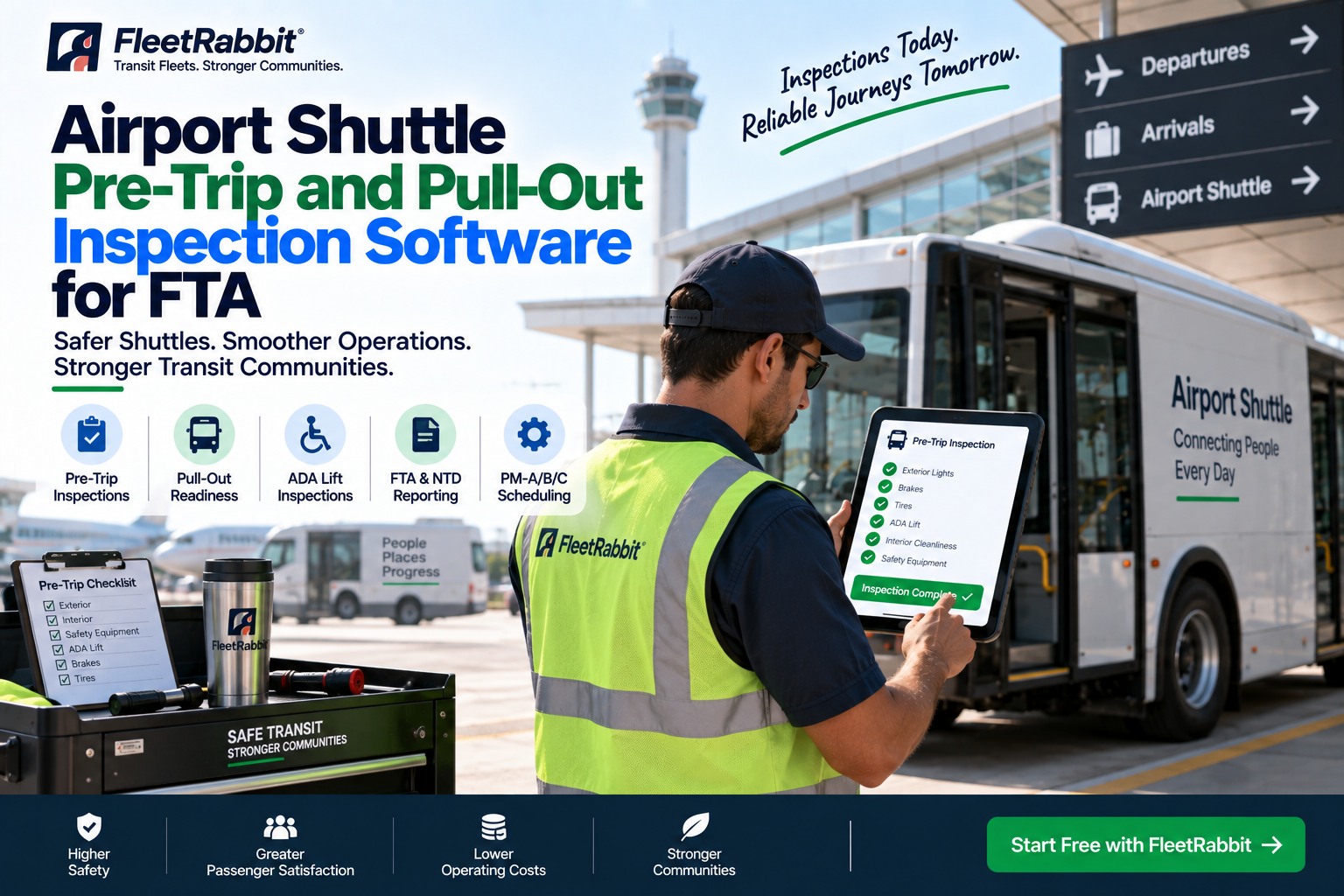
An airport shuttle does not get the luxury of a slow morning. It runs terminal-to-lot loops on a schedule tied to flight arrivals, and every vehicle has an assigned pull-out slot at the airport authority's curb whether the pre-trip inspection is actually finished or not. A rushed fifteen minutes checking brakes, lights, and a wheelchair lift is the same fifteen minutes standing between a shuttle and an out-of-service order at the exact moment a full plane of connecting passengers is walking out to the curb expecting a ride. This page covers what a real pre-trip inspection needs to cover before pull-out, what the air brake check actually verifies, and how a shuttle operation keeps every vehicle both compliant and on time for its slot.
15-20 min
typical time a thorough pre-trip inspection actually takes
18.1%
of commercial vehicles were placed out of service in the 2025 CVSA Roadcheck
41%
of those out-of-service violations were brake defects
Daily
wheelchair lift cycling is FTA best practice, not a weekly glance
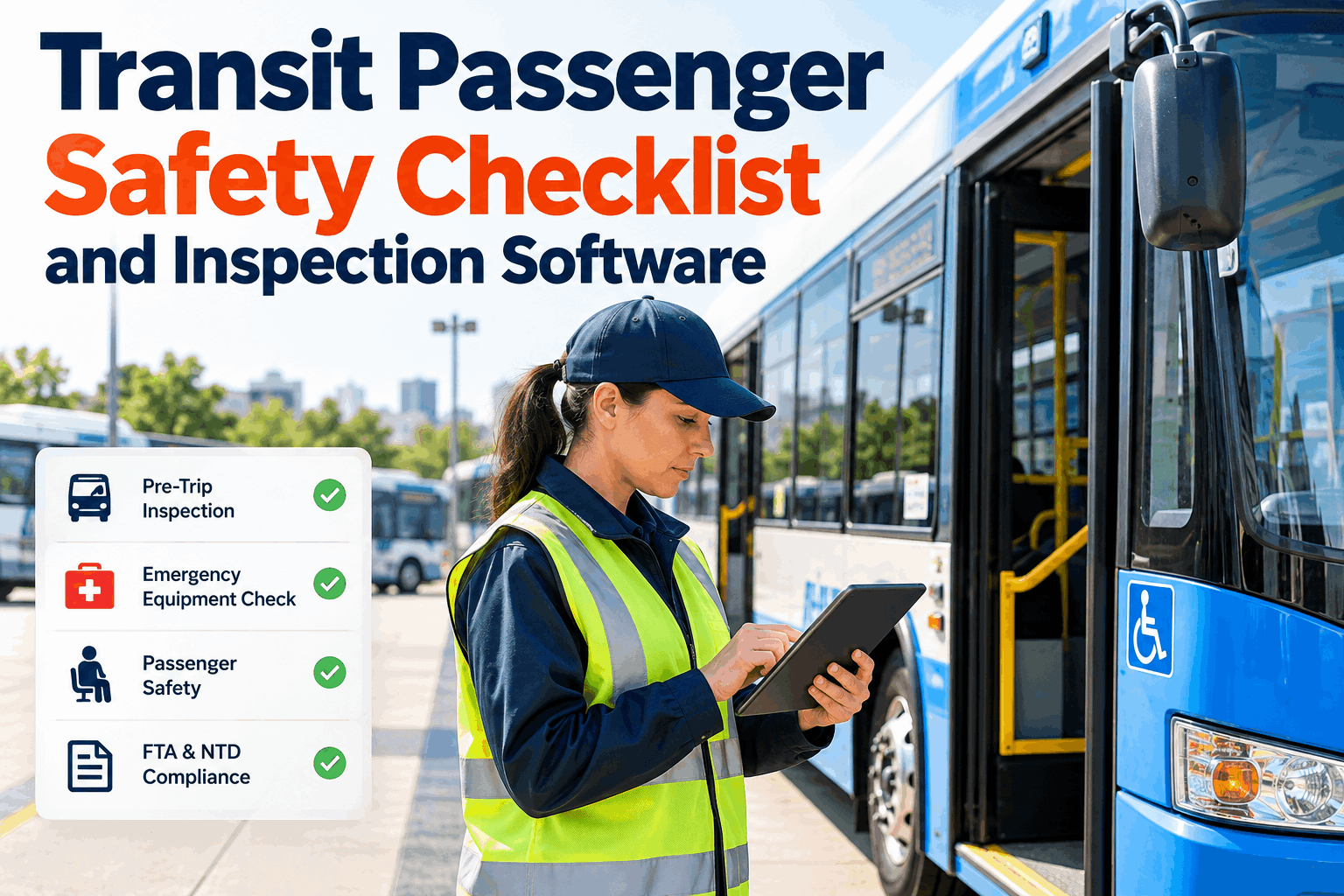
✓
Exterior & Tires
✓
Brake System
✓
Farebox & Kneeling
✓
Wheelchair Lift Bay
-
Interior & Cab
Five zones, one certification, and a clock running the whole time. Skipping straight to the interior check because the lift bay looks fine from three feet away is exactly the shortcut FTA guidance warns against, because a lift needs to actually be cycled, deployed and stowed, not glanced at, before it counts as checked. A shuttle operation that wants every zone tracked with an actual timestamp instead of a driver's word can sign up and turn that five-zone walk into a guided digital checklist a supervisor can see in real time.
Turn pre-trip into a guided five-zone check
Connect your shuttle fleet and give every driver a digital checklist that times out, flags defects, and certifies pull-out readiness.
What the air brake check actually verifies
120-140 psi
Air pressure builds to governor cutoff before the engine is shut off
Max 3 psi
Allowed pressure drop during a one-minute leak test with the service brake held
60 psi
Point at which the low air pressure warning must trigger while fanning the brakes
20-45 psi
Range where spring brakes should activate as pressure continues to drop
Brake defects made up the largest single share of out-of-service violations in the most recent CVSA Roadcheck, and nearly every one of them is something this exact four-step test would have caught before the shuttle ever left the yard. Skipping the full one-minute hold, or stopping the moment the needle looks roughly normal, is how a driver ends up certifying a vehicle that fails ten minutes later on the airport access road.
A missed curb slot
Airport authorities assign fixed pull-out and curb windows, and a shuttle still finishing its inspection late loses that slot to the next operator in line.
Stranded connecting passengers
A shuttle that never leaves on time turns a tight flight connection into a missed one, and the complaint lands on the operator, not the airline.
A roadside out-of-service order
A defect missed at pull-out does not disappear, it surfaces at a roadside inspection instead, pulling the vehicle and stranding whoever is already on board.
A DVIR that will not hold up
A certification signed from memory instead of an actual walk-around is the finding an FTA or state DOT auditor is specifically trained to spot.
None of those four outcomes trace back to a dramatic mechanical failure, they trace back to a fifteen-minute inspection that got compressed into five because the shuttle was already running behind before it even reached the bay. Operators who book a demo of a timed, zone-by-zone digital inspection usually find that the process gets faster, not slower, once drivers are guided through it instead of working from memory against the clock.
Requirement
What it means at pull-out
49 CFR 392.7
The driver must be satisfied the vehicle is safe to operate before it ever pulls out
49 CFR 396.11 / 396.13
The prior DVIR is reviewed and certified, and any noted defects are resolved before dispatch
49 CFR 37.163
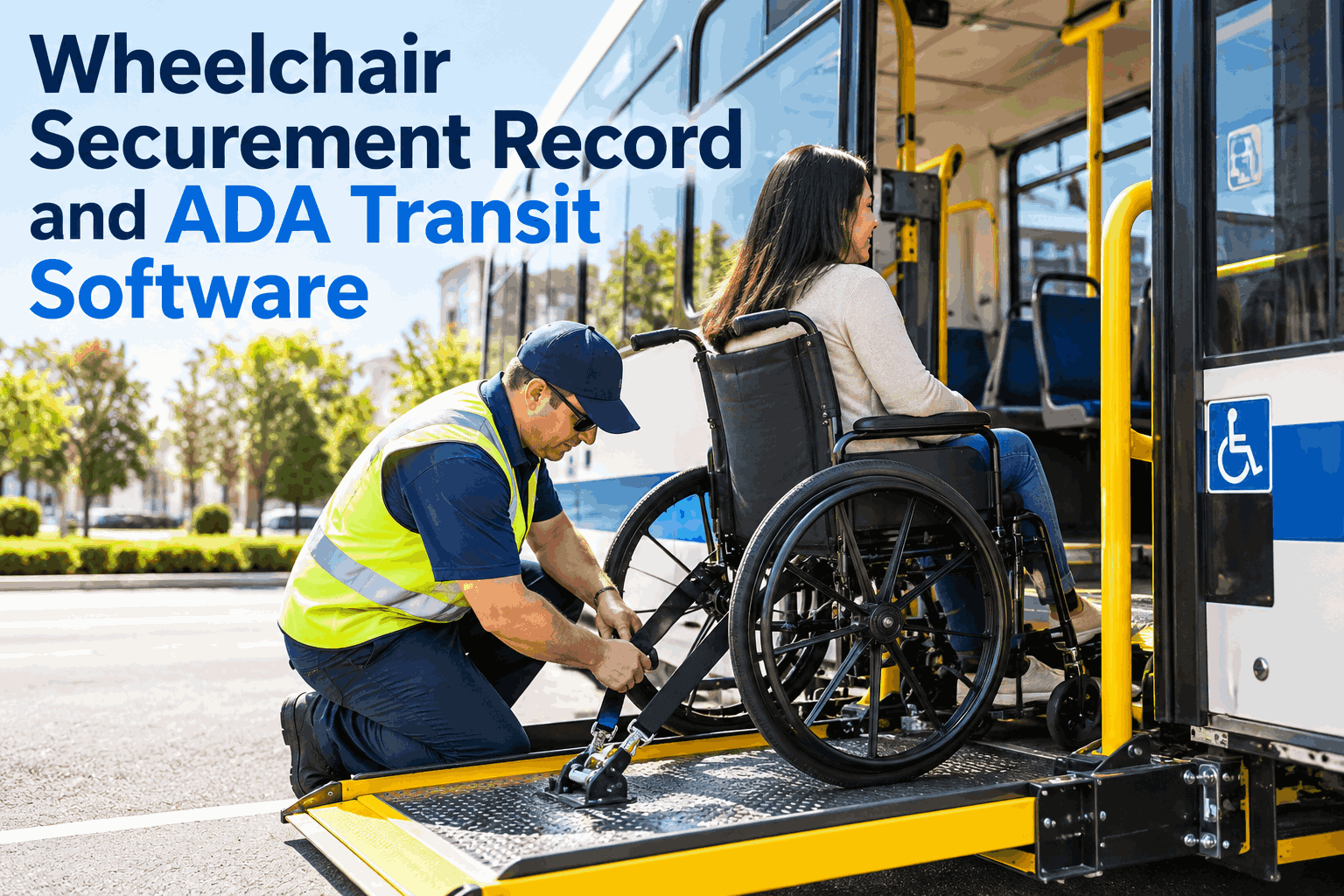
Wheelchair lifts get regular, frequent maintenance checks, with daily cycling as FTA best practice
State DOT and airport authority rules
Additional inspection or documentation requirements layered on top of the federal baseline
Paper checklist against the clock
- Zones skipped or rushed when a shuttle is running behind
- Lift checks glanced at instead of physically cycled
- Defects noted on paper a supervisor rarely sees in time
- DVIR history scattered across binders by vehicle
FleetRabbit, guided pull-out readiness
- Every zone timestamped and tracked through the full checklist
- Lift cycling logged as its own certified step, not a glance
- Defects flagged to a supervisor the moment they are logged
- Full DVIR and pull-out history searchable by vehicle instantly
The gap between those two columns is usually the gap between a shuttle that makes its curb slot and one that is still finishing its inspection while the next flight's passengers are already walking outside. Airport ground transportation runs on a schedule that does not wait, and the operators protecting it best are the ones who made pre-trip inspection faster and more reliable at the same time instead of treating speed and thoroughness as a tradeoff. If your shuttle fleet is still running pre-trip from a clipboard, this is a good time to sign up and put a guided checklist in every driver's hands.
Never miss a pull-out slot again
Book a demo and see pre-trip, lift cycling, and DVIR certification tracked together, NTD-ready in one click.
What does pull-out readiness actually mean for an airport shuttle.
It means the full pre-trip inspection, including brakes, lift cycling, and DVIR certification, is complete and documented before the vehicle leaves the yard for its assigned curb slot.
How long should a proper pre-trip inspection take.
Around 15 to 20 minutes for a thorough walk-around covering exterior, brakes, farebox and kneeling system, wheelchair lift, and interior, though a rushed inspection under time pressure often takes far less and misses more.
What does the air brake pressure test actually check.
It confirms the system builds to 120 to 140 psi, holds pressure within 3 psi over a one-minute test, triggers the low air warning at 60 psi, and activates spring brakes between 20 and 45 psi as pressure continues to drop.
How often does a wheelchair lift need to be checked.
FTA best practice calls for daily pre-trip cycling, meaning the lift is actually deployed and stowed as part of the inspection, not just visually checked from a distance.
What happens if a shuttle misses its assigned pull-out slot.
Airport authorities typically reassign that curb window to the next operator in line, which can cascade into missed connections for waiting passengers and a complaint that lands on the shuttle operator.
How quickly can a shuttle operator get digital pre-trip inspections running.
Most operators can equip drivers with a guided digital checklist within days, replacing a paper form without changing the actual inspection sequence drivers already follow.
September 7, 2026
By Mark
All Posts