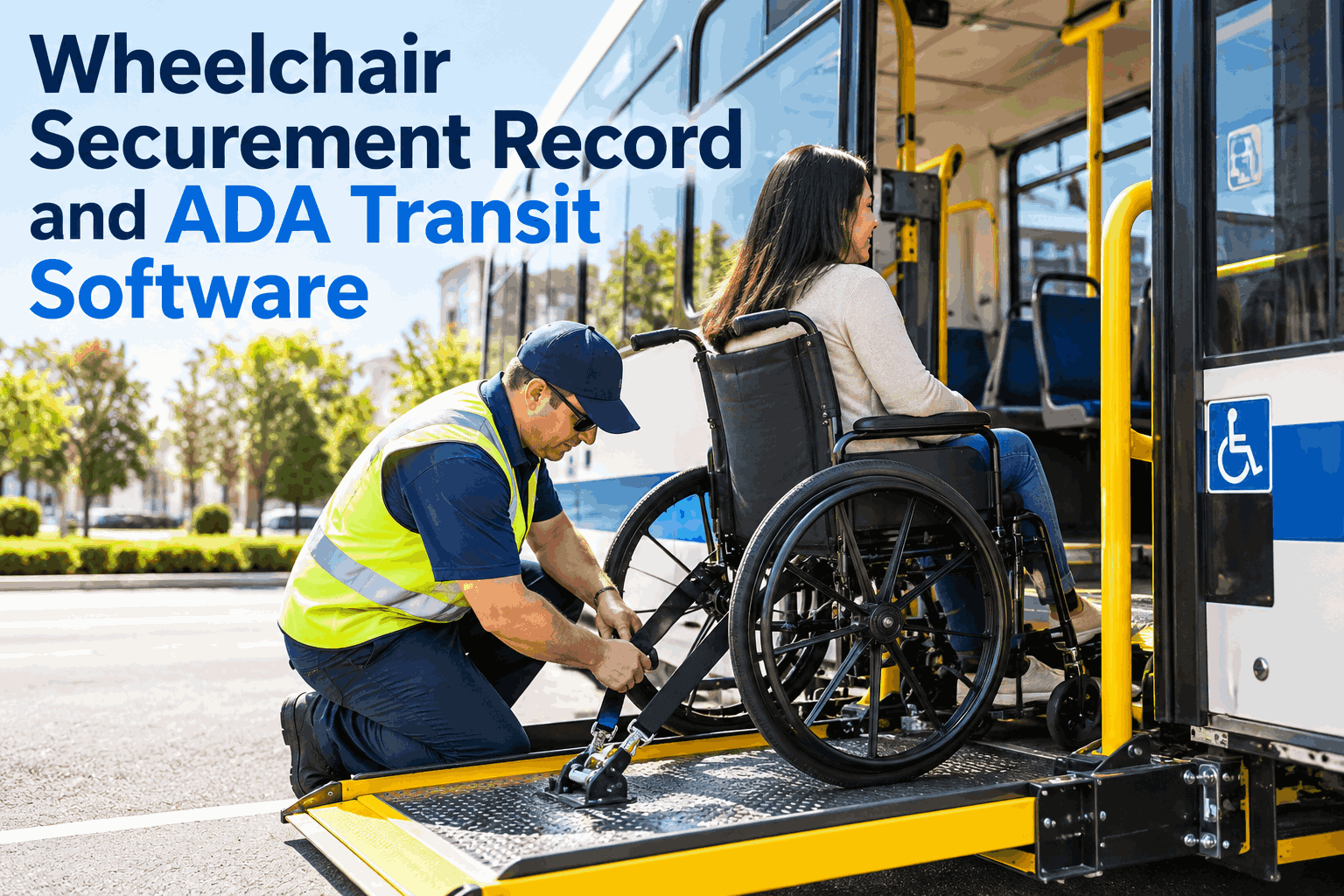
Wheelchair Securement Record and ADA Transit Software

wheelchair-securement-record-software-ada-accessibility-compliance

For a rider who uses a wheelchair, the lift and the securement system are the difference between getting to work and being left at the stop. Federal ADA rules expect transit agencies to keep those features working, use them properly and be able to show it. A worn strap or a stiff lift that slips past a paper checklist becomes a service failure, a complaint and sometimes a finding. Book a demo to see how FleetRabbit turns lift and securement checks into clear, searchable records.

Passenger Transit · ADA Accessibility

Wheelchair Securement Record and ADA Inspection Software for Transit

Capture lift and securement checks at every pre-trip, flag failures at once and keep the records that prove accessible service.

Front of bus
Wheelchair
30 x 48 in
1234 5
Securement station
1 2Front tie-down straps
3 4Rear straps and retractors
5Lap and shoulder belt

What the Rules Expect From Your Agency

The ADA transportation rules in 49 CFR Part 37 place three practical duties on transit providers. This is a plain-language summary, so confirm the details with the FTA and your legal counsel. Start free and build your first securement checklist.

Part 37.163Keep accessibility features workingLifts, ramps and securement systems must be maintained in operative condition, and repaired promptly when they fail.
Part 37.165Use lifts and securement properlyOperators must make sure securement systems are used, and must not refuse riders they can safely accommodate.
Part 37.173Train operators to proficiencyOperators must be trained to operate the vehicle and its accessibility equipment and to assist riders with disabilities.

Six Checks on Every Securement Station

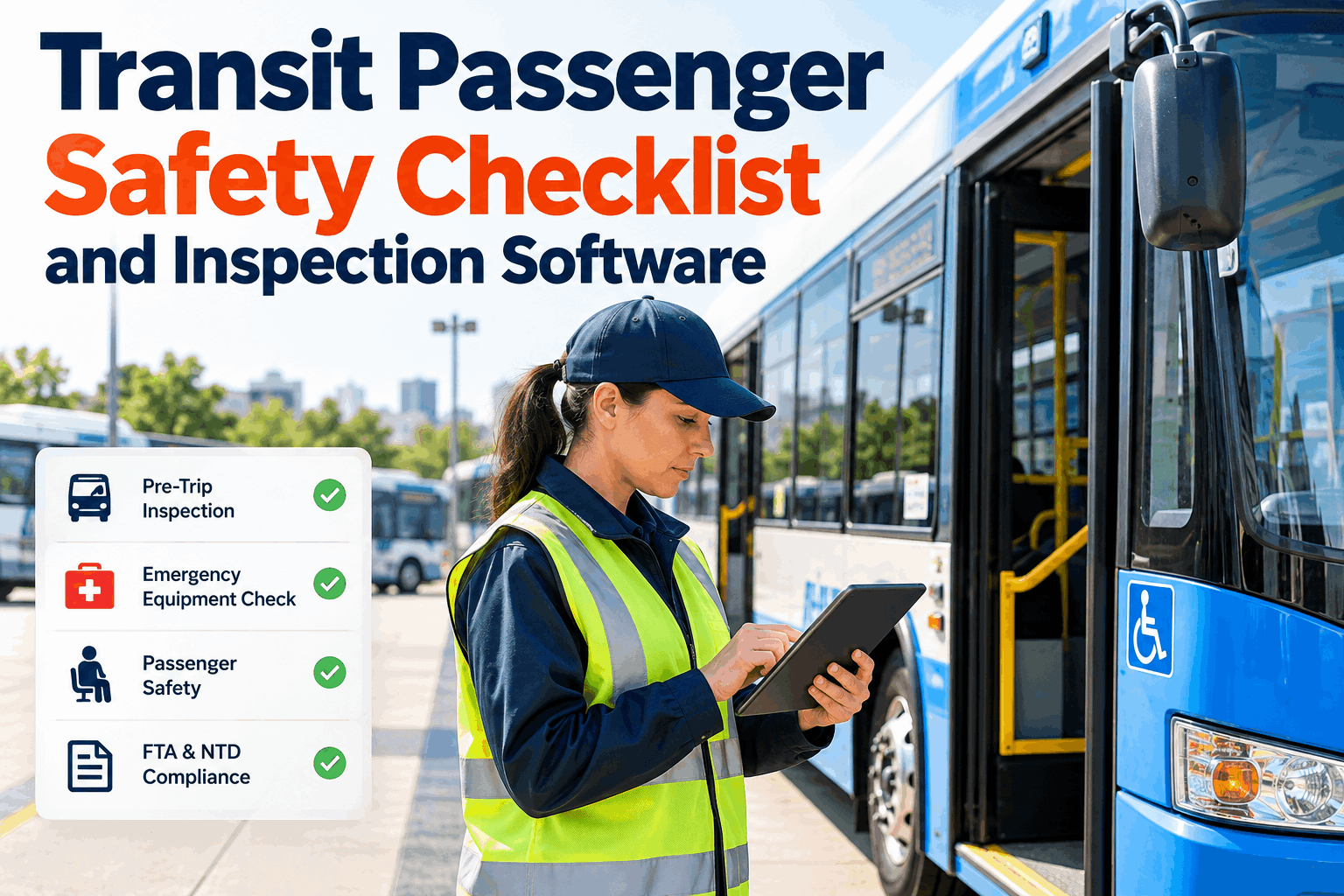
A thorough pre-trip looks at each part of the station, not just whether the lift moves. Adapt this to your vehicle types and manufacturer guidance.

AFront straps and hooksLook for fraying, cuts, sun damage and bent or worn hooks.
BRear straps and retractorsConfirm retractors lock, release and take up slack smoothly.
CLap and shoulder beltCheck webbing, buckle and anchor points for wear or damage.
DFloor anchors and tracksLook for looseness, corrosion or debris that stops a secure fit.
ELift or ramp and interlocksCycle the equipment and confirm the interlocks and warning devices work.
FSignage and lightingPriority seating signs, platform lights and stop request signals in place.

Make every lift and securement check impossible to skip

Digital ADA checklists with instant alerts and audit-ready history. Free for your first three vehicles.

Who Does What, From Pre-Trip to Audit

Accessibility depends on several people doing small things at the right time. A shared record keeps them in step. See the shared workflow in a live demo.

RolePre-tripOn routeWhen something failsFollow-up
OperatorPre-tripCycles the lift, checks straps and belts, logs the resultOn routeSecures each rider according to trainingWhen something failsReports the defect at once and asks for backupFollow-upConfirms the reported issue was closed
MaintenancePre-tripKeeps lift and securement PM currentOn routeReady to respond to defect alertsWhen something failsPrioritizes the repair from the alertFollow-upRepairs, retests and signs off
SupervisorPre-tripReviews the morning resultsOn routeWatches vehicle statusWhen something failsAssigns a backup vehicle and arranges serviceFollow-upReviews repeat failures by vehicle
CompliancePre-tripDefines the checklist and scheduleOn routeAvailable for questionsWhen something failsDocuments the out-of-service decisionFollow-upAudits records and reports

What a Good Securement Record Captures

Each inspection should leave a record that answers who checked what, when and what was found. A single failed item should trigger action automatically. Sign up free to see a record like this built for your own fleet.

ADA securement inspectionSample record
VehicleBus 2418 · Low-floor, 40 ft
Date and time5:42 AM
OperatorOperator 0417
Lift or ramp cycleComplete, smooth
Front straps and hooksPass
Lap and shoulder beltPass
Interlocks and warningsPass
Rear straps and retractorsFail
Note: fraying near the hook on the rear left strap. Photo attached.
Vehicle held from accessible serviceMaintenance alerted · Work order opened · Backup vehicle suggested

When a Lift or Securement System Fails

The rules expect prompt repair, and they limit how long a bus with a broken lift can stay in service. Exceptions exist when no replacement vehicle is available, so confirm the exact limits in 49 CFR 37.163 for your service area. Clear steps and a record of each decision protect your riders and your agency.

Found at pre-tripHold the vehicleAssign another bus to the run before it leaves the yard.
Fails on routeKeep service equivalentArrange a backup vehicle or alternative service for waiting riders.
No spare availableDocument the decisionRecord why the bus stayed in service, for how long and who approved.

What FleetRabbit Brings to ADA Vehicle Records

FleetRabbit covers the vehicle side of ADA accessibility. It does not replace your paratransit scheduling or complaint systems.

Custom ADA checklistsLift, ramp and securement inspections built for each vehicle type.
Photos and notesAttach evidence of wear or damage right from the phone.
Real-time alertsFailed items notify maintenance and supervisors immediately.
Out-of-service flagsMark buses unavailable for accessible service until signed off.
PM for accessibility equipmentSchedule lift and securement service by hours and mileage.
Audit-ready historyInspections, repairs and decisions stored by vehicle.

Frequently Asked Questions

What is a wheelchair securement record

It is documentation that the securement system and lift on a vehicle were inspected, who inspected them, when, and what was found or fixed.

How often should lifts and securement be inspected

Most agencies inspect them at every pre-trip, with deeper checks at scheduled PM intervals. Your policy and manufacturer guidance set the exact cadence.

What happens when a lift is inoperative

Federal rules expect prompt repair and limit how long a vehicle can stay in service with a broken lift. Confirm the details in 49 CFR 37.163 for your agency.

Do reviewers look at lift and securement records

ADA accessibility is a routine focus of FTA oversight, and reviewers commonly ask for evidence that lifts are inspected and maintained.

Is FleetRabbit practical for a small transit agency

Yes. You can start free with three vehicles and add more as your fleet grows.

Keep Every Accessible Vehicle Ready and Every Rider on Board

ADA checklists, instant alerts, PM scheduling and audit-ready records in one system. Free for your first three vehicles.
September 30, 2026 By Mark
All Posts

Share This Story, Choose Your Platform!

Latest Posts

Scroll