An airport shuttle does not get the luxury of an overnight rest most transit vehicles take for granted. It runs terminal loops from the first flight to the last, idles at curbside pickup for minutes at a time, and cycles its doors and lift dozens of times more per shift than a standard fixed-route bus. Maintenance programs built around mileage alone miss most of what actually wears an airport shuttle down, which is exactly why so many operators find themselves short a vehicle during the exact hours flights need one most.
Why Airport Shuttles Wear Differently Than Regular Transit
A city bus covers a route and returns to the yard. An airport shuttle rarely stops moving between terminals, parking structures, and rental car centers, often running close to continuous service across a full operating day. That means engine hours climb far faster than mileage would suggest, doors open and close at a pace few other vehicle types match, and lift or ramp cycles pile up from constant passenger and luggage turnover rather than a handful of scheduled stops.
Generic fleet maintenance tools built around mileage intervals consistently miss this pattern. Purpose-built airport shuttle maintenance software tracks engine hours and cycle counts alongside mileage, catching wear where it actually happens instead of where a standard PM template assumes it will.
First flights bring back-to-back terminal loops before most transit routes have even started their day.
Steady curbside idling and frequent door cycles as parking and rental car connections run continuously.
Peak arrivals push shuttle frequency and lift usage to the highest point of the entire operating day.
Red-eye and delayed-flight coverage keeps vehicles running well past when a typical transit shift ends.
Mileage Alone Cannot Trigger PM on a Shuttle Fleet
Because so much of an airport shuttle's operating day happens at low speed or idle, mileage-based PM intervals badly understate real engine wear. A vehicle can sit well under its next mileage threshold while its engine hours, a far more accurate measure of actual runtime, are already past due for service.
Mileage-Only Trigger
Assumes wear tracks distance traveled, which badly understates engine runtime accumulated during curbside idling and low-speed terminal loops.
Engine-Hour Trigger
Fires PM-A/B/C based on whichever threshold hits first, mileage or engine hours, so idle-heavy shuttle duty gets caught before it turns into a road call.
Fleets still scheduling PM on mileage alone can book a demo to see how dual-trigger scheduling catches wear that a mileage-only system would miss for weeks.
PM-A/B/C Built for Continuous Terminal Duty
Airport shuttle PM programs generally need to run tighter than standard transit intervals, since the duty cycle compresses a normal week of wear into a handful of operating days. The tiers stay familiar, but the thresholds that trigger them shift.
Short Interval
Fluids, filters, and door hardware checks triggered by engine hours as much as mileage, given the idle-heavy operating pattern.
Mid Interval
Brake, lift, and suspension attention timed for the constant curbside stop-and-go rhythm of terminal service.
Extended Interval
Full system inspection covering transmission, cooling, and structural points before continuous-duty fatigue sets in.
Operators who want these intervals automated instead of tracked by hand can sign up and let live engine-hour and mileage data trigger every PM tier on its own.
Match Your PM Schedule to Real Shuttle Duty
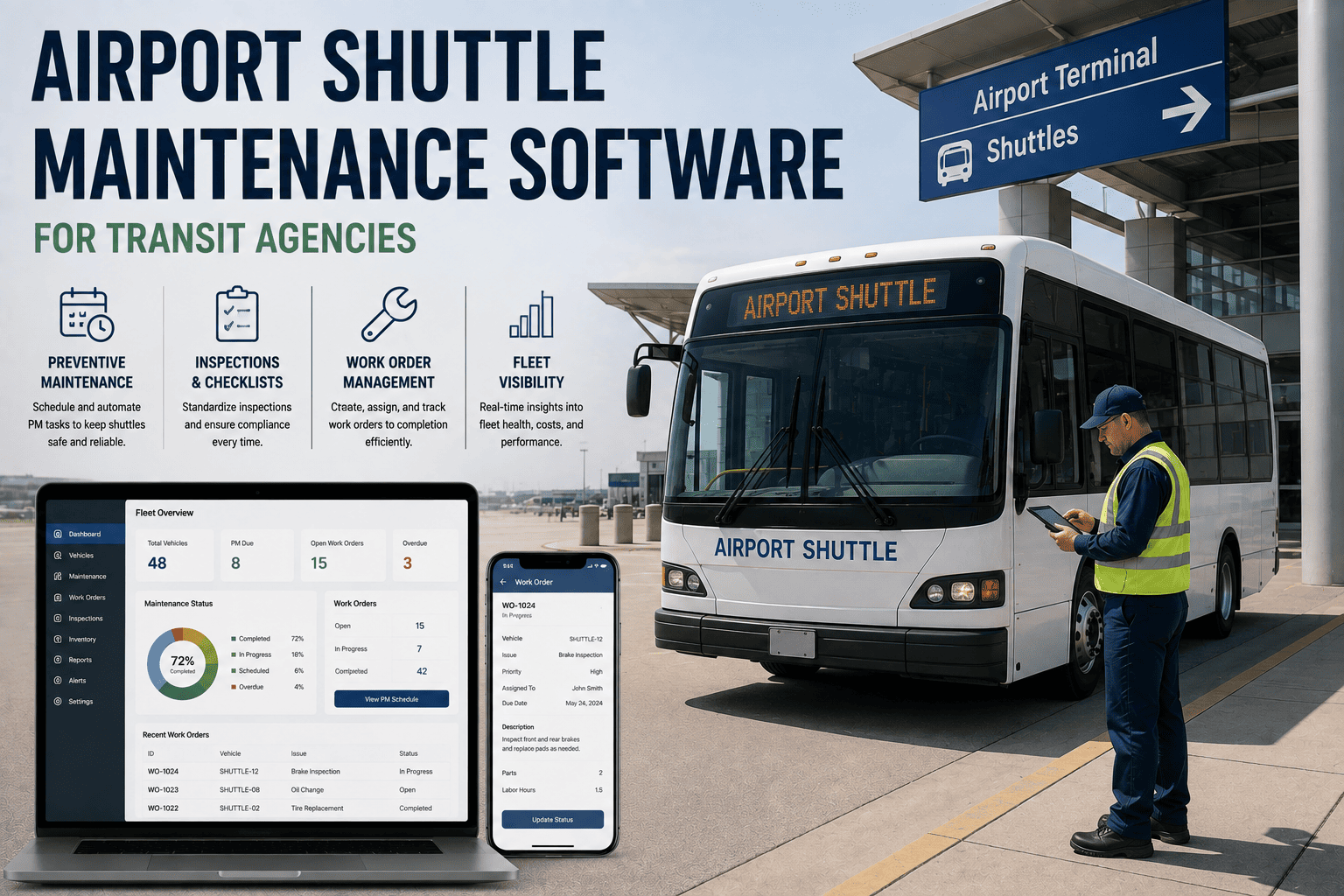
FleetRabbit tracks engine hours, mileage, and door cycles together, so PM triggers reflect how your airport shuttles actually operate, not a generic transit template.
Lift Cycles, Door Wear, and Driver Credential Tracking
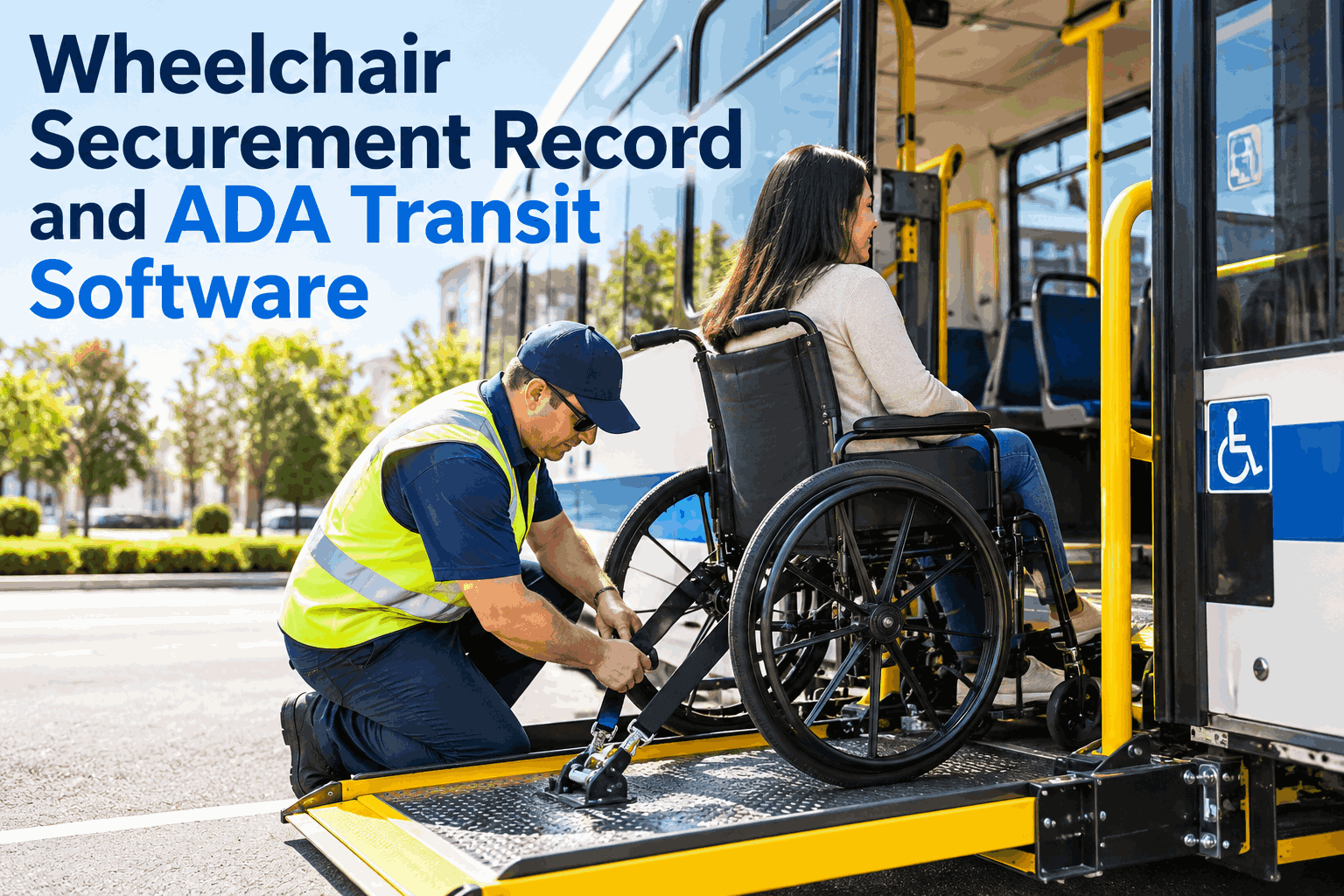
Airport shuttles combine two compliance burdens most transit vehicles handle separately. ADA lift and ramp systems still need the same daily deploy-and-stow verification any transit vehicle requires, but airport operations add driver-side credential tracking on top, since drivers working airside typically carry security clearances that expire and must be renewed on a fixed schedule.
Losing track of either one creates real operational risk, either a lift that fails during a passenger transfer or a driver whose clearance lapses mid-shift without anyone noticing until an airport authority audit catches it. Agencies ready to track both in the same system, alongside every PM record, can sign up and stop managing credentials in a separate spreadsheet from vehicle maintenance.
Typical operating window for terminal, parking, and rental car shuttle loops
Mileage and engine hours, whichever comes first, needed for accurate PM timing
Minimum PM completion rate generally expected during a compliance review
Turning Shuttle Data into Audit-Ready Reporting
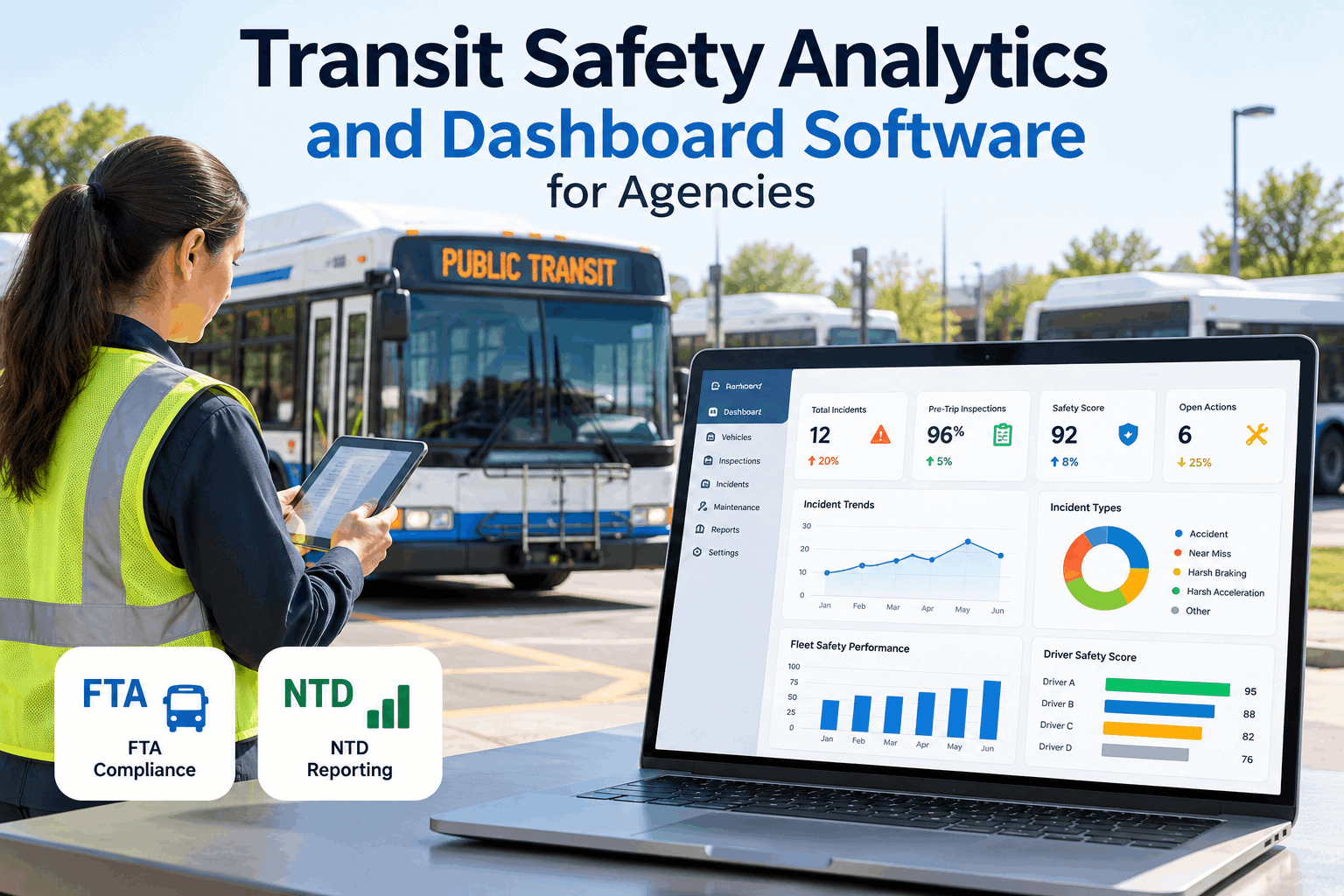
Airport ground transportation contracts and public transit compliance reviews both expect the same thing at audit time: complete, timestamped records of every inspection, PM cycle, defect, and driver credential, produced in minutes rather than assembled from paper the night before an inspector arrives. When engine-hour data, lift logs, and driver clearances live in one connected system, that record is already built before anyone asks for it.
The same structured data also feeds cleanly into NTD reporting for agencies operating shuttle service under public transit funding, since service hours and maintenance completion rates are captured continuously rather than reconstructed once a year.
What Runs Behind an Airport-Ready Maintenance Platform
Want to see this running against your own terminal loops? Book a demo and walk through a real shuttle schedule with your team.
Keep Every Shuttle Ready for the Next Flight Bank
Engine-hour triggers, credential tracking, and audit-ready records in one platform built for continuous terminal duty.
Frequently Asked Questions
Why do airport shuttles need different PM triggers than regular buses
Airport shuttles spend a large share of their operating time idling or moving at low speed, so mileage alone understates real engine wear, which is why engine-hour tracking matters as much as distance.
How often should PM-A checks run on an airport shuttle
Intervals are typically tighter than standard transit schedules and are best triggered by whichever threshold, mileage or engine hours, is reached first during continuous terminal duty.
Do airport shuttles still need daily ADA lift checks
Yes, the same daily deploy-and-stow verification required on any transit vehicle applies to airport shuttles, and high passenger turnover often makes lift wear even more pronounced.
What is airside driver credential tracking
It refers to monitoring the security clearances and qualifications airport authorities require for drivers operating in terminal and airside zones, each with its own renewal schedule.
Can this software support NTD reporting for shuttle service
Yes, when service hours, PM completion, and inspection records are captured continuously, that data structures cleanly into an annual NTD submission without a manual rebuild.
Is this suitable for a small shuttle operation, not just a major airport
Yes, the same dual-trigger PM scheduling, lift logging, and credential tracking scale down cleanly for smaller terminal, parking, or rental car shuttle fleets.