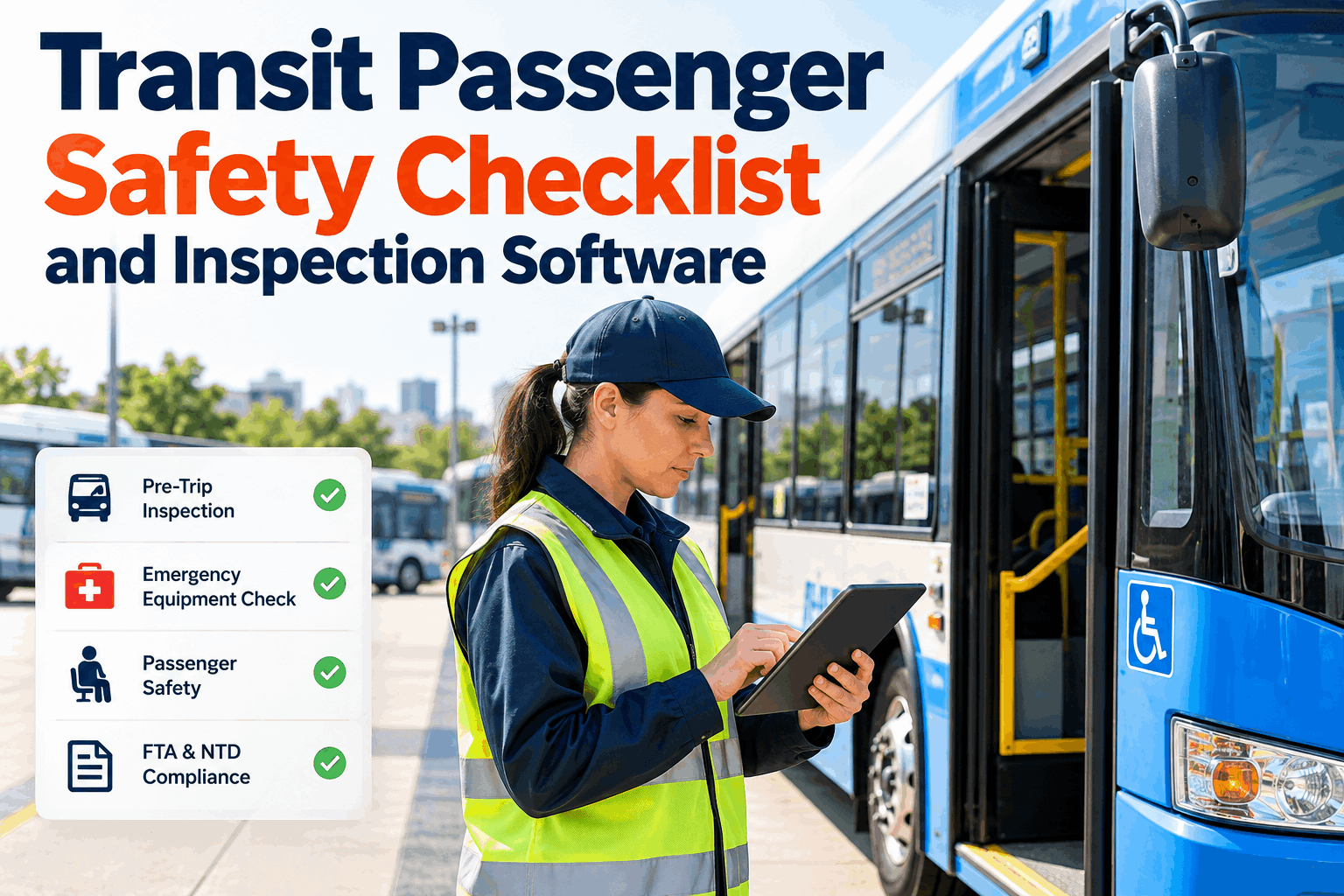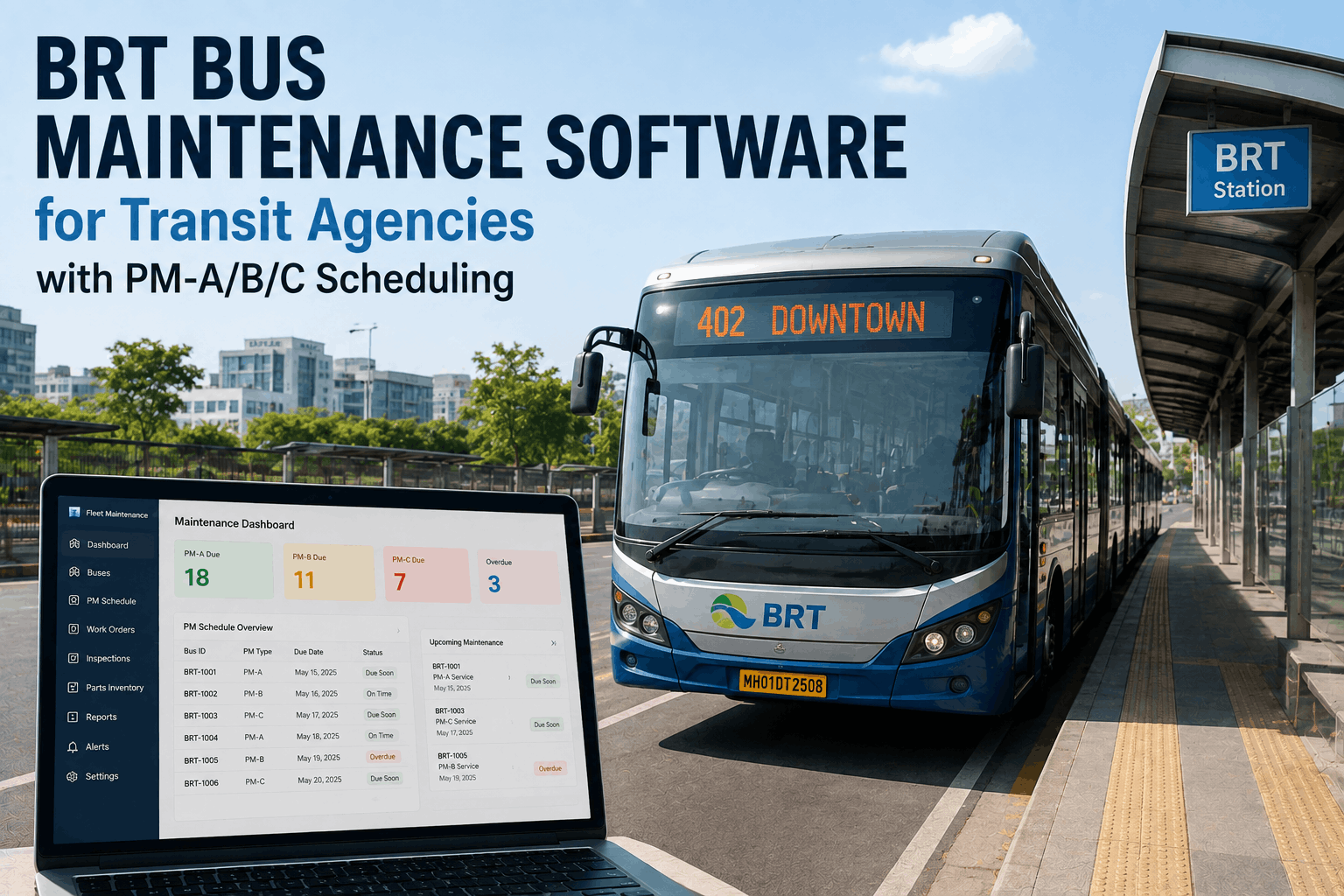
A BRT bus does not get to rest the way a standard fixed-route bus does. Dedicated lanes keep it moving at higher average speeds with fewer traffic delays, which sounds like an easy life until you look at the numbers: more daily miles, more door cycles at high-volume stations, and in many systems an articulated body absorbing constant flex at speeds a standard 40-foot bus never sees. Running that fleet on a generic PM template is how agencies end up surprised by failures that a proper BRT bus maintenance software setup would have flagged weeks earlier.
Dedicated lane, harder duty cycle
It seems counterintuitive at first. A BRT corridor removes traffic delays, so shouldn't the vehicle wear less. In practice the opposite happens, because dedicated lanes mean higher sustained speeds, tighter headways, and far more daily miles per vehicle than a standard route running in mixed traffic. Compare the two side by side and the gap in what actually stresses the vehicle becomes obvious.
None of this shows up on a standard odometer-based PM plan until it is already a failure. Agencies running BRT alongside standard routes usually find the gap the hard way, which is exactly why it is worth choosing to sign up and separate BRT PM templates from the rest of the fleet from day one.
Give BRT vehicles the duty-cycle-aware PM they actually need
PM-A/B/C scheduling built around articulation wear, door cycling, and precision docking, not a generic template.
Where an articulated BRT bus actually wears first
PM-A/B/C, tuned for what actually wears on a BRT unit
Each class still nests inside the one above it, the same as any transit PM program, but the tasks inside each class are chosen for what a BRT vehicle actually stresses rather than copied from a standard bus checklist. Fleets ready to build PM templates around real BRT duty cycles can book a demo and see the template built against their own vehicle specs, or sign up directly to start building it today.
What audit-ready looks like for a BRT fleet
| What auditors ask for | Paper and spreadsheets | FleetRabbit |
|---|---|---|
| PM completion rate by class | Manually tallied before review | Live dashboard, always current |
| Door and kneeling cycle counts | Rarely tracked at all | Logged automatically per vehicle |
| Articulation joint inspection history | Buried in shop paperwork | Tied to the vehicle record, searchable |
| Full service record for a spot-check vehicle | Days to assemble | Minutes to export |
An FTA triennial reviewer who selects a BRT unit for a records check is not going to accept "the kneeling system usually gets checked." They want dates, technician IDs, and completed work orders tied to that specific vehicle. Building that trail after the fact is a scramble. Building it automatically is why most agencies eventually sign up instead of continuing to patch together spreadsheets, and a quick book a demo call is usually enough to see the difference on their own fleet.
Free for up to three vehicles, forever
Try duty-cycle PM-A/B/C scheduling and ADA lift tracking on your own BRT fleet at no cost to start.
Frequently asked questions
Why does a BRT bus need a different PM schedule than a standard fixed-route bus.
BRT vehicles typically run more daily miles, cycle their doors and kneeling systems far more often, and in articulated models absorb constant joint flex at higher sustained speeds. A PM plan built for a standard route under-services all three.
Does this apply to non-articulated BRT vehicles too.
Yes. The door cycling and daily mileage pressure applies to any BRT vehicle running a dedicated corridor with high-frequency stops, whether it is a standard 40-foot bus or an articulated unit.
What is included in the free plan for up to three vehicles.
Full PM-A/B/C scheduling, ADA lift and kneeling system inspection tracking, and compliance reporting are available at no cost for fleets of up to three vehicles, with no time limit.
Can this track precision docking sensor calibration.
Yes. Docking and alignment sensor calibration can be scheduled as part of PM-C service and logged against the vehicle record the same way any other inspection is.
How fast can a BRT fleet get set up.
Most agencies are live within days, since vehicle records and PM templates can be imported in bulk rather than built one unit at a time.