A BRT bus does not wear out the way a regular transit bus does. It stops more often, carries heavier peak loads, and spends its entire service life on schedules built for speed, not for rest. A maintenance program copied straight from a conventional fleet will quietly fall behind on a BRT corridor, and by the time it shows up as a road call, the bus has already been running past its real service limits for weeks.
BRT Duty Cycles Are Not Conventional Duty Cycles
Dedicated lanes and high-frequency schedules let BRT vehicles move more people, faster, but that speed comes from a duty cycle that is dramatically harder on the vehicle than standard fixed-route service. More stops per shift means more brake cycles, more door cycles, and more transmission shifts, all compounding faster than a conventional PM schedule was ever designed to track.
This is why generic fleet software rarely holds up on a BRT corridor. A dedicated BRT bus preventive maintenance software platform needs intervals that reflect this duty cycle, not a template built for a bus that only makes sixty stops a day.
The Components That Fail First on a BRT Fleet
Agencies running standard PM intervals on a BRT fleet consistently report the same failure points, usually months earlier than a conventional bus would show the same wear.
Door Motors and Solenoids
Multiple wide doors cycling at every stop puts far more strain on door hardware than a conventional single-door route ever produces.
Brake Chambers
Frequent stop-and-go braking under heavy passenger loads runs brakes hotter and wears components faster than standard intervals assume.
Transmission Seals
Constant shifting across a high-stop-count route accelerates seal and clutch wear well ahead of typical replacement schedules.
Kneeling and Suspension
Level-boarding cycles at every station add mechanical stress that rarely appears on a standard curb-to-curb route.
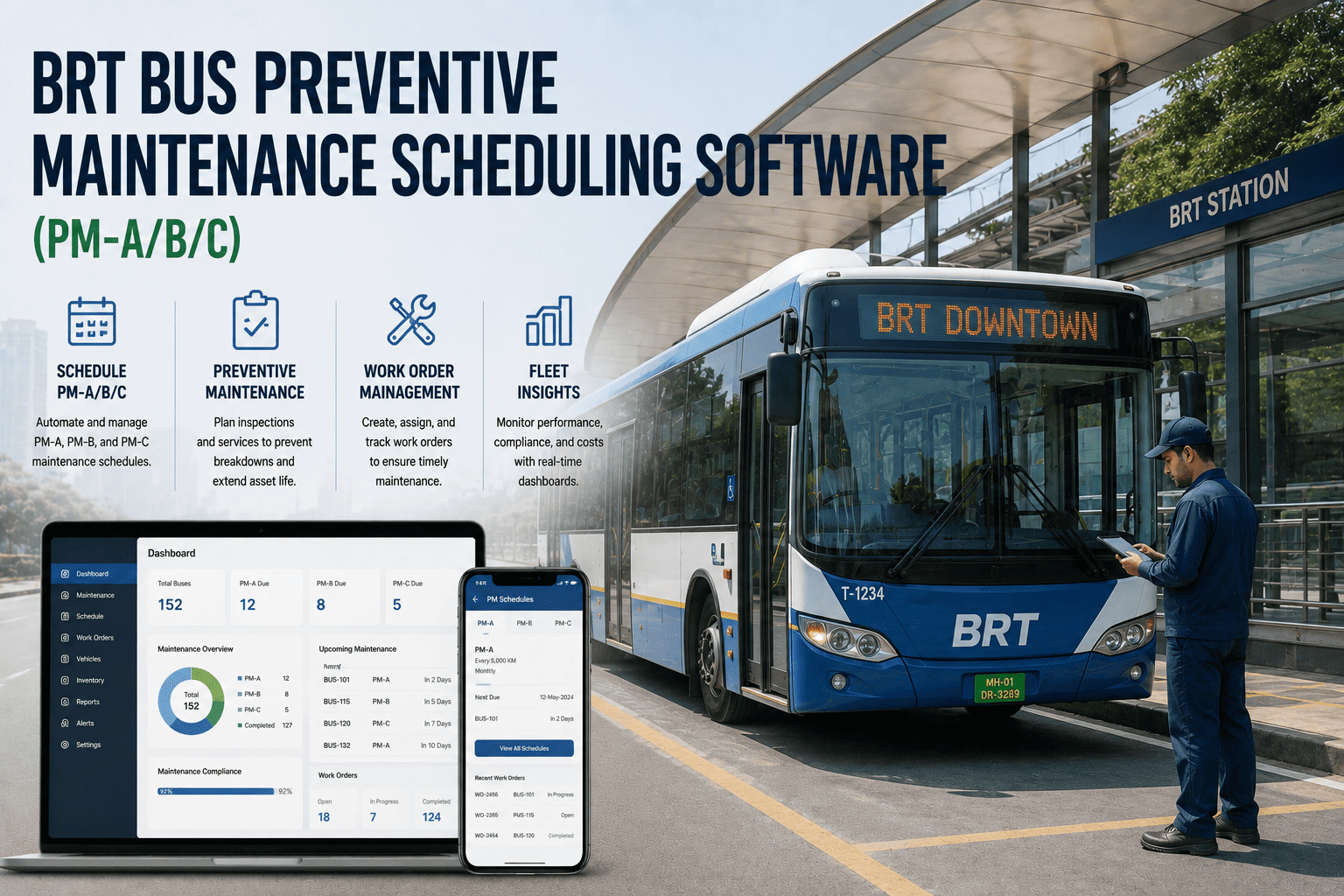
Rebuilding PM-A/B/C Around Real BRT Wear
The fix is not more maintenance for its own sake, it is shorter, better-targeted intervals matched to how a BRT bus actually wears. Agencies that shift from standard transit intervals to BRT-specific ones typically shorten the cycle on brake and door systems while keeping structural checks on a slightly extended schedule, since fatigue on those points shows up differently than on high-cycle components.
Shortened interval focused on brakes, doors, and fluid checks, run more frequently than a conventional A-check cycle.
Mid-cycle inspection adding transmission, suspension, and kneeling system checks tuned to high-stop-count wear.
Extended system-wide inspection covering structural and drivetrain points before fatigue becomes a state-of-good-repair issue.
Agencies still running a copied conventional PM template on their BRT fleet can book a demo to see intervals rebuilt around real duty-cycle data instead of a generic mileage table.
Give Your BRT Fleet Intervals That Match Its Duty Cycle
FleetRabbit builds PM-A/B/C schedules around how your BRT buses actually wear, not a template copied from conventional fixed-route service.
ADA Lift and Level-Boarding Checks on a Multi-Door Fleet
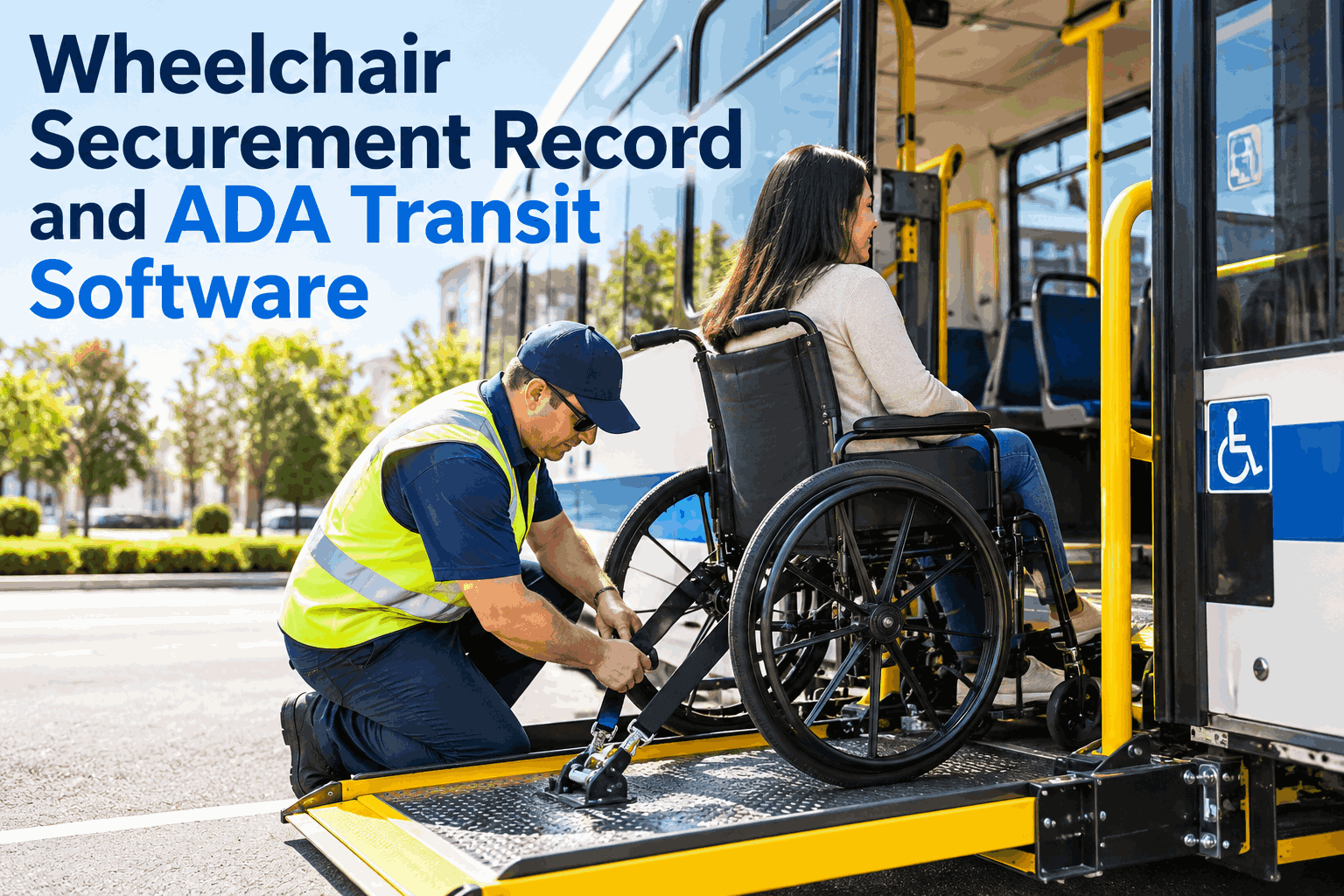
BRT vehicles often rely on level boarding at raised platforms rather than a single deployable lift, but the accessibility inspection burden does not disappear, it shifts. Kneeling systems, ramps, and multiple door mechanisms all need the same daily functional verification a traditional lift would require, and missing that documentation is just as likely to surface during an FTA compliance review as a skipped lift check on a conventional bus.
Agencies want this logged the same way lift cycles are logged elsewhere in the fleet, with a timestamp and technician ID attached automatically rather than reconstructed from memory. Teams ready to standardize this across every door and kneeling system can sign up and bring every accessibility check into one searchable record.
Why BRT Wear Hits Your State of Good Repair Score Harder
FTA's State of Good Repair framework scores vehicle condition against expected lifecycle, and a BRT bus running on conventional intervals tends to fall below its expected condition rating years before a standard bus would. A vehicle with a heavier duty cycle but the same documented maintenance program as a conventional bus will show a widening service gap that auditors are trained to notice, and that gap directly affects capital replacement funding requests.
The same maintenance and inspection data that protects your SGR score also structures cleanly for annual NTD submissions, since completion rates, defect resolution, and inspection history are already timestamped rather than reconstructed once a year.
Typical BRT bus service life without duty-cycle-matched maintenance, versus 12–15 for conventional fleets
Minimum PM completion rate generally expected during an FTA triennial review
Achievable service life on BRT-specific intervals with proactive component replacement
What a BRT-Ready Maintenance Platform Handles
Duty-Cycle-Matched PM-A/B/C
Intervals shortened or extended based on real stop counts, mileage, and brake cycles per route.
Door and Kneeling System Logs
Daily functional checks across every door and kneeling mechanism, tied to technician ID automatically.
Predictive Component Alerts
Early flags on brake chambers, door motors, and transmission seals before they become road calls.
State of Good Repair Tracking
Condition scoring aligned to duty cycle, not a generic mileage assumption from conventional fleets.
One-Click NTD Export
Maintenance and inspection history structured for annual reporting without a manual rebuild.
See how these intervals would look against your own corridor data. Book a demo and walk through a real BRT route with your team.
Stop Running BRT Buses on Conventional Intervals
Shorten the cycle where wear is real, extend it where it is not, and keep every record ready for your next FTA review.
Frequently Asked Questions
Why do BRT buses need different PM intervals than conventional buses
BRT vehicles accumulate far more mileage and stop-and-go cycles per year, which wears brakes, doors, and transmissions faster than the intervals built for conventional fixed-route service.
Which components fail first on a BRT fleet
Door motors and solenoids, brake chambers, and transmission seals are the most commonly reported early failure points on high-frequency BRT duty cycles.
How much shorter should BRT PM-A checks be
Many agencies find brake and door-related checks need to run on a notably tighter cycle than standard A-checks, while structural PM-C items can often stay closer to conventional timing.
Do BRT buses without a traditional lift still need accessibility inspections
Yes, kneeling systems, ramps, and multi-door mechanisms used for level boarding still require the same daily functional verification a wheelchair lift would need on a conventional bus.
How does BRT maintenance affect State of Good Repair scoring
A BRT bus maintained on conventional intervals tends to show condition decline earlier than its documented service life suggests, which can widen the gap auditors flag during an FTA review.
Can this scale for a smaller BRT corridor, not just a citywide system
Yes, the same duty-cycle-matched scheduling and inspection logging apply just as cleanly to a single BRT corridor as they do to a full multi-line system.
Have a question specific to your corridor or fleet mix? Sign up and get answers built around your actual routes.