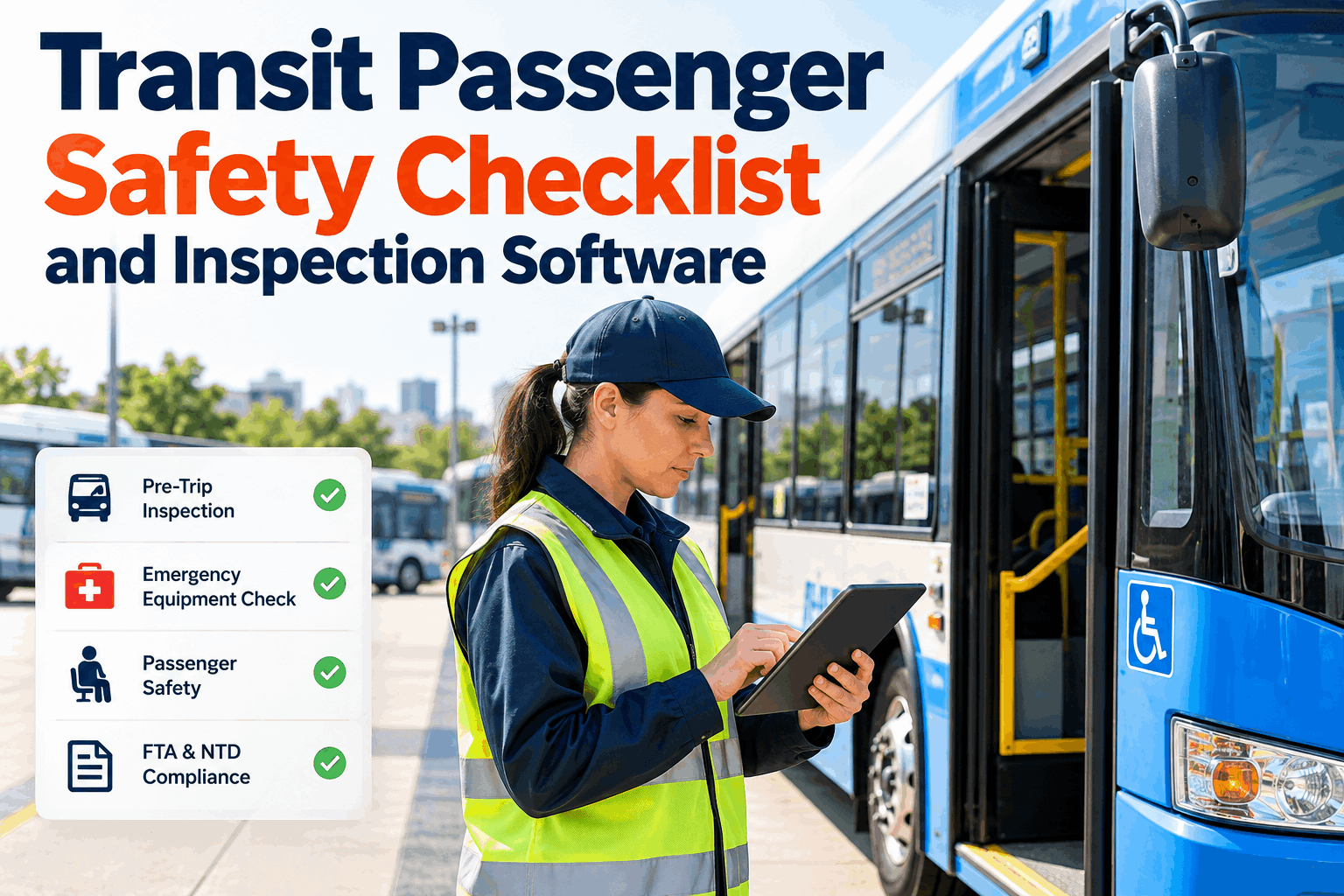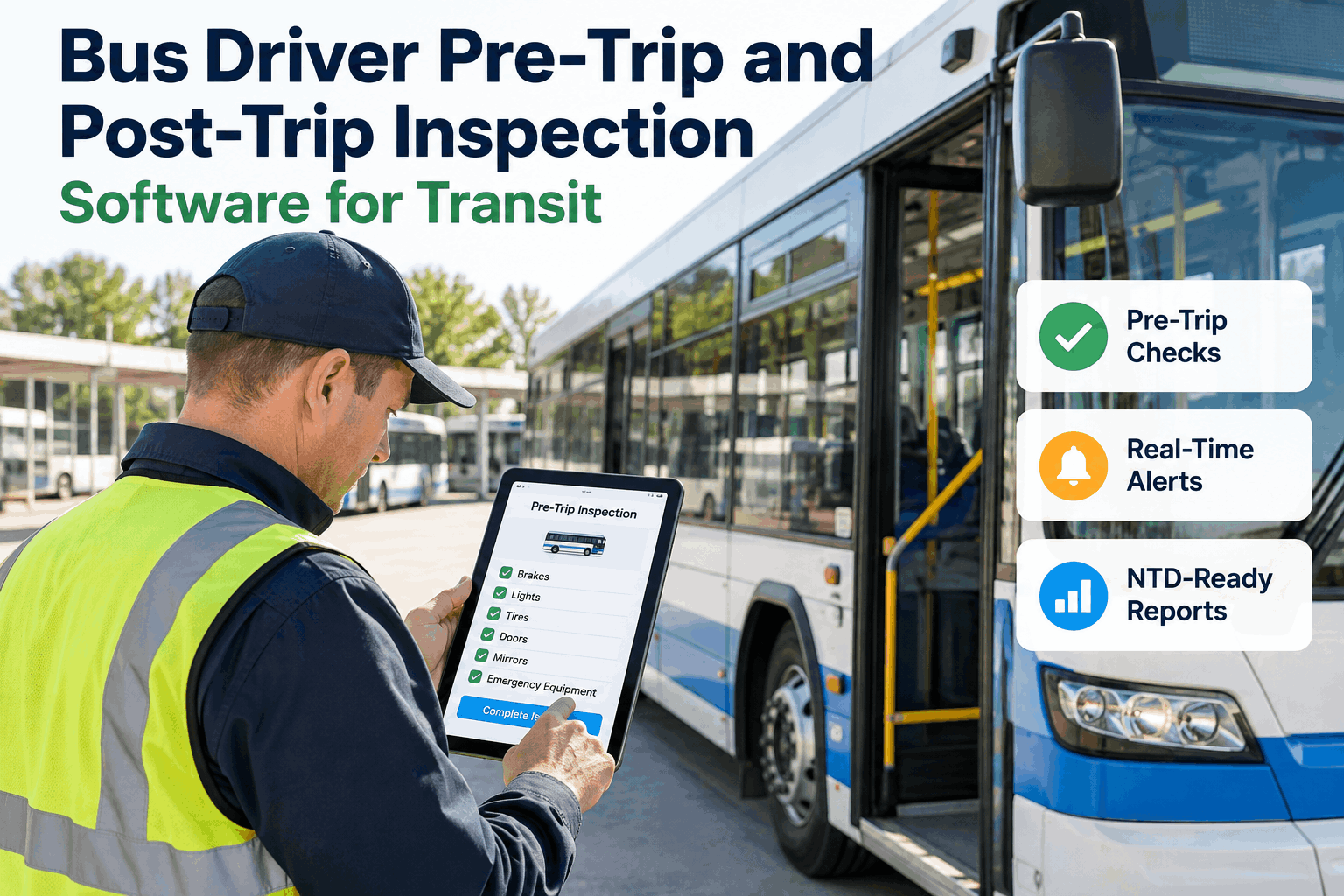
Ten minutes before pull-out is the most valuable time in a transit day. A driver walks around the bus, spots a slow wheelchair lift or a weeping hose and either the problem reaches the shop in time or the bus rolls out with it. Paper forms and radio calls make that handoff slow and easy to lose. A digital pre-trip and post-trip inspection turns every check into a timestamped record the whole agency can see. See how FleetRabbit puts inspections, alerts and repairs in one place and get every bus out on time and safe.
Bus Driver Pre-Trip and Post-Trip Inspection Software for Transit
Catch defects before pull-out, get them to the shop instantly and keep audit-ready records for every bus, every shift. Here is how the process works and what to look for in software.
Ten Minutes That Decide Your Pull-Out
Here is how a morning looks when a defect is caught before the bus leaves the yard.
Sample morning for illustration.
Pre-Trip, Post-Trip and DVIR: Who Does What
These three terms are often used as one. They cover different moments and leave different records.
Pre-trip inspection
WhenBefore the bus moves
PurposeConfirm the bus is safe to operate now
RecordDriver reviews the previous report and certifies the check
Post-trip inspection
WhenEnd of the driver's shift
PurposeFind what changed during service
RecordDefects noted while the bus is fresh in the driver's mind
DVIR
WhenCompleted at the end of the day's work
PurposeReport defects that affect safe operation
RecordSigned report, repair certification and next-driver review
Walk the Bus in Six Stops
A fixed walkaround route means nothing gets skipped, even on a dark, cold morning.
Numbers show one suggested walk order. Match your checklist to the items your agency and state require.
When a Defect Turns Up, Then What
Get Every Bus Checked, Recorded and Ready Before Pull-Out
Digital inspections, defect alerts, work orders and vehicle history in one system. Free for your first three vehicles.
A Defect's Journey: Paper vs Digital
The same defect can take very different routes to the shop.
What to Look for in Inspection Software
Good software does more than replace the clipboard. Start free and see how these fit your yard.
Four Numbers Worth Watching
Frequently Asked Questions
It is a walkaround and cab check done before the bus moves, to confirm it is safe to operate. It covers brakes, steering, tires, lights, doors, emergency equipment and, on transit buses, the wheelchair lift or ramp.
The pre-trip is the check before driving. The DVIR is the written report of defects at the end of the day's work, which the mechanic certifies as repaired and the next driver reviews.
Yes. A federal rule effective March 23, 2026 explicitly allows electronic driver vehicle inspection reports. Check your state and agency policy for any added requirements.
The federal DVIR rule calls for three months of retention. Many agencies keep them longer for audits, warranty and repair history.
Catching a defect in the yard gives the shop time to fix it or dispatch a spare. Catching it on the road creates a road call and delayed trips.
Yes. You can start free with three vehicles and add more as your fleet grows.
Make Every Pull-Out Safe, On Time and Documented
Digital inspections, alerts, work orders, PM and downtime for your whole transit fleet in one system. Free for your first three vehicles.