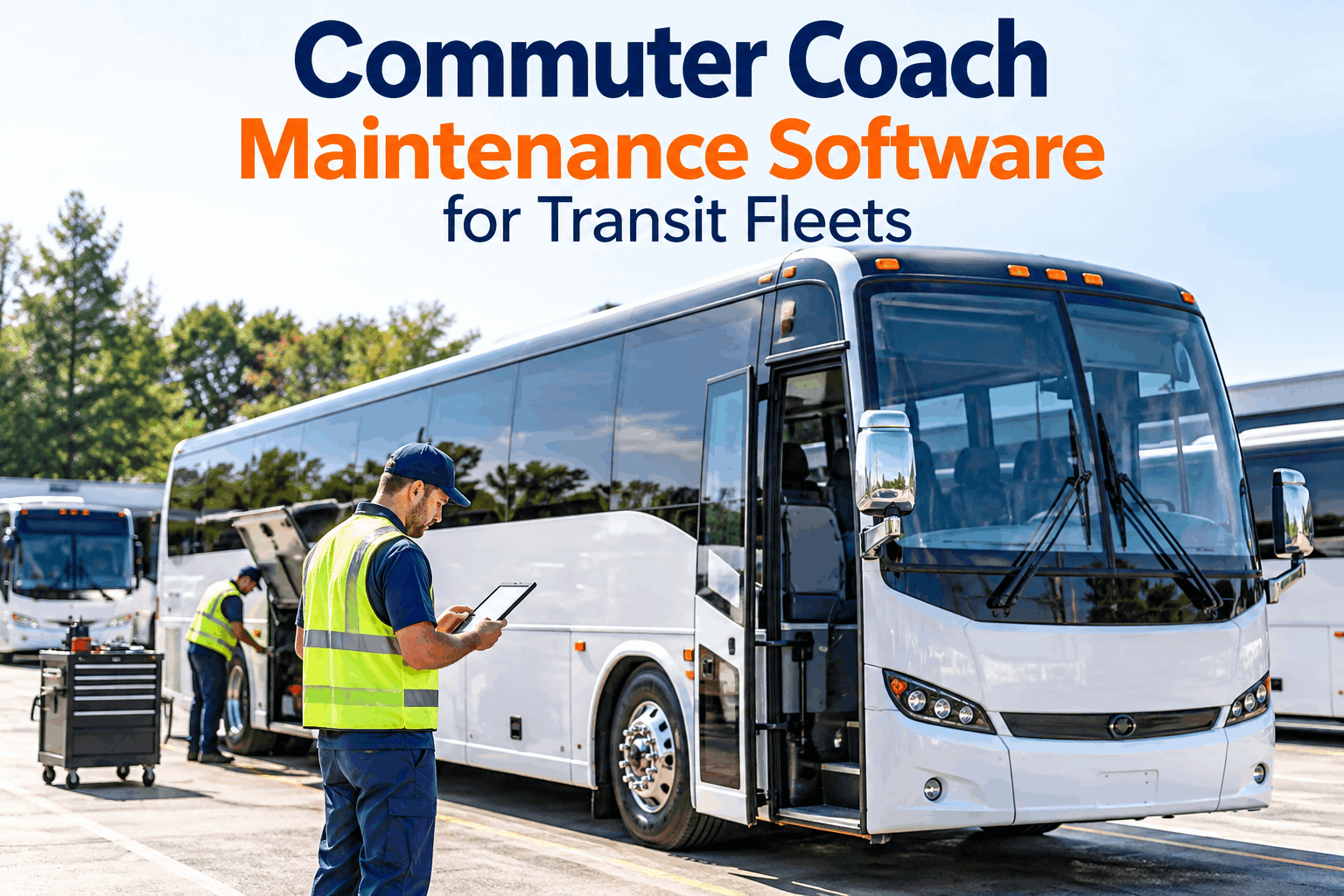
A commuter coach doesn't behave like a local transit bus, and it doesn't get inspected like one either. It runs longer routes at highway speed, carries a luggage bay and sometimes a restroom, and — because it usually qualifies as a commercial motor vehicle — it answers to FMCSA's truck-style inspection and hours-of-service rules on top of the FTA and ADA rules every transit vehicle already follows. FleetRabbit is built to run both rulebooks from one dashboard instead of two separate systems. Book a free demo to see it against your own coach fleet, or sign up and start a trial today.
Transit obligations
Accessible boarding under 49 CFR Part 37, complementary paratransit coordination, NTD reporting on every revenue mile and hour.
Coach
Motor carrier obligations
Annual periodic inspection under 49 CFR 396.17, daily DVIRs under 396.11/396.13, and driver hours-of-service limits under Part 395.
What Actually Makes a Commuter Coach Different
The National Transit Database gives commuter coach service its own definition, and that definition is exactly why the maintenance picture changes.
That combination means a commuter coach can rack up highway mileage far faster than a local fixed-route bus covering the same number of service hours — which changes when PM tiers trigger and how quickly tires, brakes, and drivetrain components wear.
The Daily DVIR Loop a Commuter Coach Never Skips
Because most commuter coaches operate as commercial motor vehicles, the driver inspection cycle required under 49 CFR 396.11 and 396.13 runs every single day, on top of any transit-side pre-trip check.
Pre-trip inspection
Driver reviews the prior day's DVIR and confirms any listed defect was repaired and certified.
Coach in service
Route operates; any defect noticed mid-route gets logged as it happens.
Post-trip DVIR
Driver files a written report at the end of the day covering every defect found.
Repair & certify
Mechanic corrects the defect and signs off before the coach is eligible for tomorrow's pre-trip.
Hours of Service Meets the Maintenance Window
Commuter coach drivers engaged in interstate service are generally subject to FMCSA's hours-of-service limits under 49 CFR Part 395 — a constraint local transit operators rarely have to plan around, but one that directly shapes when a coach is actually free for maintenance.
A driver's 14-hour on-duty window includes at most 11 hours of driving and a required 30-minute break after 8 cumulative hours behind the wheel — FleetRabbit lines up PM scheduling against the gaps this creates instead of pulling a coach off a route mid-window.
PM-A, PM-B, PM-C — Scaled for Highway Mileage
Safety inspection
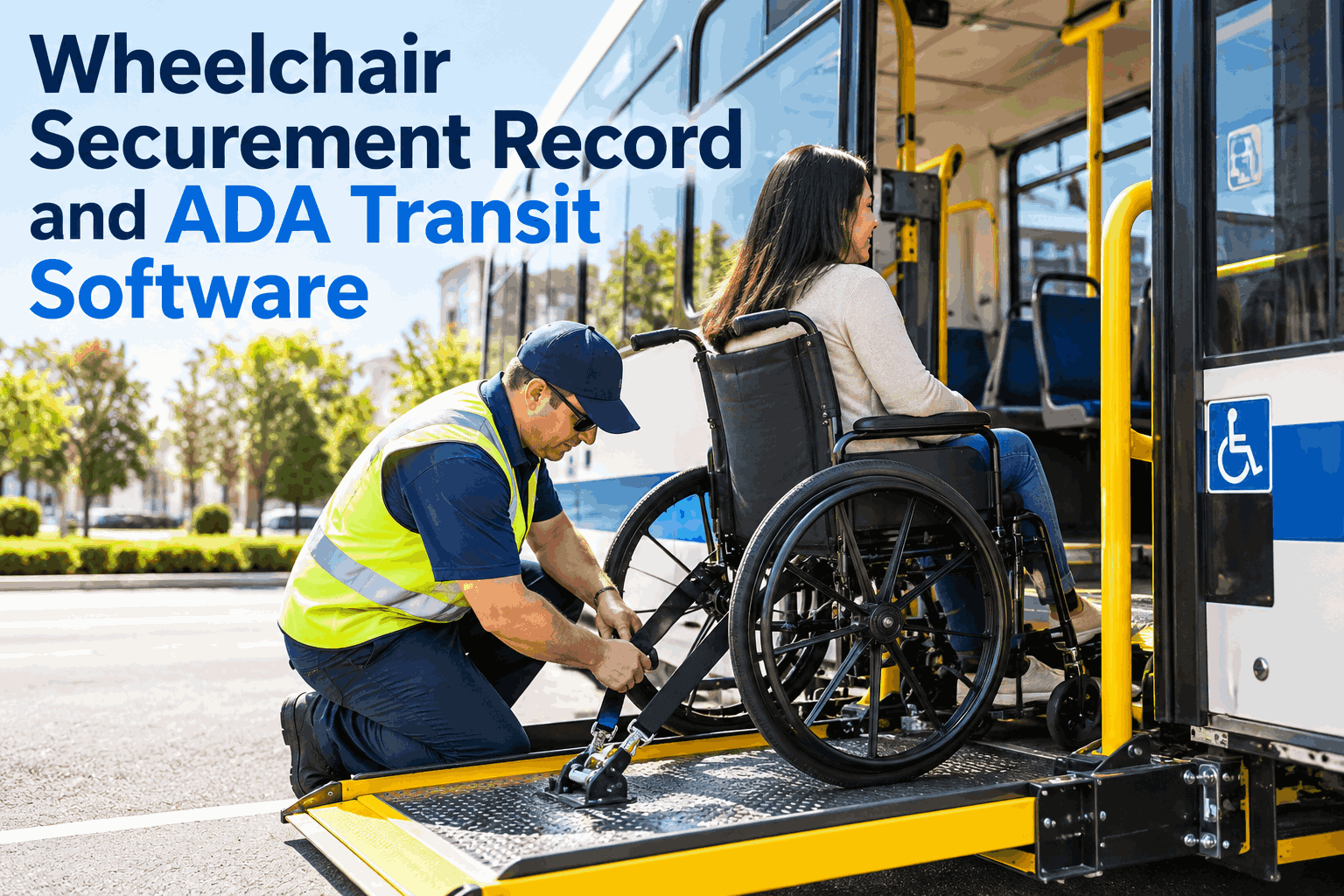
Fluids, brakes, tires, lighting, and a functional check of the ADA boarding equipment.
Intermediate service
PM-A scope plus suspension, steering, and drivetrain components under closer highway-mileage wear.
Major service
Full teardown-level inspection aligned with the FMCSA annual periodic inspection under 49 CFR 396.17.
Mileage thresholds for each tier are set by the operator's own maintenance plan — FleetRabbit schedules against whatever bands are configured.
Compliance Framework at a Glance
| Rule | What It Requires | Evidence Needed | FleetRabbit Capability |
|---|---|---|---|
| 49 CFR 396.17 | Annual periodic mechanical inspection | Dated inspection report per vehicle | Scheduled inspection tracking with due-date alerts |
| 49 CFR 396.11 / 396.13 | Daily pre-trip and post-trip DVIRs | Signed driver reports, defect sign-off chain | Digital DVIR with forced defect certification |
| 49 CFR Part 395 | Driver hours-of-service limits | Hours-of-service records | Duty-window-aware maintenance scheduling |
| 49 CFR Part 37, Subpart H | Accessible boarding equipment on OTRBs | Lift/ramp maintenance and use records | Forced accessibility equipment checks |
| NTD Commuter Bus (CB) | Revenue mile, hour, and asset reporting | Reconciled service and maintenance data | NTD-ready export by mode |
Luggage Bays, Restrooms, and the Extras a Highway Coach Carries
A commuter coach carries equipment a local bus simply doesn't have, and each piece needs its own line on the inspection sheet rather than a silent assumption that it's fine.
Undercarriage luggage bay doors
Latches, seals, and lighting checked so bays stay secure and dry at highway speed.
Seatbelts at every position
Webbing, buckles, and anchor points inspected for wear on a motorcoach's required restraint systems.
Onboard restroom (where equipped)
Sanitation and holding-tank servicing tracked on its own cadence, separate from the mechanical PM tiers.
Emergency exits and roof hatches
Release mechanisms cycle-tested so they open under load, not just visually inspected.
Where Commuter Coach Service Fits in the National Transit Database
NTD reports commuter coach service under its own mode code — Commuter Bus (CB) — defined as fixed-route service connecting outlying areas to a central city, typically using over-the-road buses, with predominantly one-directional peak service, limited stops, and routes of extended length.
That distinct mode code means a commuter coach's revenue miles, revenue hours, and asset records need to be tracked and exported separately from a regular fixed-route (MB) bus — not folded into the same bucket by habit.
Frequently Asked Questions
Does a commuter coach need the FMCSA annual inspection even if it's transit-agency owned?
If it operates as a commercial motor vehicle in interstate commerce, the 49 CFR 396.17 periodic inspection requirement generally applies regardless of who owns it.
Are commuter coach drivers subject to hours-of-service rules?
Drivers engaged in interstate commuter coach service are generally covered by Part 395; exemptions can vary, so agencies should confirm their own drivers' status.
Do commuter coaches still need ADA accessibility equipment?
Yes. Over-the-road buses used in fixed-route service are covered by 49 CFR Part 37, Subpart H, which requires accessible boarding equipment and ongoing lift or ramp maintenance.
How is PM scheduling different from a local transit bus?
The tiers are the same PM-A/B/C structure, but highway mileage accumulates faster, so thresholds are typically reached sooner in calendar time.
Can FleetRabbit separate commuter coach data from regular bus data for NTD?
Yes. Vehicles and trips can be tagged by mode so Commuter Bus (CB) service reports separately from Motor Bus (MB) service.
How fast can a commuter coach operator get this running?
FleetRabbit needs no proprietary hardware and typically deploys across a fleet within about two weeks.
Run Both Rulebooks From One Dashboard
FTA compliance, FMCSA inspections, and driver hours-of-service — all tracked against the same commuter coach record.