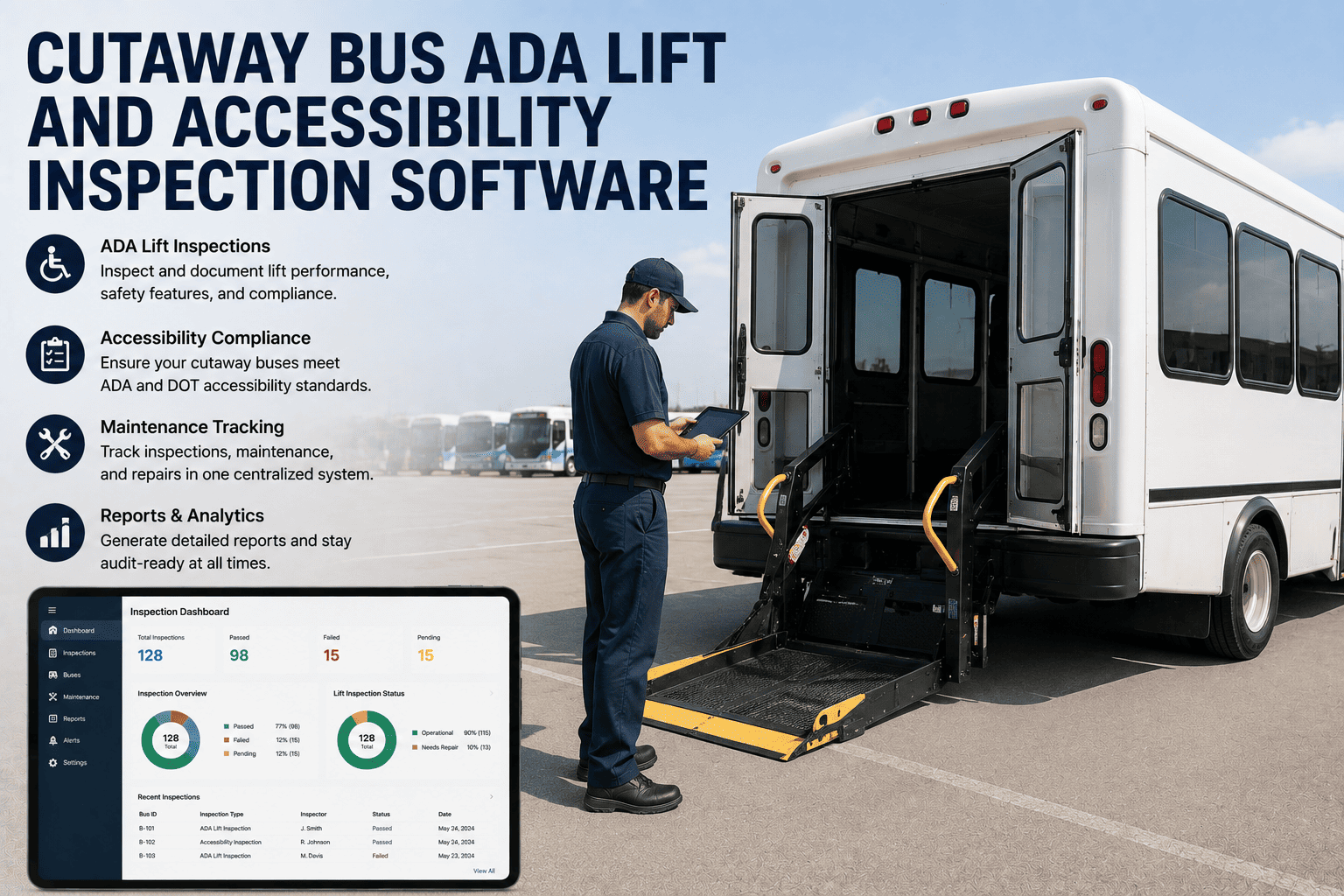
Cutaway buses carry some of the most vulnerable riders in a transit system, and they do it on a chassis that was never originally built as a bus. That combination is exactly why ADA lift and accessibility inspection has to be treated as its own discipline rather than a line item inside a general PM checklist. FleetRabbit gives agencies and paratransit operators a way to run that inspection discipline automatically, keep every check documented, and walk into an FTA compliance review without digging through file cabinets. Fleets ready to see it firsthand can sign up and load their own roster in minutes.
Because a cutaway bus is built on a light-duty chassis with a separate body bolted on, its ADA equipment needs a layered inspection cadence rather than a single annual check. Daily, weekly, monthly, and annual reviews each catch a different failure pattern.
Pre-trip functional cycle
Driver runs the lift or ramp through a full deploy and stow, checks handrails, and confirms the interlock stops the vehicle from moving with the lift deployed.
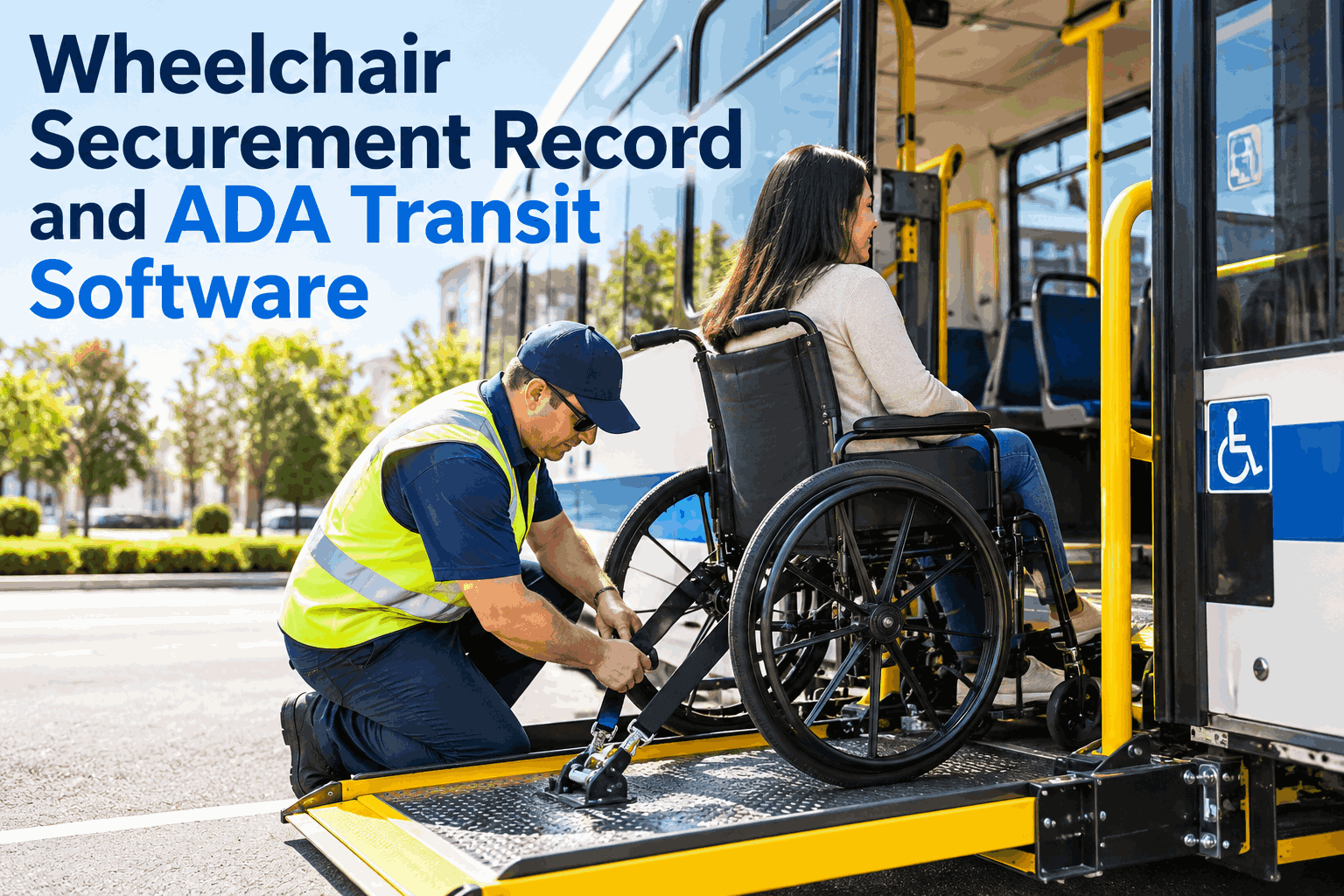
Tie-down and securement check
Wheelchair tie-down straps, floor anchors, and retractor mechanisms are tested for tension and smooth locking under load.
Hydraulic and electrical review
Lift hydraulic pressure, wiring harnesses, and platform sensors are checked for early signs of leaks, corrosion, or intermittent faults.
Full ADA equipment certification
A complete structural and functional certification of the lift, ramp, kneeling system, and securement points against 49 CFR Part 38 standards.
Running four separate cadences by hand across a mixed cutaway fleet is where most agencies lose track of a check. FleetRabbit assigns each cadence to every vehicle automatically and surfaces a work order the moment one comes due, so nothing slips between a driver's daily glance and a technician's annual sign-off.
A cutaway body is mounted onto a van chassis rather than built as one continuous structure, which creates stress points that a standard bus inspection checklist was never designed around.
Body-to-chassis mounting points
Repeated flexing between the cutaway chassis and the bolted-on body can loosen mounts over time, which throws off door and lift alignment.
Lift track and platform alignment
Frame flex shifts the lift track just enough to cause binding or uneven platform travel if it goes unchecked between inspections.
Wheelchair securement anchors
Floor anchors mounted through a lighter-gauge cutaway floor see more fatigue than anchors in a purpose-built transit bus floor.
Step-well and threshold wear
The transition point between chassis and body at the entry step is a common spot for water intrusion and structural wear.
Agencies that inspect cutaway buses using a generic transit checklist often miss these four points entirely. Operators who want a checklist built specifically around cutaway construction can book a demo and see how FleetRabbit structures it.
Put ADA lift inspection on autopilot
Daily, weekly, monthly, and annual cutaway bus checks, all tracked and time-stamped automatically.
ADA accessibility compliance for transit vehicles rests on two federal building blocks, and understanding both is what keeps an inspection program audit ready rather than reactive.
49 CFR Part 37
Establishes the transportation service obligations, including maintaining accessibility features in operative condition and responding promptly when equipment fails.
49 CFR Part 38
Sets the vehicle design and equipment standards for lifts, ramps, securement systems, and boarding areas that inspections are measured against.
FTA reporting expectations
Agencies receiving federal funds are expected to maintain documented proof of equipment condition and repair history, which feeds directly into NTD submissions.
Meeting the letter of Part 37 and Part 38 is far easier when every check already lives in one system instead of being reconstructed for an audit. Agencies preparing for a compliance review can sign up and start building that record today.
The cost of skipping a layered inspection cadence rarely shows up as a maintenance bill. It shows up as a bus pulled from service mid-route.
Reactive lift failure
Vehicle pulled from route, rider stranded, replacement dispatch, and multi-day repair wait for parts
Proactive daily check
A few minutes at pull-out catches the same fault before it strands a rider or triggers a road call
The gap between those two outcomes is almost always a documentation gap, not an effort gap. Drivers are already checking the lift, the missing piece is a system that captures it consistently and turns it into usable data.
ADA equipment condition and accessibility service data feed directly into the National Transit Database, and cutaway fleets are frequently the hardest to report on because records are split across drivers, technicians, and paper logs.
| Record type | NTD relevance |
|---|---|
| Daily lift functional checks | Accessibility equipment operability data |
| Securement anchor inspections | Vehicle safety and equipment condition |
| Lift repair and downtime logs | Service reliability and asset performance |
| Annual ADA certification | Compliance documentation for federal review |
FleetRabbit keeps each of these categories structured from the moment the check happens, so the annual NTD pull is an export rather than a reconstruction project.
| Task | Manual process | FleetRabbit |
|---|---|---|
| Daily lift functional check | Paper form, easy to skip or lose | Digital check-in with timestamp and driver ID |
| Structural stress-point review | Not separated from general PM | Cutaway-specific inspection items built in |
| ADA regulation alignment | Tracked informally by senior staff | Checklist mapped to Part 37 and Part 38 |
| NTD data preparation | Compiled once a year under deadline pressure | Continuously structured and export-ready |
Teams that want to see this comparison run against their own fleet numbers can book a demo and walk through it live.
Give every cutaway bus a documented ADA record
From daily checks to annual certification, keep the full accessibility inspection trail in one place.
Frequently asked questions
Why do cutaway buses need a different ADA inspection approach
Because the body is mounted onto a separate van chassis, cutaway buses develop stress points at the body-to-chassis mounts, lift track, and step-well that a standard transit bus checklist does not account for.
What is the difference between 49 CFR Part 37 and Part 38
Part 37 covers the service obligations, including keeping accessibility features working and responding promptly to failures, while Part 38 sets the technical design standards for lifts, ramps, and securement systems.
How often should the wheelchair lift be checked
A functional cycle check should happen daily before pull-out, with securement anchor checks weekly, hydraulic and electrical review monthly, and a full certification annually.
How does this connect to NTD reporting
Accessibility equipment condition and repair history are core inputs to the National Transit Database, so keeping daily and periodic checks structured makes the annual submission far more accurate and far less time consuming.
Is this suited for smaller paratransit fleets, not just large agencies
Yes. Cutaway buses are common in paratransit and smaller agency fleets, and the layered inspection cadence scales the same way whether a fleet has five vehicles or five hundred.