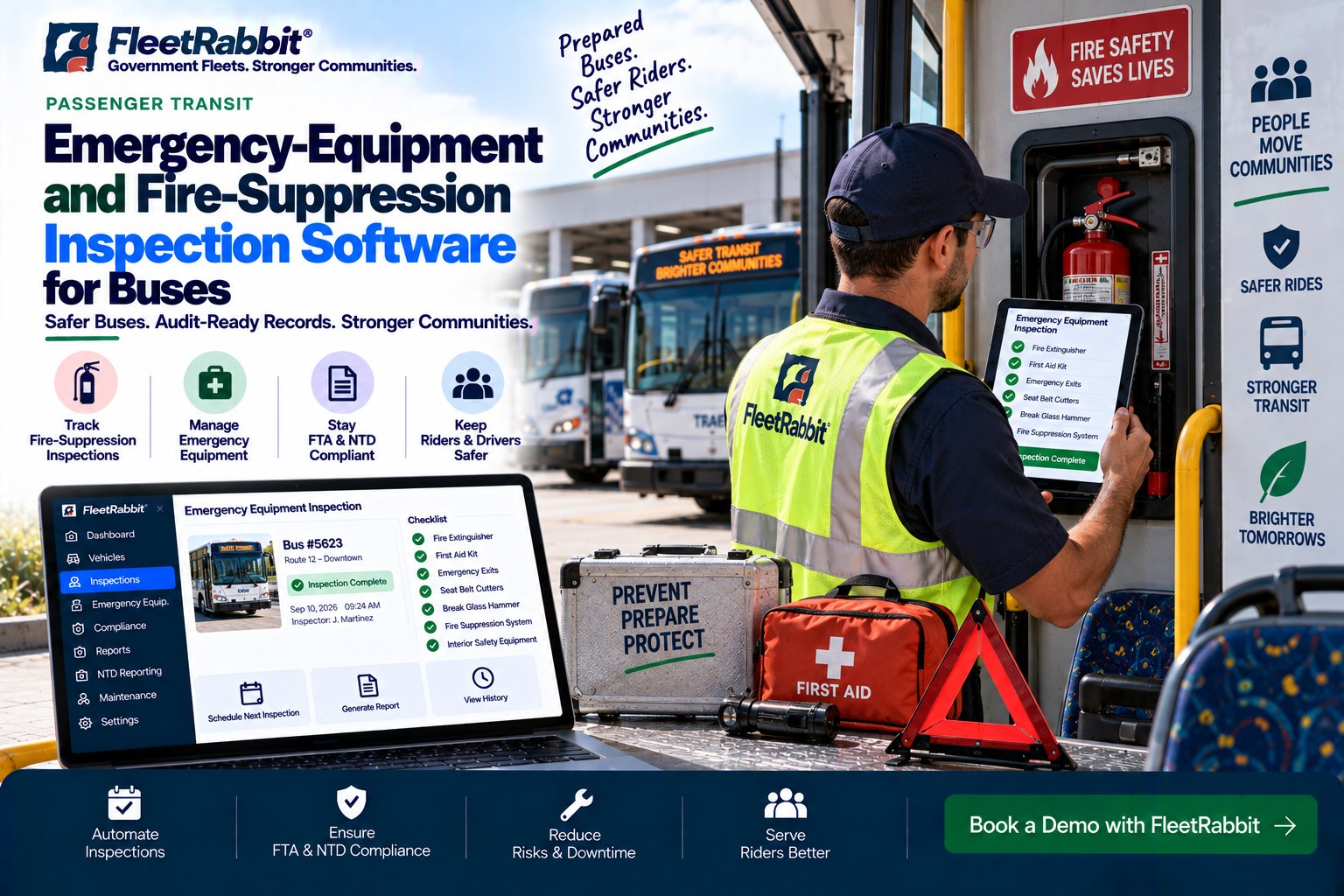
Public transportation authorities, regional transit agencies, and contracted paratransit operators operate under stringent life-safety oversight enforced by the Federal Transit Administration (FTA) and state oversight agencies: satisfying 49 CFR Part 673 Public Transportation Agency Safety Plan (PTASP) safety assurance standards, adhering to DOT 49 CFR § 393.95 emergency equipment mandates, proving functional readiness of automatic fire suppression systems (AFSS) and methane gas detection sensors on CNG and clean-diesel coaches under NFPA 130 and NFPA 52, inspecting ADA emergency door releases and wheelchair lift interlocks under 49 CFR Part 38, and logging non-compliance occurrences for annual National Transit Database (NTD) safety reporting. When safety equipment checks, extinguisher pressure tag logs, emergency window release audits, and fire suppression cylinder hydrostatic dates are tracked on paper clipboards, shop binders, or disconnected maintenance spreadsheets, transit authorities face catastrophic passenger safety risks, failed state safety oversight audits, frozen federal formula funding, and severe civil liability following vehicle thermal events. FleetRabbit provides purpose-built emergency-equipment and fire-suppression inspection software designed specifically for passenger transit operations. By binding mobile driver pre-trip checks, photo-verified extinguisher audits, automated suppressant cylinder hydrostatic test countdowns, instant dispatch pull-out lockouts, and 1-click NTD and FTA Triennial Review dossiers into a unified digital ecosystem, FleetRabbit guarantees rolling stock remains compliant, safe, and audit-ready. Eliminate uninspected vehicle pull-outs, automate shop work orders for discharged safety systems, and log safety walkarounds completely offline inside subterranean rail-bus terminals and reinforced concrete bus barns with zero cellular reception. Book a demo to see FleetRabbit emergency equipment inspection software in action.
Emergency-Equipment and Fire-Suppression Inspection Software for Buses
Eliminate paper fire safety binders. Automate daily driver pre-trip walkarounds for fire extinguishers, first-aid kits, emergency egress windows, and automatic engine-bay fire suppression systems with instant dispatch safety lockouts and 1-click FTA audit dossiers.
The 4-Stage Closed-Loop Life-Safety Verification Matrix
FleetRabbit connects operator pre-trip walkarounds, mechanic repair authorizations, and federal audit archives into an automated safety-assurance loop.
Driver Mobile Egress & Gear Walkaround
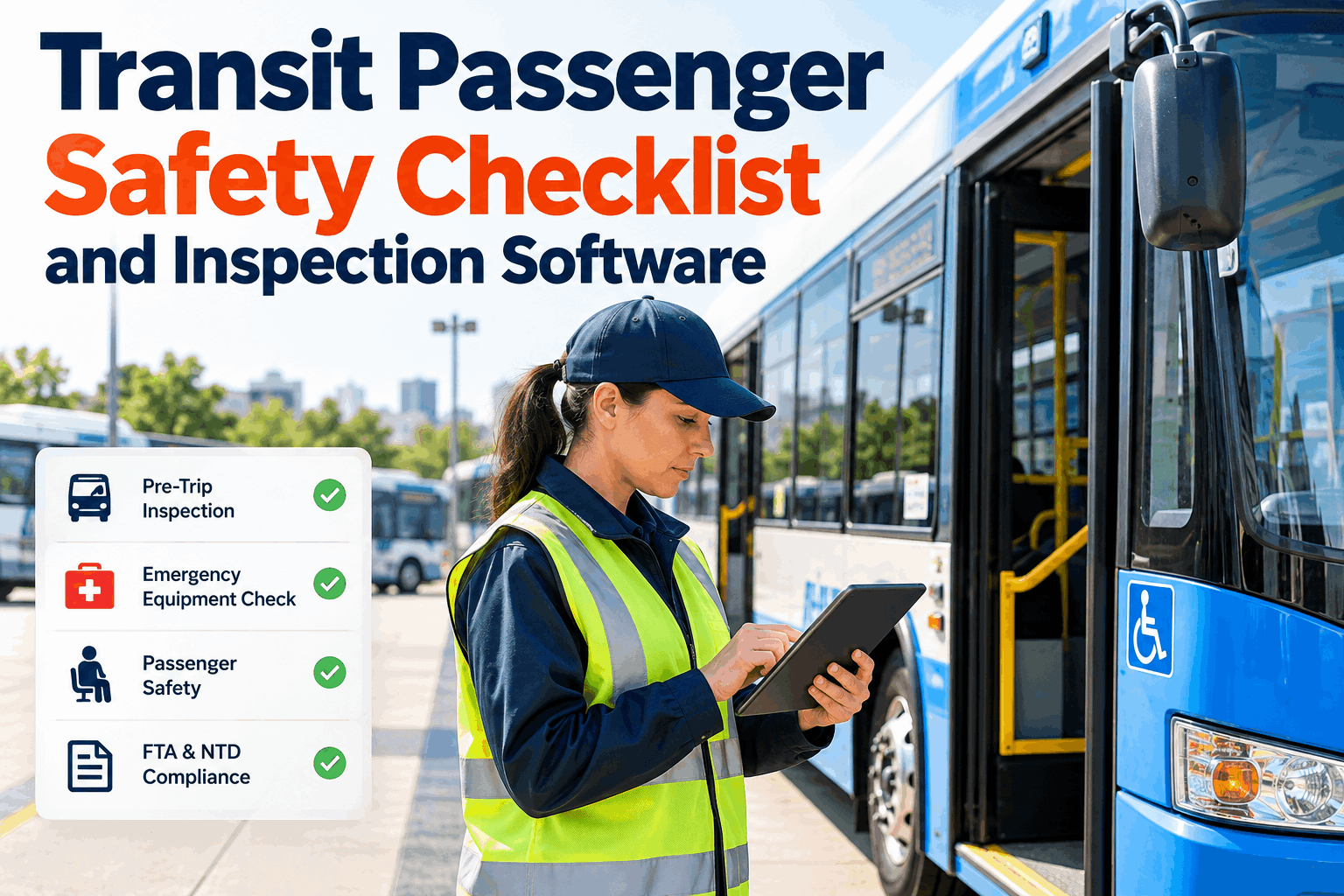
Drivers complete guided checks: testing roof emergency hatches, unlatching side egress windows, verifying extinguisher pin seals, and photographing first-aid kit seals.
AFSS & Gas Detection Diagnostic Check
System ingests electronic status loops from fire suppression control panels and methane sensors, verifying circuit continuity, pressure switch states, and harness integrity.
Defect Safety Lockout & Work Order
If an extinguisher is depressurized, a hatch interlock sticks, or an AFSS pressure sensor reads low, the coach is locked from dispatch until a mechanic signs off.
FTA Triennial Review & NTD Storage
Inspection sign-offs, suppression test certificates, and hydrostatic test records automatically populate an unalterable regulatory vault accessible for state safety audits.
The Legal, Safety, and Grant Liabilities of Overlooked Emergency Equipment
Relying on water-damaged paper inspection sheets and missed suppressant re-certifications leaves transit authorities exposed to severe operational and civil sanctions.
Uncontrolled Engine Compartment Thermal Runaway
A diesel or CNG bus operating with a depressurized fire suppression cylinder or blocked distribution nozzles cannot suppress an engine bay thermal event. A minor electrical arc or turbocharger oil leak rapidly escalates into a catastrophic vehicle fire, risking passenger lives and complete asset loss.
FTA Triennial Review Citations & Frozen Formula Grants
Under 49 CFR Part 673 (PTASP), transit recipients must maintain verifiable safety assurance records proving all safety-critical systems are inspected. Missing pre-trip fire equipment logs or lapsed hydrostatic tests trigger immediate corrective action findings, threatening Section 5307 and 5339 apportionments.
Civil Tort Liability & Loss of Sovereign Immunity Caps
Following a passenger evacuation incident, claimant attorneys subpoena pre-trip inspection logs. Missing, illegible, or pencil-whipped emergency hatch and fire extinguisher records prove gross administrative negligence, exposing municipal authorities to massive legal payouts.
Subterranean Tunnels, Bus Garages & Concrete Yard Dead Zones
Daily driver pre-trip walkarounds and maintenance shop safety checkouts occur inside reinforced concrete maintenance bays, underground transit concourses, and staging pits with zero cellular reception. Cloud-only inspection tools freeze, dropping vital life-safety audit timestamps.
Built for Transit Directors, Safety Officers, and Maintenance Foremen
FleetRabbit connects mobile operator checklists, automatic fire suppression diagnostics, and regulatory compliance archives into one platform. Request an interactive walkthrough.
Automated Fire Suppression Tracking
Log cylinder pressure gauges, optical flame sensor cleanings, linear thermal wire continuity, and automated engine-shutdown interlocks for every transit coach in the fleet.
FMVSS 217 Emergency Exit eDVIRs
Drivers cycle and verify all passenger escape routes: checking roof hatch latches, emergency push-out side windows, emergency door release dump valves, and exit warning buzzers.
Hydrostatic & Recertification Calendar
Track 5-year, 10-year, and 12-year hydrostatic test intervals for dry chemical, water mist, and nitrogen actuation cylinders, auto-generating work orders before certifications lapse.
Transit Pit Offline Mobile Syncing
Drivers inspect safety gear and mechanics sign off cylinder replacements inside concrete pits and basement staging decks with zero cellular coverage; records auto-sync upon reconnection.
Life-Safety Pull-Out Lockout
When a driver records a missing fire extinguisher, broken egress window latch, or discharged suppression system, FleetRabbit automatically blocks the vehicle from morning dispatch.
1-Click FTA Triennial & NTD Dossiers
Compile search-indexed compliance packets containing historical eDVIR walkarounds, certified vendor suppression tests, and cylinder inspection histories in under 60 seconds.
Direct Mapping to Federal Transit and Life-Safety Mandates
FleetRabbit’s transit inspection architecture aligns directly with federal transportation standards, fire safety codes, and civil rights laws.
Enforces safety assurance protocols: verifying that emergency exit mechanisms, fire protection equipment, and passenger evacuation systems are systematically inspected and documented.
Governs vehicle fire prevention standards, automatic fire suppression system requirements, flammable gas detection sensors for CNG rolling stock, and onboard dry chemical extinguisher ratings.
Mandates operational readiness of portable fire extinguishers (UL rating 5B:C or 10B:C), spare electrical fuses, three bidirectional emergency reflective triangles, and first-aid kits.
Establishes operating requirements for emergency exit windows, side push-out mechanisms, roof escape hatches, and release instructions to ensure unimpeded passenger evacuation.
Transit Emergency Equipment Software Benchmark Comparison
A feature-level comparison focused on life-safety tracking, automated lockouts, and FTA audit readiness as of 2026. Request a technical comparison.
| Capability | FleetRabbit | Generic Fleet CAD | Basic Telematics Portals | Paper Driver Binders |
|---|---|---|---|---|
| Pricing (per asset/month) | $5/month | $25–$60/month | $15–$35/month | High liability risk |
| Automated Fire System Lockout | Instant block on safety defect | Manual notification only | Not supported | None (blind roll-outs) |
| AFSS Hydrostatic Recertification Engine | Automated 90/60/30-day alerts | Manual spreadsheet log | Not available | Overlooked cylinder dates |
| FMVSS 217 Emergency Egress eDVIR | Photo-verified step-by-step | Generic check box only | Not supported | Pencil-whipped paper slips |
| Transit Pit Offline Mobile Syncing | Full store-and-forward | Network dependent | Data dropped | Paper only |
| Free Trial Access | 14 days, up to 3 assets | Sales demo only | Demo only | None |
| Contract Terms | Monthly or annual | Multi-year lock-in | 3-year minimum | None |
5-Step Transit Life-Safety Implementation Pathway
FleetRabbit deploys cleanly across your transit garages, maintenance shops, and driver devices in under two weeks without route disruptions.
Rolling Stock & Life-Safety Gear Ingestion
Import transit buses, cutaways, articulated coaches, fire suppression manufacturer models (Amerex, Fogmaker), extinguisher serials, and cylinder test dates via CSV or API.
eDVIR Checklist & Egress Rule Setup
Configure digital inspection walkaround forms matching vehicle specifications: include roof hatch latches, emergency window release levers, first-aid kits, and bio-hazard gear.
Safety Gating & Pull-Out Lockout Configuration
Establish automated lockout criteria that flag buses as Out of Service if operators report discharged extinguishers, low AFSS pressure, or defective egress latches.
Drivers & Maintenance Techs Mobile Rollout
Equip transit operators and garage mechanics with the offline-first mobile app on standard smartphones or rugged tablets for rapid pre-trip walkarounds and repair sign-offs.
Safety-Critical Command Go-Live
Activate live fleet pull-out readiness boards, automated hydrostatic test renewal queues, and 1-click FTA Triennial Review compliance reporting across all transit depots.
2-Week Deployment Plan & Milestones
Modernize your agency's fire safety compliance and eliminate audit deficiencies with zero disruption to scheduled passenger service. Request an onboarding plan.
Week 1: Asset Audit & Policy Setup
- Audit paper DVIR clipboards, extinguisher inspection tags, and vendor fire suppression files
- Configure vehicle profiles by AFSS manufacturer, nozzle count, and hydrostatic test dates
- Set up 90/60/30-day escalation alerts for extinguisher tag renewals and cylinder recertifications
- Assign user access permissions for Transit Supervisors, Fire Safety Techs, and Bus Operators
Week 2: Depot Rollout & Live Verification
- Distribute mobile app to operators and conduct 15-minute training on life-safety walkarounds
- Validate store-and-forward offline syncing inside concrete maintenance pits and garages
- Simulate a discharged fire extinguisher defect to verify automated dispatch lockout gating
- Launch live fleet life-safety dashboard and automated FTA and NTD compliance archives
Maintain 100% FTA Life-Safety Compliance and Eliminate Audit Risk
Automate fire suppression checks, enforce FMVSS emergency egress walkarounds, and generate audit-ready dossiers in seconds. Start today at $5/asset/month with a 14-day free trial.
Real-World Public Transit Safety Results
Operational improvements documented by regional public transportation authorities and municipal transit agencies. Request the transit authority case study.
Zero Deficiencies on State Safety Oversight Review Across 92 Buses
A regional public transportation authority operating 92 clean-diesel and CNG buses faced audit scrutiny after a state oversight review revealed expired annual fire extinguisher tags and unrecorded emergency hatch inspections. FleetRabbit deployed mobile offline walkarounds with photo verification, resulting in a 100% clean safety audit and avoiding $48,000 in potential state compliance fines.
100% On-Time AFSS Cylinder Recertification
A metropolitan bus operator managing 120 articulated and standard transit coaches struggled with tracking disparate 5-year and 10-year hydrostatic testing dates for automatic fire suppression cylinders across three maintenance depots. FleetRabbit automated the testing calendar, cutting administrative tracking time by 80% and achieving a 100% on-time cylinder recertification record.
In passenger transit operations, there is zero margin for error when it comes to fire suppression and emergency egress equipment. If an engine compartment thermal event occurs on a crowded commuter route and your suppression system fails to deploy because an actuation cylinder lost pressure six months ago, you are facing a nightmare scenario. Before FleetRabbit, our operators scribbled inspection notes on paper DVIR slips that were stored in cardboard boxes, and our shop foremen kept fire suppression test dates on a whiteboard. FleetRabbit modernized our entire life-safety program. Our operators check the extinguisher seals, roof hatches, and suppression panel LEDs on their mobile phones in under four minutes. If anything is amiss, the bus is locked from dispatch before morning roll-out. During our last FTA Triennial Review, we exported complete maintenance and inspection dossiers for ninety buses in under two minutes. It protected our federal grant funding and gave our executive board complete peace of mind.
Frequently Asked Questions
Upgrade Your Transit Agency's Emergency Equipment Compliance in Less Than 2 Weeks
Automate fire suppression checks, eliminate pull-out safety violations, and ensure 100% FTA and NTD compliance at $5/asset/month with a 14-day free trial.