Low-floor buses solved the boarding problem by getting rid of steps, but they didn't get rid of the paperwork. A kneeling suspension and a fold-out ramp are mechanical systems with their own federal maintenance obligations under 49 CFR Parts 27, 37, and 38, separate from routine engine and brake PM. When a ramp motor sticks or a kneeling valve leaks, the bus doesn't just need a repair ticket — it needs to come out of service immediately, and the agency needs a record proving it did. FleetRabbit builds that record automatically, from the driver's pre-trip check to the NTD export. Book a free demo to see it against your own fleet, or sign up and start a trial today.
Ramp or Lift? Low-Floor Buses Follow the Same Law, Different Hardware
DOT's ADA regulations were written around the word "lift," but the rules apply just as fully to the ramps that low-floor buses use instead. The hardware is different; the obligation is not.
Powered lift
A hydraulic or electric platform raises and lowers the passenger at the door. It is mechanically complex, has more moving parts to fail, and needs its own hydraulic and electrical inspection cycle.
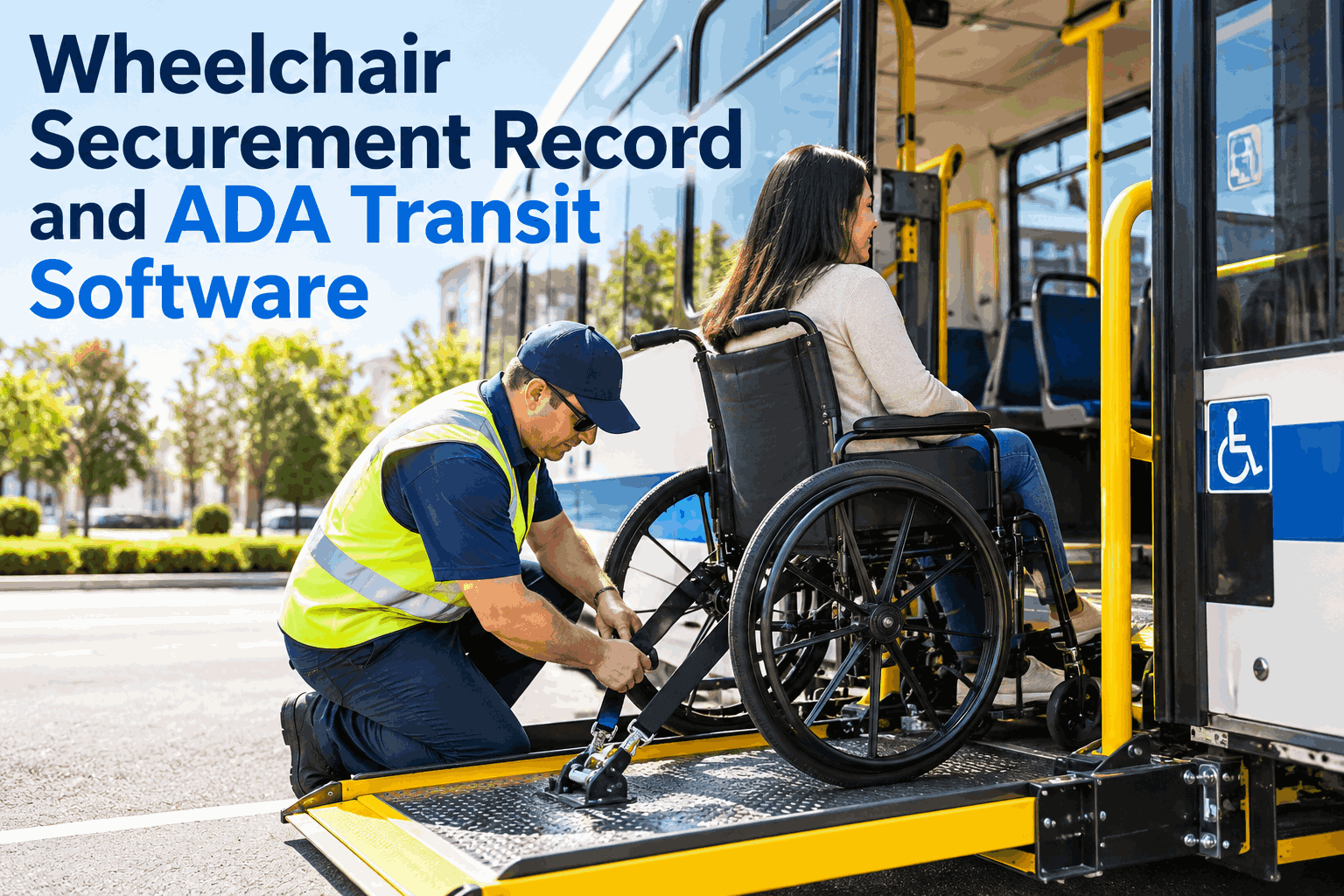
Kneeling suspension + fold-out ramp
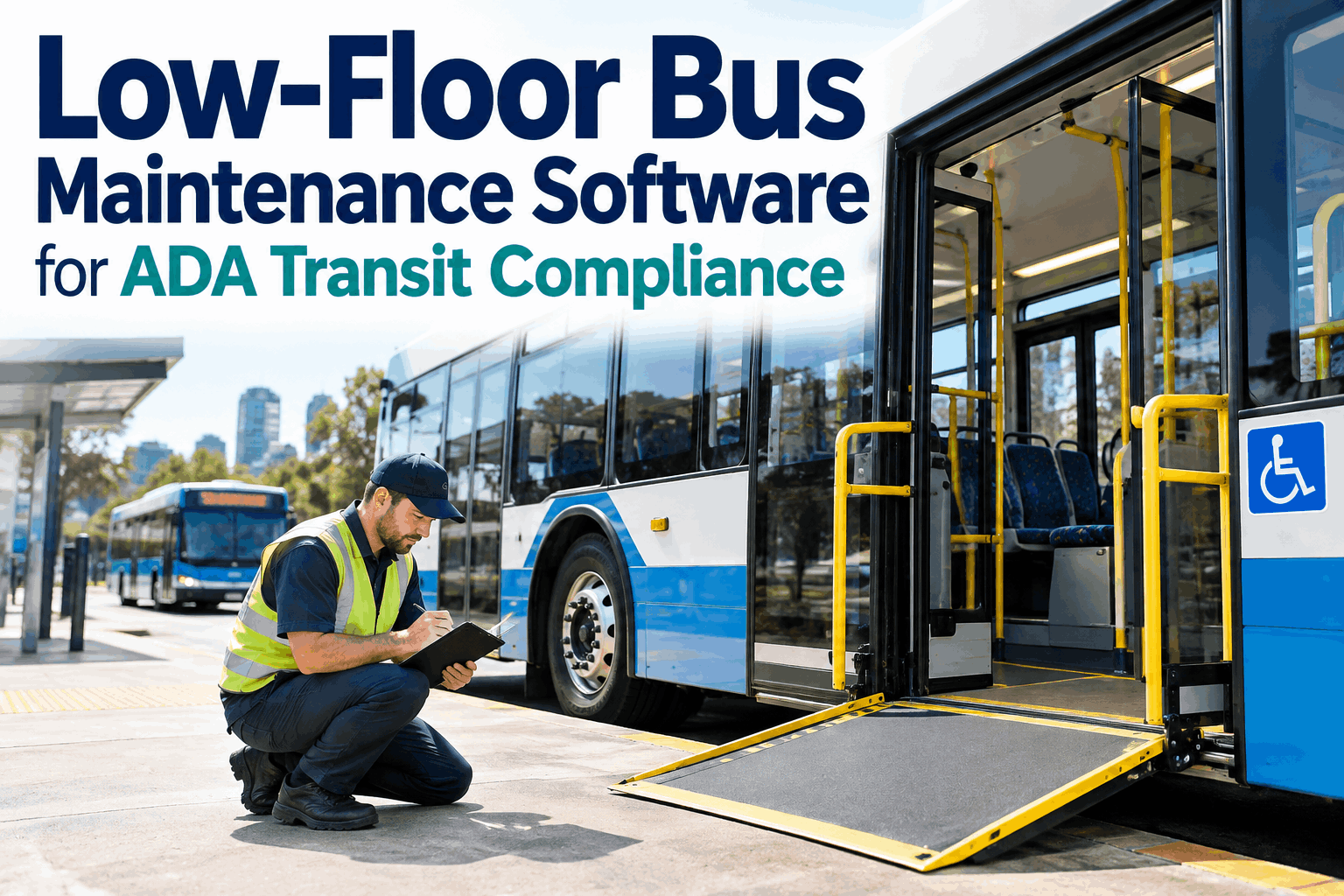
Air suspension lowers the entry side toward the curb, and a manual or powered ramp bridges the remaining gap. Fewer parts than a lift, but the ramp still must carry a 600-pound load and have a 2-inch edge barrier on each side, and the kneeling function needs its own inspection line.
Whichever system a fleet runs, FTA's Office of Civil Rights holds agencies to the same standard: accessibility equipment has to work every time it's needed, personnel have to be trained to use and assist with it, and every failure has to be documented and corrected. Fleets that also run BRT service with PM-A/B/C scheduling or paratransit cutaways already know this drill from the lift side — low-floor buses just move the same discipline onto a ramp and a kneeling valve.
The Pull-Out Gate: What a Low-Floor Bus Has to Clear Before It Leaves the Depot
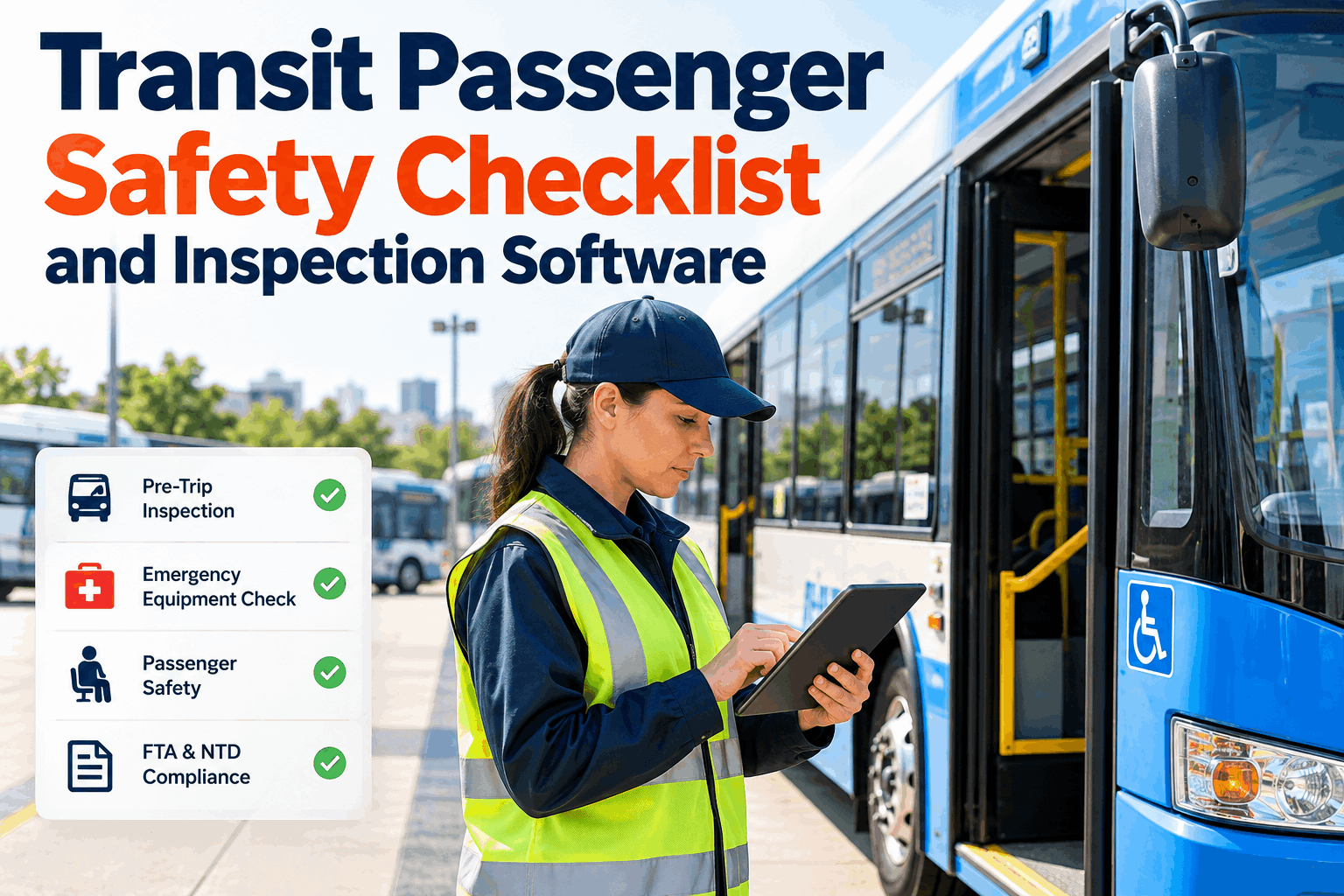
Agencies that pass FTA accessibility reviews check ADA features specifically at pull-out, not just during scheduled PM. FleetRabbit turns that habit into a forced digital gate the driver can't skip past.
Kneel cycle
Full kneel and return to ride height, checked for smooth travel and correct final position.
Ramp deploy
Full extend and stow, surface and edge barriers checked for damage.
Interlock test
Vehicle confirmed unable to move with the ramp deployed.
Securement points
Tie-downs and belt/harness sets checked for wear and correct locking action.
Announcement system
Audible and visual stop annunciators confirmed operating.
Door edge sensor
Sensitive edge strip tested to confirm it stops the door from closing on a boarding rider.
Any failed step blocks the vehicle in FleetRabbit before it's marked ready for service — mirroring the same remove-from-service standard agencies already apply on the lift side, now enforced by the app instead of relying on a driver to remember and a dispatcher to notice.
PM-A, PM-B, and PM-C Don't Disappear on a Ramp-Equipped Fleet
Low-floor buses still run the same tiered mileage-based inspection structure most transit fleets use, with the ramp and kneeling system added as their own line items rather than folded quietly into a generic chassis check.
Compliance Framework at a Glance
Every low-floor accessibility requirement traces back to a specific part of the federal regulation and a specific piece of evidence an auditor will ask to see.
| Regulation | What It Requires | Evidence an Auditor Wants | FleetRabbit Capability |
|---|---|---|---|
| 49 CFR Part 37 | Equal, accessible service on every fixed route | Pull-out checks, complaint log, alternate-transport record | Forced pull-out gate + complaint tracking |
| 49 CFR Part 38 | Ramp load rating, edge barriers, securement tolerance | Design certification, securement inspection records | Digital equipment inspection with photo evidence |
| Section 37.165 | Staff assist riders with ramps, kneeling, and securement | Assist-provided log tied to trip and operator | Trip-linked assist logging |
| Section 37.173 | Personnel trained to proficiency on accessibility equipment | Training completion and refresher records | Operator credential and training tracking |
| NTD Asset Inventory | Accurate vehicle and equipment reporting to FTA | Reconciled roster with maintenance history | Automated NTD-ready export |
Where Kneeling Systems and Ramps Actually Wear Out
A ramp and a kneeling valve don't fail the way an engine does — they fail from repetition, at the busiest stops on the route.
Cycle count, not mileage
A downtown local route can put a ramp through 200+ deploy cycles a day; a suburban express route might see a tenth of that. Two identical buses wear at very different rates.
Curb angle and grade
Repeated kneeling against an uneven curb stresses the air spring and leveling valve faster than kneeling on flat pavement.
Weather exposure
Grip-tape ramp surfaces and edge barriers take the brunt of salt, sand, and moisture in winter climates.
FleetRabbit logs every deploy cycle from the driver's pre-trip check, so a maintenance team can move a ramp-heavy route bus into PM-B early instead of waiting for a mileage number that never reflected its real workload.
From a Failed Ramp Check to an NTD-Ready Record
The value of digital pull-out checks shows up months later, when an FTA reviewer or an NTD auditor asks for proof.
Driver flags a fault at pull-out
Ramp won't fully stow, or the interlock doesn't engage — the check fails and the bus is held.
Work order opens automatically
No separate step for a dispatcher or supervisor to remember — the failed check becomes a maintenance ticket immediately.
Repair and sign-off attach to the vehicle history
Technician notes, parts used, and return-to-service timestamp are all stored against that specific bus.
Record is ready for NTD and FTA export
No file cabinet search — the full chain from fault to fix is already formatted for reporting.
Common Questions on Low-Floor Bus Accessibility Compliance
Does a low-floor bus need the same ADA inspections as a lift-equipped bus?
Yes. The regulation uses the term "lift," but FTA and DOT guidance apply the same design, maintenance, and reliability expectations to ramps and kneeling systems used on low-floor buses.
What happens if a ramp or kneeling system fails mid-route?
Standard practice is the same as for a broken lift: the vehicle is treated as out of service for accessibility purposes, and the agency arranges alternate transportation for any rider who can't use the vehicle as a result.
Can FleetRabbit tell PM-A, PM-B, and PM-C apart for a low-floor fleet?
Yes. Each tier is configured against the agency's own mileage or hour thresholds, with ramp, kneeling, and securement checks added at the tier the agency assigns them.
How does this connect to NTD reporting?
Every pull-out check, work order, and repair record is timestamped and tied to the vehicle, so it can be pulled directly into an NTD asset inventory or FTA compliance review export.
Do drivers need extra training to use FleetRabbit's pull-out gate?
No. The app walks the driver through the same kneel, ramp, and securement steps they already perform, and simply won't let the vehicle be marked ready until each one is confirmed.
Get Every Low-Floor Bus Pull-Out-Ready, Every Day
Forced ramp and kneeling checks, automatic work orders, and NTD-ready records — all in one place. No proprietary hardware, deployable across a fleet in days.