A minibus that is three minutes late at the first timepoint is rarely a one-time event. It usually means the same route will drift five minutes late by stop ten, riders will start giving up on the schedule, and somewhere in the yard a PM-B check that was due last week is still sitting open. Schedule adherence, GPS visibility, and preventive maintenance are not three separate problems for a minibus fleet. They are one operational picture, and most agencies are still trying to read it from three disconnected tools.
Why Minibus Routes Drift Off Schedule So Easily
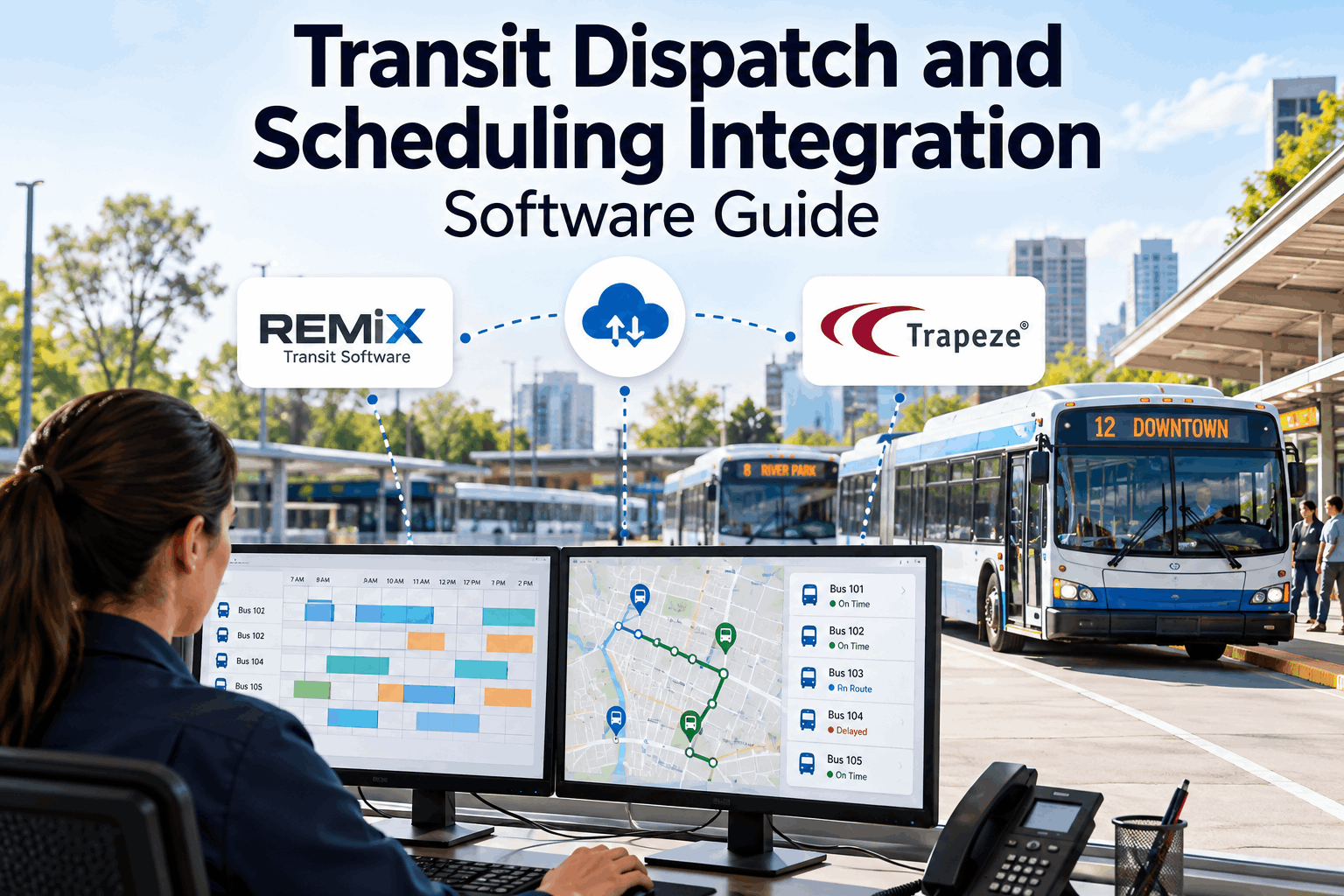
Minibuses run tighter, more frequent stop patterns than full-size transit buses, which means small delays compound fast. A single missed light or an extra boarding at a busy stop can push a route from on-time to late within two or three stops. Without live location data tied back to the published schedule, dispatchers only find out a route has drifted when a rider complaint comes in, long after the window to correct it has closed.
Agencies that pair minibus GPS tracking software with real schedule data catch the drift at the first timepoint, not the last one, which is the difference between a quiet correction and a route that falls apart for the rest of the shift.
Three Ways Agencies Actually Measure On-Time Performance
Not every agency defines "on time" the same way, and knowing which definition applies changes what your tracking software needs to report.
Timepoint Adherence
A vehicle is scored against a scheduled arrival window, usually zero minutes early to five minutes late, at each designated stop along the route.
Headway Consistency
Instead of a fixed schedule, the vehicle is compared against the gap it should keep from the bus ahead of it, commonly within a few minutes either way.
Customer Journey Time
The strictest measure, tracking whether a rider's full trip, from boarding to arrival, lands within a set number of minutes of what was promised.
Whichever definition your agency reports on, the underlying requirement is the same: continuous GPS position data linked directly to the published schedule, not a location dot with no route context.
What Live Tracking Should Actually Catch
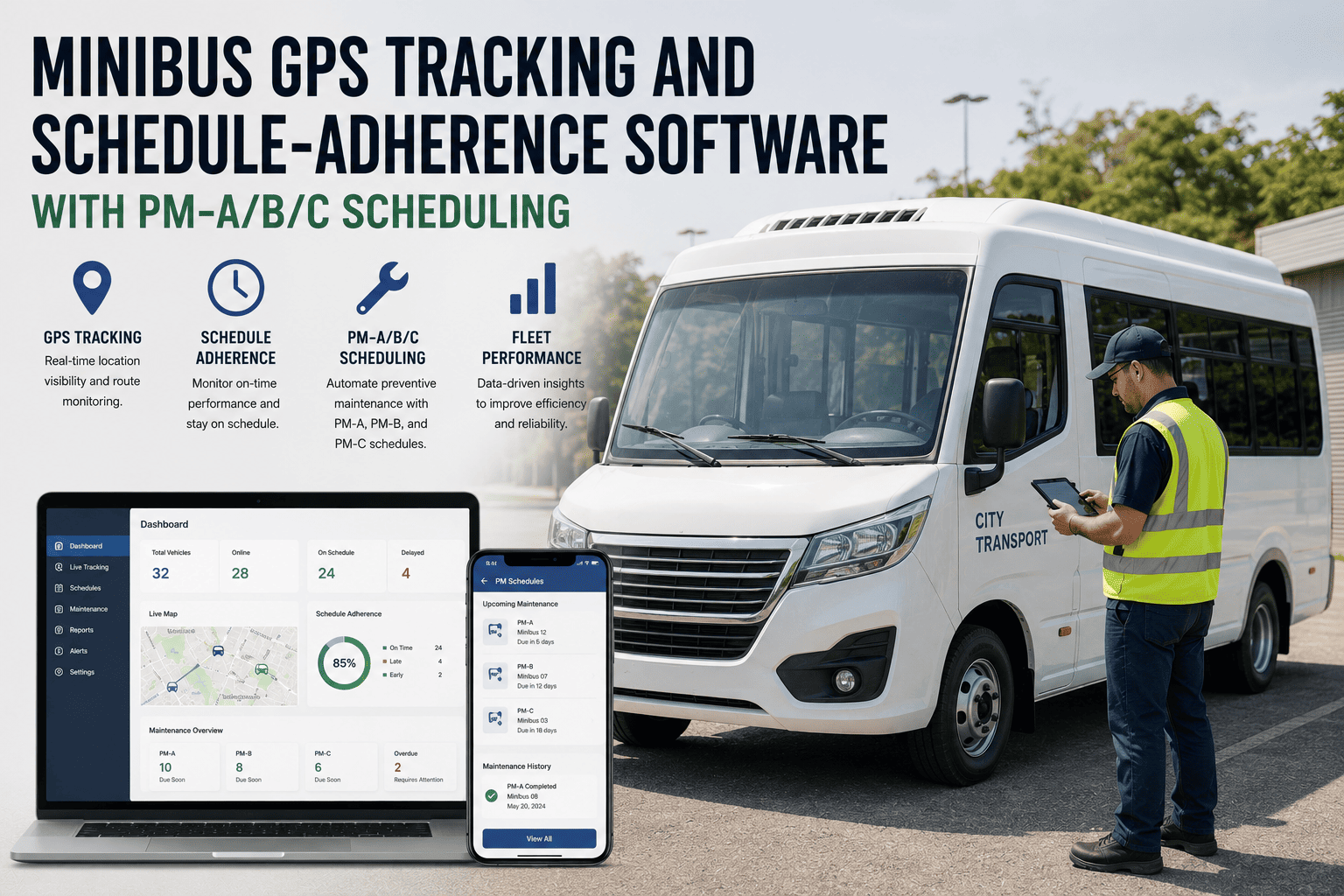
A location pin on a map tells you where a minibus is. It does not tell you whether that minibus is supposed to be there. Useful GPS tracking software converts raw location pings into schedule-aware alerts dispatchers can act on before a route falls apart.
Flags a vehicle the moment it falls outside its on-time window at a timepoint, instead of at the end of the run.
Alerts dispatch when a vehicle strays from its assigned path, useful for catching detours before riders are affected.
Triggers a notification when a vehicle leaves or enters a defined service zone, depot, or restricted area.
Reconstructs a vehicle's full path after the fact, useful for incident review and rider complaint investigation.
Dispatch teams that want this level of visibility instead of a static map usually book a demo to see live schedule-adherence scoring running against their own route network.
See Your Fleet's Schedule Adherence in Real Time
FleetRabbit connects GPS tracking directly to your published schedules, so dispatch knows about drift at the first stop, not the last complaint.
Letting Mileage Data Trigger PM-A/B/C on Its Own
Minibus PM programs typically run on tiered A, B, and C intervals, spaced by mileage or engine hours rather than a fixed calendar. The problem most agencies run into is that the mileage tracking lives in one system and the PM schedule lives in another, so intervals get updated manually and inevitably fall behind. GPS data solves this by feeding live odometer and engine-hour readings straight into the PM schedule, so an interval trips itself the moment a threshold is crossed.
Short Interval
Fluids, filters, and safety-critical fastener checks on the shortest mileage cycle, triggered automatically from live telematics.
Mid Interval
Everything in an A-check plus brake, steering, and suspension attention, timed for the stop-and-go pattern typical of minibus routes.
Extended Interval
A deeper system-wide inspection covering transmission, cooling, and structural points before wear becomes a state-of-good-repair issue.
Fleets tired of chasing mileage logs by hand can sign up and let real-time vehicle data drive the PM schedule instead of a spreadsheet reminder that always seems to run a week late.
Where Tracking Data Feeds Straight into Compliance
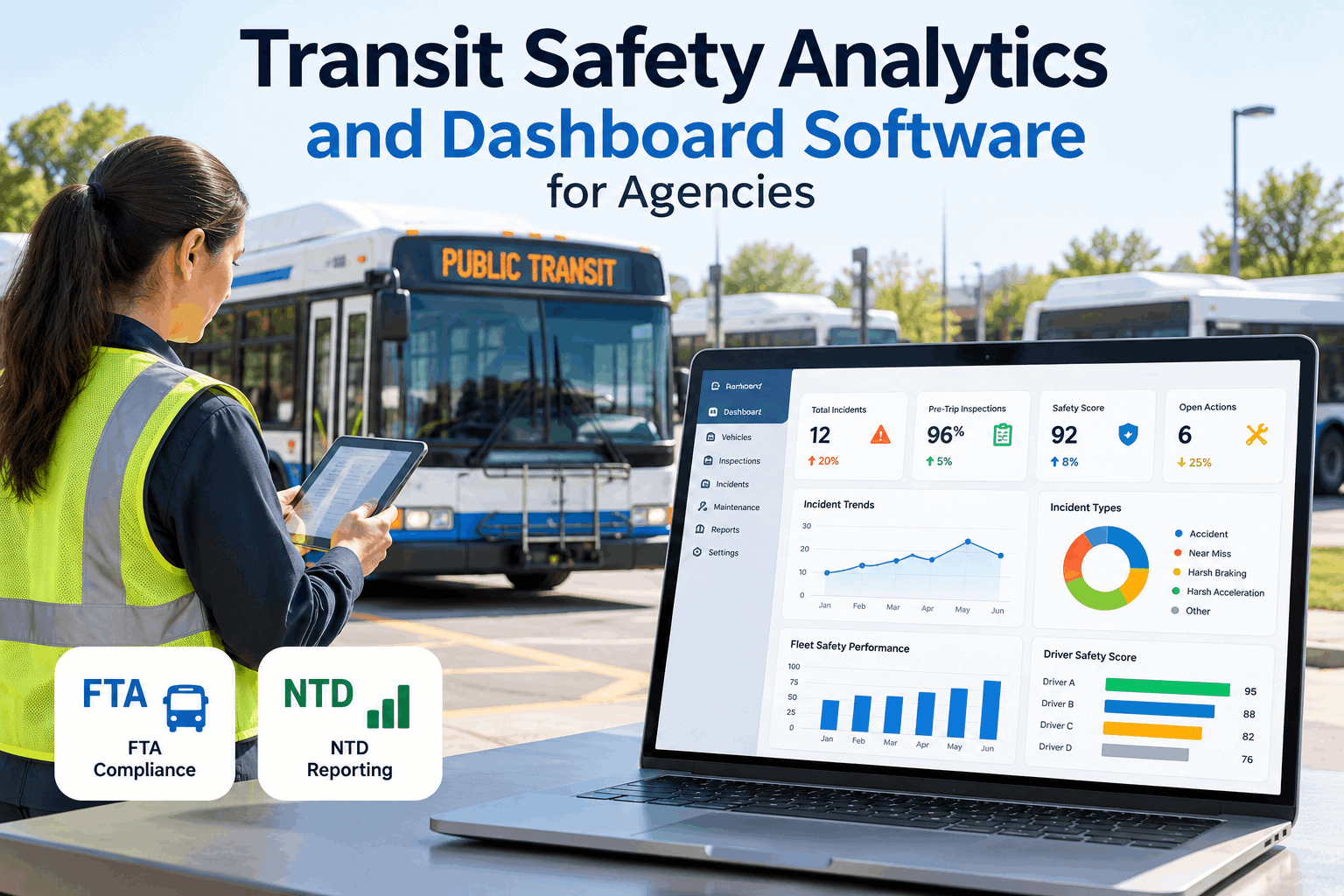
Live location and mileage data does more than help dispatch. It becomes the backbone of the same records an FTA triennial review examines, including PM completion rates, ADA lift cycling logs, and pull-out readiness for every vehicle in service. When GPS, PM scheduling, and inspection records live in one connected system, a fleet manager can answer "was this vehicle compliant on this date" in seconds instead of piecing it together from three separate logs.
The same connected data also structures cleanly for annual NTD reporting, since service hours, mileage, and on-time performance are already being captured continuously rather than reconstructed once a year under deadline pressure.
Minimum PM completion rate typically expected during an FTA compliance review
Common on-time performance window used for timepoint-based schedule adherence
Where GPS, PM scheduling, and NTD-ready records should live instead of three
What Runs Behind a Connected Minibus Platform
Schedule-Aware GPS Tracking
Live position data scored against timepoints or headways, not just a dot moving on a map.
Automatic PM-A/B/C Triggers
Mileage and engine-hour data from telematics that fires PM intervals without manual tracking.
ADA Lift Cycle Logging
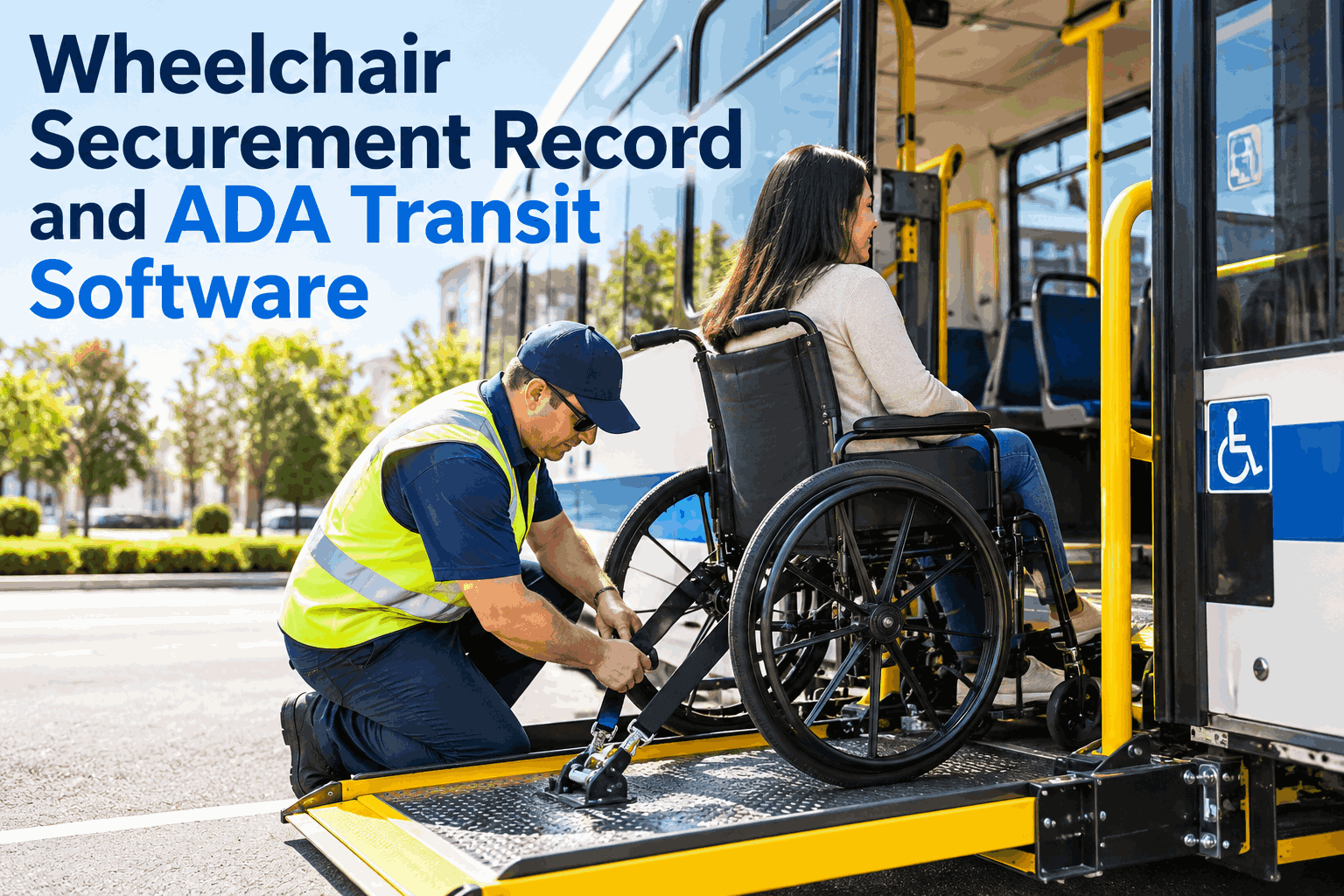
Daily deploy-and-stow records tied to driver ID, stored alongside monthly functional checks.
Pull-Out Readiness View
A live dashboard showing which vehicles have cleared pre-trip and which are stuck on a defect.
One-Click NTD Export
Service hours, mileage, and adherence data structured for annual reporting without a manual rebuild.
Curious what this looks like against your own route map? Book a demo and see live adherence scoring on your actual service area.
Bring GPS, PM Scheduling, and Compliance into One View
Stop reading route drift from a static map and PM status from a spreadsheet. Get both, plus audit-ready records, in a single connected platform.
Frequently Asked Questions
How is minibus GPS tracking different from a basic vehicle locator
A basic locator only shows position. Schedule-aware tracking compares that position against a published timepoint or headway target and generates an alert the moment a vehicle drifts outside its window.
What triggers a PM-A, PM-B, or PM-C check
Most programs trigger intervals by mileage or engine hours, with A-checks on the shortest cycle and C-checks reserved for deeper, less frequent inspections, all of which can be automated from live telematics data.
Can GPS data really reduce missed PM intervals
Yes, when odometer and engine-hour readings feed the PM schedule automatically, intervals trigger themselves at the correct threshold instead of depending on someone remembering to check a mileage log.
Does schedule adherence tracking help with FTA compliance
Indirectly, yes. On-time performance data, combined with PM completion rates and inspection records, forms part of the documentation reviewed during an FTA triennial review.
How does this connect to NTD reporting
Service hours, mileage, and on-time performance captured continuously through GPS tracking can be exported directly into an annual NTD submission instead of being rebuilt manually from separate logs.
Is this suitable for a small minibus fleet, not just large transit agencies
Yes, the same tracking, PM automation, and reporting scale down cleanly for smaller paratransit and minibus fleets, where a single missed pickup or delayed PM has an outsized effect on service.