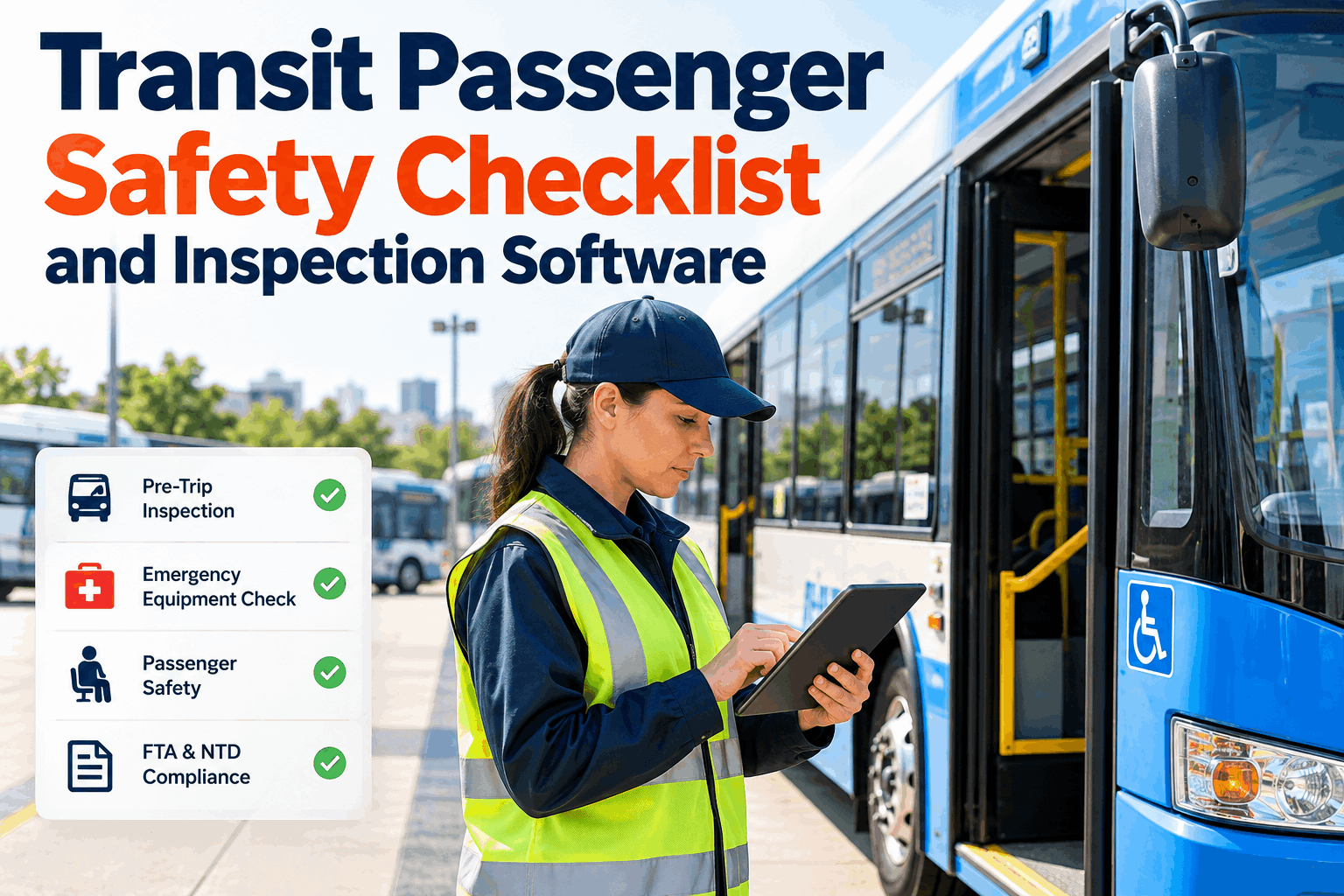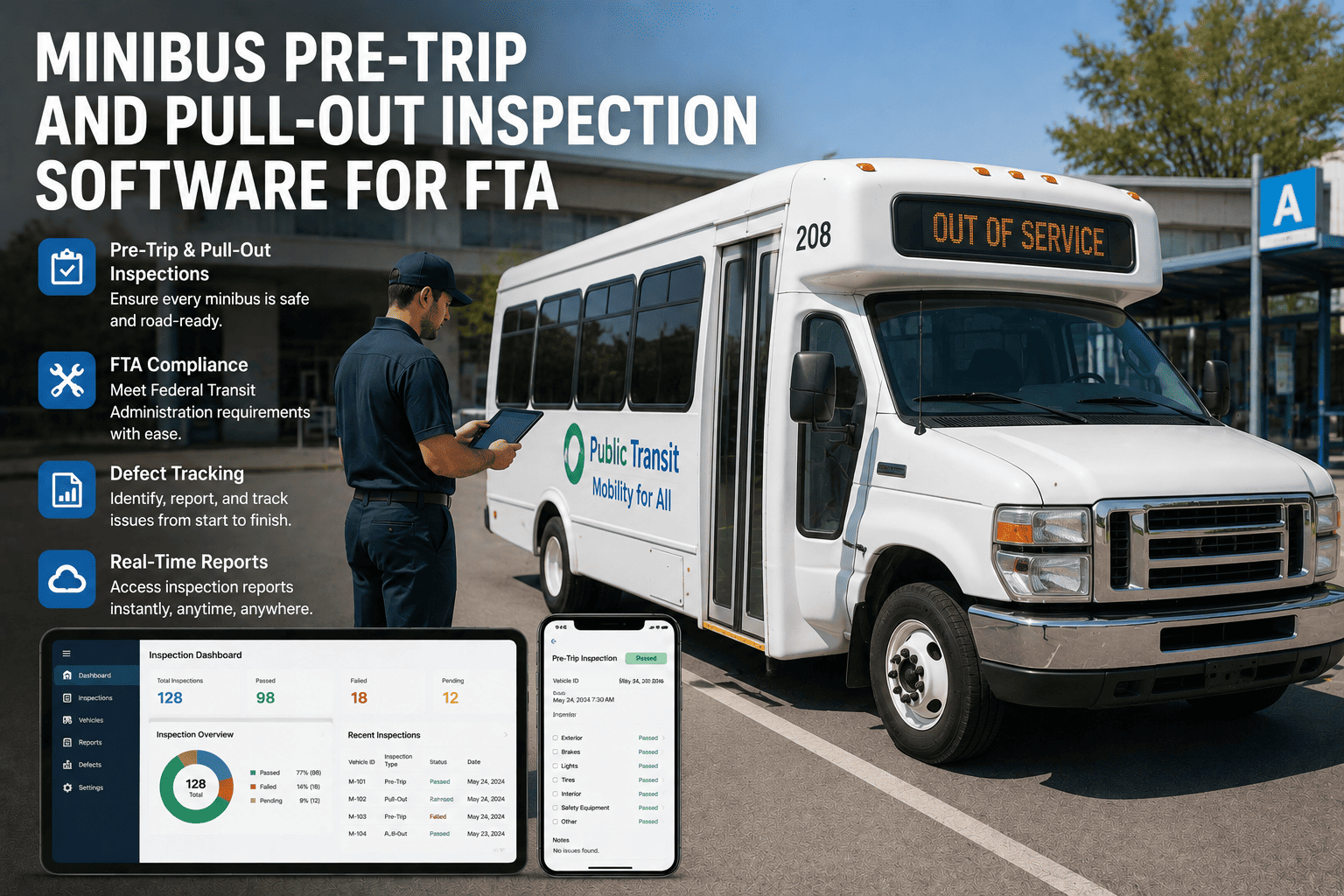
A minibus rarely fails on the road because of one big mechanical surprise. It fails because a small defect got missed at pull-out, sat unreported for a week, and finally turned into a road call during a rider's trip. Pre-trip and pull-out inspection is the first and most important checkpoint in a transit agency's entire maintenance program, and it is also the easiest one to lose track of when it depends on paper sheets and driver memory. FleetRabbit turns that daily checkpoint into a structured, FTA-aligned digital process that agencies can actually audit. Fleets that want to see it working before their next pull-out can sign up today.
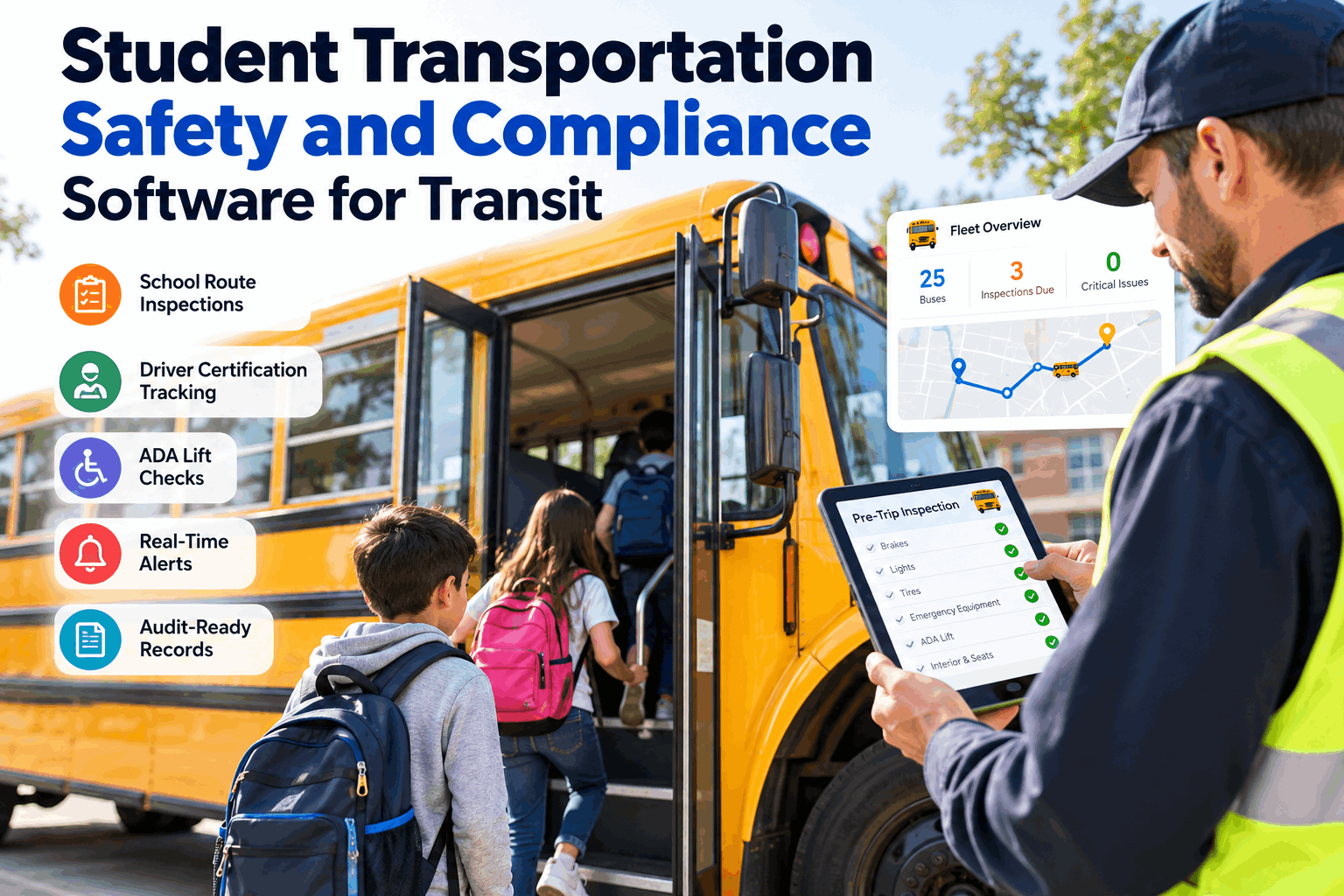
A thorough pre-trip walk-around covers the minibus in defined zones rather than a random glance, which is what keeps the check consistent no matter which driver is doing it.
Front zone
Headlights, turn signals, wipers, windshield condition, steering play, and front tire wear and pressure.
Curb side
Entry door operation, wheelchair lift or ramp cycle, step condition, mirrors, and side marker lights.
Rear zone
Tail lights, brake lights, exhaust condition, rear door or emergency exit function, and rear tire wear.
Street side and interior
Fuel or fluid leaks, seat belts, wheelchair securement anchors, fire extinguisher, and first aid kit presence.
When a driver moves through these four zones the same way every shift, defects surface early and consistently instead of depending on how rushed the morning happens to be. FleetRabbit turns this walk-around into a guided digital checklist on the driver's device, so every zone gets covered before the vehicle leaves the yard.
What happens after a defect is found is just as important as finding it. A pull-out inspection process needs a clear, immediate path for both minor and safety-critical issues.
Minor defect
Logged in the system, flagged for the next scheduled service, vehicle continues to pull-out with the issue documented and monitored.
Safety-critical defect
Vehicle is held out of service immediately, a work order is generated automatically, and it cannot pull out until a technician clears the repair.
Without a system enforcing this split, minor and critical defects tend to get treated the same way, either everything gets escalated and delays the whole yard, or nothing does and a critical issue slips onto the route. Agencies looking to fix that gap can book a demo and see the escalation logic in action.
Make every pull-out inspection count
Guided zone checklists, automatic defect escalation, and a full digital record for every minibus in the fleet.
The Driver Vehicle Inspection Report requirement under federal motor carrier rules exists precisely because pull-out checks are the frontline defense against sending an unsafe vehicle onto the road.
| DVIR requirement | How it plays out day to day |
|---|---|
| Written or digital defect report | Driver documents any defect found during pre-trip or post-trip |
| Certification of repair | A technician must confirm and sign off before the vehicle returns to service |
| Retained inspection history | Records must be kept and available for review, typically for a set retention period |
| Driver review before next trip | The next driver reviews prior defects before taking the vehicle out again |
Paper DVIR books satisfy the letter of this requirement but make it painfully slow to search, summarize, or hand over during an audit. A digital DVIR trail tied to each minibus solves that instantly, and agencies exploring the switch can sign up to test it against their own fleet records.
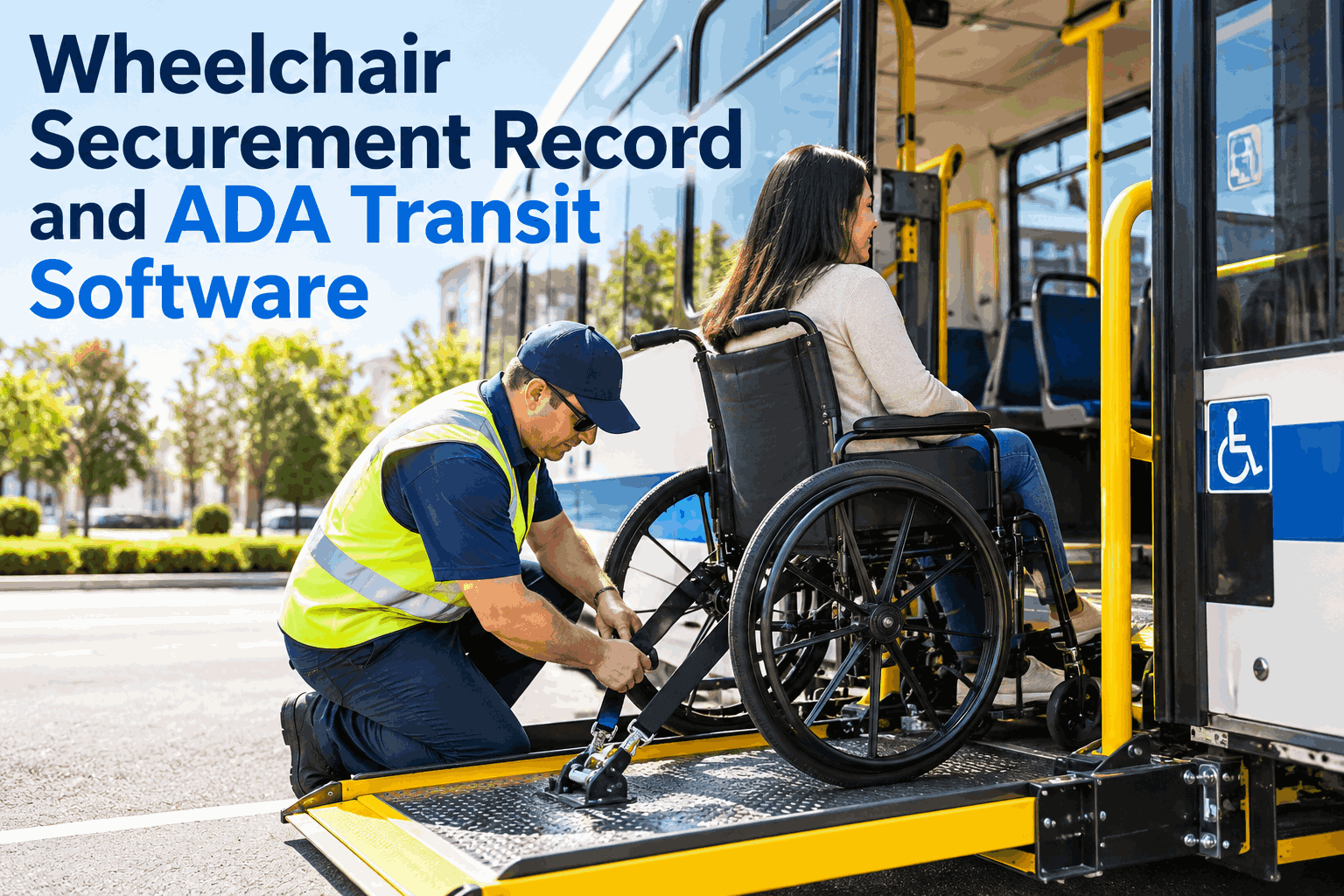
For minibuses running paratransit or fixed routes with wheelchair riders, the lift or ramp check inside the pre-trip walk-around is not optional, it is the single most safety-sensitive item on the list.
Cycle test every pull-out
Full deploy and stow before every shift, not just on days a wheelchair rider is scheduled.
Interlock confirmation
Confirm the vehicle cannot move while the lift or ramp is deployed.
Securement anchor check
Tie-down points inspected for smooth locking and proper tension before the first rider boards.
These three checks feed directly into ADA compliance and NTD accessibility reporting, so capturing them consistently at pull-out saves an enormous amount of reconstruction work later.
| Task | Manual process | FleetRabbit |
|---|---|---|
| Zone-by-zone walk-around | Depends on driver habit and paper form | Guided digital checklist, same every time |
| Defect escalation | Judged case by case by whoever is on shift | Automatic minor versus safety-critical routing |
| DVIR record keeping | Paper books stored by date, hard to search | Digital history searchable by vehicle or driver |
| ADA lift pull-out check | Logged inconsistently, easy to skip on quiet days | Required step before pull-out clears |
Teams ready to see this comparison run against their own minibus roster can book a demo and bring their questions.
Turn pull-out inspections into clean, audit-ready records
Every zone checked, every defect routed correctly, every record ready when FTA comes asking.
Frequently asked questions
What is the difference between a pre-trip and a pull-out inspection
They generally refer to the same core process, a driver-performed check completed before the vehicle leaves the yard, though some agencies use pull-out to describe the final clearance step right before the bus departs.
What happens if a driver finds a safety-critical defect
The vehicle should be held out of service immediately, a work order generated, and the bus should not pull out again until a technician certifies the repair.
How long do DVIR records need to be kept
Retention requirements vary by jurisdiction and agency policy, but records generally need to be kept for a defined period and available for review during an audit.
Does the ADA lift need to be checked every single day
Yes, a functional cycle test should happen at every pull-out regardless of whether a wheelchair rider is scheduled that day, since the equipment needs to be ready at any point in the route.
Can this replace paper DVIR books entirely
Most agencies transition fully to a digital record once drivers are comfortable with the workflow, since it keeps the same legal documentation while making the history far easier to search and report on.