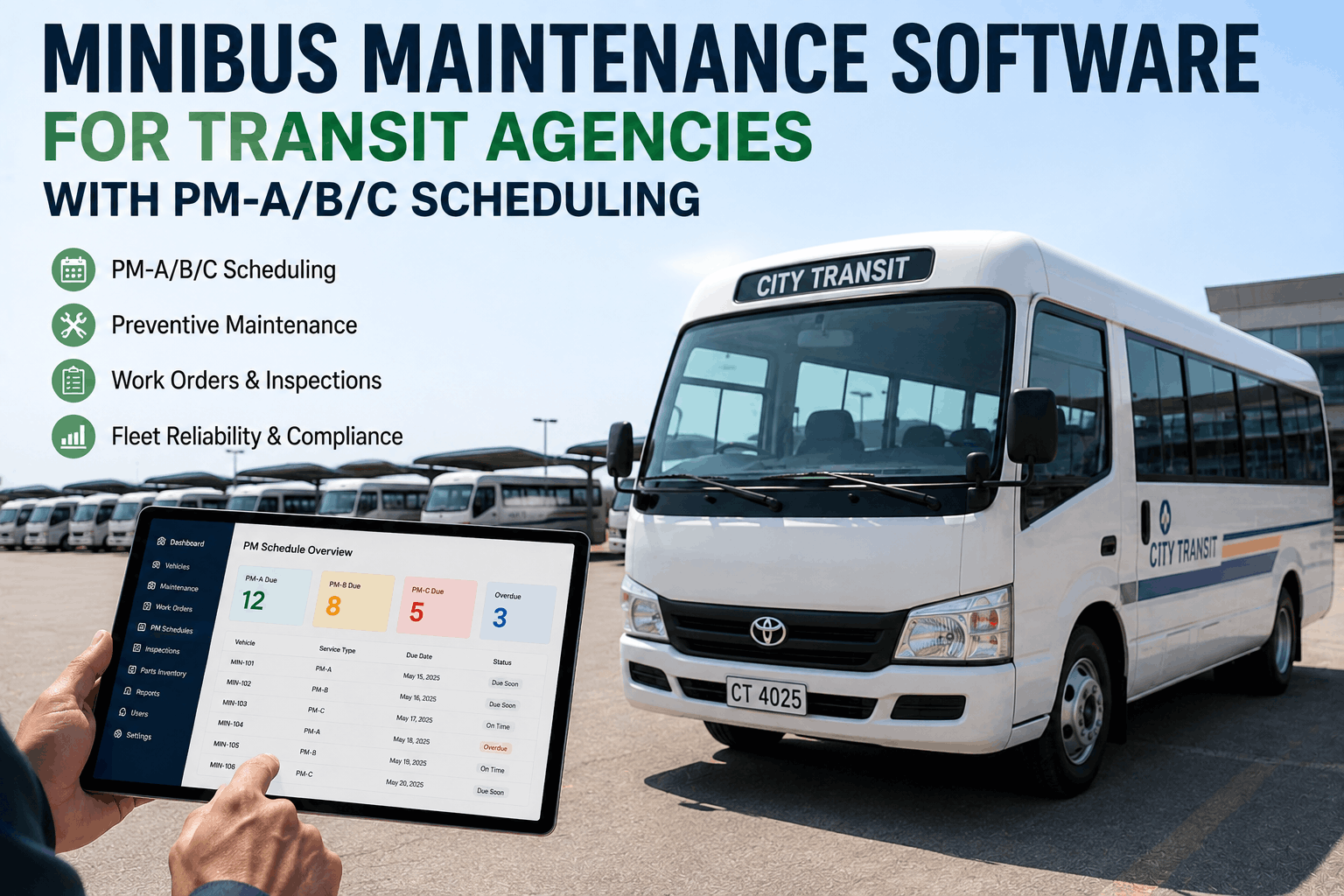
A minibus is not a scaled-down transit bus, and treating it like one is where most PM-A/B/C programs quietly break. A 20-passenger minibus running a dense paratransit route sees far more stop-and-go cycling per mile than a 40-foot coach on a fixed line, which means the same mileage-based service plan either over-services the light routes or leaves the hard-working units exposed. Agencies that get this right are usually the ones already using minibus maintenance software built around duty cycle, not just odometer readings.
PM-A, PM-B, and PM-C mapped onto one cadence
Each higher class absorbs the tasks below it, so a PM-C service is not a separate checklist, it is PM-A and PM-B plus a deeper layer of work on top. Mapped by cadence instead of a flat list, the structure is easier for dispatch and maintenance to plan around together.
The most common mistake agencies make is running one PM template for every minibus regardless of route type. A vehicle covering a dense downtown paratransit loop needs its own PM-A/B/C timing, separate from a vehicle running a light suburban shuttle, or the whole fleet ends up over-serviced in one direction and under-serviced in the other. Agencies ready to fix that split can sign up and set duty-cycle-specific templates per vehicle instead of one blanket schedule.
Stop running one PM schedule for every route type
Duty-cycle aware PM-A/B/C scheduling, ADA lift inspections, and NTD-ready reporting for your minibus fleet.
A single service day, every compliance layer running at once
None of these layers replace each other, they stack. A vehicle can pass its daily DVIR and still be overdue on PM-B, and that gap is exactly what an FTA triennial review is built to find. Keeping all six layers visible in one place is the difference between catching a slip internally and having an auditor catch it for you, which is exactly why agencies book a demo before their next review cycle rather than after a deficiency finding.
ADA lift readiness, scored instead of assumed
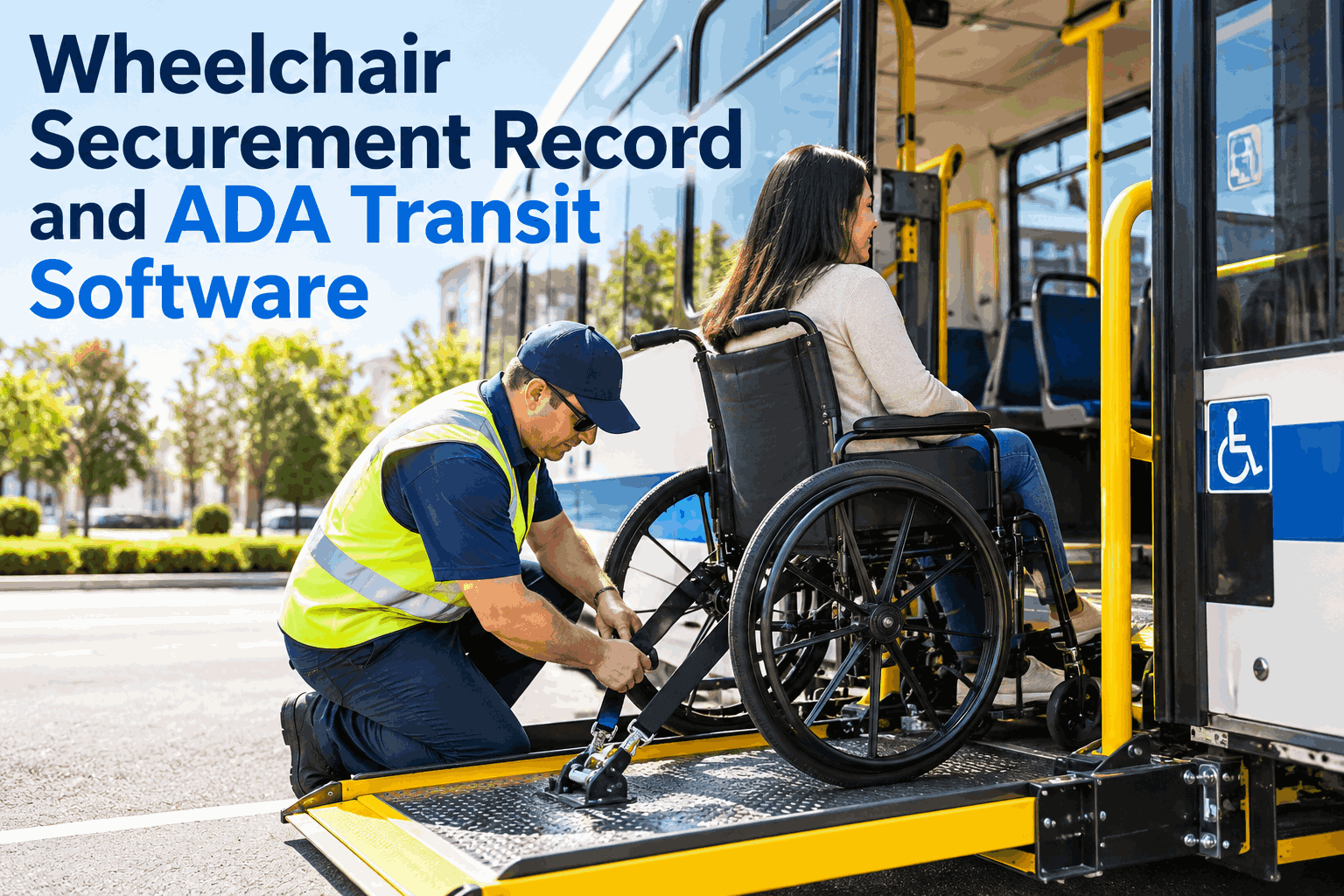
A lift that "worked yesterday" is not the same thing as a lift that is documented, tested, and ready for a rider today. Scoring each unit against its own cycling test, load check, and platform inspection turns a subjective judgment call into a number dispatch can actually act on before pull-out. Teams that want that visibility can book a demo to see readiness scoring on their own fleet roster.
From inspection record to NTD submission without re-typing anything
| Source record | What it captures | Where it lands in NTD |
|---|---|---|
| PM-A/B/C work order | Service date, technician, tasks completed | Vehicle maintenance performance |
| ADA lift inspection log | Cycle test result, defect notes | Accessibility feature reporting |
| Roadcall and defect record | Failure date, cause, repair time | Mean distance between failures |
| Vehicle inventory record | Age, mileage, condition score | TAM and state of good repair data |
Most of the time agencies lose during audit prep is spent translating maintenance records into the format NTD and TAM reporting actually needs. When the source data and the reporting fields already live in the same system, that translation step disappears entirely. This is usually the point where a maintenance manager decides to sign up rather than rebuild the same spreadsheet mapping every quarter, and it is worth a quick book a demo conversation to see the field mapping against your own current NTD submission.
Walk into your next triennial review with the records already built
PM-A/B/C by duty cycle, scored ADA lift readiness, and NTD-ready exports from day one.
Frequently asked questions
What is the difference between PM-A, PM-B, and PM-C.
Each class builds on the one before it. PM-A is a light, frequent service, PM-B adds a mid-tier inspection layer on top of PM-A, and PM-C adds a full deep service on top of both. They are not separate schedules, they are nested.
Why does duty cycle matter more than mileage alone for minibus PM.
A minibus running a dense stop-and-go paratransit route wears differently than one running a light suburban shuttle, even at similar mileage. A single mileage-based schedule for both either over-services one or under-services the other.
How does ADA lift readiness scoring work.
Each unit's lift cycling test, load check, and platform inspection results roll up into a single readiness score, giving dispatch a clear signal before pull-out rather than relying on a driver's last-minute judgment call.
Does this replace our TAM plan or NTD submission process.
No. It generates the underlying maintenance and inspection records your TAM plan and NTD submission depend on, formatted so they map directly to the fields those reports require.
How long does setup take for a mid-size minibus fleet.
Most agencies are live within days, since vehicle records, PM templates, and inspection logs can be loaded in bulk rather than rebuilt one unit at a time.