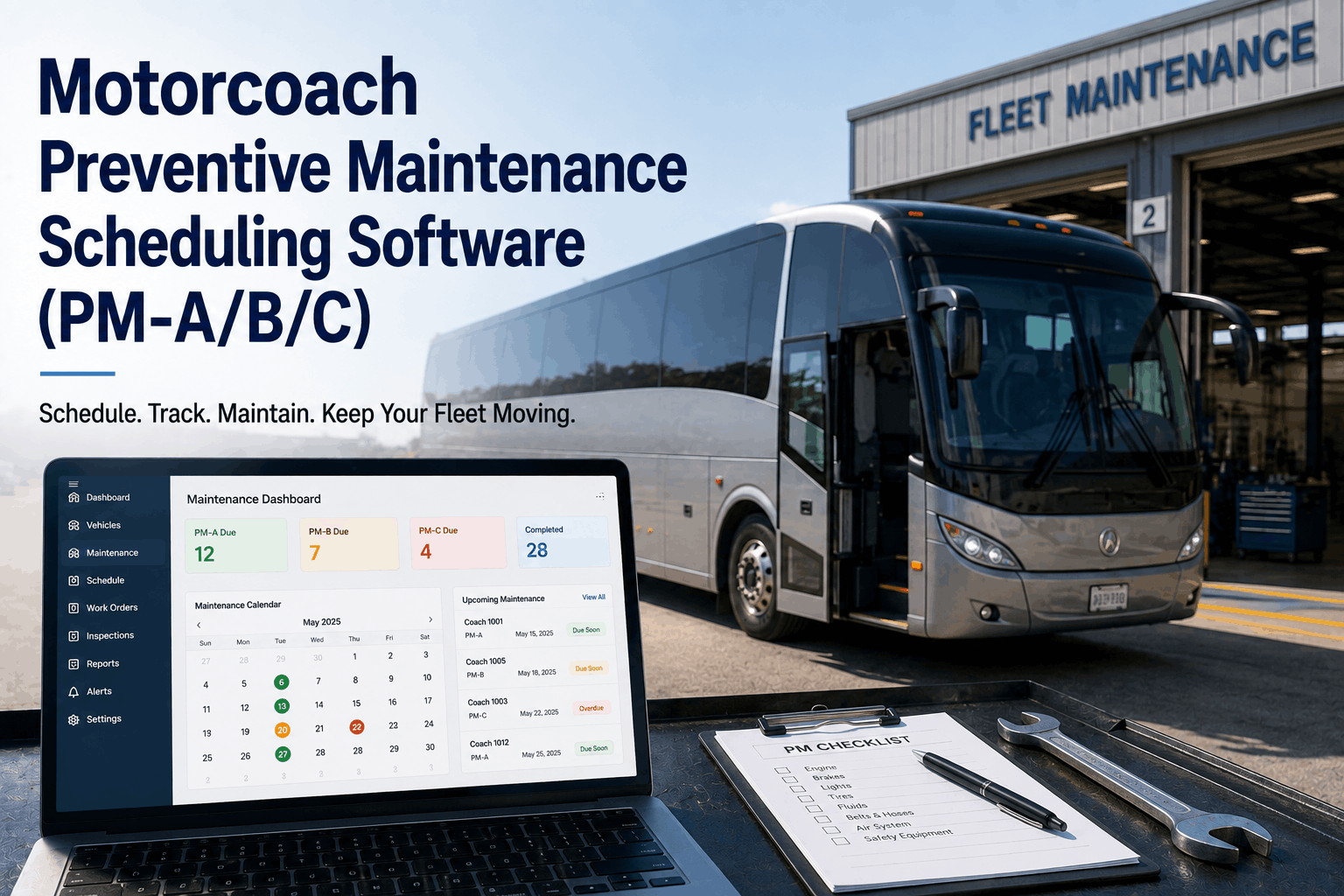
A motorcoach does not get to break down quietly. When a coach stalls on a casino run or a college charter, forty or fifty passengers are stranded at once, and the operator is looking at a replacement vehicle, a delayed contract, and a bill that starts well above what the original PM service would have cost. Motorcoach preventive maintenance scheduling software keeps PM-A, PM-B, and PM-C intervals tied to real mileage, keeps the wheelchair lift and accessibility record current for every over-the-road bus in the fleet, and turns NTD reporting into a same-day export instead of a season-long chase. FleetRabbit was built around exactly that duty cycle, and agencies ready to see it can book a demo anytime.
Reading a Motorcoach's PM Cycle Like a Mileage Ruler
A motorcoach that runs 150,000 or more miles a year is a different maintenance problem than a transit shuttle running a fixed loop. Intervals need to be plotted against real annual mileage, not just calendar months, and a high-mileage charter operation often needs a comprehensive inspection every quarter regardless of where the odometer sits. Agencies that sign up can map their own coach mileage data directly onto a ruler like this instead of tracking three separate spreadsheets per vehicle class.
Basic service
Intermediate
Major service
High-mileage check
Let Real Mileage Set the PM Schedule, Not a Calendar Guess
FleetRabbit plots every coach against its own duty cycle automatically.
Two Accessibility Rulebooks in One Vehicle
An over-the-road bus is regulated differently depending on how it is used, and mixing up the two rulebooks is one of the more common compliance gaps in a motorcoach program. Fixed-route service and demand-responsive charter service answer to different accessibility obligations under 49 CFR Part 37, even when the same coach could technically run either type of trip.
Fixed-Route OTRB Service
Every new coach purchased or leased for fixed-route service must be accessible, and the entire fixed-route fleet must eventually consist of accessible buses. There is no partial-fleet option once the transition period ends.
Demand-Responsive and Charter Service
An accessible coach must be provided on 48 hours advance notice, or equivalent service delivered through another accessible vehicle serving the same points at the same times.
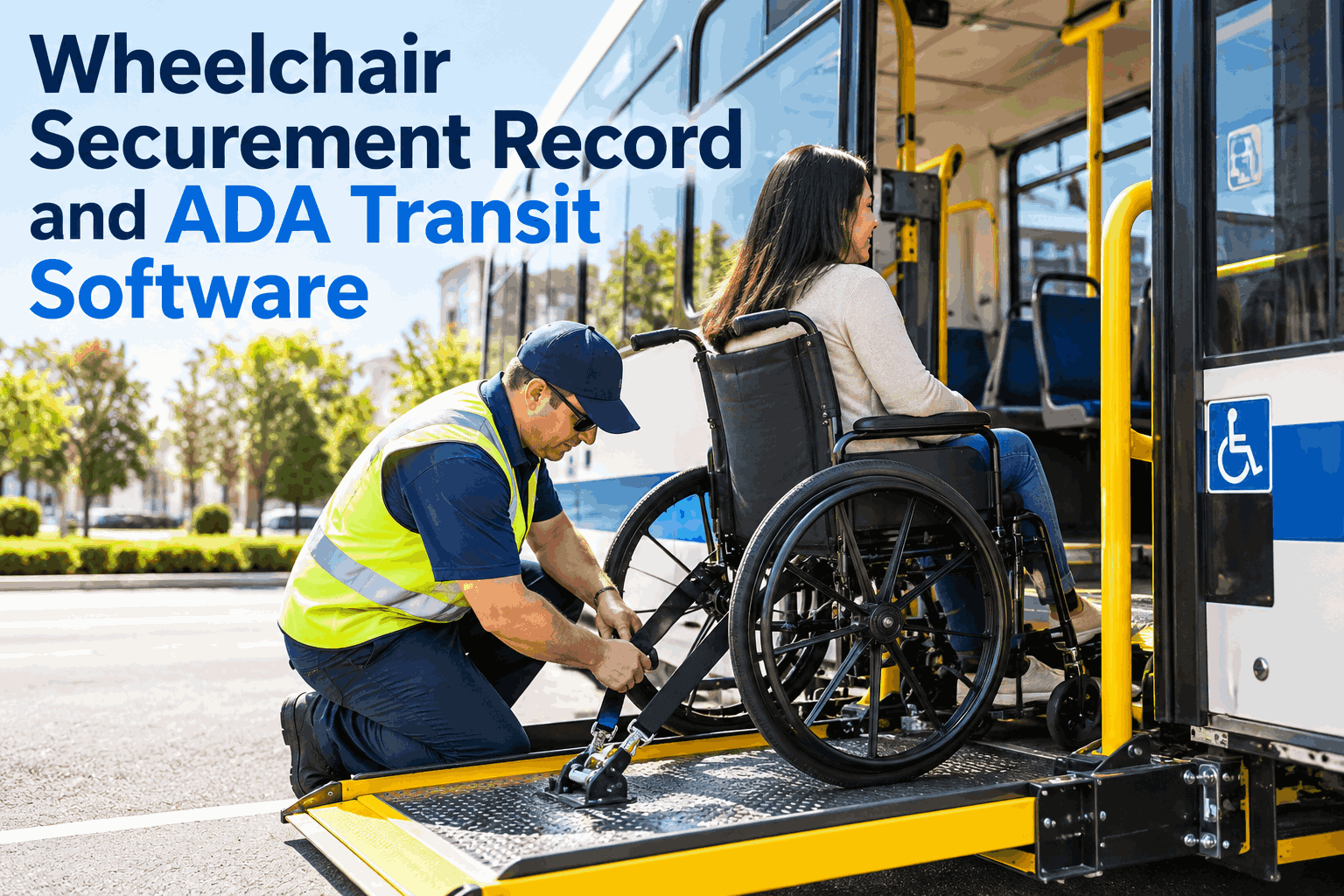
Either way, the lift design load has to meet the 600 pound minimum and two wheelchair securement locations are required on every over-the-road bus, a stricter baseline than the standard transit vehicle rule. Operators that book a demo can see how FleetRabbit tags each coach by its actual service type so the correct accessibility obligation is never mixed up with the other.
What Has to Be Checked Before Wheels Roll
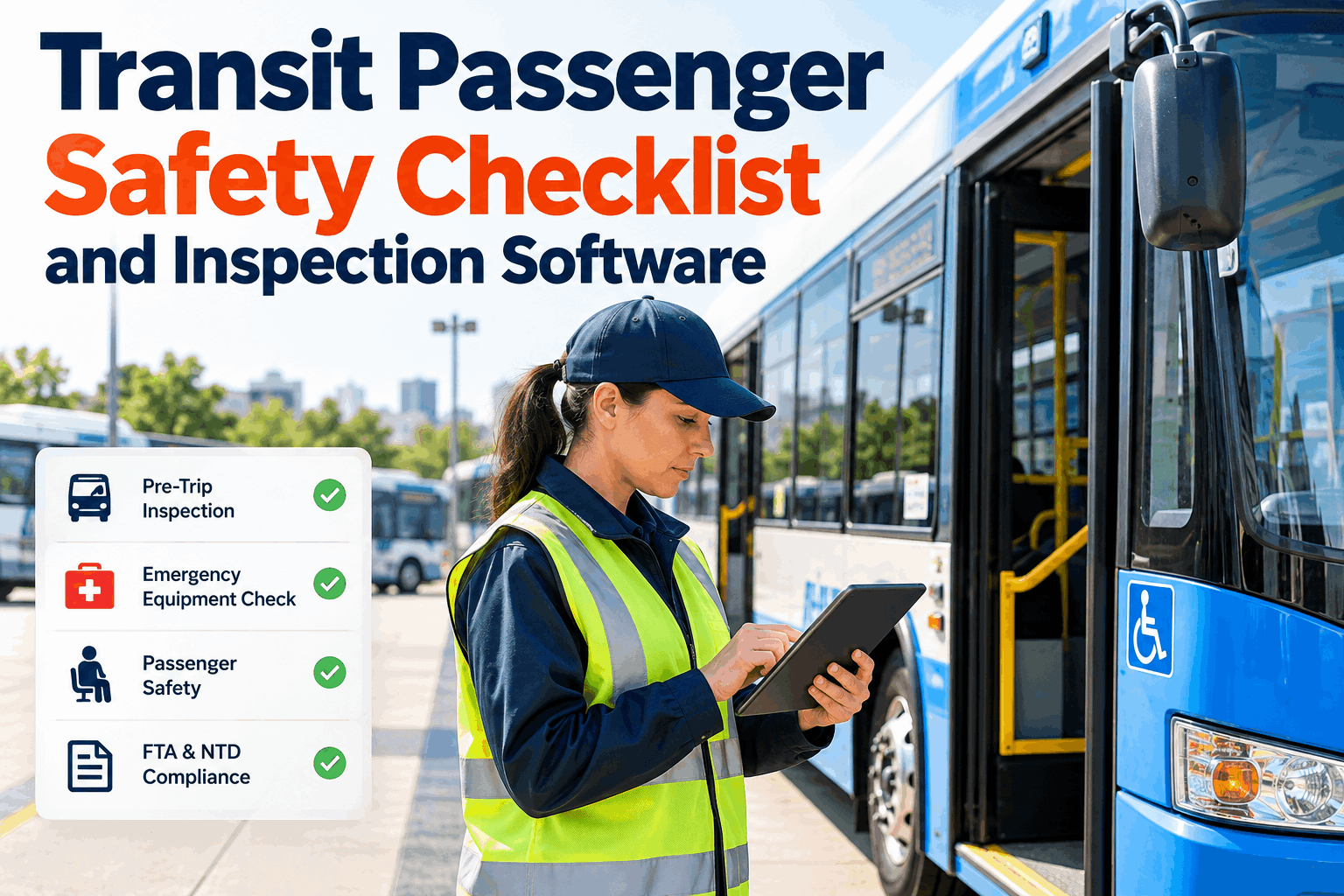
A charter departure day does not leave room for discovering a problem at the curb with fifty passengers already boarding. The pre-departure check for a motorcoach covers more ground than a standard DVIR because a coach carries accessibility equipment, an elevated passenger deck, and emergency egress systems a transit shuttle does not.
DVIR reviewed and prior defects confirmed as resolved before dispatch
Wheelchair lift or ramp cycled through a full deploy and stow, securement points checked
Pushout windows, emergency doors, and emergency door marking lights tested and logged
Tire condition and inflation checked, a leading factor in motorcoach rollover risk
Baggage bay, undercarriage, and elevated deck access points cleared for the trip
Every item on that list either passes and gets logged, or fails and holds the coach out of dispatch automatically. Fleets that sign up replace the clipboard version of this check with a digital one that a dispatcher can see in real time.
The Shift From Reactive to Documented
Federal tire safety research has flagged motorcoach tire wear as a meaningful factor in rollover crashes, which is exactly the kind of risk a documented PM program is meant to catch before it becomes a road incident rather than after. The gap between a reactive coach program and a documented one shows up clearly once the numbers are tracked side by side.
What Runs Underneath a Motorcoach Program
Mileage-mapped PM-A/B/C
Service tiers triggered by real annual mileage instead of a fixed calendar assumption.
Service-type accessibility tagging
Fixed-route and demand-responsive coaches tracked against the correct ADA obligation.
Pre-departure digital checks
Lift, egress, and tire checks logged and visible to dispatch before wheels roll.
NTD-ready exports
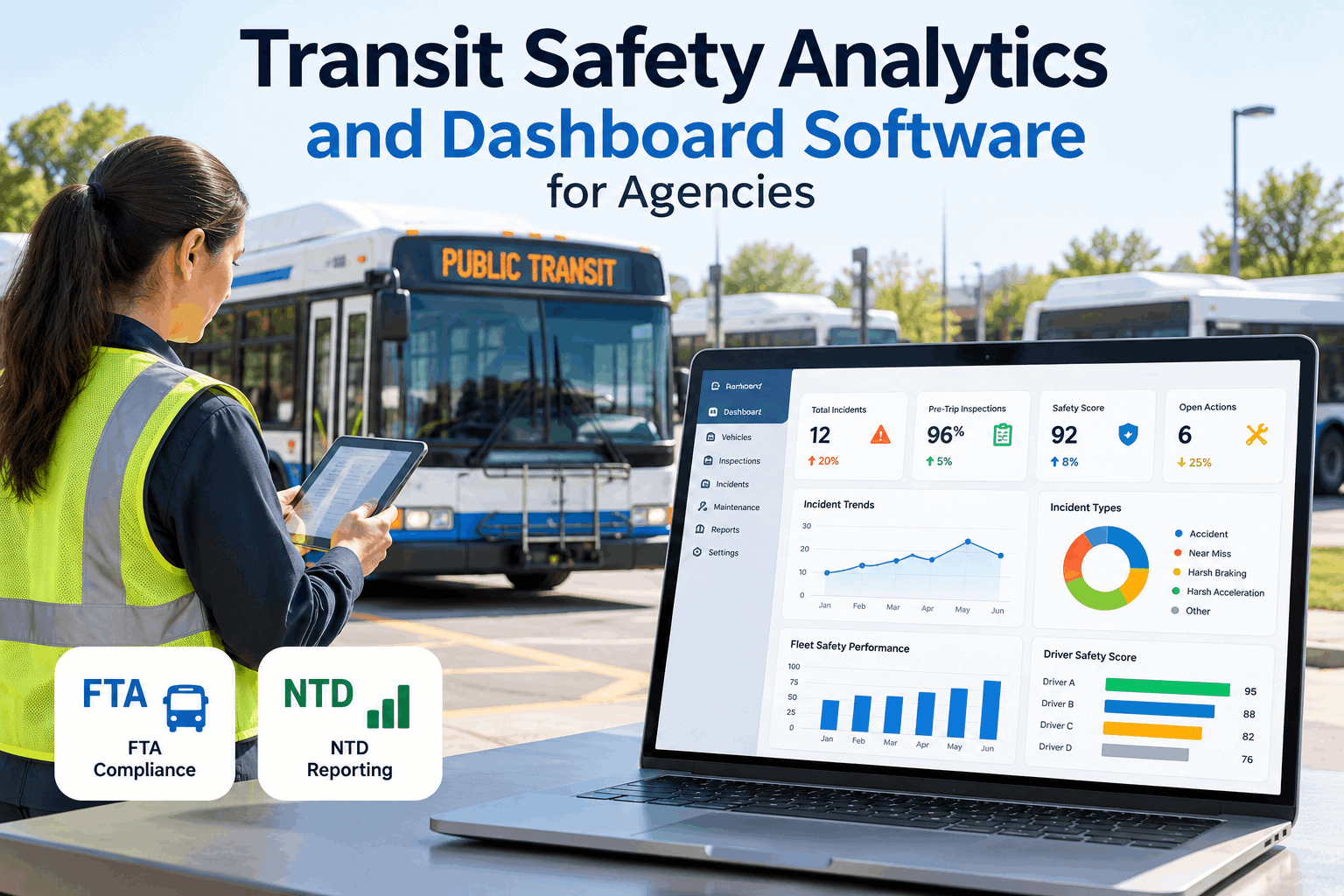
Mileage, PM completion, and inspection data aligned for a same-day submission.
Keep Every Coach Departure-Ready and Audit-Ready
One system for PM-A/B/C scheduling, accessibility checks, and NTD-ready reporting.
Common Questions
How often does a motorcoach need major PM service
Most OEMs specify major engine and drivetrain service every 15,000 to 25,000 miles, and high-mileage charter operations running 150,000 or more miles a year often add a quarterly comprehensive inspection on top of that.
Do all motorcoaches need to be wheelchair accessible
Fixed-route operators must eventually run an entirely accessible fleet, while demand-responsive and charter operators can meet the requirement by providing an accessible coach on 48 hours notice or delivering equivalent service.
How many wheelchair securement locations does an over-the-road bus need
Two securement locations are required on every over-the-road bus covered by the accessibility rule, along with a lift rated for a minimum design load of 600 pounds.
What should a pre-departure check cover beyond a standard DVIR
Lift or ramp cycling, pushout window and emergency door testing, tire condition, and baggage bay and undercarriage access, in addition to the driver's standard inspection report.
Why does NTD reporting take so long for motorcoach fleets
Because mileage, maintenance history, and service records typically live in separate spreadsheets kept by different staff, and reconciling them by hand before submission is where most of the delay comes from.