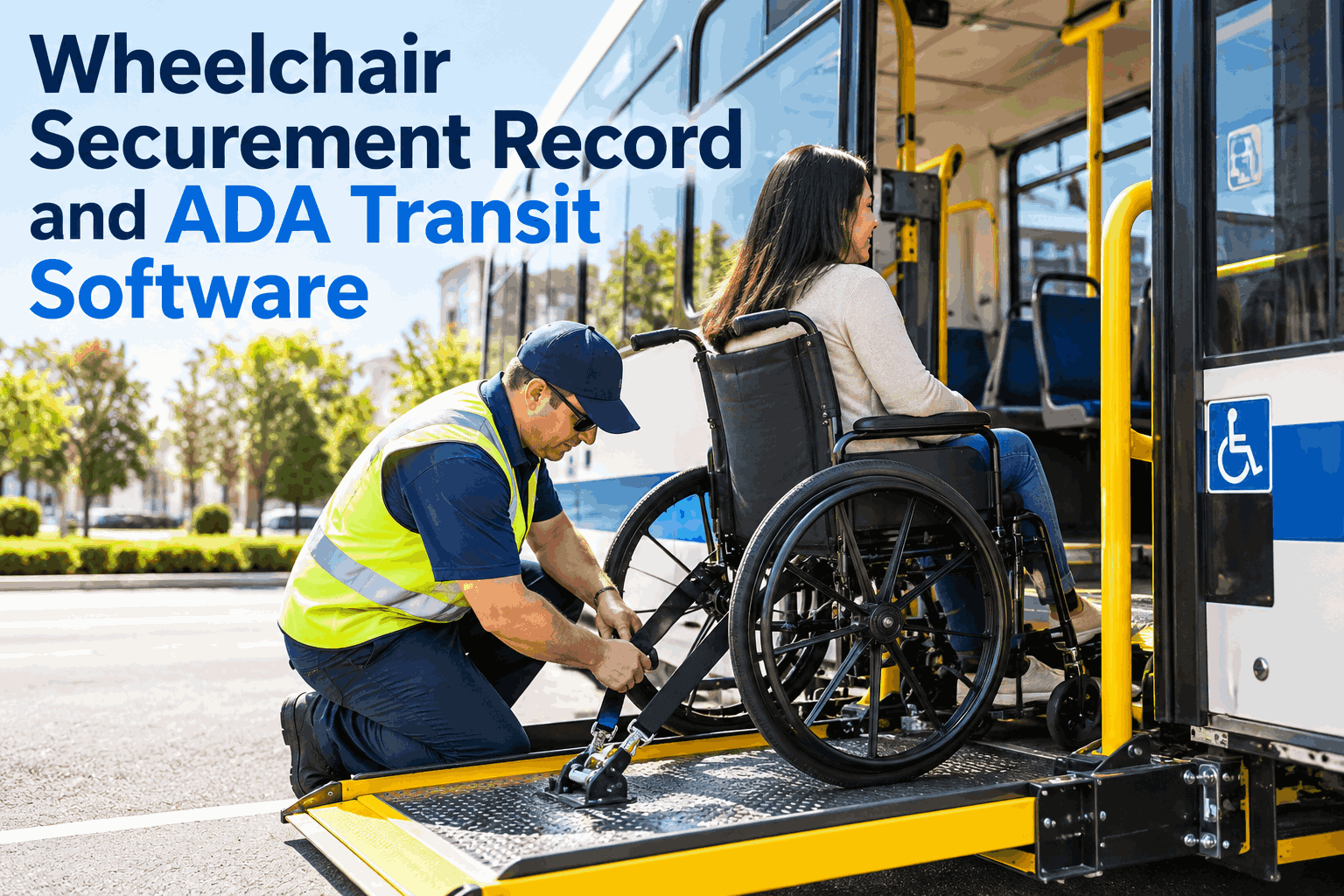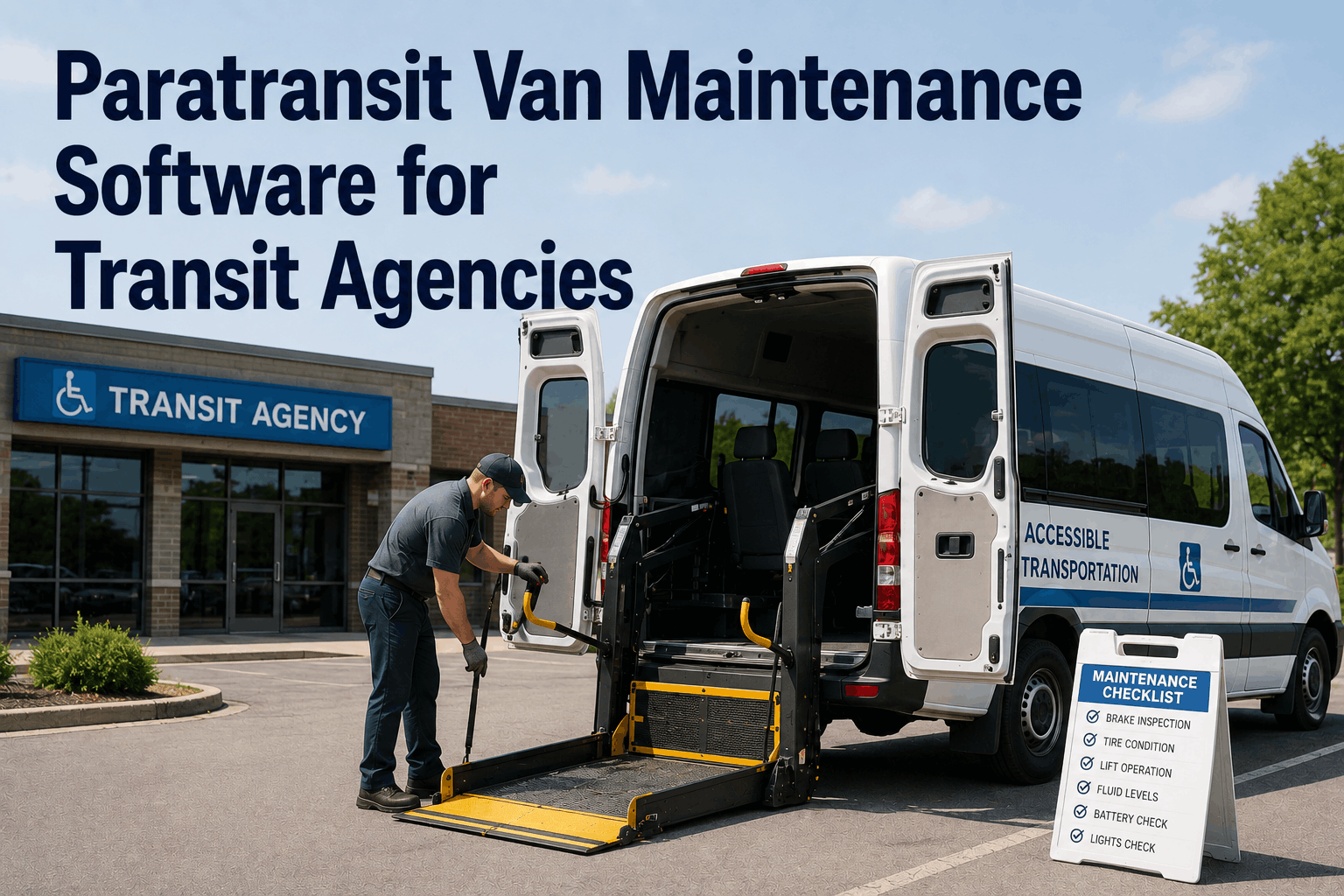
A paratransit driver pulls up to a 7:14 a.m. pickup. The rider is already outside in a power chair. The driver hits the lift deploy button and nothing happens. A second try gets the platform halfway out before it freezes. Dispatch is now thirty minutes from the nearest backup vehicle, and the rider is going to miss a dialysis appointment. That scenario is exactly what paratransit van maintenance software is built to prevent, and it is worth understanding what actually has to happen behind the scenes to stop it before it starts.
The Federal Protocol Behind Every Lift Failure
When a wheelchair lift fails during service, agencies are not just dealing with a mechanical problem. Under 49 CFR Section 37.163(f), a strict response sequence kicks in the moment a lift goes down, and missing any step in that sequence creates a documented compliance violation on top of a stranded passenger.
Radio dispatch immediately with vehicle ID, location, and failure details, documented on the DVIR
An accessible vehicle must be sent for the stranded passenger, no exceptions
Incident report filed with passenger impact and timestamped response time
Vehicle pulled from service until the lift is repaired and re-verified
Agencies that have lived through even one of these incidents tend to move fast toward a system that catches lift issues before a rider is standing at the curb. That is usually the point where a fleet manager decides to sign up for something that closes the gap between a daily inspection and a dispatch decision.
How a Dispatch Hold Flag Actually Stops This Before It Happens
The single most effective control against a mid-route lift failure is refusing to let a van onto an accessible route in the first place if its daily lift check was not passed. A dispatch hold flag ties the pre-trip inspection result directly to vehicle assignment, so a failed or skipped check makes a van unassignable automatically, not just flagged for someone to notice later. It is the kind of control agencies usually only discover they need after they book a demo and see it running against a real fleet.
This single automation is often the difference between a lift failure caught on the lot at 6 a.m. and one discovered at a rider's curb an hour later. Agencies evaluating this kind of workflow against their own fleet can book a demo to see exactly how the hold and release logic works before committing to a rollout.
Stop a failed lift check from ever reaching a rider's curb
Automated dispatch holds, inspection tracking, and audit-ready documentation in one system.
The Three Inspection Tiers Every Accessible Van Needs
Wheelchair lift maintenance is not a single task, it is three layered checks running at different frequencies, and paratransit fleets that lose track of any one tier are the ones that end up with an inconsistent lift record when FTA comes calling.
Lift cycled and visually inspected before the van enters service. Any failure holds the van from an accessible route until resolved.
Full functional test including a load test at 600 pounds, checking all controls, interlocks, and emergency deployment systems.
Confirms the lift still meets ADA platform dimension, slope, and securement standards after a full year of daily cycling.
What an FTA Reviewer Actually Asks For
A triennial FTA accessibility compliance review does not accept a general impression that lifts are being maintained. Reviewers request specific documentation, and the gap between agencies with a smooth review and agencies scrambling usually comes down to whether that documentation already exists in one searchable place.
Daily pre-service inspection logs with timestamps and driver identification
Lift failure records including response times and repair timelines
Quarterly and annual servicing records for every accessible vehicle
Driver training documentation covering ADA lift operation
Any complaints received related to lift availability or failure
Securement system and audible announcement equipment functionality logs
Agencies producing this on paper often cannot assemble a full twelve months of records inside a review window. Agencies running everything through a connected system have pulled a full year of documentation in a matter of minutes. That gap alone is enough reason for many transit maintenance teams to sign up before their next scheduled review.
Walk into your next FTA review with every lift record ready
Daily, monthly, and annual inspection tracking, all searchable by vehicle in seconds.
Frequently Asked Questions
What is required when a wheelchair lift fails during a trip
Under 49 CFR Section 37.163(f), the response includes immediate radio dispatch with vehicle and failure details, sending an accessible backup vehicle for the stranded passenger, filing a timestamped incident report, and pulling the vehicle from service until the lift is repaired and re-verified.
How often does a wheelchair lift need to be inspected
Lifts need a daily pre-trip cycle and visual check, a monthly functional test including a 600 pound load test, and an annual verification confirming the lift still meets ADA platform, slope, and securement standards.
What is a dispatch hold flag and why does it matter
A dispatch hold flag automatically prevents a van from being assigned to an accessible route if its daily lift inspection was failed or skipped, closing the gap between a known issue and a van still being sent out on a route.
What documentation does an FTA accessibility compliance review require
Reviewers typically ask for daily pre-service inspection logs, lift failure and response time records, quarterly and annual service records, driver training documentation, and any complaints related to lift availability, all covering roughly a twelve month period.
How does paratransit van maintenance differ from fixed-route bus maintenance
Paratransit vans carry the same ADA lift and securement obligations as fixed-route buses, but the demand-response scheduling model means a single vehicle going out of service can strand a rider with a time-sensitive appointment, making dispatch-level hold controls especially important.