A paratransit van misses more than a mile marker when a PM interval slips, it misses a scheduled pickup for a rider who has no other way to get to a dialysis appointment or a job. Paratransit van preventive maintenance scheduling software exists to make sure that never happens by chance. FleetRabbit builds PM-A, PM-B, and PM-C intervals around each van's actual mileage and duty cycle, keeps the wheelchair lift inspection record attached to every trip-ready check, and turns NTD reporting from a multi-week scramble into a same-day export. If your agency is still tracking any of that on paper, you can book a demo and see what a connected system looks like.
PM-A, PM-B, and PM-C Are Not Three Separate Jobs
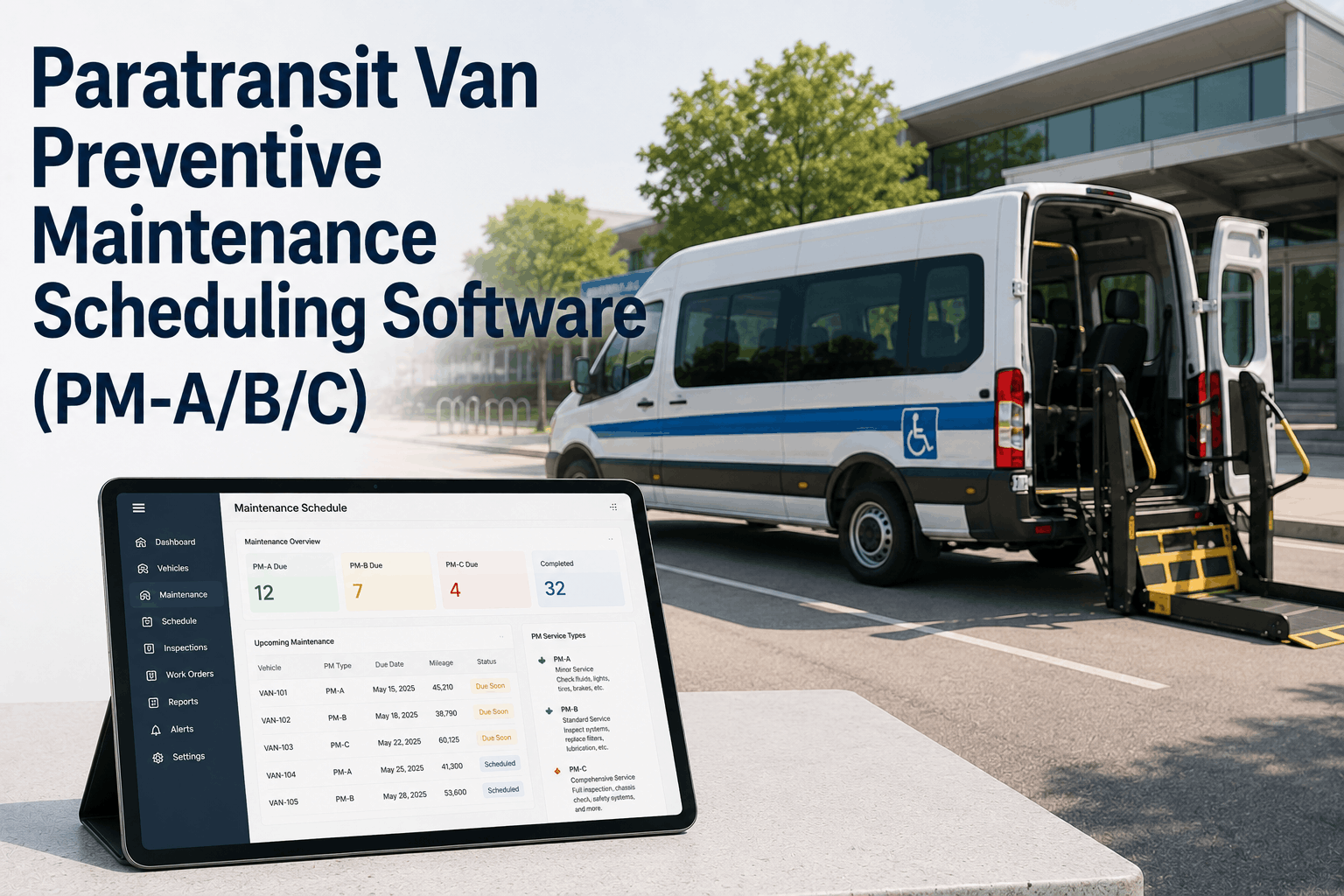
The most common mistake in a paratransit maintenance program is treating A, B, and C as unrelated checklists instead of a nested sequence. Each tier builds on the one before it: PM-B repeats every PM-A task and adds a deeper service layer, and PM-C repeats everything in A and B before adding its own major-interval items. A van that skips straight to a C service without having completed its A and B intervals is not actually getting a complete inspection, it is getting a partial one with a bigger invoice attached.
Transmission service, suspension and steering inspection, exhaust and chassis check, plus everything below
Battery and belt inspection, coolant system check, brake component inspection, plus everything below
Oil and filter change, fluid levels, tire pressure and tread, lights and wipers, basic safety check
FleetRabbit tracks where every van sits in that cycle automatically, so a dispatcher scheduling a C service can see at a glance that the A and B items are already covered rather than relying on a technician's memory. Agencies that sign up can map their own mileage intervals directly onto this structure in a single setup pass.
Stop Guessing Which PM Tier a Van Is Due For
Let FleetRabbit track A, B, and C intervals automatically from real mileage data.
The Wheelchair Lift Check Riders Depend On
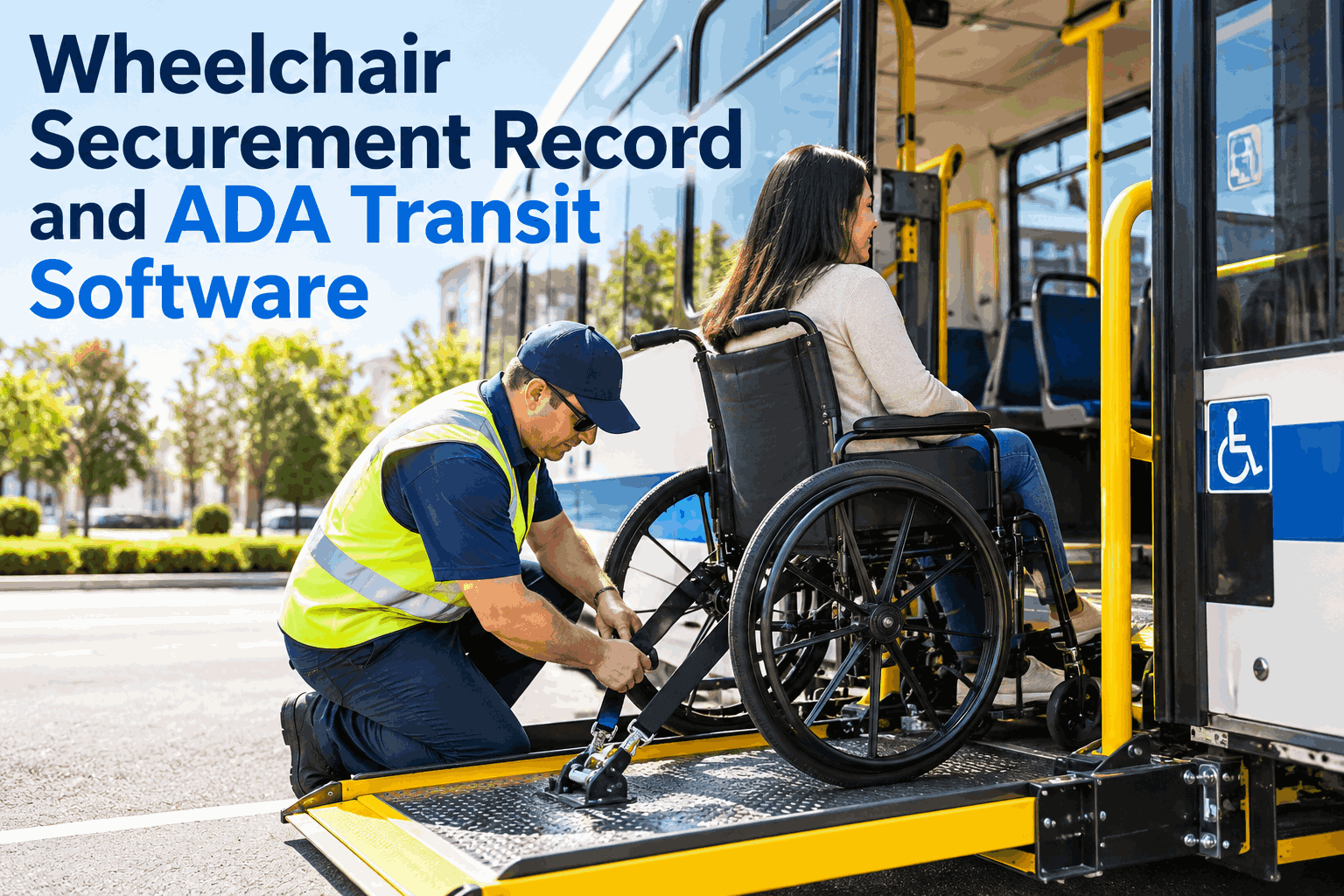
For a fixed-route bus, a missed inspection is an inconvenience. For a paratransit van, a lift that fails mid-route strands a rider who may have no way to get home without it. Lift and ramp maintenance records are one of the most heavily scrutinized items in an FTA audit, and they need to be tracked at three separate frequencies rather than folded into a single generic checklist.
A lift-failure defect logged during a pre-trip check should automatically hold the van out of dispatch until it is cleared, not sit in a paper binder until someone happens to notice it. That is the kind of gap a connected inspection workflow closes, which is why agencies book a demo before their next ADA compliance review.
Where NTD Reporting Actually Breaks Down
NTD validation does not just check whether each form was filled out, it checks whether the forms agree with each other. Vehicle miles on the service data form need to line up with the fleet inventory form. Maintenance failure counts need to be plausible against the miles a van actually logged. When those numbers come from separate spreadsheets kept by separate people, mismatches are almost guaranteed, and every mismatch is a question an auditor gets to ask.
FleetRabbit keeps mileage, PM completion, and failure records tied to a single vehicle record from day one, so the numbers that feed each NTD form already agree before a report is ever generated. Agencies that sign up ahead of their fiscal year end typically cut weeks off the submission process.
What a Connected Program Replaces
Paper and Spreadsheets
- PM tier tracked from memory or a whiteboard
- Lift inspection sheets filed separately from work orders
- Mileage reconciled by hand across three spreadsheets
- NTD prep starts from a filing cabinet search
FleetRabbit
- PM-A/B/C tier calculated automatically from live mileage
- Lift defects hold a van out of dispatch until cleared
- One mileage record feeds every downstream report
- NTD-aligned export generated in a single pass
Why Duty Cycle Changes the Interval
A paratransit van rarely logs highway miles the way a commuter vehicle does. Frequent stops, curbside idling while a rider boards, and short trips that never let the engine reach full operating temperature all accelerate wear in ways a flat mileage number understates. Manufacturer intervals are a starting point, not a ceiling, and most agencies running door-to-door service find they need to tighten A and B intervals below the factory recommendation once actual duty cycle data comes in.
Duty-cycle adjusted intervals
PM triggers that account for stop-and-go routes, not just odometer miles.
Lift and ramp defect holds
A failed accessibility check automatically removes a van from the dispatch queue.
NTD-ready exports
Mileage, PM completion, and failure data pre-aligned across every relevant form.
Single vehicle record
One history per van instead of separate logs for maintenance, inspections, and reporting.
Turn PM Compliance Into an NTD-Ready Record
One system for PM-A/B/C scheduling, lift inspections, and reporting.
Common Questions
What is the difference between PM-A, PM-B, and PM-C for a paratransit van
PM-A is the basic short-interval service such as oil and fluid checks, PM-B repeats those items and adds a deeper inspection layer at a longer interval, and PM-C repeats both A and B before adding major-interval items like transmission and suspension service.
How often should a wheelchair lift be inspected
A basic cycling check belongs in the daily pre-trip inspection, a deeper mechanical check should happen monthly, and a full load-rated inspection should be documented annually.
Why does NTD reporting take agencies weeks to complete
Because vehicle mileage, maintenance records, and service data usually live in separate spreadsheets kept by different staff, and reconciling them by hand before submission is where most of the time goes.
Should PM intervals be shorter for paratransit vans than the manufacturer recommends
Often yes, since frequent stops, curbside idling, and short trips create more wear per mile than the highway driving manufacturer intervals typically assume.
Can a failed lift inspection automatically take a van out of service
Yes, when the inspection is logged digitally a failed result can trigger an automatic dispatch hold rather than depending on someone noticing a paper form later.