Specialty passenger transportation directors, luxury nightlife charter operators, and event transit superintendents manage an asset class with distinct operational exposures: the custom charter party bus. Converting heavy-duty cutaway chassis or retired 40-foot transit coaches into mobile VIP lounges introduces mechanical vulnerabilities unseen in standard public transit: secondary high-output passenger cabin air conditioning systems running at continuous load, auxiliary high-draw power inverters supporting sound amplifiers and mood lighting, custom perimeter seating that risks blocking escape pathways, and pneumatic or hydraulic wheelchair cassette lifts. When charter operations run their pre-trip pull-out inspections with paper clipboards or unverified mental checklists, systemic risks multiply: emergency roof hatches go unverified, auxiliary battery banks overheat, and vehicles exceed the strict 10% preventive maintenance variance window mandated under Federal Transit Administration (FTA) Title 49 CFR Part 625 Transit Asset Management (TAM) rules. A weekend mechanical breakdown or an unverified emergency door latch defect leaves passengers stranded, triggers multi-million-dollar personal injury tort liabilities, and risks commercial operating authority revocations. Fleet Rabbit delivers dedicated party bus maintenance and pull-out readiness software engineered for high-liability passenger charters. Standardize digital mobile pre-trip walkarounds, automate tiered PM-A/B/C schedules, verify ADA lift cycles, track CAN-bus electrical and powertrain telemetry, and compile audit-defensible NTD records in one unified platform. Book a Demo to see our party bus fleet maintenance and pull-out software in action.
Charter & Luxury Transit
FTA 49 CFR Part 625 Ready
Electrical & Egress Safety
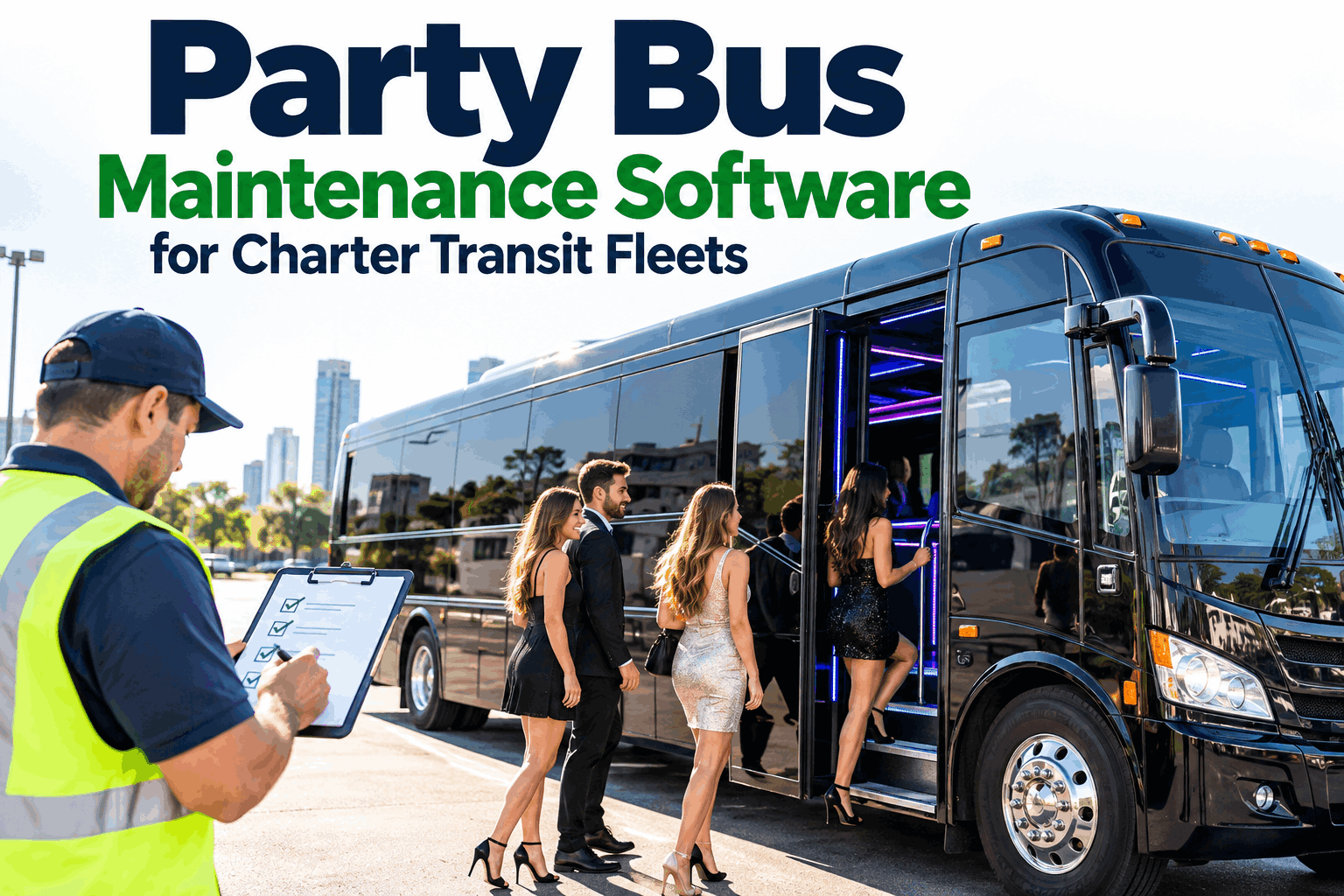
Party Bus Maintenance Software for Charter Transit Fleets
A modern operational management and regulatory compliance architecture for entertainment transit operators: enforce digital 360-degree morning and evening pull-out walkarounds, monitor auxiliary inverter draw, track strict 10% FTA PM intervals, and safeguard charter booking revenue.
Auxiliary Inverter Telemetry
Emergency Egress Path Verification
ADA Cassette Lift Cycle Tracking
Automated NTD Audit Sync
99.8%
Pull-Out Clearance Rate
Mobile DVIR audits eliminate weekend terminal departure delays.
100%
FTA 10% Window Compliance
Automated J1939 odometer logging keeps PM-A/B/C schedules on track.
0
Saturday Electrical Stalls
Dual-alternator and inverter load monitoring stops voltage crashes.
$5
Per Vehicle / Month
All-inclusive cloud platform with zero long-term RFP contract lock-in.
Party Bus Telematics, Pull-Out Verification & Compliance Pipeline
Zone 01
Cabin & Audio Draw
Auxiliary inverter draw, roof escape hatches, second-cabin A/C fans, and perimeter seat grab stanchions.
Zone 02
Safety & Egress
Door interlock status, emergency push-out window pins, fire extinguishers, and first-aid biohazard kits.
Zone 03
Chassis & Brakes
CAN-bus true miles, air drum stroke checks, battery cranking voltage curves, and ADA cassette lifts.
Zone 04
Gate Clearance
Instant digital gate pass, defect lockout triggers, automated spare swap, and 1-click NTD report sync.
Safeguard Weekend Charter Bookings and Halt Roadside Stalls
Empower charter drivers with guided pre-trip inspections, automate strict 10% FTA PM intervals, and streamline NTD passenger-mile reporting for just $5/asset/month.
The Mechanical Vulnerabilities of Custom Party Bus Operations
Party buses and luxury charter coaches navigate an operational environment marked by stop-and-go urban corridors, high-amperage entertainment grids, and shifting passenger loads. Managing converted luxury vehicles with generic delivery logs or paper sheets creates significant mechanical and legal exposure. Sign up to automate party bus maintenance across your charter fleet.
01
Auxiliary Electrical Overload & Alternator Diode Failure
Custom party buses feature heavy auxiliary loads: high-wattage sound amplifiers, exterior and interior lighting rigs, video monitors, and secondary high-output A/C units running simultaneously. This pulls immense current from dual-alternator systems. Without real-time voltage monitoring, alternator diodes overheat and battery banks drain, stranding vehicles curbside on prime Saturday night bookings.
Book a demo to inspect our electrical diagnostic telemetry modules.
02
Emergency Egress Obstruction & Custom Interior Violations
Custom vehicle builders frequently install wrap-around perimeter leather seating and partition bars that inadvertently block push-out emergency side windows and floor-level fire extinguisher access. Drivers who skip pre-trip walkarounds fail to verify that emergency roof escape hatches and window release pins operate freely, exposing operators to catastrophic liability during transit safety enforcement stops.
03
The Strict FTA 10% PM-A/B/C Variance Window Trap
Federal Transit Administration oversight requires all scheduled preventive maintenance to occur within a strict 10% mileage variance of the manufacturer's established benchmark (e.g., a 6,000-mile inspection must occur between 5,400 and 6,600 miles). On long weekend charter runs, buses quickly overshoot service thresholds. Manual paper logs miss this window, resulting in immediate audit deficiency citations.
Sign up to automate FTA 10% PM variance window tracking.
04
Stop-and-Go Brake Drum Glazing & Caliper Seizure
Party buses operate through congested entertainment districts with frequent curbside passenger pick-ups. Continuous low-speed brake applications create sustained friction heat, causing air brake drums to glaze and pushrod strokes to drift. When drivers fail to check brake chamber travel during pre-trip pull-outs, stopping distances increase, raising the risk of rear-end collisions in crowded corridors.
The Tiered Charter Bus PM Matrix: PM-A, PM-B, and PM-C Schedules
To comply with FTA Transit Asset Management (TAM) requirements under 49 CFR Part 625, charter transit operations schedule party bus servicing through structured, telematics-linked preventative tiers. Book a demo to calibrate party bus PM intervals for your charter fleet.
| Preventive Maintenance Tier |
Mileage / Operating Benchmark |
Inspection, Lubrication & Component Scope |
Compliance & Operational Objective |
| PM-A: Safety & Electrical Sweep |
Every 4,000 Miles / 250 Engine Hours |
Chassis grease lubrication; air brake pushrod stroke measurement; auxiliary dual-alternator charging output test; emergency exit push-out window and roof hatch latch verification; ADA wheelchair cassette lift deployment cycle; passenger door brake interlock test. |
Ensure vehicle passes daily pre-trip standards, prevent brake drum heat glazing, eliminate passenger emergency egress hazards, and maintain ADA accessibility. |
| PM-B: Powertrain & Auxiliary Power |
Every 12,000 Miles / 750 Engine Hours |
PM-A scope PLUS: synthetic engine oil and filter flush; primary and secondary fuel filter replacement; dual-alternator diode ripple and battery conductance test; transmission fluid and hydraulic retarder check; auxiliary power inverter cooling fan service; secondary cabin A/C condenser coil cleaning. |
Maintain heavy stop-and-go cooling reliability, prevent electrical brownouts under full passenger sound and lighting loads, and protect engine warranties. |
| PM-C: Heavy Structural & Overhaul |
Every 24,000 Miles / 1,500 Engine Hours |
PM-A & PM-B scope PLUS: transmission filter and fluid flush; differential gear lube replacement; engine cooling loop flush and vacuum bleed; air dryer desiccant cartridge swap; passenger floor framing and dance pole subframe anchor weld ultrasonic crack inspection. |
Comprehensive structural integrity certification, roll-stability verification, and State of Good Repair (SGR) compliance under federal standards. |
The 4 Diagnostic Pillars of Party Bus Maintenance Software
Fleet Rabbit unites on-board vehicle diagnostic telemetry, custom passenger cabin inspection tools, and garage repair queues into an automated, paperless transit management platform. Sign up to connect your charter bus diagnostic telemetry.
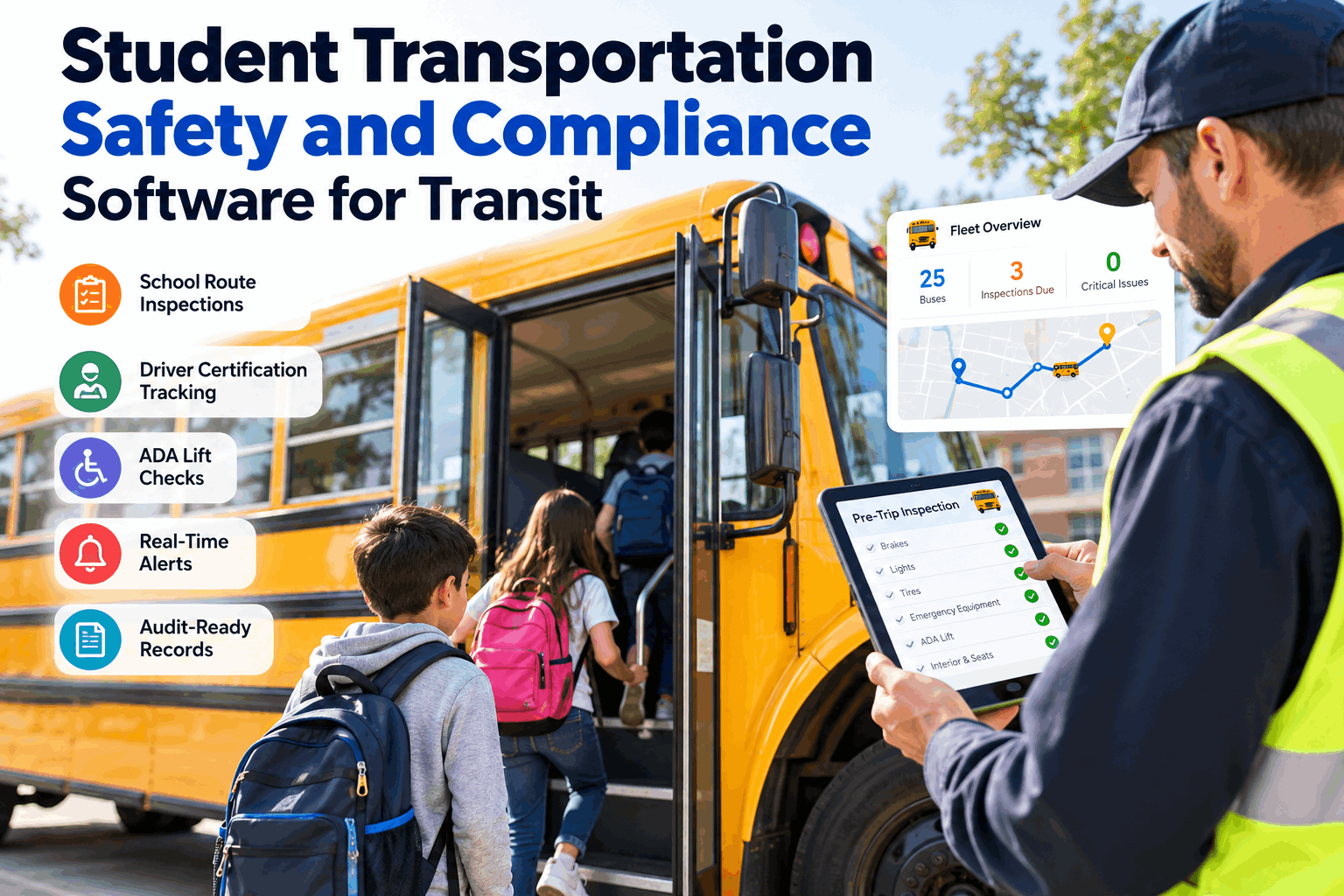
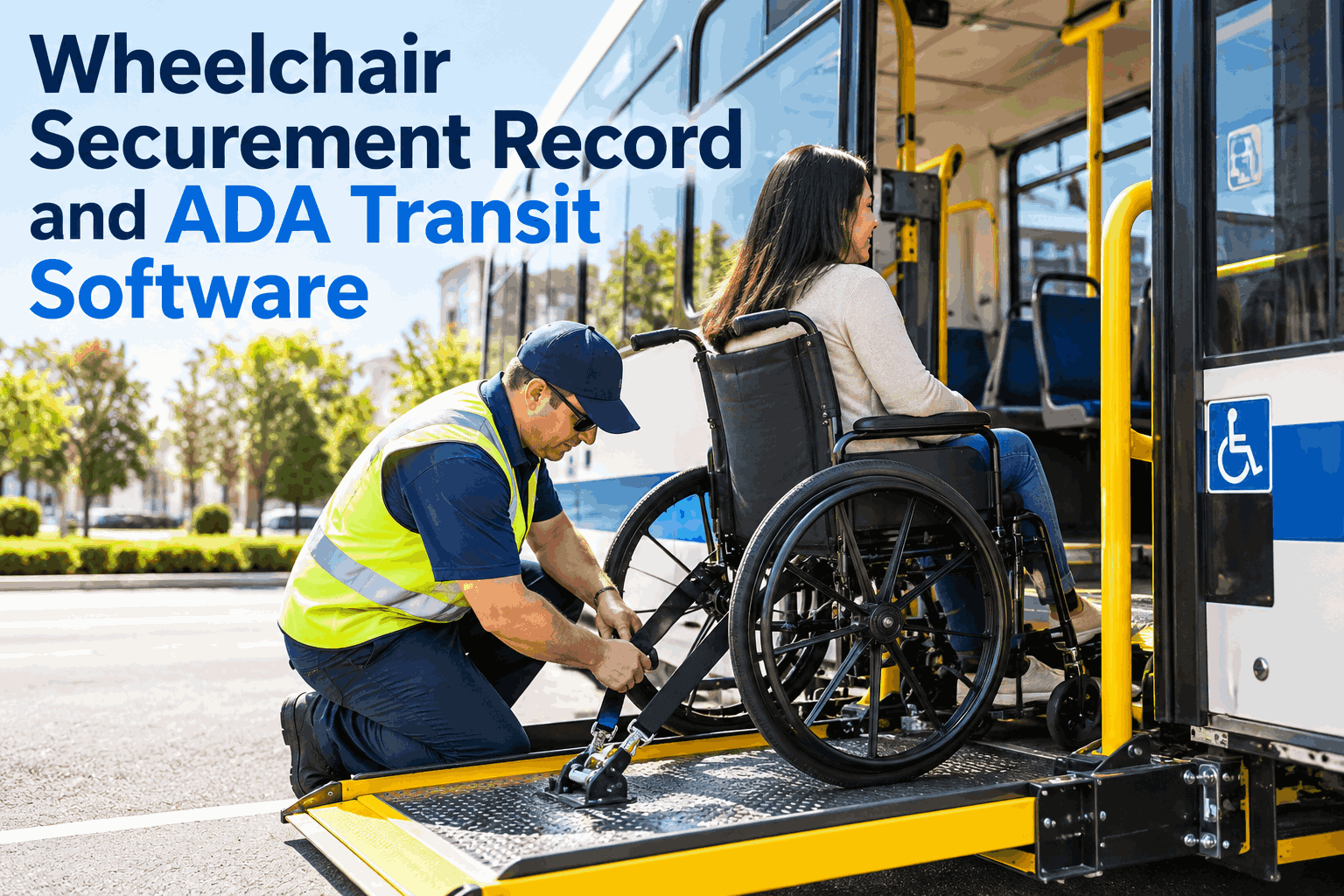
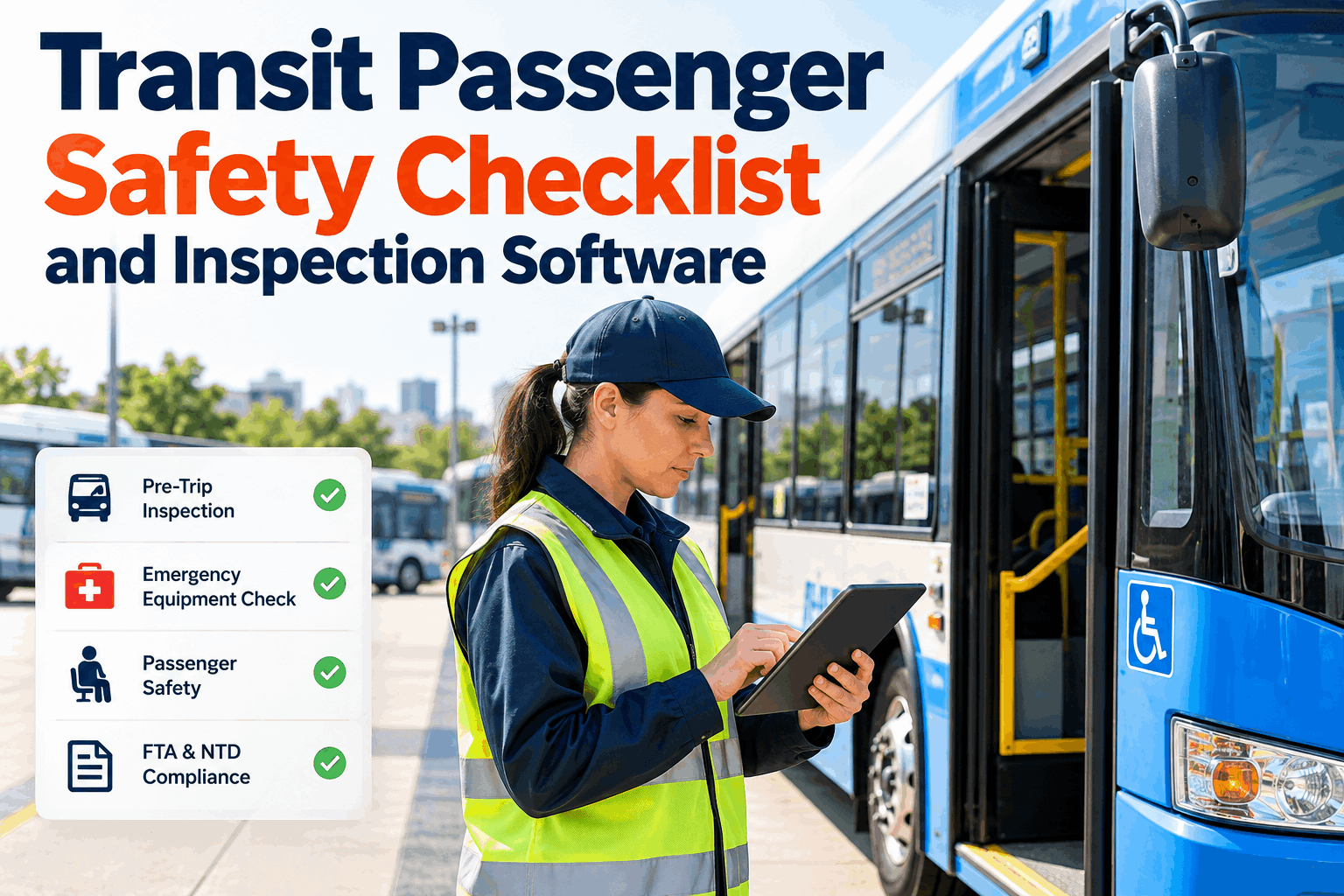
Equip charter chauffeurs with an intuitive mobile DVIR application on agency tablets. The workflow guides drivers through a complete 360-degree walkaround: verifying emergency push-out window levers, checking auxiliary inverter breakers, cycling ADA wheelchair lifts, testing perimeter seating seatbelts, and confirming fire extinguisher charge tags before weekend departure.
Extract verified odometer and engine runtime data directly through J1939 CAN-bus telemetry. The software automatically tracks approaching PM-A, PM-B, and PM-C service thresholds, alerting garage supervisors as vehicles enter the mandatory 10% window to ensure complete federal compliance.
Book a demo to inspect our automated 10% PM compliance engine.
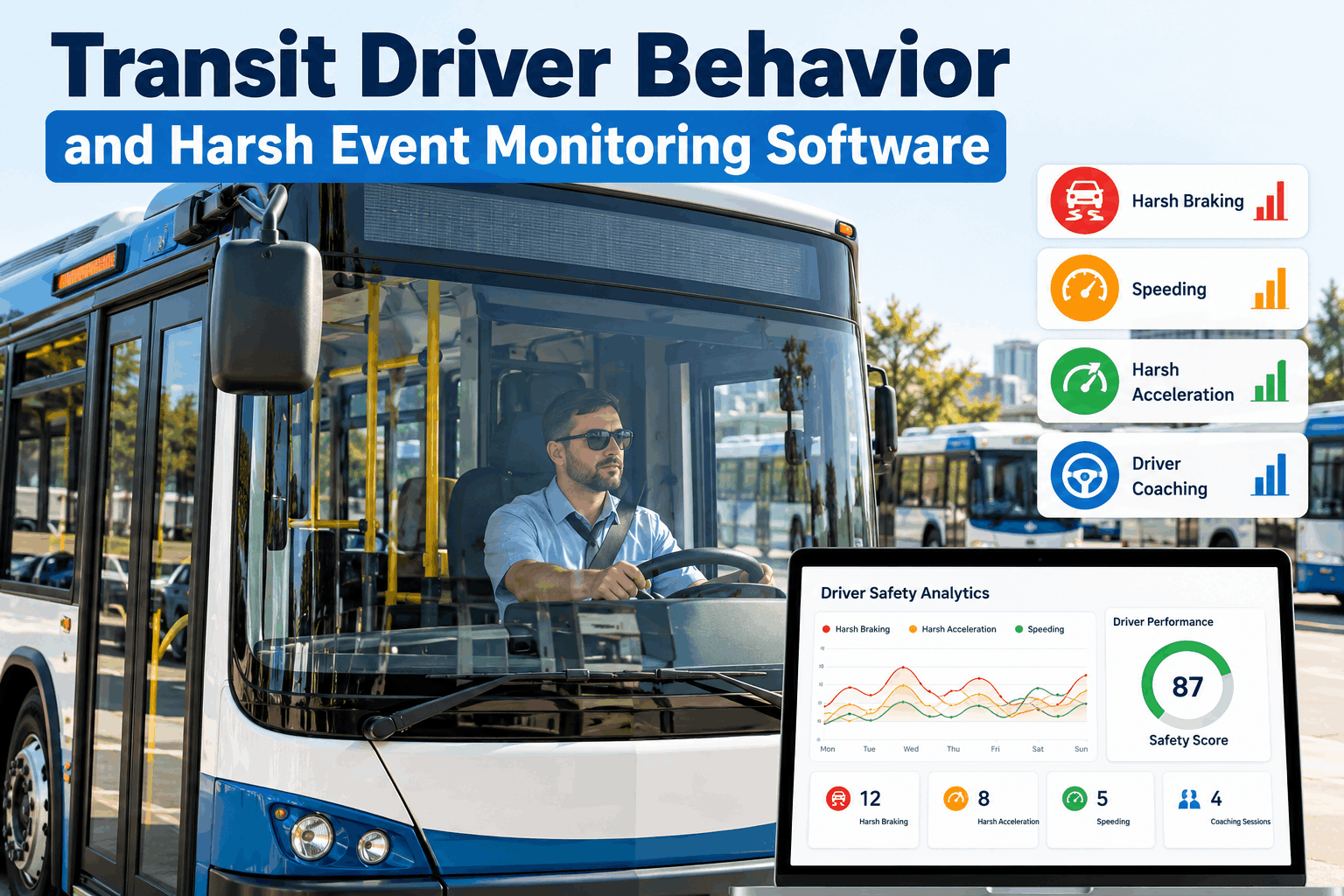
Monitor real-time vehicle ECU data to detect pending brake stroke sensor faults, radiator hydraulic fan pressure drops, and dual-alternator voltage sags under full entertainment load. The system isolates mechanical binding and electrical drain, auto-generating prioritized shop work orders before coaches leave the garage.
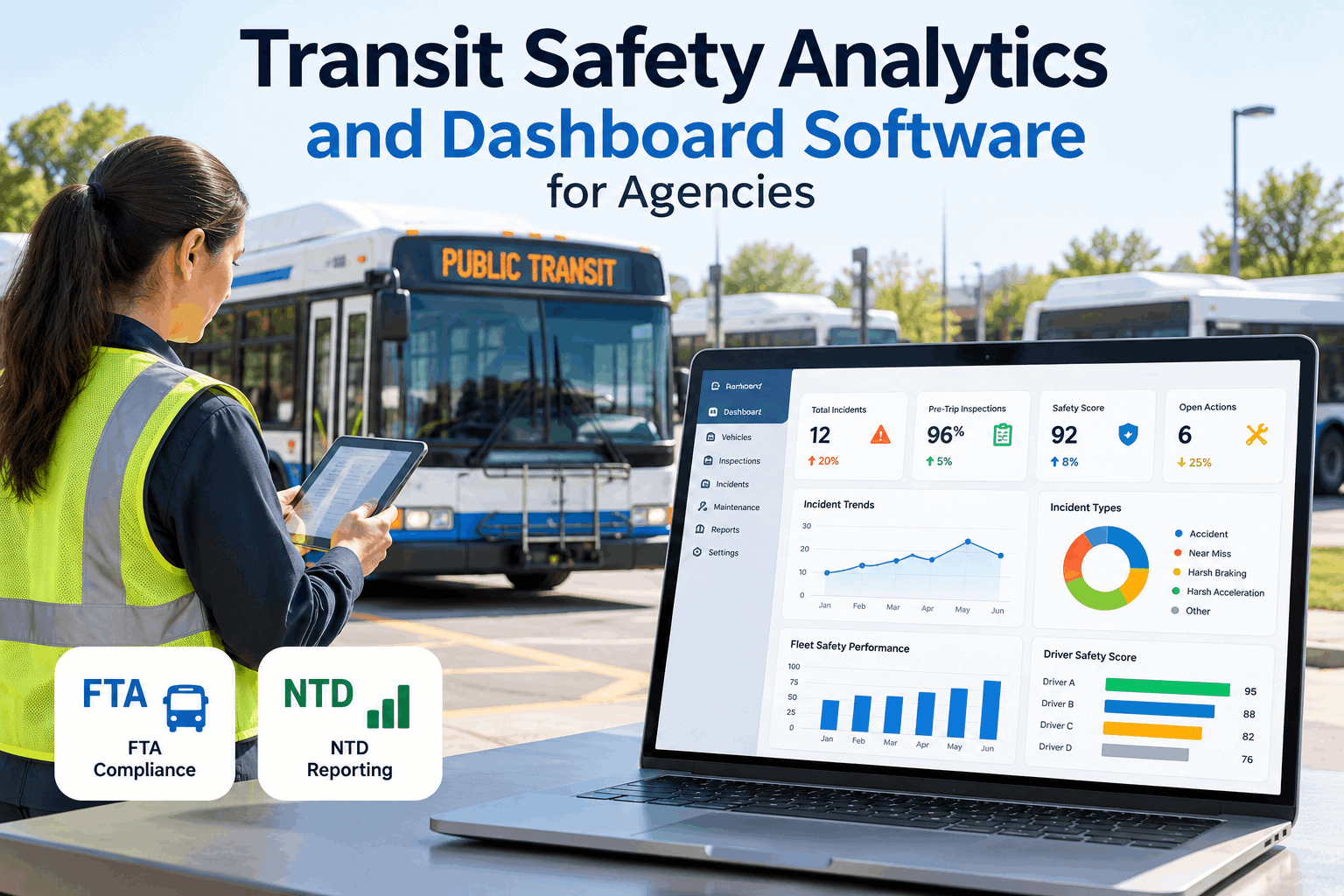
Maintain digital maintenance records, actual vehicle revenue miles, deadhead miles, and asset condition scores under 49 CFR Part 625. Generate 1-click compliance dossiers formatted specifically for annual Federal Transit Administration National Transit Database (NTD) reporting audits.
Sign up to automate NTD transit asset reporting.
The Closed-Loop Charter Pull-Out & Shop Triage Workflow
Follow the operational sequence that ensures defective equipment is resolved immediately without delaying weekend VIP passenger charter departures. Book a demo to walk through our live yard pull-out triage workflow.
01
Driver 360° Walkaround
Driver executes the guided charter inspection on a tablet, checking emergency roof escape hatches and cycling the ADA wheelchair ramp before yard departure.
02
Gatekeeper Defect Lockout
If an ADA ramp fails to stow or an emergency exit window is obstructed, the system flags a safety-critical defect and locks the coach from dispatch clearance.
03
Automated Spare Reassignment
04
Pre-Staged Shop Work Order
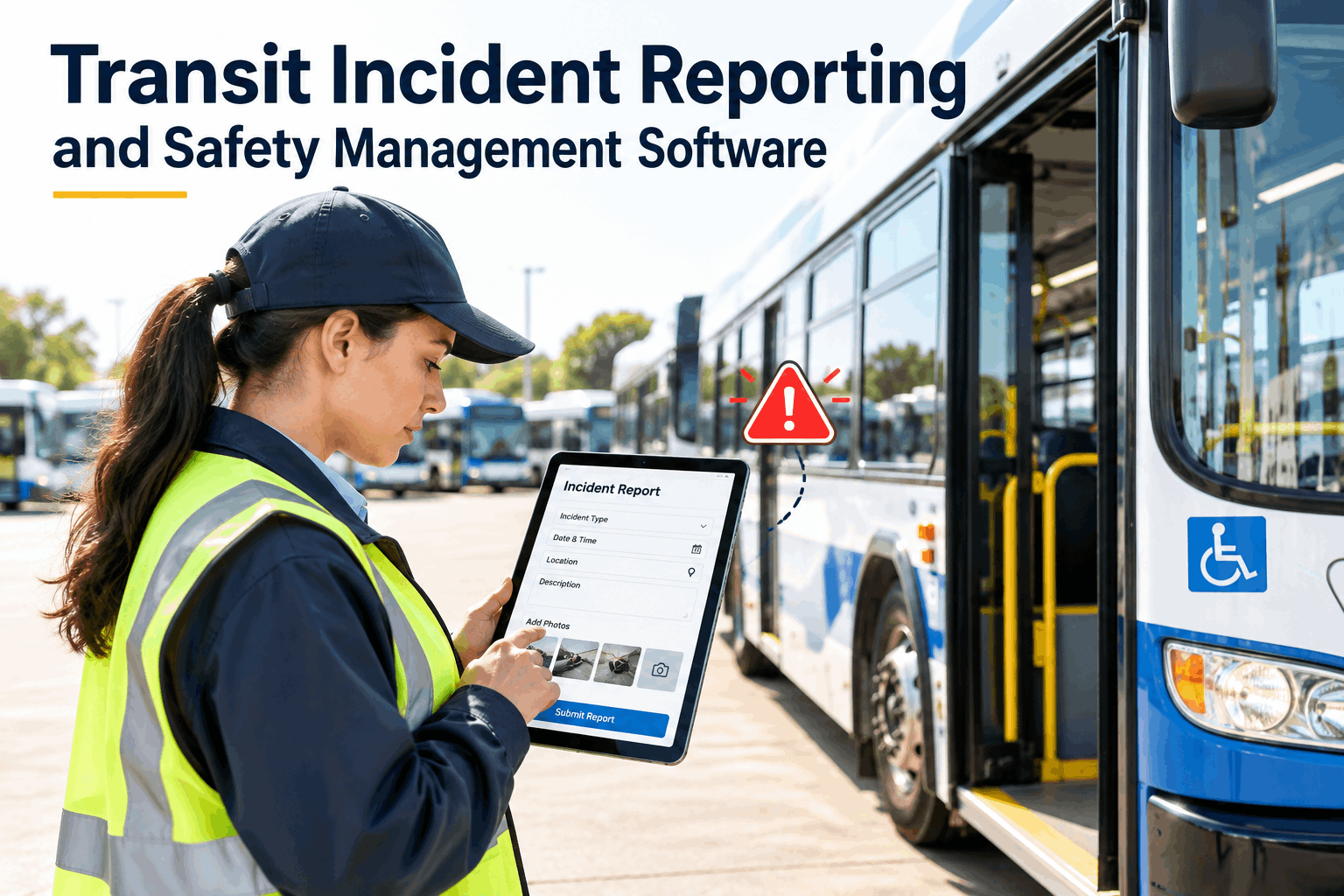
Maintenance technicians receive a priority work order on shop tablets with attached photos, ECU fault codes, and required replacement parts pre-staged in the service bay.
Platform Comparison: Manual Clipboards vs. Fleet Rabbit Platform
Evaluate the clear operational differences, regulatory safeguards, and passenger safety benefits between traditional manual practices and Fleet Rabbit’s connected software. Book a demo to evaluate your agency's transit modernization ROI.
| Charter Transit Dimension |
Fleet Rabbit Party Bus Suite |
Paper DVIR Sheets & Spreadsheets |
Generic Commercial Fleet GPS |
| Subscription Rate |
$5 / asset / month |
High administrative payroll & audit risk |
$25 – $45 / vehicle / month |
| Custom Interior & Egress Checklists |
Native escape hatch, inverter & stanchion checks |
Generic commercial truck form |
Vehicle tracking only (no inspection tools) |
| FTA 10% PM-A/B/C Window Monitoring |
Automated live J1939 CAN-bus odometer sync |
Frequently violated on paper logs |
Estimated GPS mileage breadcrumbs |
| Auxiliary Electrical Load Telemetry |
Real-time dual-alternator & voltage sag alerts |
Unrecorded; discovered during dead battery stalls |
Not supported |
| ADA Ramp Cycle Verification |
Mandatory digital deployment & interlock test |
Subjective checkbox (unverified) |
Not supported |
| NTD Revenue-Mile Reporting |
1-click audit-ready exportable PDF |
Weeks of manual spreadsheet reconciliation |
Not compliant for transit formula grants |
| Procurement & Deployment |
14-day free trial, live in 14 days |
Not applicable |
1 to 3-year auto-renewing contract |
Transit Authority Case Study: Metro Nightlife Transit Charters
Learn how a regional passenger charter transit provider operating 28 luxury party buses and cutaway coaches eliminated weekend roadside electrical stalls and passed state DOT safety reviews with zero deficiencies. Sign up to achieve similar transit operational reliability.
Charter Case Study
99.8%
On-Time Weekend Pull-Out Rate
0
FTA Triennial Audit Findings
$72,000
Annual Maintenance & Tow Savings
Metro Nightlife Charters Eliminates Electrical Stalls Across 28 Party Buses
Operating 28 custom luxury party buses and executive cutaway coaches handling corporate events and private weekend charters across a major metropolitan area, Metro Nightlife Transit Charters struggled with painful weekend mechanical disruptions. Heavy auxiliary electrical loads from high-output subwoofers and cabin entertainment systems caused three roadside dual-alternator failures during Saturday night prime runs, stranding VIP clients and costing over $28,000 in emergency towing, refunds, and lost booking reputation. During a state DOT commercial enforcement audit, inspectors cited the company for two buses operating with obstructed emergency exit window push-pins due to custom upholstered wall panels.
By implementing Fleet Rabbit at $5/asset/month, the charter operator equipped drivers with mobile tablets running pre-trip walkarounds that required photo-verified checks of emergency escape hatches, secondary fire extinguishers, and ADA wheelchair cassette lifts. Live J1939 telematics pulled true vehicle odometer readings directly from engine control units, while monitoring auxiliary battery voltage curves to detect alternator diode degradation before buses left the depot. Over 12 months, on-time weekend gate pull-out compliance rose to 99.8%, in-service electrical breakdowns dropped to zero, and the company passed its subsequent DOT safety review with a clean audit record, while saving $72,000 in eliminated emergency towing, reduced technician overtime, and streamlined NTD reporting.
Frequently Asked Questions
What is the "10% rule" enforced during FTA Triennial Reviews?
Under Federal Transit Administration (FTA) oversight, transit agencies and charter operators receiving federal grant apportionments must perform scheduled preventive maintenance inspections within a strict 10% variance window of the manufacturer's established benchmark. For example, if a charter bus requires PM-A servicing every 4,000 miles, the inspection must occur between 3,600 and 4,400 miles. At least 80% of all maintenance records must demonstrate compliance within this window to avoid an audit deficiency finding during federal Triennial Reviews.
What specific checks does the software require for custom passenger cabins?
Fleet Rabbit requires the operator to execute a dedicated interior safety walkaround: verifying that emergency roof escape hatches unlatch freely, confirming that custom upholstery does not obstruct push-out emergency side windows, testing that floor dance poles and ceiling grab stanchions are rigidly secured, verifying that auxiliary power inverters show normal operating voltage without breaker trips, and checking that fully charged fire extinguishers and biohazard spill kits are present.
How does Fleet Rabbit automate National Transit Database (NTD) mileage reporting?
Under FTA formula grant programs, transit and charter agencies must accurately report total actual vehicle miles, vehicle revenue miles, and deadhead miles, while documenting asset condition under Transit Asset Management (TAM) guidelines. Fleet Rabbit connects directly to on-board vehicle diagnostic ports to track odometer miles continuously, automatically segmenting revenue and deadhead charter service and compiling audit-ready NTD annual report exports with a single click.
Can operators complete morning pull-out inspections without cellular connectivity?
Yes. Fleet Rabbit features an offline-first mobile architecture. Drivers can perform complete pre-trip walkarounds, take high-resolution defect photos, and verify safety hardware inside metal-clad bus depots, concrete parking structures, or rural staging yards without internet access. All data caches securely on the mobile device and automatically syncs to central dispatch the moment cellular or Wi-Fi connectivity returns.
What are the pricing details and contract terms for Fleet Rabbit's transit software?
Fleet Rabbit is priced at a transparent flat rate of $5 per active transit vehicle per month billed annually. This gives complete access to party bus pre-trip inspection checklists, J1939 telematics integration, FTA 10% PM-A/B/C window tracking, automated NTD mileage reporting, and audit-ready compliance dossiers. We provide a 14-day free live trial on up to 3 vehicles with zero setup fees or long-term locked enterprise contracts.
Ready to Automate Party Bus Maintenance Across Your Charter Fleet?
Enforce passenger cabin safety, automate FTA 10% PM-A/B/C compliance, and streamline NTD reporting for just $5/asset/month.
September 26, 2026
By Mark
All Posts