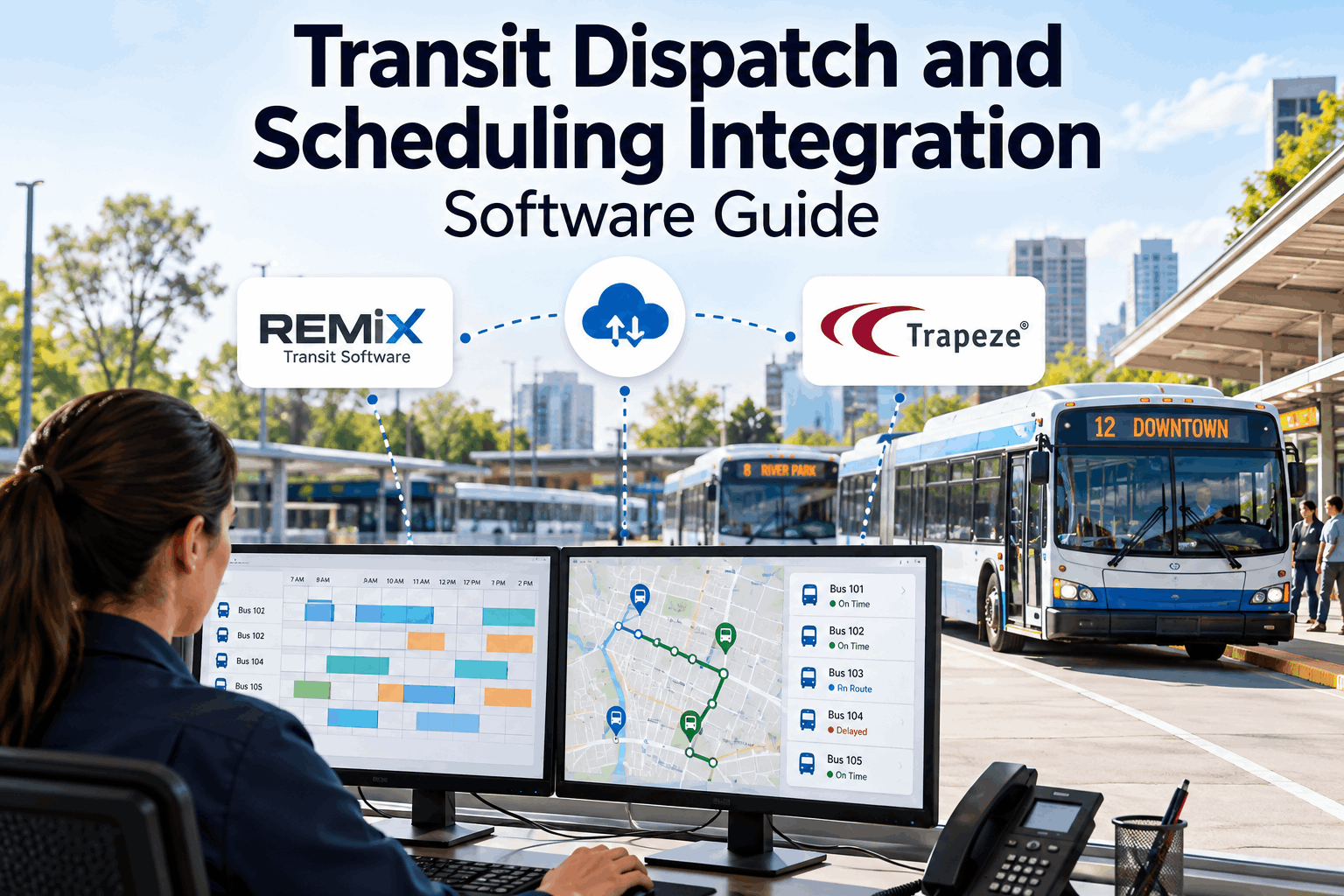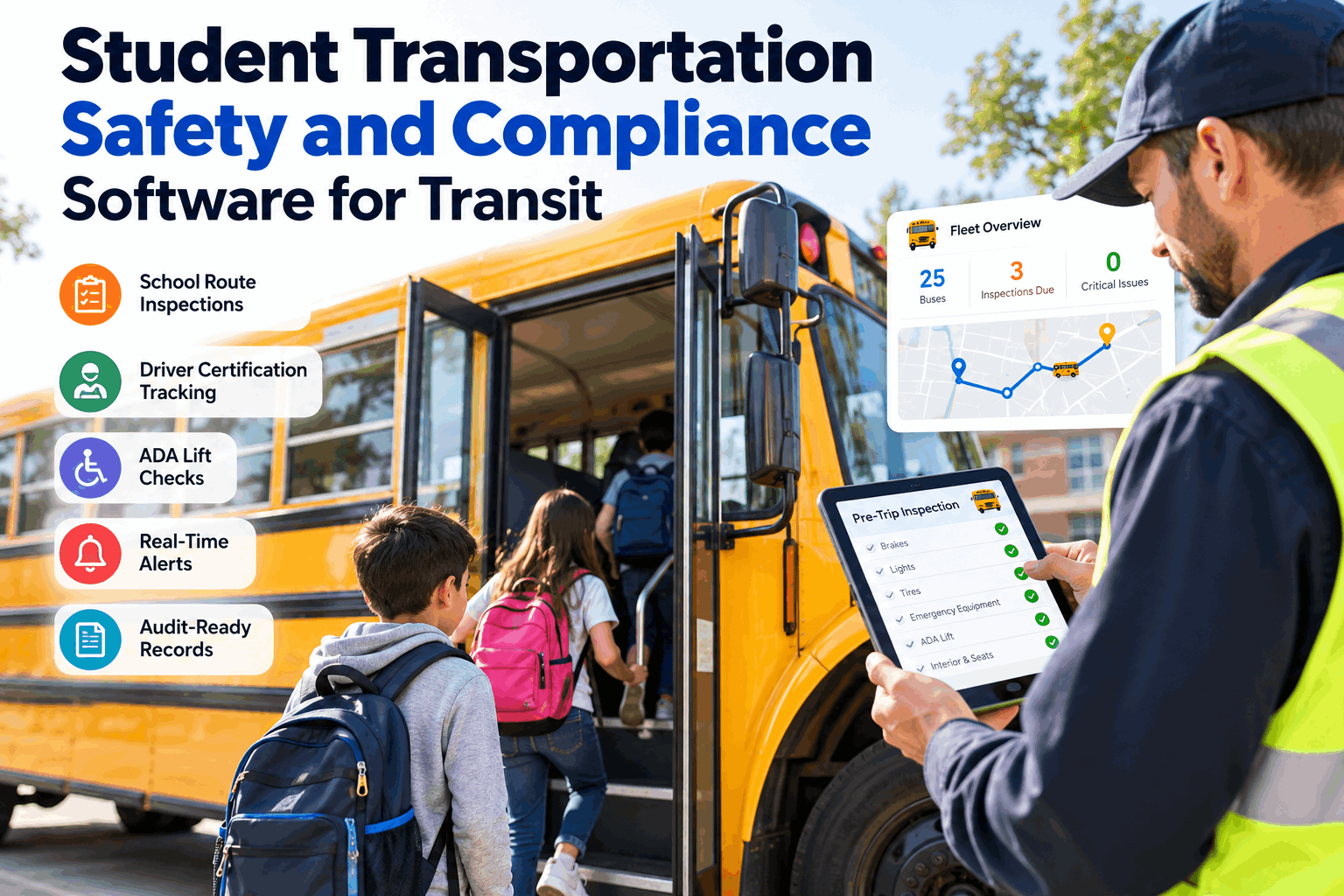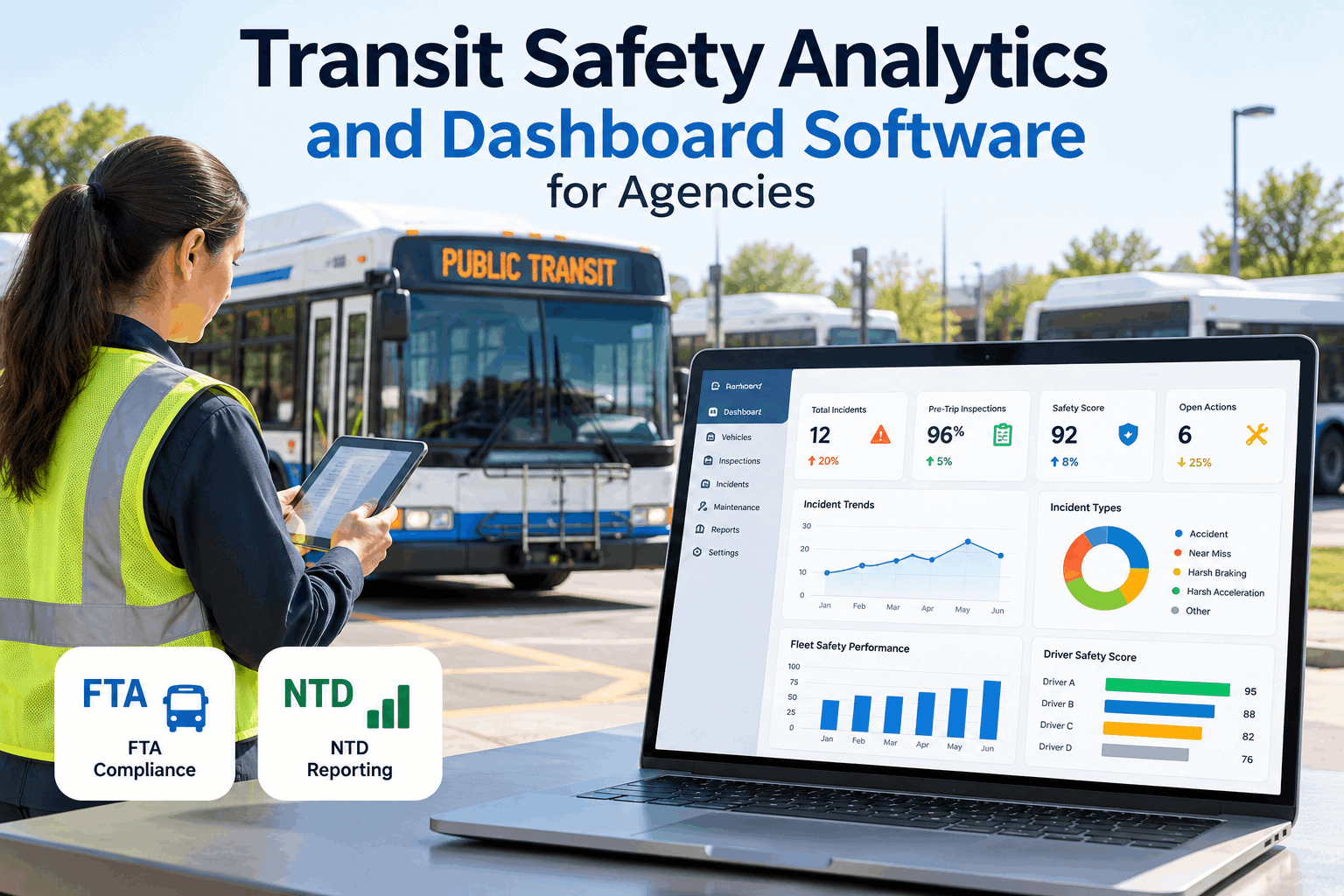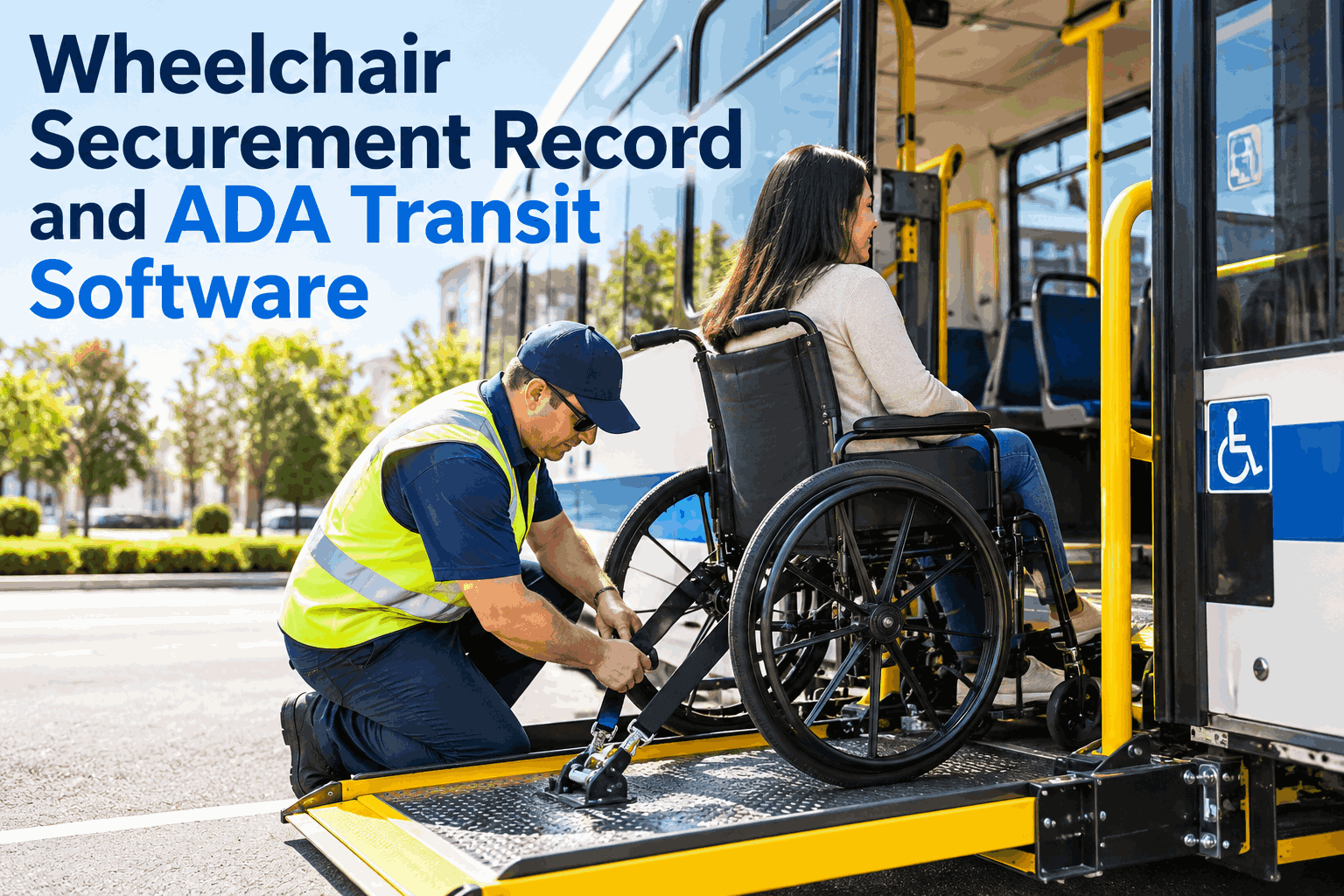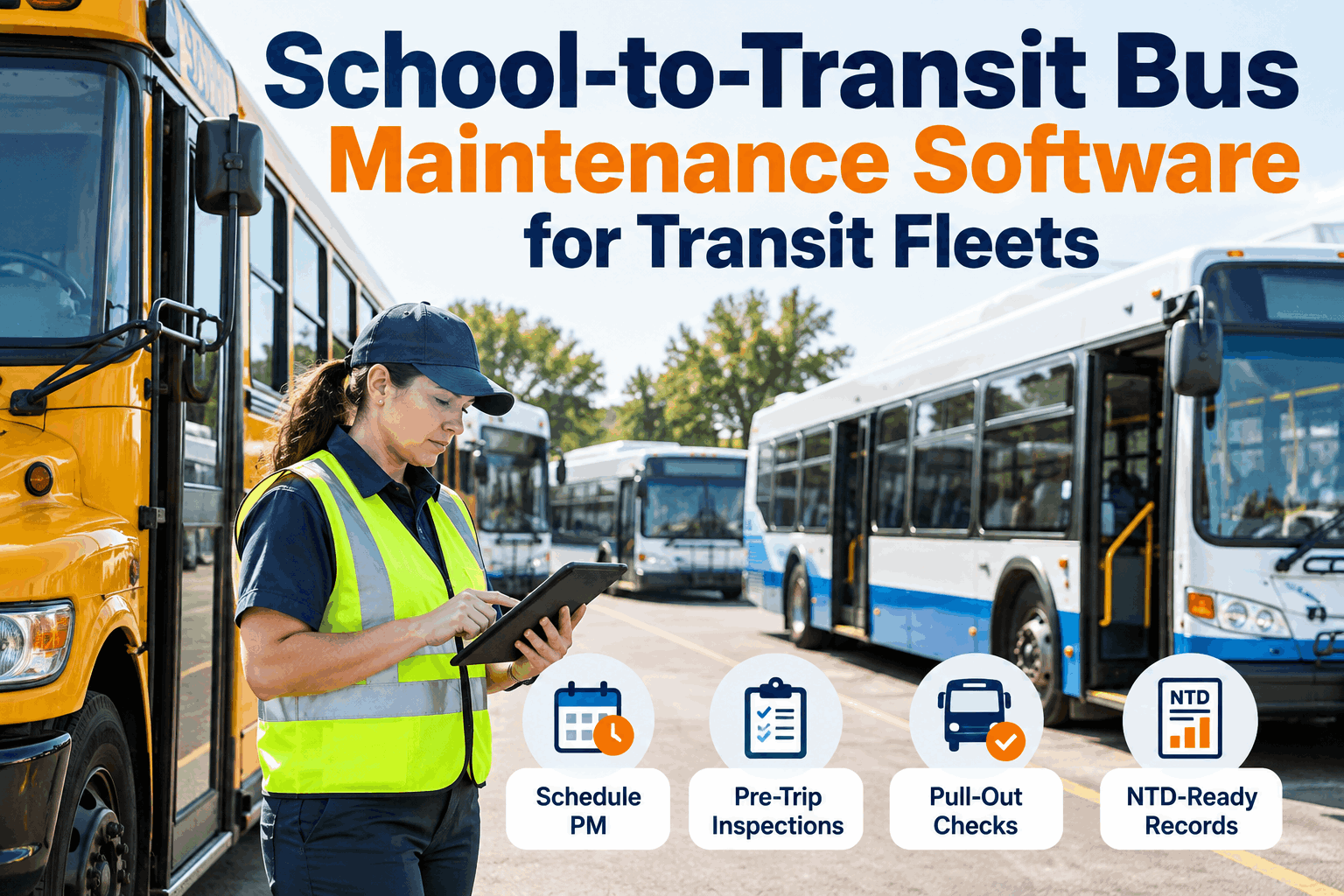
Public school district transportation directors, regional transit authorities, and contracted student-mobility operators face an intricate regulatory operational challenge: managing dual-service "school-to-transit" buses. Operating a fleet that delivers dedicated K-12 yellow-bus student runs during morning and afternoon peak bells while transitioning to public municipal feeder routes, midday community transit, or demand-response micro-shuttles requires adherence to two fundamentally different regulatory jurisdictions. State departments of education enforce strict pupil transportation codes, school-bus amber-and-red flasher inspections, crossing gate functional tests, and child-reminder seat-check mandates. Simultaneously, regional transit operations fall under strict Federal Transit Administration (FTA) Title 49 CFR Part 625 (TAM) rules, National Transit Database (NTD) asset mileage logging, and the non-negotiable 10% preventive maintenance variance window. When dual-role fleets attempt to track operations on paper clipboards or disjointed maintenance spreadsheets, vehicles miss statutory inspections, child-check alarms fail, and agencies risk immediate pupil safety violations, federal grant funding clawbacks, and catastrophic liability during roadside collisions. Fleet Rabbit delivers purpose-built school-to-transit bus maintenance software designed for dual-mission transit fleets. Standardize morning yard pull-out inspections, enforce pupil safety and ADA wheelchair lift testing, synchronize live CAN-bus diagnostics, and generate audit-defensible NTD reporting in one unified cloud system. Book a Demo to see our school-to-transit bus maintenance software in action.
The Complex Operational Friction of Dual-Role School-to-Transit Buses
School-to-transit fleets carry double the operational and legal exposure of conventional municipal fleets. When a 35-foot transit-style bus drops high-school students off at 8:15 AM and pivots to general public fixed-route or micro-transit service at 9:00 AM, maintenance teams must satisfy conflicting statutory frameworks. Relying on disconnected paper logs or commercial delivery software introduces dangerous liabilities. Sign up to modernize your dual-service bus fleet management.
The 4-Zone Dual-Mission Pull-Out Readiness Protocol
Fleet Rabbit replaces generic inspection sheets with an intelligent, mode-aware digital walkaround workflow tailored to dual-service pupil and passenger transit buses. Book a demo to see our 4-zone mobile driver inspection flow.
- 8-Way Warning Flasher Sequence: Verification of amber advisory lights, red stop lamps, and roof strobe operation.
- Stop Paddle & Crossing Gate: Testing pneumatic or electric deployment of the driver-side stop sign and front bumper bumper crossing arm.
- Electronic Child-Check Reminders: Mandatory walk-to-back verification requiring drivers to press the rear physical deactivate button before leaving the bus.
- Emergency Exits & Buzzers: Testing roof hatches, emergency push-out side windows, and rear door safety latches and interlock alarms. Sign up to automate digital pupil safety checklists.
- ADA Wheelchair Ramp/Lift Cycle: Mandatory full deployment to curb level, roll-stop barrier engagement check, and secure stowage test.
- Wheelchair Securement Retractors: Physical inspection of four-point tie-down retractors, floor tracks, and passenger lap/shoulder belts.
- Electronic Destination Sign (LED): Verifying front, side, and rear destination sign programming for public transit route codes.
- Farebox & Smart Card Reader: Power check on fare validation equipment and Automated Passenger Counter (APC) optical sensors.
- CAN-Bus Fault Interrogation: Live scan of active and pending Diagnostic Trouble Codes (DTCs) from Cummins, Detroit Diesel, or Allison controllers.
- Air Brake Pressure & Leak-Down: Recording governor cut-in/cut-out pressures and executing 1-minute static and applied brake loss tests.
- Brake Stroke Measurement: Automatic sensor check on slack adjuster travel to detect uneven brake wear before roadside state trooper checks.
- Alternator & Battery Cranking V: Monitoring high-output commercial alternator output under full cabin heating and A/C loads. Book a demo to inspect our J1939 air brake diagnostic modules.
- Interior Passenger Sanitation: Photo-verified audit confirming passenger seats, handrails, and vinyl floors are sanitized between student and public runs.
- Safety Equipment Certification: Visual audit of sealed body-fluid cleanup kits, first-aid boxes, and 3 reflective warning triangles.
- Fire Extinguisher Pressure: Verification of gauge needle in green zone and current annual inspection tags on 5 lb/10 lb ABC extinguishers.
- Two-Way Dispatch Radio Check: Operational signal test with central dispatch and verification of emergency driver duress button functionality. Sign up to deploy transit-ready sanitation and safety checks.
The Closed-Loop Morning Pull-Out & Midday Transition Workflow
See how Fleet Rabbit prevents defective equipment from rolling out on student runs and automates asset reassignment when transitions occur. Book a demo to walk through our pull-out and transition pipeline.
Platform Comparison: Manual Clipboards vs. Fleet Rabbit Transit Suite
Compare the operational capabilities, regulatory defensibility, and compliance safeguards between traditional manual practices and Fleet Rabbit’s connected platform. Book a demo to evaluate your agency's transit modernization ROI.
| Regulatory & Maintenance Dimension | Fleet Rabbit School-to-Transit Suite | Paper DVIRs & Spreadsheets | Generic Commercial Fleet GPS |
|---|---|---|---|
| Subscription Rate | $5 / asset / month | High administrative payroll & audit risk | $25 – $45 / vehicle / month |
| Dual-Mission Inspection Support | Native State DOE pupil & FTA public transit modes | Generic commercial checkbox form | Location tracking only (no transit tools) |
| FTA 10% PM Window Monitoring | Automated live J1939 CAN-bus odometer sync | Frequently violated on paper logs | Estimated GPS mileage breadcrumbs |
| Pupil Safety Equipment Checks | Mandatory photo-verified flashers & child alarms | Subjective checkbox (unverified) | Not supported |
| NTD Revenue-Mile Segmentation | Automated separation of school vs. transit miles | Weeks of manual estimation | Not available |
| Morning Gate Pull-Out Release | Instant digital pass/fail gate clearance | Manual paper review | Vehicle location only (no dispatch lock) |
| Contract Terms & Procurement | 14-day free trial, self-serve in 14 days | Not applicable | 1 to 3-year auto-renewing contract |
Transit Authority Case Study: Central Valley Transit District
Learn how a regional transit district operating 52 dual-mission school-to-transit buses eliminated morning gate pull-out delays and passed federal safety reviews with zero deficiencies. Sign up to achieve similar transit operational reliability.
Operating 52 Type D transit-style buses providing morning and afternoon school runs for two local school districts while operating midday public fixed routes and weekend micro-transit, Central Valley Transit District faced severe operational friction. During a state Department of Education review, inspectors cited the district for two buses operating with inoperable crossing gate arms. Months later, an FTA Triennial Review revealed four buses had exceeded their mandatory 10% preventive maintenance window due to paper log entry lag, putting federal grant funding at risk.
By implementing Fleet Rabbit at $5/asset/month, the transit district equipped drivers with mobile tablets running mode-specific pre-trip walkarounds with mandatory photo verification of pupil safety equipment. Live J1939 telematics pulled true vehicle odometer readings directly from engine control units, automatically scheduling 6,000-mile services precisely within the 10% FTA window. Over 12 months, morning gate pull-out compliance rose to 99.8%, the agency passed its subsequent state DOE and federal FTA reviews with zero deficiencies, and automated NTD mileage tracking saved $74,000 in administrative payroll and eliminated overtime repair costs.