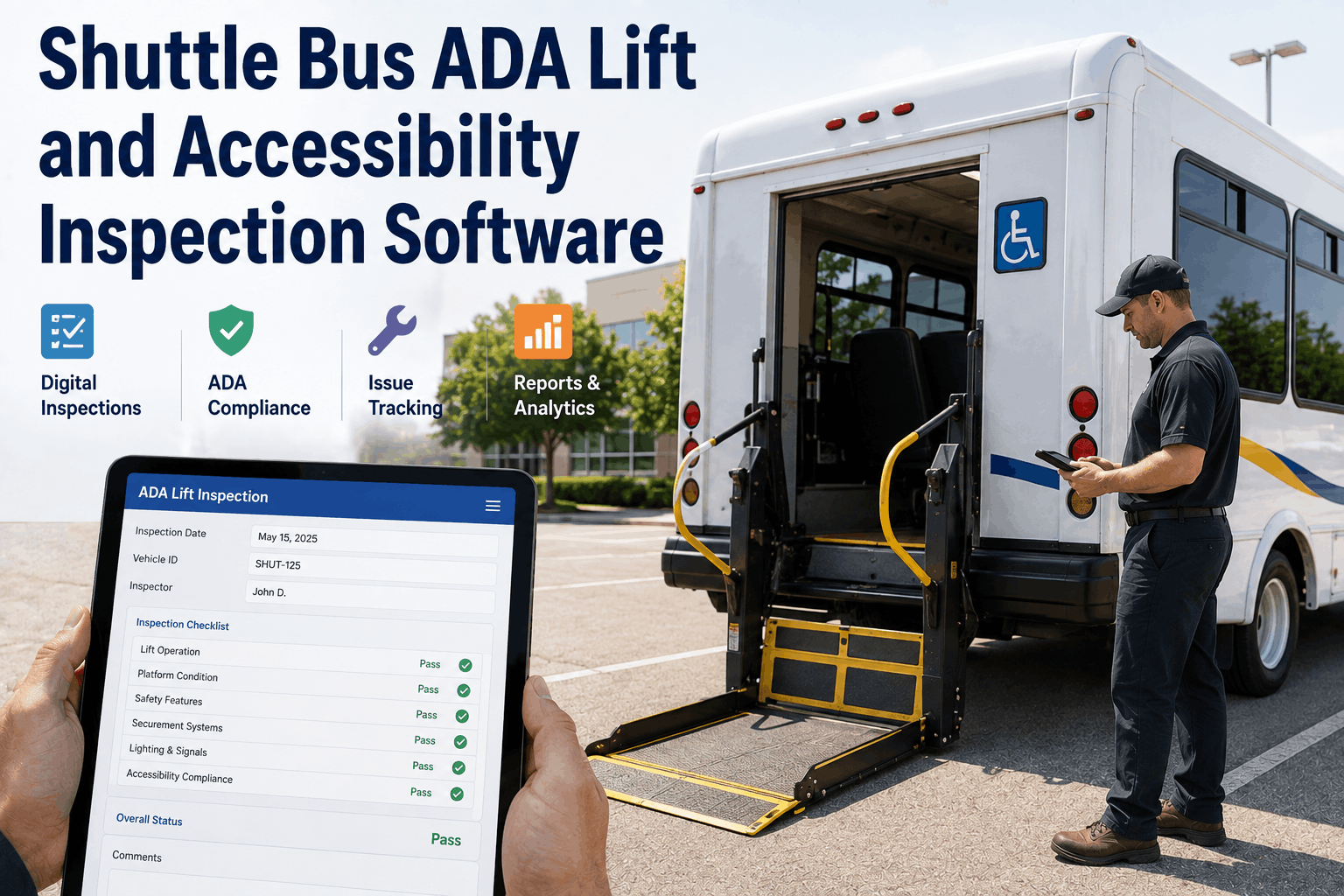
A wheelchair lift that will not deploy is not a maintenance ticket sitting in a queue, it is a federal compliance failure the moment a rider needs it and it does not work. Shuttle bus ADA lift and accessibility inspection software exists to make sure that moment never happens on your route. FleetRabbit ties daily lift cycling, monthly functional testing, and annual certification into one inspection record per vehicle, flags a failed check before dispatch ever assigns that bus, and keeps every document ready for a triennial review. If your program is still running on paper sign-off sheets, you can book a demo and see the difference a connected system makes.
A Lift Failure Is a Civil Rights Issue, Not a Shop Delay
Under 49 CFR Part 37, transit entities must establish regular and frequent lift maintenance checks, and 49 CFR 37.163 sets the rule that follows a failure: a bus with an inoperative lift comes out of service before its next service day, full stop. There is no grace period to finish the current shift and fix it tomorrow. Agencies that treat a failed lift like any other mechanical issue, something to schedule around, are the ones showing up in federal enforcement findings. Departments that sign up for FleetRabbit get that out-of-service rule enforced automatically instead of relying on a dispatcher remembering it.
Lift fails pre-trip cycling
Driver logs the failure during the daily deploy-and-stow check before pulling out.
Vehicle held from dispatch
The unit is removed from the active roster before its next scheduled service day, no exceptions.
Alternative transportation offered
Any rider stranded mid-service must be provided accessible transportation within the federal window.
Work order and parts tracked
The repair is logged against the same vehicle record used for the original inspection failure.
Return to service documented
A passed re-inspection is logged before the bus goes back on the active roster.
Never Let a Failed Lift Reach Dispatch
FleetRabbit holds a unit out of the active roster automatically the moment an inspection fails.
What the Regulation Actually Measures
49 CFR Part 38 does not leave lift specifications open to interpretation. Inspectors and auditors check the same measurable points every time, and a shuttle program needs to be able to confirm each one on demand rather than assume it is fine.
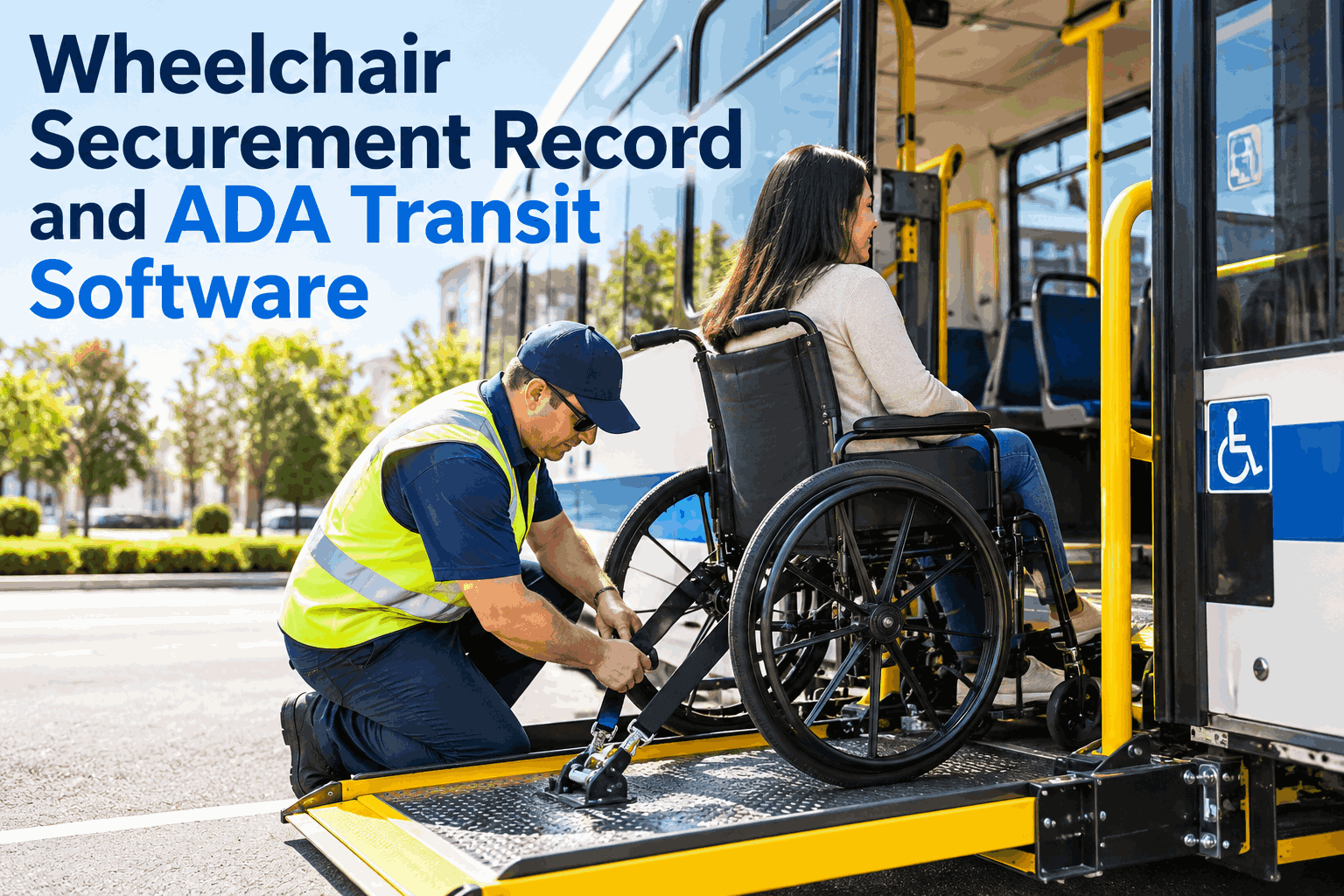
Every securement position also needs a working two-part restraint system with a lap and shoulder belt, and every one of those points has to be verified as part of a functioning inspection cycle, not assumed because it worked last month. Agencies that book a demo can see how FleetRabbit turns each of these into a discrete checklist item tied to the vehicle's inspection history.
Three Layers of Documentation, One Retention Clock
A lift inspection program is not one checklist, it is three checklists running on different clocks, and auditors expect records for all three to be retrievable for a minimum of five years.
Pre-trip deploy-and-stow cycling logged by the first driver out, timestamped per current documentation requirements
Functional testing of securement tracks, actuators, roll-off barrier, and platform condition
Full certification against the load and platform specifications, filed for triennial review
When these three layers live in three separate binders, reconstructing a five-year history for one bus during an audit can take days. When they live in one digital record per vehicle, it takes a search. Programs that sign up before their next FTA triennial review typically cut that reconstruction time down to minutes.
Where the Old Way Breaks Down
Paper Sign-Off Sheets
- A missed daily log is invisible until an audit asks for it
- A failed lift can still get dispatched if the sheet is not checked
- Five-year retention means boxes of paper by vehicle and by month
- Repair history and inspection history live in separate files
FleetRabbit
- A missed daily check flags automatically before shift start
- A failed inspection removes the unit from dispatch immediately
- Full history searchable per vehicle in seconds
- Repairs and inspections tied to the same vehicle record
Built Around the Rest of the Fleet, Too
Accessibility inspections do not run in isolation from the rest of a shuttle's maintenance program. FleetRabbit ties ADA lift checks into the same PM-A, PM-B, and PM-C mileage-tiered scheduling used across the fleet, so a lift recertification and a chassis service can be planned together instead of pulling a bus out of service twice in the same month.
Auto dispatch holds
A failed lift check pulls the vehicle from the active roster with no manual step required.
Three-tier inspection tracking
Daily, monthly, and annual lift records tied together under one vehicle history.
Five-year retention, searchable
Every inspection and repair retrievable per vehicle in seconds, not boxes.
Coordinated with PM-A/B/C
Accessibility checks scheduled alongside chassis and mechanical service intervals.
Walk Into Your Next Triennial Review Ready
One system for daily lift cycling, monthly testing, annual certification, and full audit history.
Common Questions
How often must a shuttle bus wheelchair lift be inspected
Daily pre-trip cycling by the driver, monthly functional testing of the mechanism and securement components, and a full annual certification against the load and platform specifications.
What happens immediately after a lift is found inoperative
The vehicle must be removed from service before its next scheduled service day, and any rider stranded mid-service must be offered alternative accessible transportation within 30 minutes.
How long do lift inspection records need to be retained
A minimum of five years, covering daily pre-trip logs, monthly test results, annual certifications, and repair records for each vehicle.
What are the minimum design specifications for a wheelchair lift
A minimum design load of 600 pounds and a minimum clear platform area of 30 inches by 48 inches, with support for both inboard and outboard wheelchair user facing.
Can accessibility inspections be scheduled alongside regular PM service
Yes, coordinating lift recertification with PM-A/B/C mileage-tiered service intervals avoids pulling the same vehicle out of service twice in a short window.