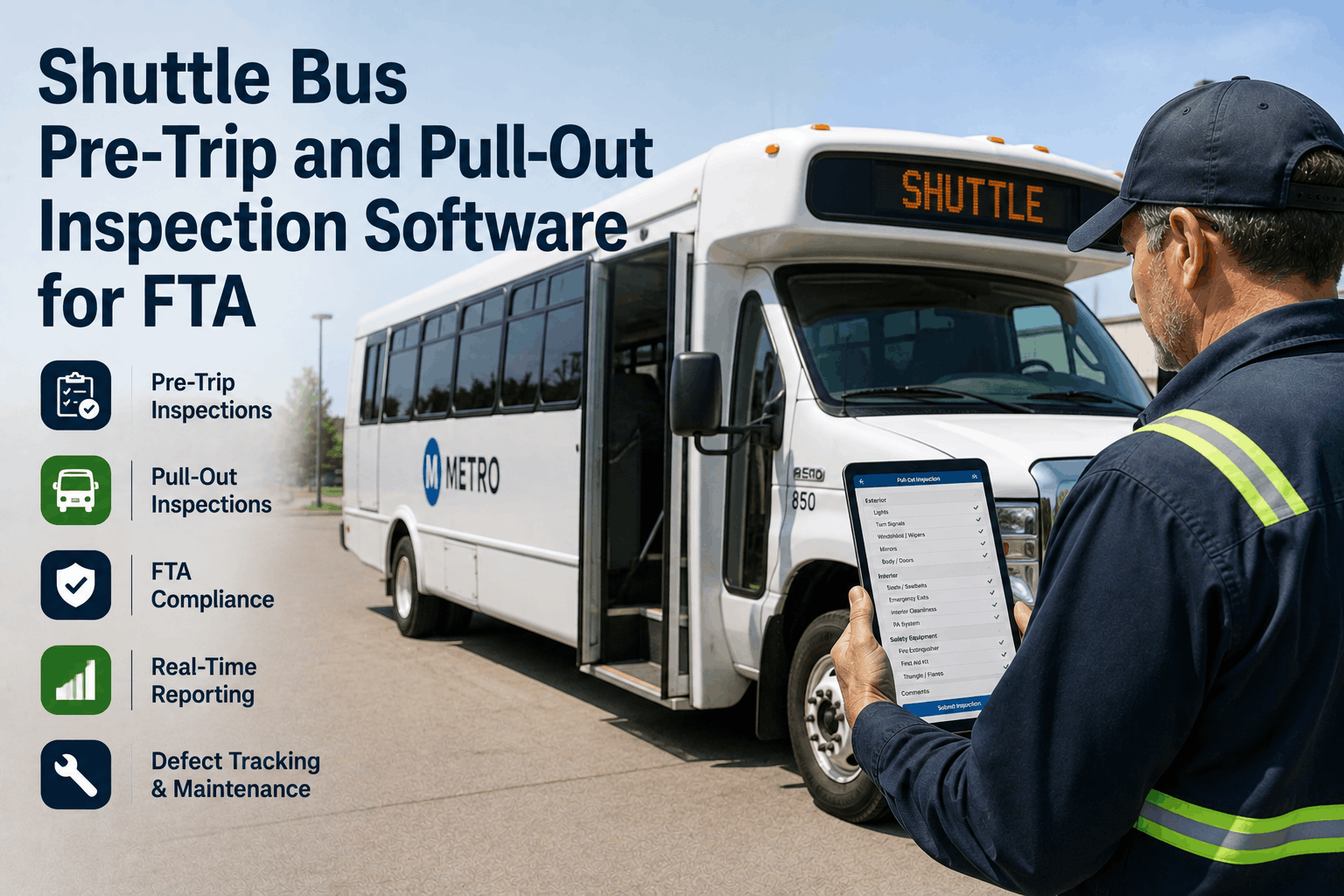
Every shuttle bus that pulls out of the yard is carrying a legal certification with it, whether anyone thinks about it that way or not. Under 49 CFR 396.11 and 396.13, a driver must inspect the vehicle, document any defect, and the previous day's report must be reviewed and certified before the bus moves again. A missed signature, an unread prior report, or a defect that got flagged but never fixed isn't a paperwork gap, it's a violation with its own price tag. Shuttle bus inspection software exists to make that daily chain of inspection, certification, and repair impossible to skip, especially at the exact moment it matters most: pull-out.
Pull-Out Is Where Compliance Actually Gets Tested
Most fleets think of inspection compliance as a paperwork problem to solve at the end of the month. In reality, it's tested every single morning, in the few minutes before a shuttle bus leaves the yard. That's the moment a driver either does or doesn't review the prior day's DVIR, either does or doesn't complete a real pre-trip walk-around, and either does or doesn't get stopped from pulling out with an unresolved brake, tire, or lighting defect. Paper checklists and disconnected spreadsheets have no way to enforce any of that in real time, which is exactly why so many violations trace back to a bus that should never have left the yard.
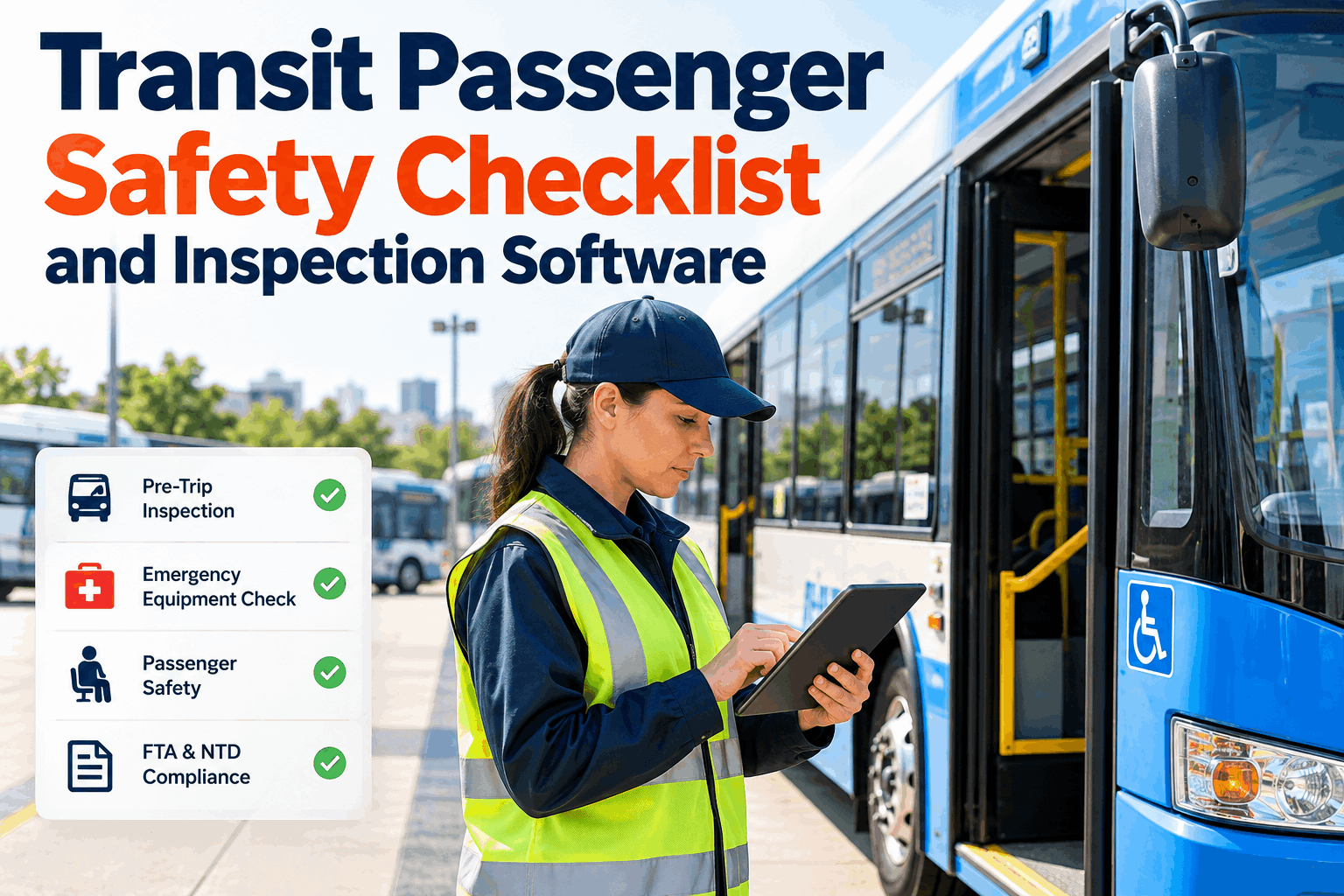
Shuttle bus inspection software closes that gap by making the pre-trip DVIR, the prior-report certification, and the pull-out decision one connected digital workflow instead of three separate, easily skipped steps. Agencies that sign up typically see their defect-catch rate rise almost immediately, not because more things are breaking, but because a guided digital checklist makes it much harder to sign off without actually looking.
The Three-Signature Chain Behind Every Legal Pull-Out
Driver certifies the DVIR
Today's pre-trip walk-around is completed and signed, covering brakes, tires, steering, and lighting at minimum.
Prior report reviewed
The previous DVIR is read, not just signed, confirming any noted defect was actually repaired.
Repairs certified
If a defect was flagged, the shop certifies the fix on the original report before the bus is cleared.
Under 49 CFR 396.13, skipping any one of these three signatures means the bus was operated illegally from the first mile, regardless of whether the mechanical issue was ever actually dangerous.
Turn Pull-Out Into a Verified, Not Assumed, Decision
FleetRabbit builds the DVIR, prior-report review, and repair certification into a single guided workflow drivers can't bypass. Sign up to digitize your first route today, or book a demo to see a live pull-out board in action.
What Dispatchers Actually Need to See Before a Bus Leaves
A dispatcher managing a shuttle route in the morning doesn't need a maintenance history report, they need one answer, right now: is this specific bus cleared to pull out or not. That answer depends on whether today's pre-trip was completed, whether yesterday's defects were resolved, and whether any PM interval or ADA lift check is overdue. When that information lives in a paper binder or a disconnected system, dispatchers end up making pull-out calls on incomplete information, which is how a bus with an open defect ends up on the road.
A real-time pull-out readiness view turns that guesswork into a glance. Every bus shows its actual status, not its assumed status, and a bus that isn't cleared simply doesn't show as available. Fleets that want dispatchers working from that kind of clarity every morning can book a demo and see the readiness board running against a real route sheet.
A Pull-Out Readiness Board, at a Glance
Paper DVIRs Don't Just Slow Fleets Down, They Fail Audits
FTA triennial reviews and roadside FMCSA inspections both request records on the spot, and the standard expectation is producing the right documentation in seconds, not days. A paper filing system built around binders and monthly spreadsheet updates almost never meets that bar. When an auditor asks for 90 days of DVIR history on a sample of vehicles, a digital system exports it instantly, while a paper-based fleet is often still searching. The gap between those two experiences shows up directly in review outcomes.
The March 2026 federal rule authorizing electronic DVIRs under 49 CFR 396.11 and 396.13 removed any remaining ambiguity for fleets still holding onto paper out of caution. There's no compliance reason left to stay on clipboards. Fleets ready to make that switch can sign up and have their first digital DVIR workflow running the same day.
Paper DVIRs vs. Digital Pull-Out Workflows
| What Matters | Paper-Based | Digital Workflow |
|---|---|---|
| Producing 90 days of DVIR history | Minutes to days, if records are intact | Seconds, exported on demand |
| Enforcing the prior-report review | Relies on the driver's memory and habit | Built into the workflow, cannot be skipped |
| Blocking dispatch on an open defect | Depends on dispatcher awareness | Automatic, bus shows as not cleared |
| Linking inspections to PM scheduling | Manual cross-referencing | Connected automatically, per vehicle |
Getting a Shuttle Fleet From Paper to Pull-Out Ready
Switching a fleet over doesn't mean re-training every driver overnight. Most agencies start by digitizing the pre-trip DVIR for one route or garage, let drivers get comfortable with the guided checklist for a couple of weeks, and then expand pull-out readiness scoring and PM-A/B/C scheduling across the rest of the fleet once the workflow is proven. If you're weighing whether this fits your operation, the fastest way to know is to book a demo with your own route and fleet size in the room.
Make Every Pull-Out a Verified Decision, Not a Guess
Pre-trip DVIRs, PM-A/B/C scheduling, ADA lift inspections, and NTD-ready reporting, all connected in one workflow built for transit dispatchers. Get started today.
Frequently Asked Questions
What is shuttle bus inspection software?
It's a fleet platform that digitizes pre-trip DVIRs, prior-report certification, and defect-to-repair tracking into one connected workflow, giving dispatchers a real-time view of which buses are actually cleared to pull out.
Is a digital DVIR legally acceptable for shuttle bus fleets?
Yes. A federal rule effective March 23, 2026 explicitly authorizes electronic DVIRs under 49 CFR 396.11 and 396.13, so a digital workflow with timestamps and signatures meets the same requirements paper records do, and produces records far faster during an audit.
What happens if a driver signs off without actually reading the previous DVIR?
Under 49 CFR 396.13, certifying the previous report is a legal requirement before the vehicle moves. Skipping that review, even if nothing was actually wrong with the bus, is a documented violation for both the driver and the carrier.
What are the most common defects that ground a shuttle bus?
Brake system issues account for the largest share of out-of-service violations, followed by tire and lighting defects. All three are checkable during a proper pre-trip walk-around, which is why a guided digital inspection tends to catch far more of them than a rushed paper check.
How does this support FTA and NTD reporting?
Because pre-trip inspections, defect repairs, PM scheduling, and ADA lift checks are all captured in one system, the same data can produce audit-ready records for FTA triennial reviews and National Transit Database reporting without duplicate entry.
How quickly can a fleet switch from paper to digital pull-out workflows?
Most agencies digitize their first route within days, with drivers completing guided DVIRs on mobile devices immediately. Sign up to start with your first route, or book a demo to see the full pull-out readiness workflow before rolling it out fleet-wide.