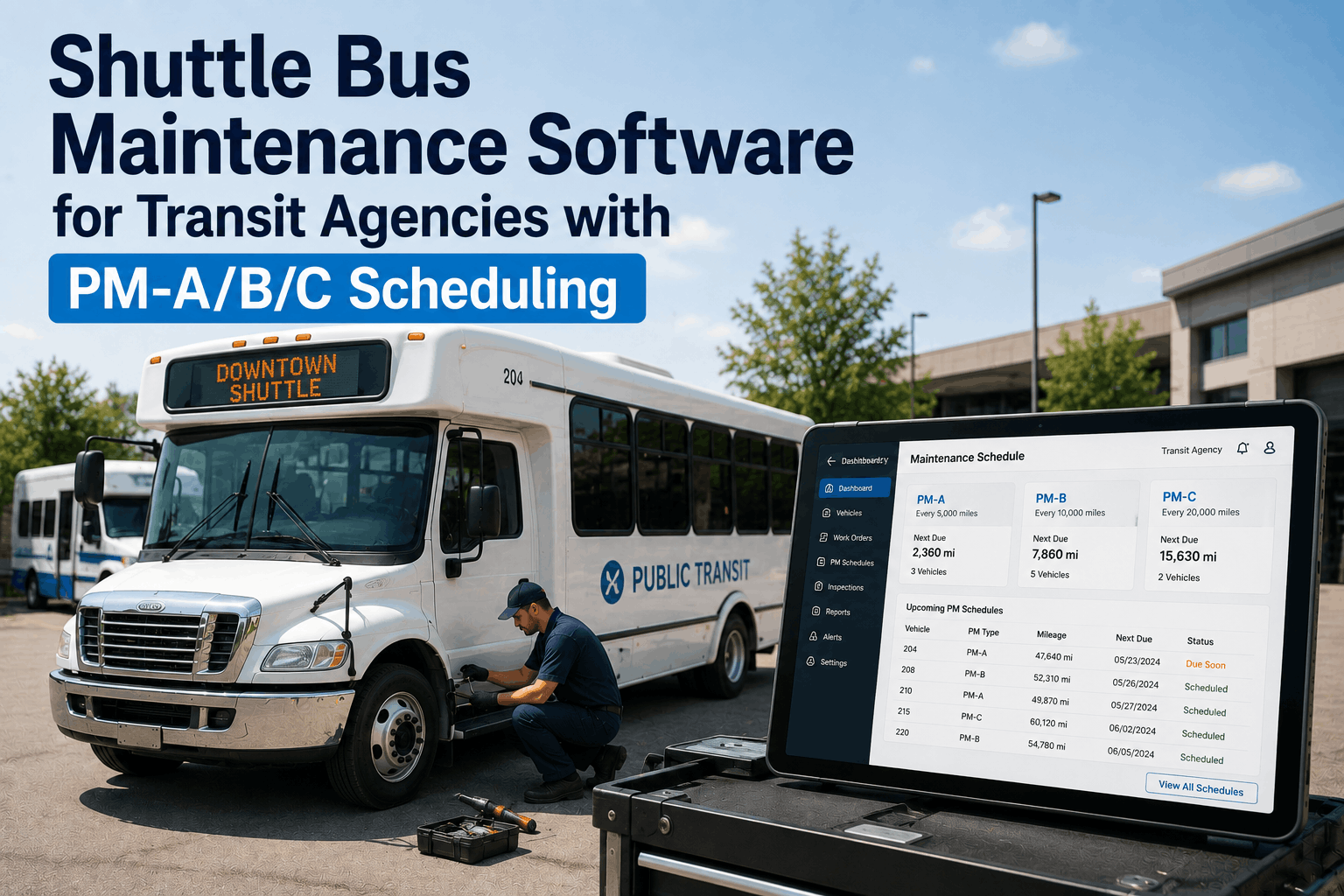
Picture a mid-sized agency running 180 shuttle buses. If just five percent of that fleet is unexpectedly out of service on a given morning, that is nine buses missing their runs before the first commuter even boards. Shuttle bus maintenance software built around PM-A/B/C scheduling exists to keep that number as close to zero as possible, and it does it by turning pull-out readiness from a morning guessing game into a number dispatch can see before drivers even arrive.
What a Morning Pull-Out Readiness Board Actually Shows
Every transit agency runs some version of the same morning ritual: figuring out which buses are actually fit to leave the yard before the first run of the day. Agencies still doing this by walking the lot or calling around lose hours dispatchers do not have. A live readiness board turns that into a single glance.
Dispatchers working from a board like this know exactly what they have available before the first run, instead of finding out a bus is down when a driver is already standing next to it. Agencies tired of that morning scramble are usually the ones who sign up first, just to get that single view working.
PM-A, PM-B, and PM-C: Why "Whichever Comes First" Is the Whole Point
Shuttle buses do not wear out on a single clock. Some routes rack up mileage fast, others sit idling through long dwell times at a hub. A PM system built for this reality tracks three triggers at once for every tier and fires a work order the moment any one of them is crossed, not just whichever one is easiest to track.
PM-A due at 6,000 miles
PM-A due at 300 hours
PM-A due every 90 days
In this example the calendar trigger is closest to firing, even though the bus has not covered heavy mileage. That is exactly the scenario a mileage-only schedule misses, and it is why a real PM-A/B/C system checks all three triggers on every vehicle, every day, rather than assuming the same trigger is always the limiting one. It is also the kind of detail that is easiest to see by watching a live demo against real fleet data, which is why many agencies choose to book a demo before switching over their PM records.
Never guess which bus is actually ready before pull-out
Multi-trigger PM-A/B/C scheduling and a live readiness board dispatch can check every morning.
What Each PM Tier Actually Covers on a Shuttle Bus
Oil and fluid service, brake pad inspection, tire condition, lights, wipers, and a basic safety walkaround. The tier that runs most often and catches the most day-to-day wear. Agencies still tracking this tier on paper often sign up just to get PM-A alerts flowing automatically.
Everything in PM-A plus suspension inspection, cooling system check, and door and lift hardware, since shuttle doors cycle constantly through every stop.
Comprehensive service covering drivetrain, steering components, and a full undercarriage review, typically timed around annual inspection windows.
What Structured PM Scheduling Actually Changes in the Numbers
The gap between agencies running disciplined PM-A/B/C schedules and those still working reactively shows up clearly in road call data. Agencies that shift from reactive repair to structured PM scheduling typically see meaningful reductions in unplanned road calls within the first year, along with a fleet availability rate that holds consistently higher through peak service hours.
That gap between the 80 percent compliance threshold agencies are measured against and the 61 percent industry average is where most FTA findings actually come from, and it is rarely because maintenance was skipped entirely. It is because a mileage-only or calendar-only schedule missed a trigger that a multi-trigger system would have caught. Agencies that want to see where their own fleet sits against that gap can book a demo and run their current PM data through it directly.
Close the gap between 61 percent and the 80 percent FTA bar
Automated PM-A/B/C scheduling, readiness tracking, and NTD-ready reporting in one system.
Frequently Asked Questions
What does PM-A/B/C actually mean for a shuttle bus fleet
PM-A, PM-B, and PM-C are tiered service levels of increasing depth. PM-A covers basic routine items like oil and brakes, PM-B adds suspension and door hardware checks, and PM-C is a comprehensive service typically aligned with annual inspection cycles.
Why does PM scheduling need to track mileage, hours, and calendar days together
A shuttle bus can hit its service window through any of the three, high mileage on a busy route, high idle hours at a hub, or simply enough calendar time passing. Tracking only one trigger means the other two can quietly drift past due without anyone noticing.
What is pull-out readiness and why does it matter
Pull-out readiness is a real-time view of which buses are actually fit to leave the yard for the first run of the day. Agencies with a live readiness board avoid the scramble of discovering a bus is down only after a driver has already arrived to take it out.
What PM compliance rate do FTA reviewers expect to see
Reviewers generally look for around an 80 percent PM compliance rate, while the unassisted industry average sits closer to 61 percent, which is often where agencies run into documentation and scheduling gaps during a triennial review.
How much of a difference does structured PM scheduling make to road calls
Agencies moving from reactive repair to structured, multi-trigger PM scheduling typically see road calls drop by roughly 30 to 45 percent within the first year, along with fleet availability holding above 95 percent during peak service.