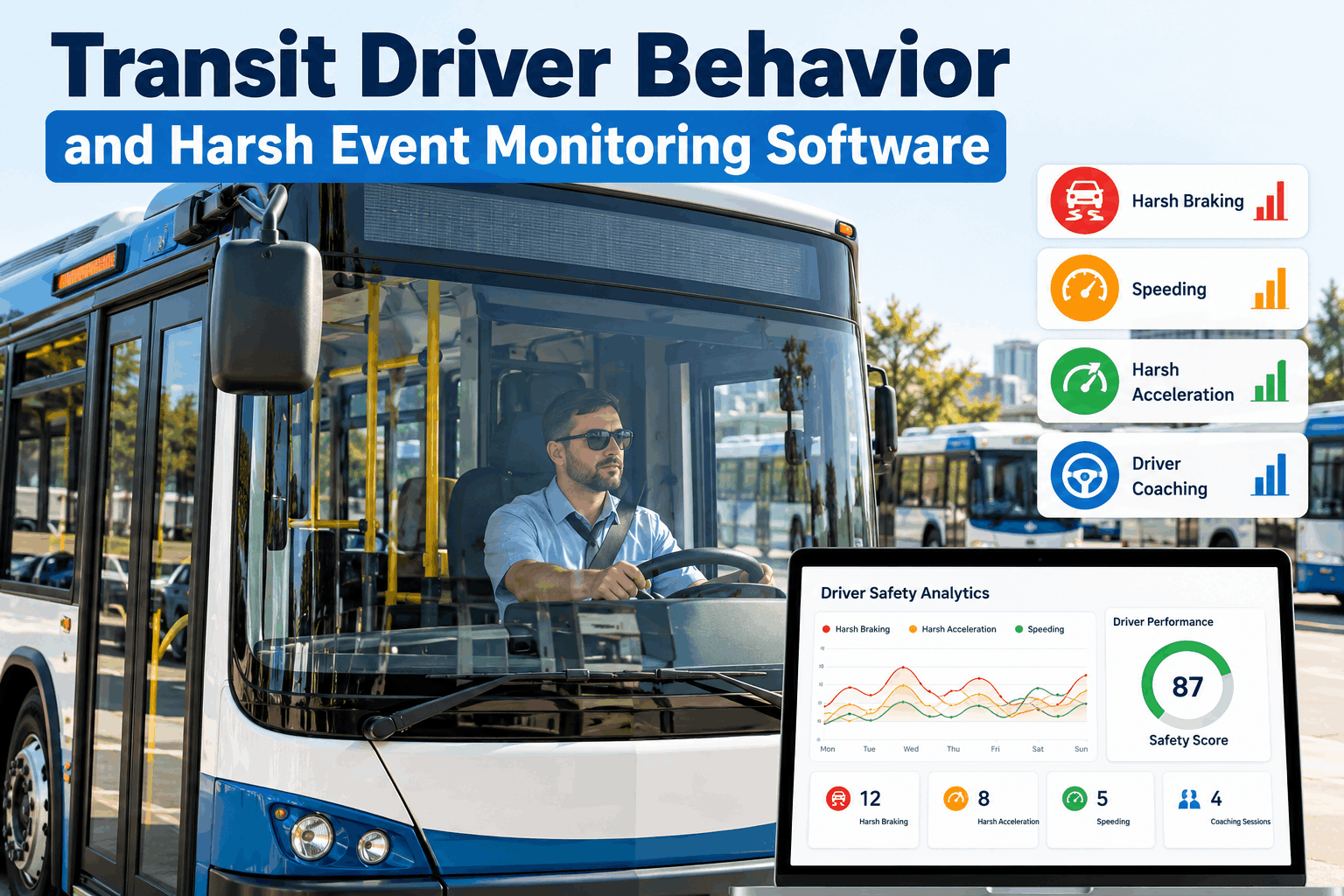
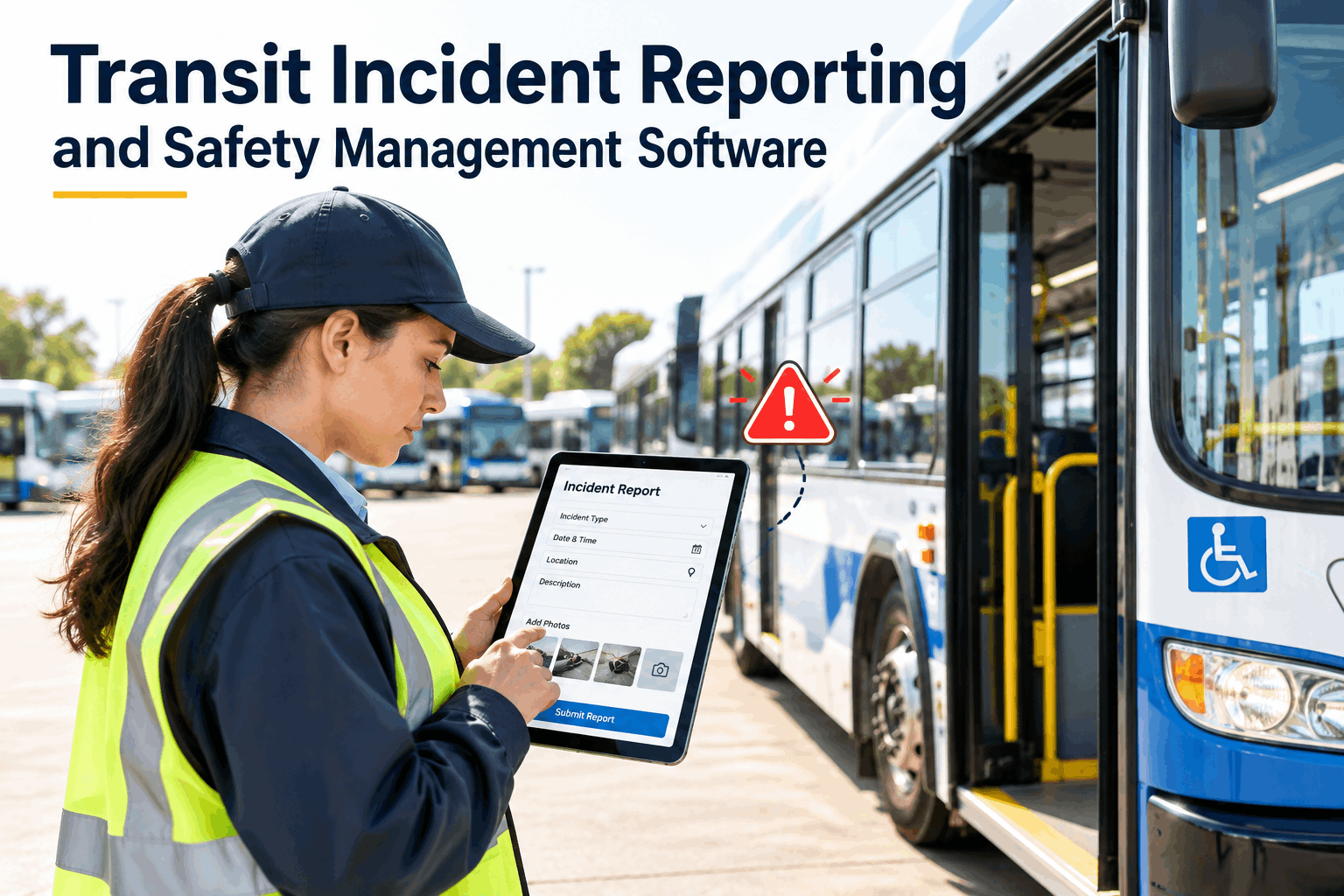
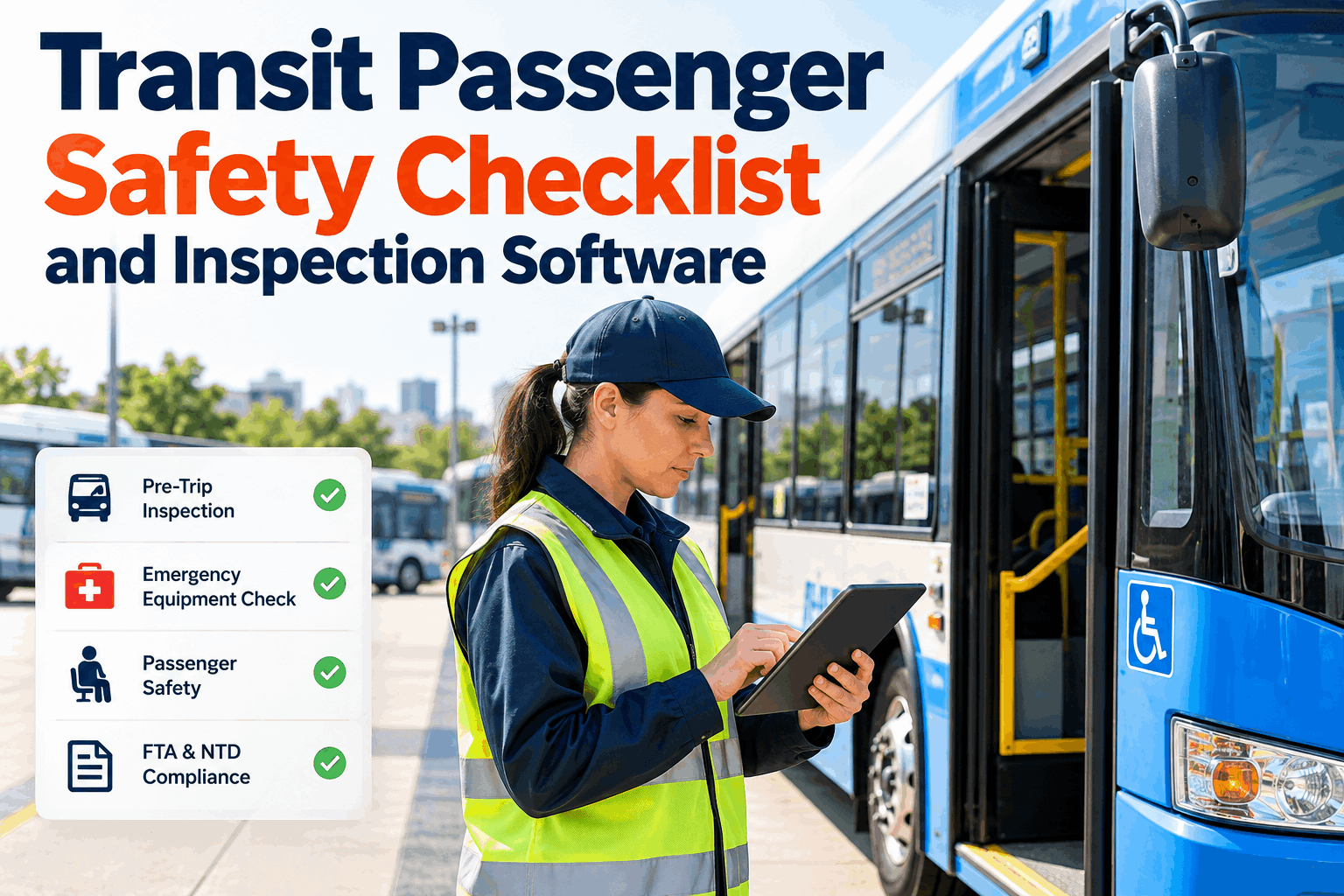
PM-A/B/C mileage scheduling
Stacking PM tiers triggered automatically off real mileage, not a shop wall chart.
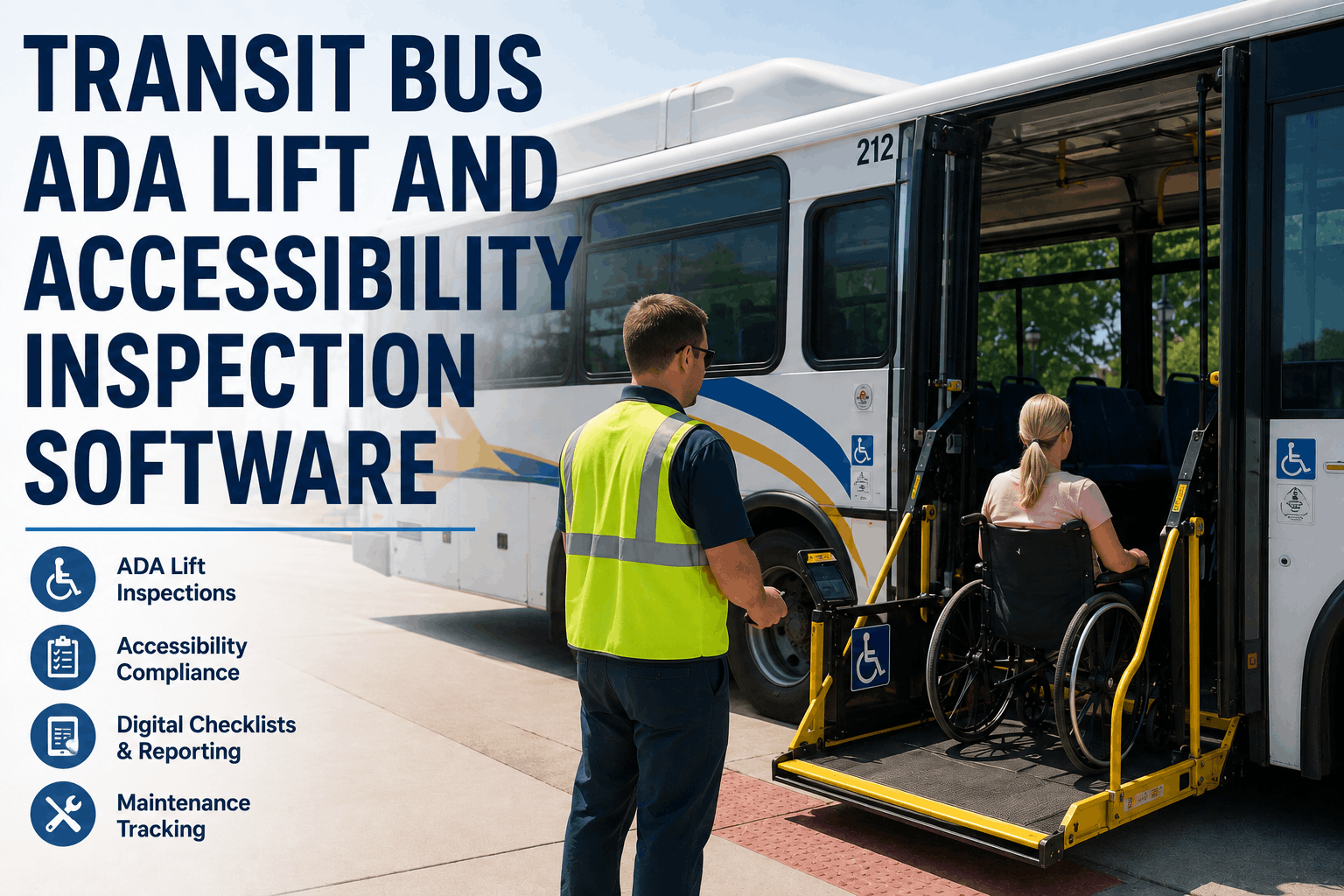
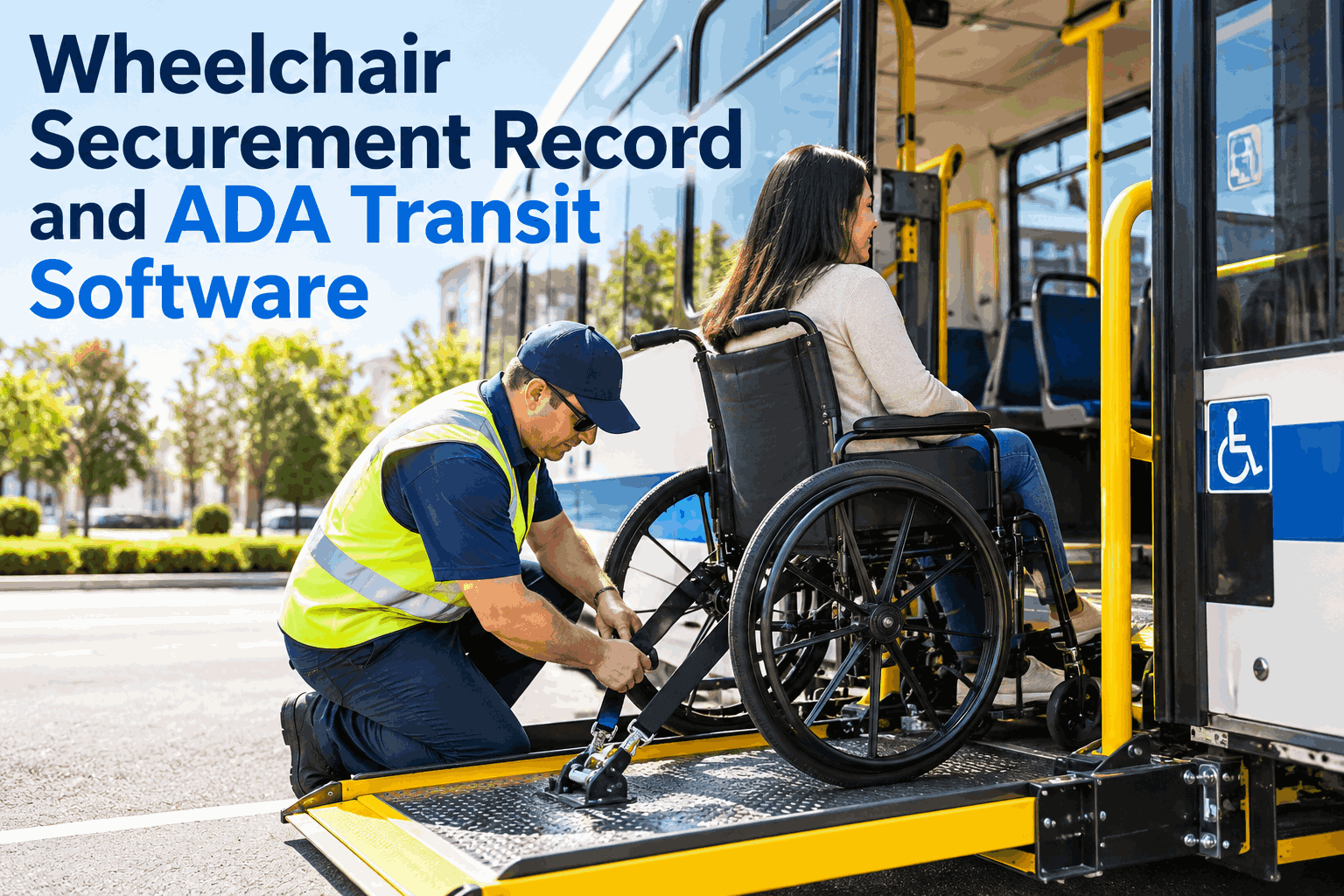
A wheelchair lift that fails to deploy isn't a mechanical inconvenience for a transit agency, it's a civil rights violation under 49 CFR Part 37, with civil penalties that start at 75,000 dollars and an audit trail that FTA reviewers will ask for down to the timestamp. Running that program alongside a normal PM-A, B, and C mileage schedule across a whole fleet is exactly the kind of thing that falls apart on a spreadsheet. Transit bus ADA inspection software exists to keep both programs, mechanical and accessibility, provably compliant at the same time.
Oil, filters, fluid levels, basic safety checks
Everything in A, plus brake measurement and fuel system checks
Everything in A and B, plus drivetrain, suspension, and propulsion service
Each higher tier repeats the lower one, so nothing gets skipped just because a bus jumped straight to a major service interval. Agencies that sign up for mileage-triggered scheduling stop relying on a shop wall chart to catch which tier a bus is actually due for.
A worn brake pad or a low fluid level is a maintenance finding. It gets logged, scheduled, and fixed on the next appropriate PM tier without anyone outside the shop needing to know it happened.
Under 49 CFR 37.163, a lift that isn't operative pulls the bus from service before its next service day, and every part of that response, from the driver's radio call to the passenger's alternative ride, has to be documented well enough to survive an FTA triennial review. Agencies that book a demo want to see that documentation build itself, not get reconstructed after the fact.
See PM-A/B/C mileage scheduling and daily ADA lift inspections tracked together, FTA-ready by default.
Driver radios dispatch immediately, by the most available means
Agency arranges alternative accessible transport within 30 minutes
Bus is pulled from service before its next scheduled service day
If no accessible spare exists, a documented 3 to 5 day exception applies, with active repair proof required
FTA best practice calls for a full deployment cycle before every day of revenue service, and a lift can look fine cycling empty while still failing under an actual passenger's weight. That's why periodic load testing matters as much as the daily pre-trip.
Fleets that sign up for structured lift tracking schedule that load test on its own cycle, separate from the daily cycling every driver performs before pull-out.
Daily pre-trip lift inspection records, timestamped with driver identification
Defect reports tied to resolution tracking, not just the initial finding
Out-of-service incident reports with alternative transport documentation attached
Exception period tracking with the justification an auditor will expect to see
Stacking PM tiers triggered automatically off real mileage, not a shop wall chart.
Full deployment cycle checks logged with timestamp and driver ID, every service day.
Dispatch flags, alternative transport logging, and exception-period tracking in one flow.
Periodic full-weight lift testing tracked separately from the daily driver cycle check.
Every required record type built continuously, ready for a triennial review request.
See which buses are due for a PM tier or a lift load test before they're overdue.
An FTA reviewer requests a full year of daily lift inspection documentation for every accessible bus in the fleet, and a paper-based agency spends weeks reconstructing what should have been a five-minute export. With inspections logged digitally against each bus from day one, that same request becomes a report generated on the spot instead of a scramble through filing cabinets. Agencies running this way describe far fewer audit findings tied to missing documentation, which is often cited even when the maintenance itself was actually performed. If your ADA records still live in binders, a short book a demo session will show what an instant export looks like on your own fleet.
Set up your first bus in FleetRabbit and see PM-A/B/C scheduling and ADA lift records generate themselves from day one.
Transit agencies must establish regular and frequent maintenance checks of lifts and ramps sufficient to determine if they're operative, and a bus with an inoperable lift must be pulled from service before its next service day.
The driver radios dispatch immediately, the agency arranges alternative accessible transport within 30 minutes for the stranded passenger, and the bus is pulled from service before its next scheduled day.
Each higher tier includes every task from the tiers below it. A PM-C service, done around 30,000 miles, repeats the PM-A and PM-B items on top of its own major service tasks.
FTA best practice calls for a full deployment cycle, not just a visual inspection, since a lift can look fine while cycling empty and still fail under an actual passenger's weight.
Under 49 CFR 37.163(e), a bus can run with a documented exception for a maximum of 3 days in areas over 50,000 population or 5 days in smaller areas, provided there's evidence of active repair effort.
Most agencies start with a subset of accessible buses to confirm PM and ADA tracking against their current records, then expand fleet-wide. A demo is the fastest way to see a timeline for your fleet.