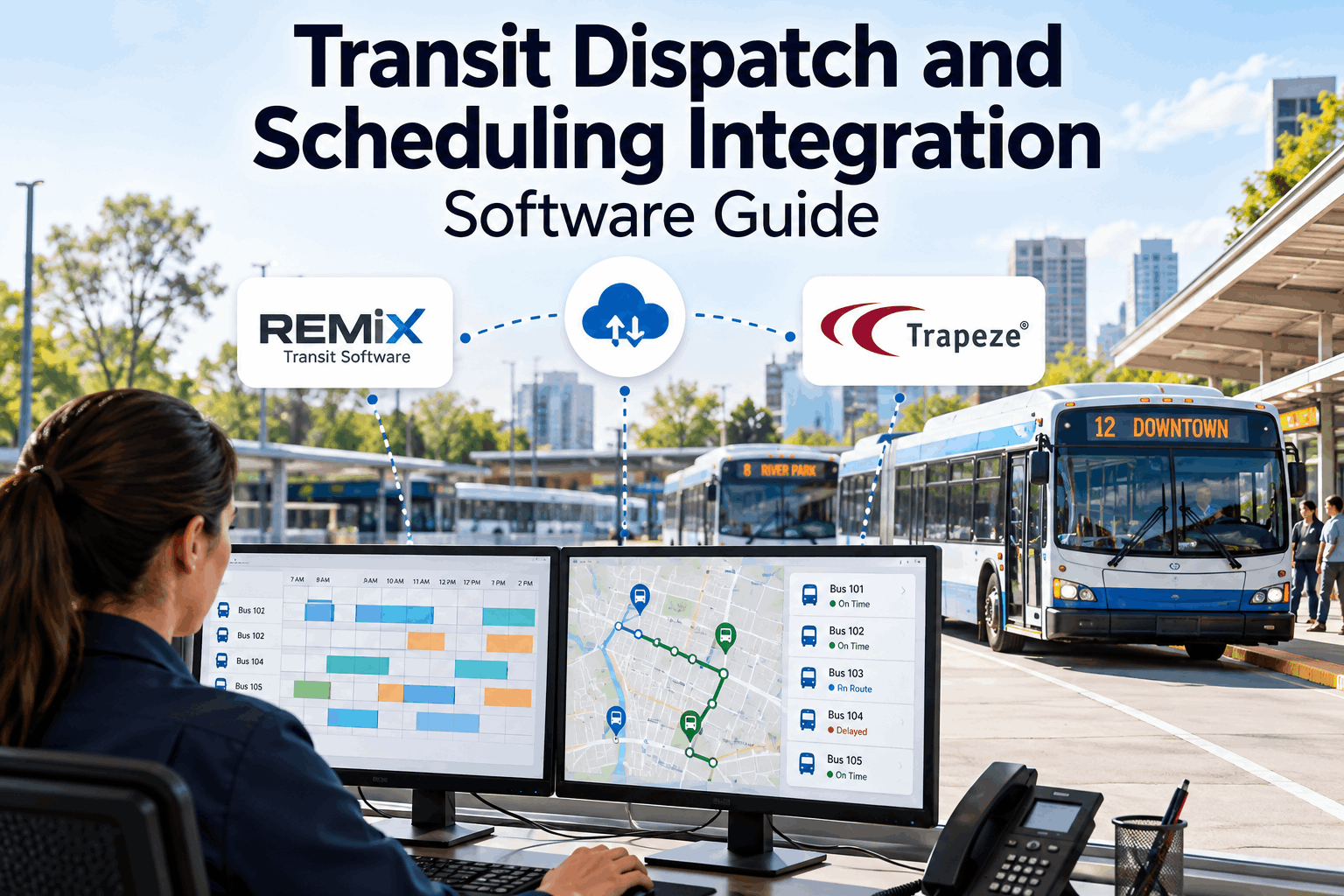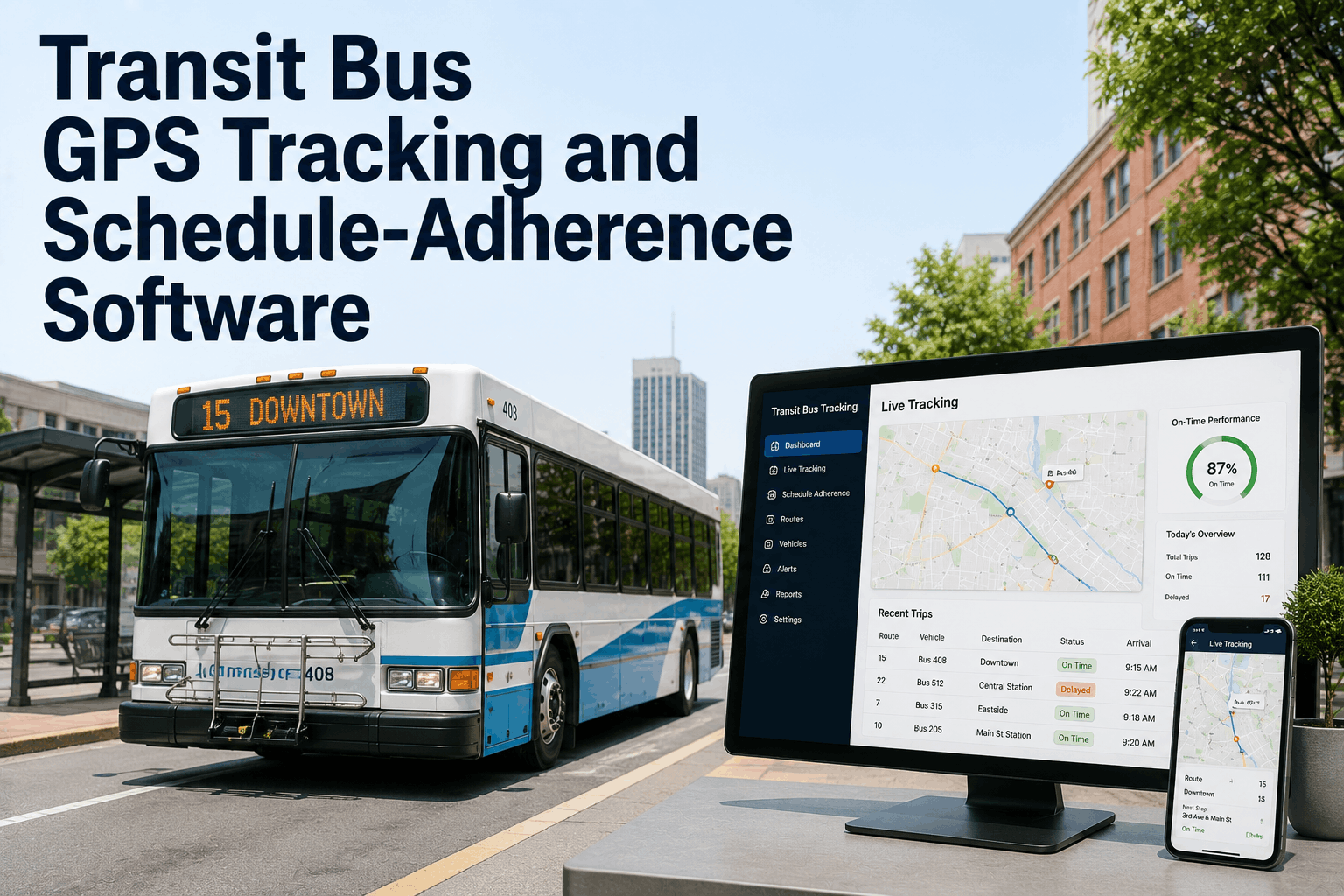
A transit dispatcher watching a route on a paper schedule and a radio check-in is always working a few minutes behind reality. By the time a driver calls in running late, three stops downstream have already missed their transfer window. Transit bus GPS tracking software built around schedule adherence closes that gap by showing dispatch exactly where every bus sits against its timepoints in real time, not after a rider has already missed a connection.
Why GPS Dots on a Map Are Not the Same as Schedule Adherence
Plenty of tracking tools can show where a bus is. Fewer can tell a dispatcher whether that position means the bus is early, on time, or late against its actual timepoints, which is the number that determines whether a transfer connection holds or breaks. A system built for fixed-route transit reads GPS position against the published schedule automatically, flagging early and late buses the moment they drift outside the window instead of waiting on a radio call. Agencies that want that gap closed usually start by looking to sign up for a platform that was built around timepoints from the ground up, not a generic delivery-fleet tracker repurposed for buses.
What On-Time Performance Actually Measures
On-time performance is the single most watched number in a transit agency's operating report, and it is calculated as the share of scheduled stops a bus reaches within its defined adherence window, typically zero minutes early to five minutes late. It matters because rider trust in a system depends almost entirely on whether the timetable can be believed. Agencies that want to see their own on-time numbers calculated this way can book a demo against a sample route before rolling it out fleet-wide.
Early or late detection flagged automatically at every timepoint, not just the route endpoints
Headway and spacing analysis to catch bunching before riders feel it
Timed-transfer alerts when a connecting route is at risk of a missed hold
Give dispatch real timepoint visibility, not just dots on a map
Live schedule adherence, early and late detection, and transfer-risk alerts across every route.
Turning Daily Tracking Data Into NTD-Ready Reporting
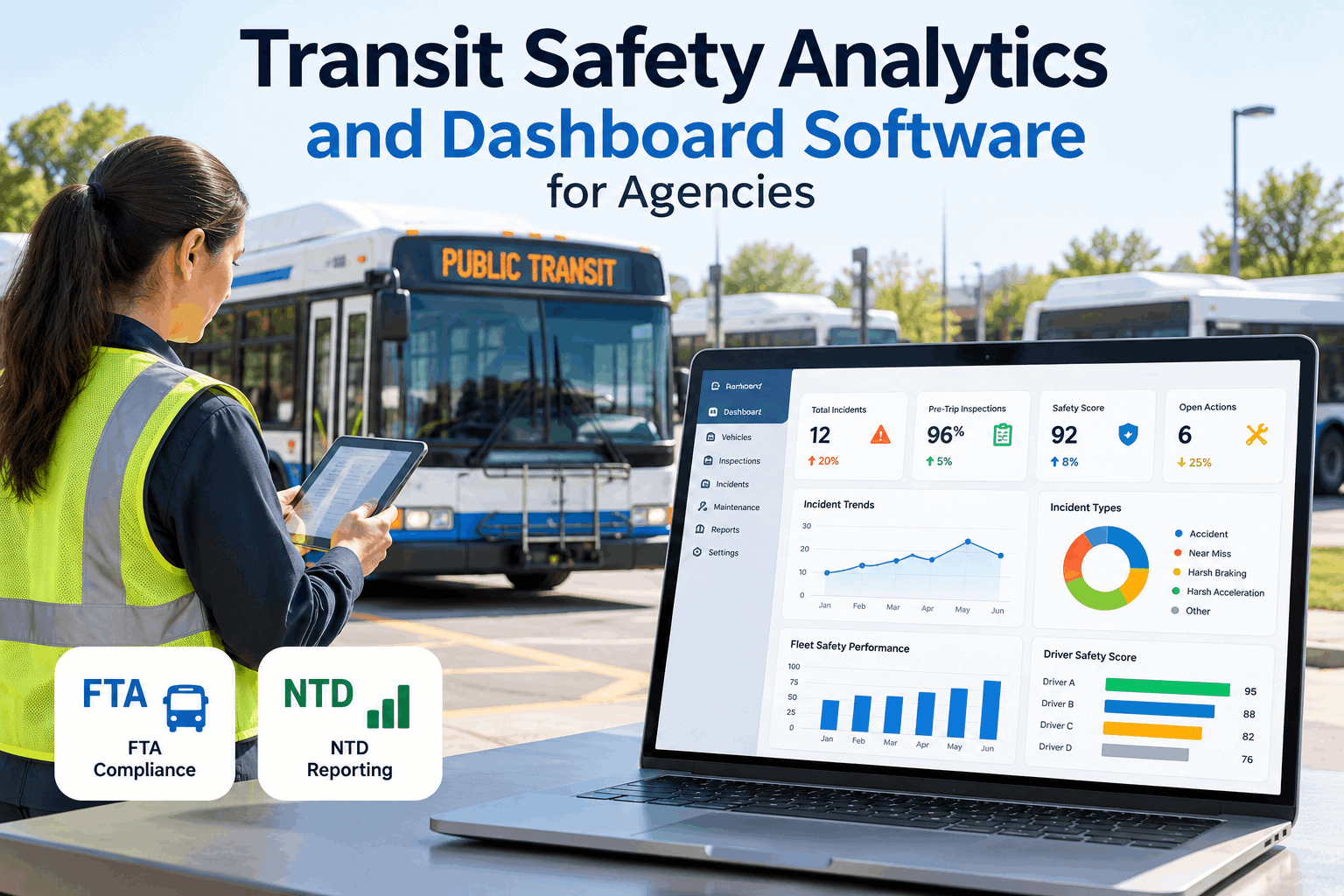
Every transit agency receiving federal funding has to submit data to the National Transit Database, and the reporting burden is usually where GPS tracking data either pays off or turns into weeks of manual spreadsheet reconciliation. A system that captures schedule adherence, service hours, and mileage automatically as buses run their routes means that data is already structured and exportable when the reporting window opens, instead of being rebuilt from scratch every cycle.
Agencies that are still assembling this data by hand every quarter are usually the ones with the most to gain from a platform that exports NTD-ready data in one click. It is a common enough pain point that agencies frequently book a demo just to see the reporting export before evaluating anything else.
Where PM Scheduling and ADA Lift Checks Fit Into the Same System
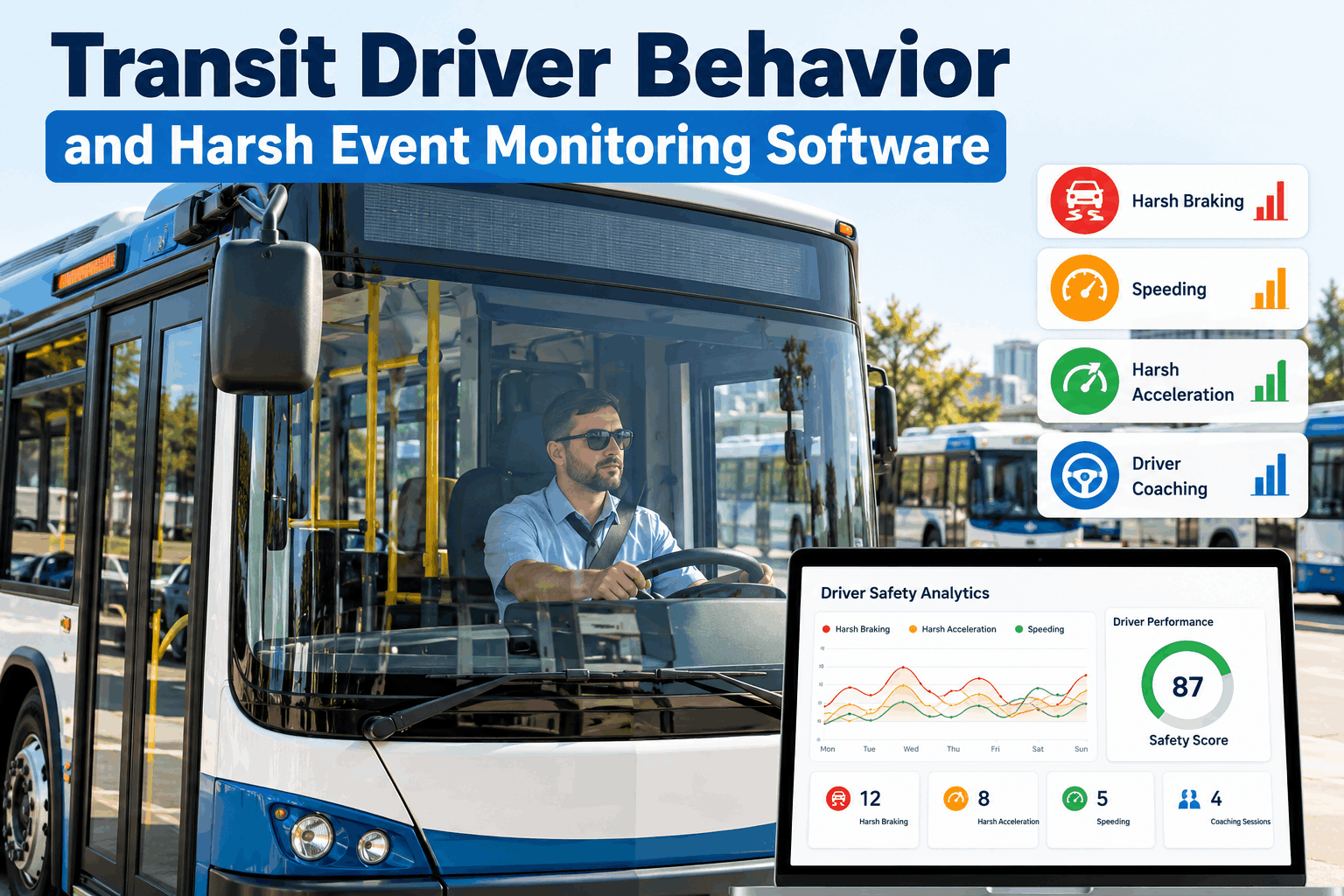
Schedule adherence tells dispatch whether a bus is running on time. It does not tell them whether that bus is mechanically fit to keep running, which is why the same GPS and telematics data feeding on-time performance should also feed a bus's PM-A, PM-B, and PM-C maintenance windows and its ADA lift inspection cycle. A bus that is perfectly on schedule but overdue for a lift inspection is still a compliance risk waiting to surface. Agencies consolidating these workflows into one platform typically sign up once they see PM windows and adherence data living in the same dashboard.
Basic service interval covering fluids, brakes, and tires, tracked against live mileage rather than a fixed calendar date.
Intermediate service adding suspension, cooling system, and door and lift hardware checks.
Comprehensive service tied to annual inspection cycles and full documentation refresh.
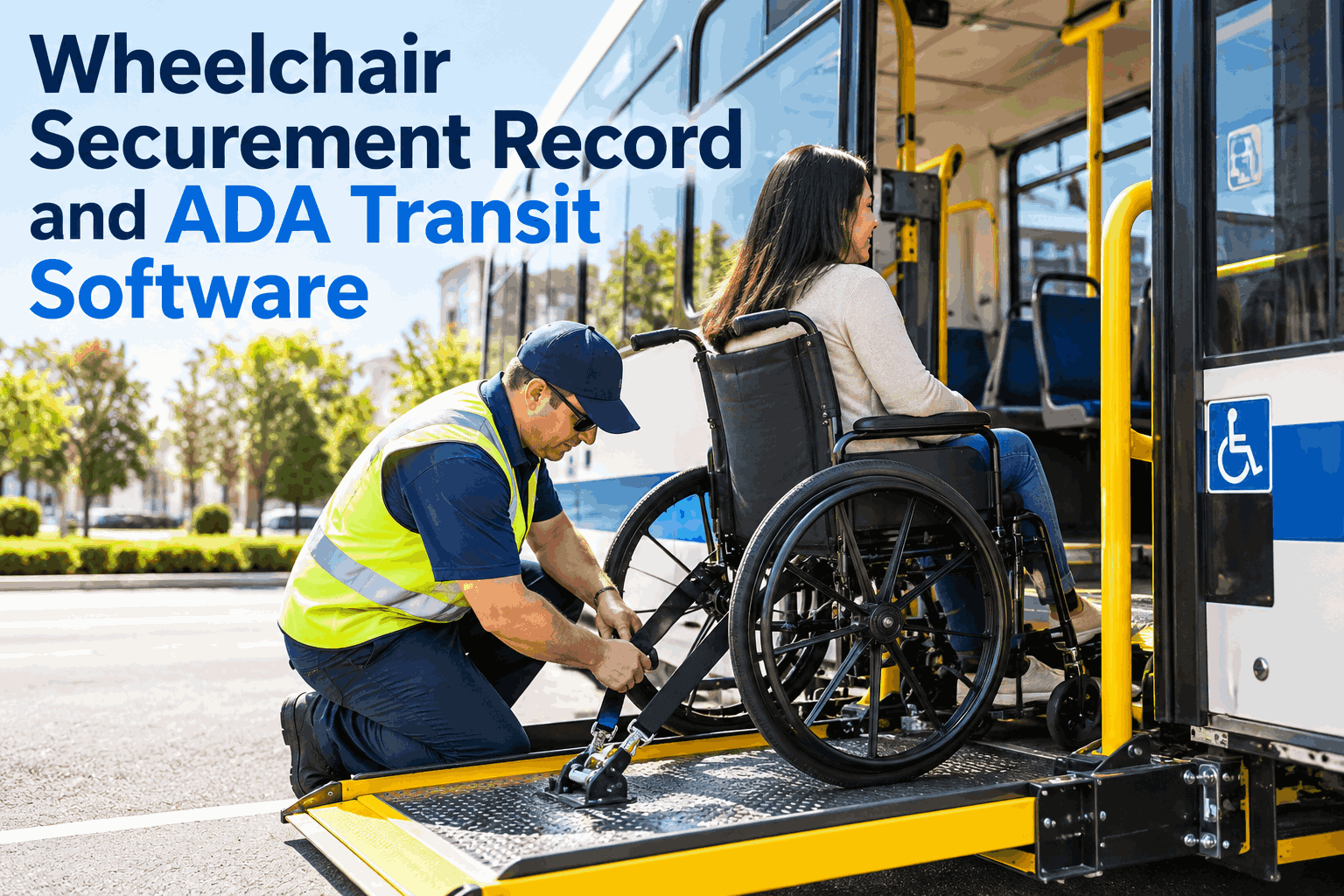
Cycling and functional checks logged on a defined schedule to keep accessibility equipment audit-ready.
One system for on-time performance, PM scheduling, and NTD reporting
Stop reconciling GPS data, maintenance records, and federal reporting across three separate tools.
Frequently Asked Questions
What counts as on-time for a transit bus
Most agencies define on-time as arriving at a timepoint between zero minutes early and five minutes late against the published schedule. Anything outside that window gets flagged as either early or late in the adherence report.
How is GPS tracking software different from a basic vehicle locator
A basic locator only shows position on a map. Schedule-adherence software compares that live position against the route's published timepoints, automatically calculating whether a bus is early, on time, or late and flagging transfer connections at risk.
What data does an agency need for NTD reporting
Core NTD data points include service hours, vehicle revenue miles, on-time performance, and roadcall records. Systems that capture this automatically from GPS and maintenance data reduce the manual reconciliation work typically needed before an annual submission.
Does schedule adherence tracking replace PM scheduling
No, they serve different purposes but work best on the same data. Schedule adherence tracks whether a bus is running on time, while PM-A, PM-B, and PM-C scheduling tracks whether that bus is mechanically due for service, both drawing from the same live mileage and telematics feed.
How often should ADA lift equipment be inspected
Lift cycling and functional checks are typically logged on a recurring schedule tied to daily or weekly use, since accessibility equipment failures are treated as zero-tolerance defects during FTA compliance reviews.