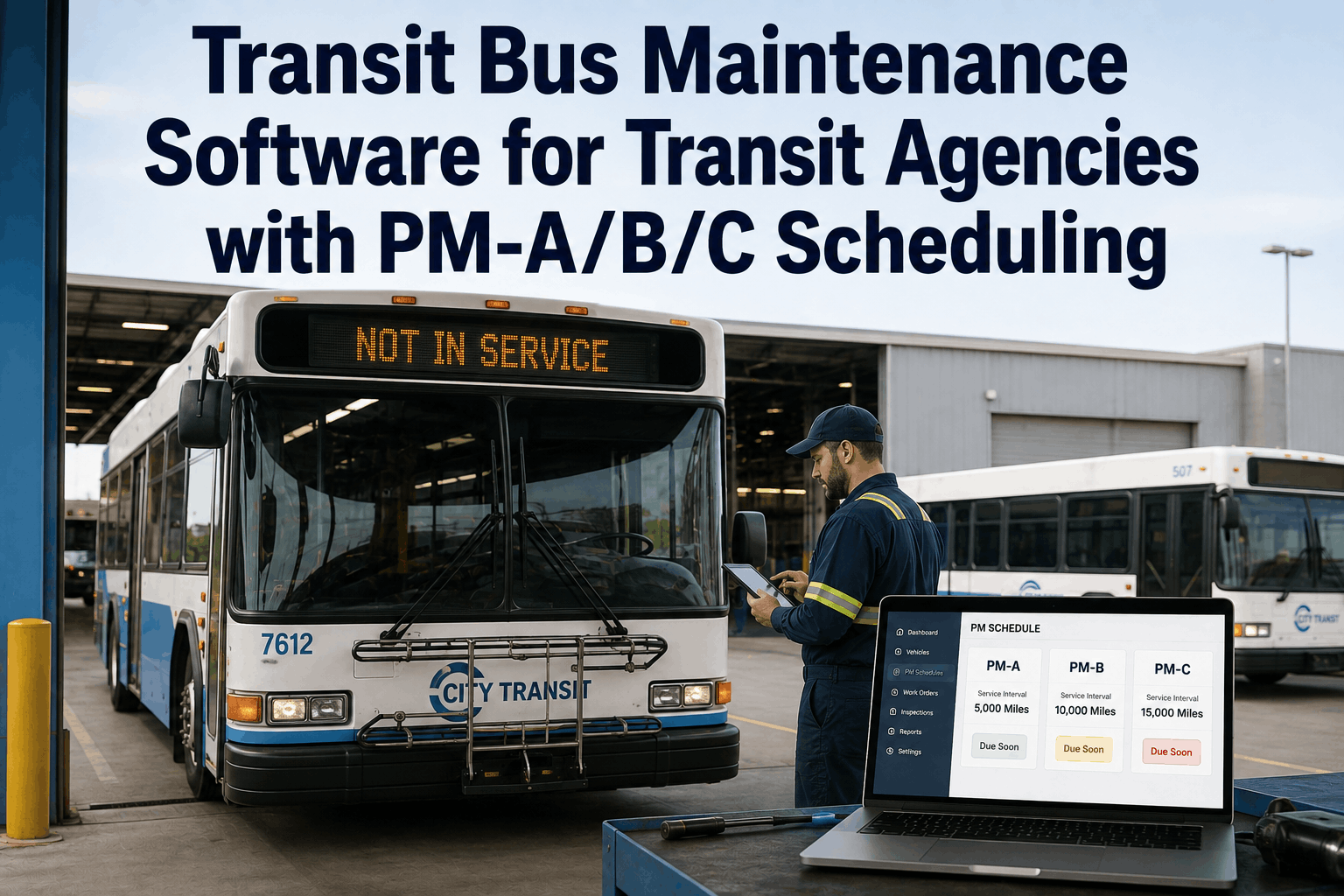
Transit maintenance managers do not get graded on effort. They get graded on whether a bus was on the curb at 5:12 AM, whether the wheelchair lift worked on the first try, and whether the NTD submissionmatched the shop floor. FleetRabbit's transit bus maintenance software was built around that exact scoreboard — PM-A/B/C scheduling, ADA lift inspections, and pull-out readiness, all tied to data your agency can hand straight to an FTA auditor.
Most agencies do not lose funding because buses are unsafe. They lose it because the paperwork cannot prove the buses are safe. FTA Circular 9400.1 expects a documented PM schedule for every revenue vehicle, and the Triennial Review treats anything under an 80% PM completion rate as a deficiency. A missed A-check on a spreadsheet does not look urgent until it becomes a road call during evening rush. Agencies that sign up for FleetRabbit stop chasing that paperwork after the fact and start generating it automatically, the moment a technician closes a work order.
The PM ladder
A, B, and C are not three separate jobs. They are one job that gets deeper each time.
Roughly every 6,000 miles
Oil and filter change, fluid levels, belts, lights, tire pressure, and a fast visual walk-around. This is the check that catches the small stuff before it snowballs — and the one most likely to get skipped when a route is short on drivers.
Roughly every 12,000 miles
Everything in A, plus engine and driveline diagnostics, battery load testing, suspension, steering, and exhaust inspection. This is where wear patterns show up months before they turn into a failure on the road.
Roughly every 30,000 miles
Everything in A and B, plus the DOT annual inspection, brake overhaul, coolant flush, transmission service, and a full ADA lift and ramp function test. This is the compliance checkpoint your auditor will ask about by name.
FleetRabbit tracks mileage per vehicle in real time and opens the right class of work order automatically — no dispatcher has to remember which bus is due for which letter. Agencies that run this way typically book a demo once they see how many buses were quietly overdue on a spreadsheet.
ADA lift and ramp compliance
A lift that fails during boarding is not a maintenance ticket. It is an incident report.
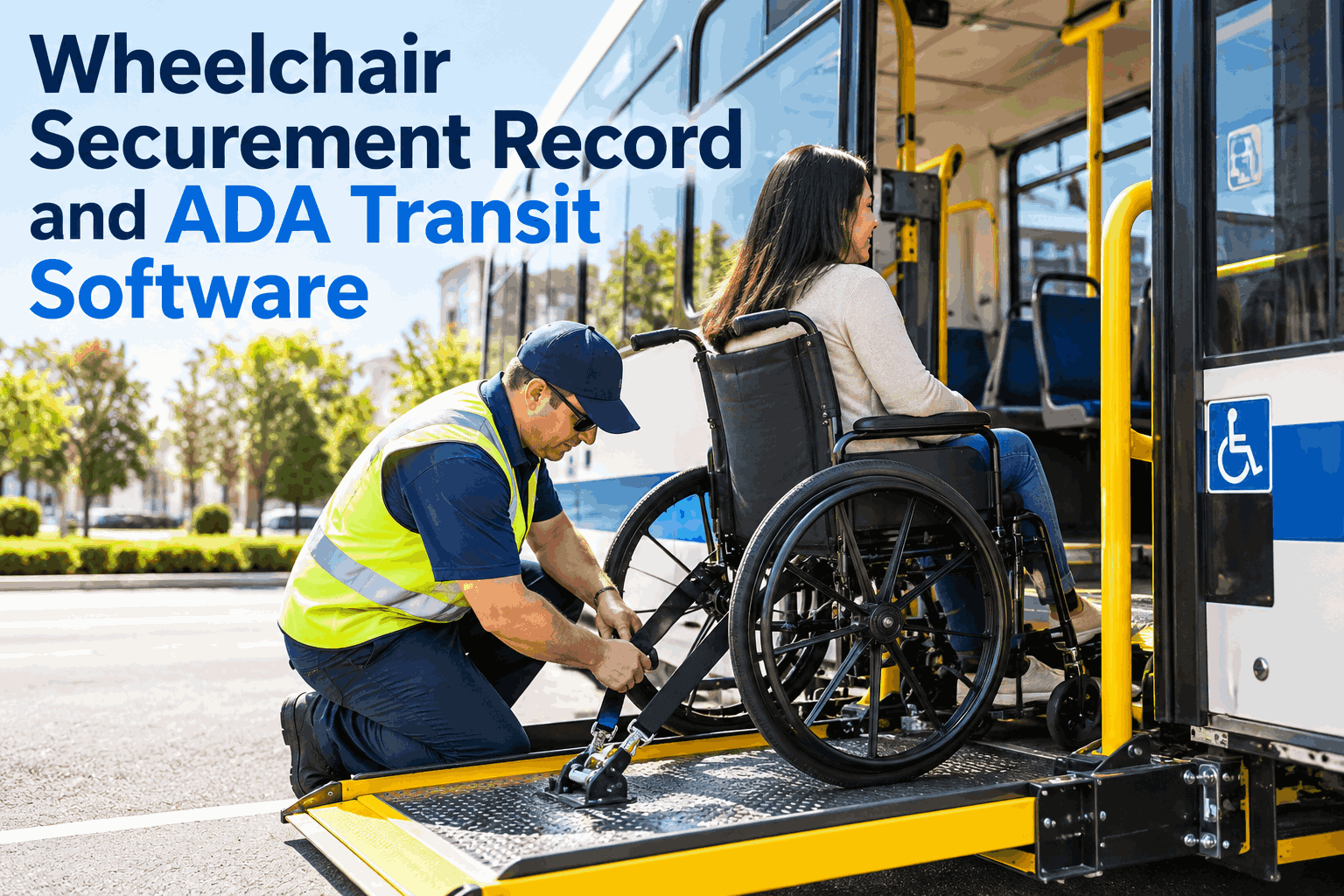
Every wheelchair lift and ramp needs a documented functional check, and agencies are expected to keep that record on hand, not reconstruct it after a rider complaint. FleetRabbit turns the lift check into a required step inside the PM-C workflow, so it cannot be closed out and skipped. Technicians who sign up get a standing checklist tied to each vehicle's lift model, not a generic form copied across the fleet.
See your fleet's overdue PMs before your auditor does
Fifteen minutes with your own vehicle list, not a canned demo script.
NTD-ready, without the scramble
The National Transit Database does not want a story about your fleet. It wants numbers that match your shop records.
Before
Maintenance history lives in three spreadsheets and a filing cabinet. Someone spends the week before the deadline reconciling mileage, PM completion rates, and asset condition by hand, then hopes nothing was missed.
With FleetRabbit
Every PM, lift check, and repair is logged against the vehicle the moment it happens. Asset inventory, maintenance cost, and PM completion rate export in the format your NTD submission actually needs. Agencies that book a demo usually ask the same question first: how much faster is report week now.
Pull-out readiness
The 5 AM question every dispatcher asks: which buses are actually cleared to leave the yard
A bus with an overdue PM or an unresolved defect should never make it onto the pull-out list, but paper DVIRs make that easy to miss in the dark. FleetRabbit flags any vehicle with an open defect, overdue PM, or failed pre-trip item, so dispatch sees the clean list before drivers even reach the yard. Agencies that sign up stop finding out about a grounded bus after it is already three stops into the route.
30–40%
Fewer unplanned breakdowns with a consistent PM-A/B/C program
80%
Minimum PM completion rate the FTA Triennial Review expects
1 click
To pull an NTD-ready maintenance export from FleetRabbit
Bring your PM-A/B/C schedule into one system your auditors trust
Free trial for your maintenance team, or a live walkthrough with your fleet data.
Common questions
What actually separates a PM-A, PM-B, and PM-C service
Each class builds on the one before it. PM-A covers fast, frequent checks like fluids and lights. PM-B adds deeper diagnostics on the engine and driveline. PM-C includes everything in A and B plus the DOT annual inspection, brake overhaul, and full ADA lift function test. Higher classes always include the lower ones, they never replace them.
How often does an ADA lift need to be inspected
Lifts and ramps should get a functional check as part of routine PM, with a full cycle and interlock test built into the PM-C interval at minimum. Agencies with high-ridership routes often run lighter lift checks more frequently, since a failed lift mid-route becomes a service and compliance issue at once.
Which agencies are required to report to the NTD
Any agency receiving FTA funding under Section 5307 Urbanized Area or Section 5311 Rural Area formula programs must report. Full reporters running 30 or more vehicles in maximum service face more extensive requirements than reduced reporters, but both need documented, auditable maintenance records.
Can FleetRabbit replace our current spreadsheet-based PM tracking
Yes. FleetRabbit tracks mileage per vehicle, opens the correct PM class automatically when a bus is due, and keeps every completed task, lift check, and inspection tied to that vehicle's permanent record, ready to export whenever a report or audit needs it.
How long does it take to get a transit fleet set up
Most agencies load their vehicle list and current PM intervals within a day. From there, work orders start generating automatically based on real mileage, so the schedule is live well before the next PM cycle is due.