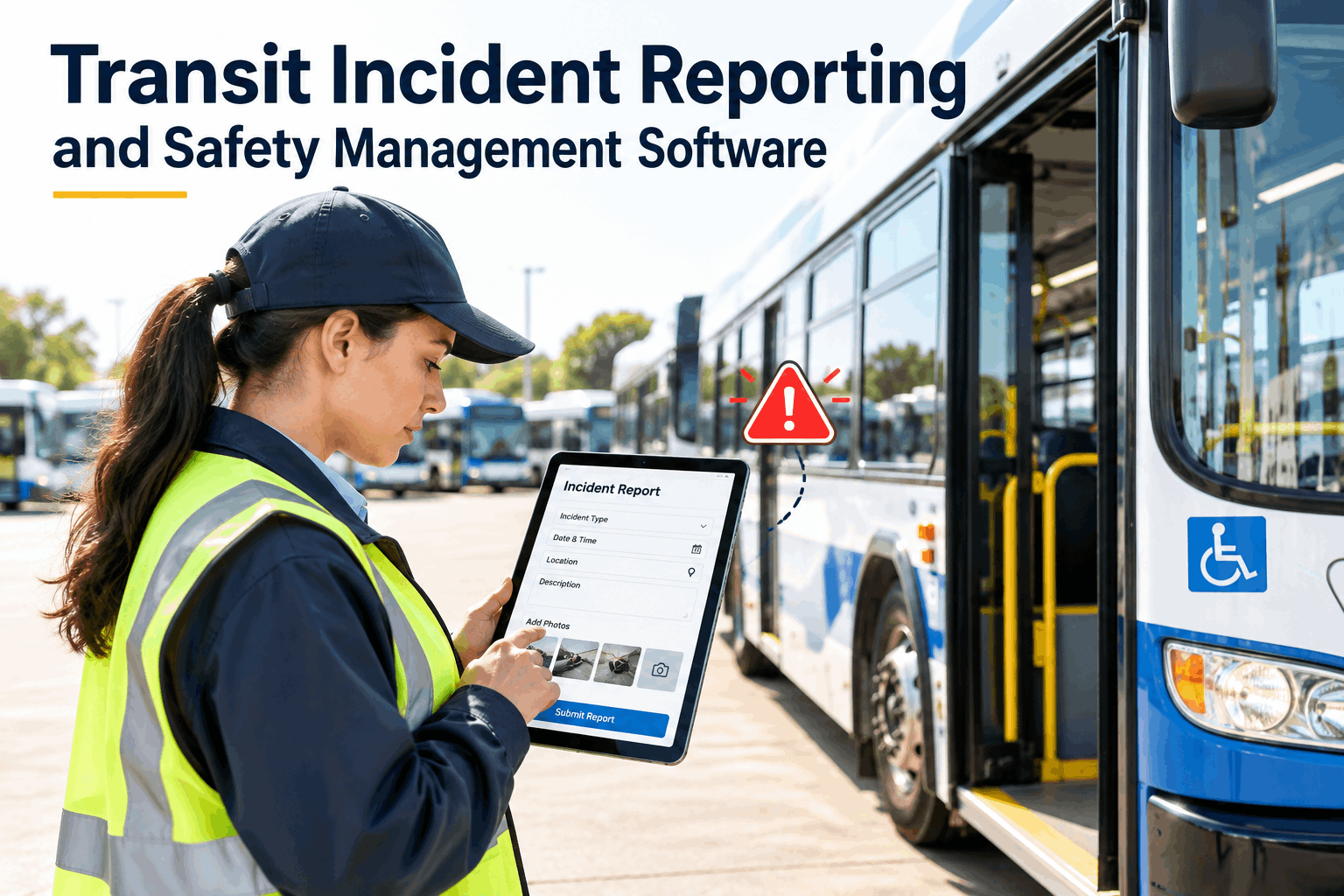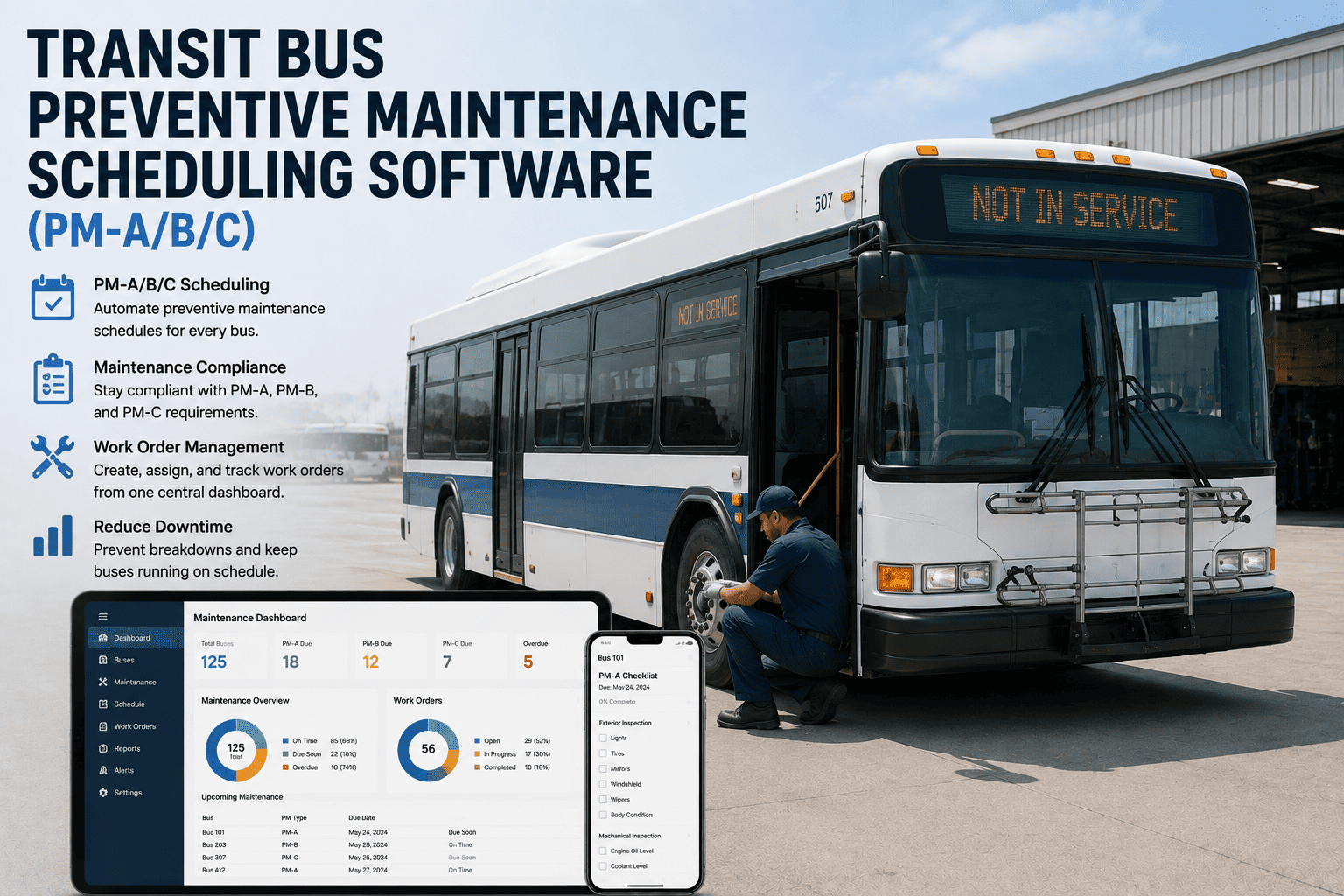
Transit agencies run some of the hardest working vehicles on the road, and the fleets that stay reliable are almost never the ones reacting to breakdowns. They are the ones running a disciplined PM-A, PM-B, PM-C schedule, keeping ADA lifts in verified working order, and generating clean data for NTD reporting without a mad scramble every quarter. FleetRabbit was built to take that entire workload off spreadsheets and whiteboards and turn it into a single, automated system that maintenance supervisors and dispatchers can trust every single day. Agencies exploring a better way to manage this can sign up and see it running against their own fleet.
Most transit agencies structure preventive maintenance around three escalating tiers rather than one flat interval. Each tier catches a different category of wear before it turns into a road call, and the tiers stack, meaning PM-B work includes everything in PM-A, and PM-C includes everything below it.
Short-interval quick check
Typically triggered every few thousand miles or roughly monthly. Covers fluid levels, tire condition, brake wear, lighting, mirrors, wipers, and a functional wheelchair lift or ramp cycle test.
Mid-interval systems check
Falls at a wider mileage or day band and adds suspension, steering linkage, HVAC performance, door interlock testing, kneeling system function, and a deeper brake measurement pass.
Major annual inspection
An in-depth structural and drivetrain review aligned to annual DOT and agency compliance cycles, including frame, engine mounts, transmission, full ADA lift certification, and emissions checks.
Tracking three overlapping intervals across a mixed fleet of buses with different ages, engine hours, and duty cycles is exactly where paper logs and shared spreadsheets fall apart. FleetRabbit assigns each vehicle its own PM-A, PM-B, and PM-C clock the moment it enters the system, so supervisors get a work order the moment a threshold is reached instead of discovering a missed interval during an audit. If your team is still juggling this manually, it is worth taking a moment to sign up and see how the tiered scheduling runs on its own.
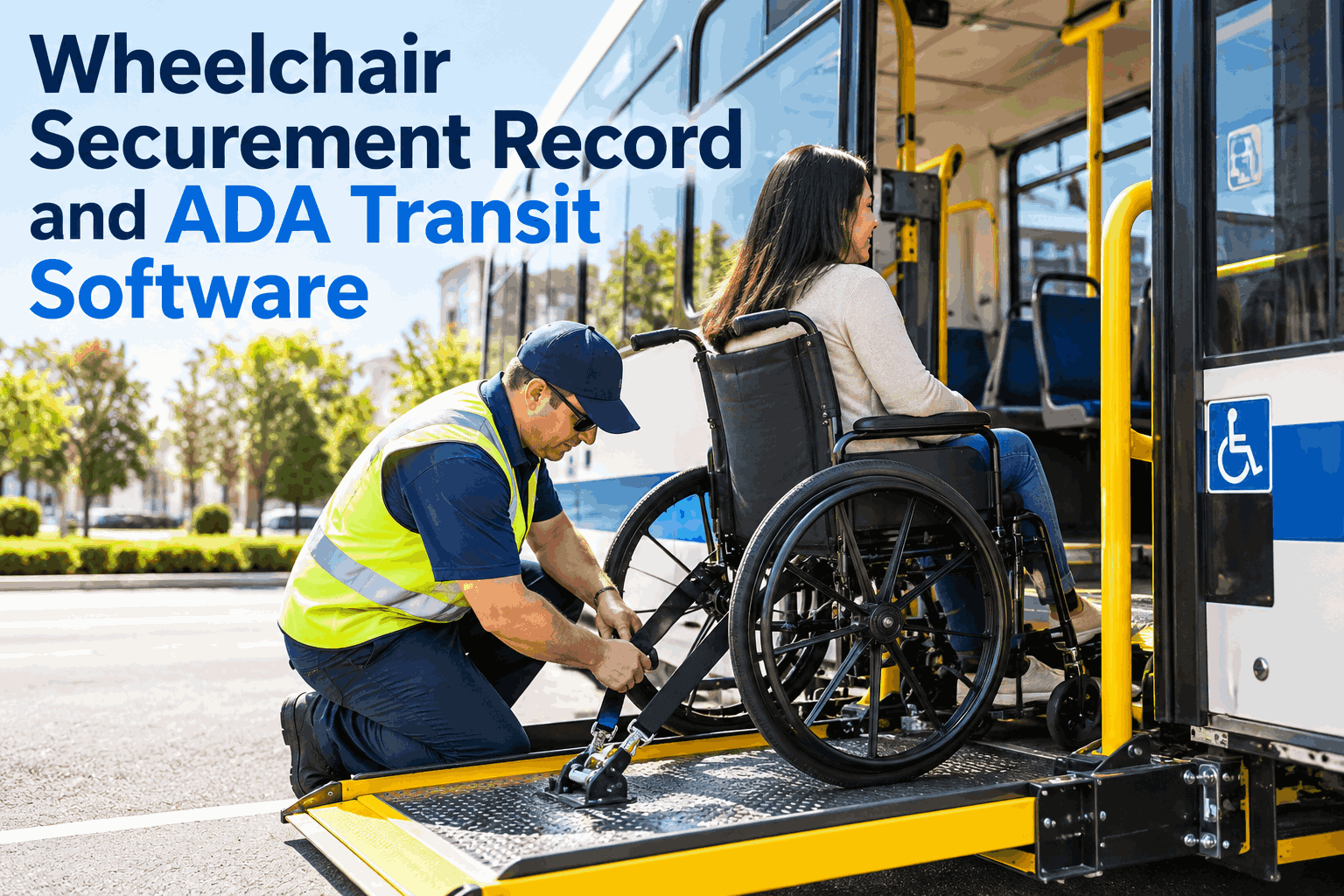
ADA lift and ramp reliability is one of the most heavily scrutinized parts of transit maintenance, because a failed lift does not just cause a delay, it denies service to a rider who depends on it. A strong PM-A/B/C program treats the lift as its own maintenance track, not an afterthought.
Pre-trip functional cycle
Drivers run a full deploy-and-stow cycle before pull-out and log any hesitation, unusual noise, or sensor fault.
Interlock and sensor testing
Door interlocks, kneeling sensors, and lift sensors are checked during PM-B to confirm they still disable movement correctly.
Hydraulic and structural review
Hydraulic lines, platform hinges, and handrail integrity get a close inspection during PM-C to catch fatigue before it fails in service.
Out-of-service escalation
Any failed check automatically flags the unit as out of service for ADA equipment until a technician clears it, closing the compliance gap.
FleetRabbit logs every lift cycle test with a timestamp, driver ID, and result, so if a rider files a complaint or an auditor asks for proof of compliance, the record already exists. Agencies that want to stop rebuilding this history from memory can book a demo and watch the lift-tracking workflow in action.
See PM-A/B/C scheduling run itself
Give your maintenance team a system that assigns intervals, tracks ADA lift checks, and keeps a clean audit trail without extra paperwork.
Agencies that receive FTA funding have to report vehicle maintenance and asset condition data to the National Transit Database every year, and the source of that data is almost always the daily PM records generated by the maintenance team. When those records are scattered across paper forms and disconnected spreadsheets, building the annual submission becomes a weeks-long project.
| Maintenance record | Where it typically feeds | Common reporting risk |
|---|---|---|
| PM-A/B/C completion logs | Asset condition and maintenance performance data | Missing timestamps or incomplete tier history |
| ADA lift check records | Accessibility and service equipment reporting | No proof of daily functional testing |
| Repair and defect history | Vehicle failure and reliability metrics | Repairs logged informally, never centralized |
| Fleet inventory and age | Asset inventory module | Outdated mileage or in-service dates |
FleetRabbit keeps every one of these records in one structured system as work happens, which means the annual data pull becomes a matter of exporting a clean report instead of reconstructing a year of activity from memory. Fleet managers preparing for their next reporting cycle can sign up now and start building that clean history today.
Transit buses see far more stop-start cycling, door operation, and kneeling activity than almost any other vehicle class, which means certain components wear on a completely different curve than mileage alone would suggest.
Because these parts wear based on cycles rather than pure distance, a purely mileage-based schedule can miss early warning signs. FleetRabbit lets supervisors set duty-cycle triggers alongside mileage, so a high-cycling door or kneeling system can pull in an earlier PM check without waiting for the next scheduled interval. Teams ready to build cycle-aware schedules can book a demo and walk through their own route data with our team.
The difference between a manual PM process and an automated one usually shows up in the details nobody has time to double-check.
| Task | Manual process | FleetRabbit |
|---|---|---|
| PM-A/B/C interval tracking | Tracked per vehicle on paper or shared sheets | Automatic per-vehicle scheduling and alerts |
| ADA lift check history | Logged inconsistently by drivers | Timestamped digital record every trip |
| NTD data preparation | Manually compiled once a year | Continuously structured, export-ready |
| Duty-cycle based triggers | Rarely tracked separately from mileage | Configurable alongside mileage intervals |
Agencies that switch to a system built around these workflows typically see fewer missed intervals and a much faster reporting season. If your team wants to see the shift firsthand, you can sign up and start with your own fleet data.
Bring PM-A/B/C, ADA tracking, and NTD reporting into one place
Stop rebuilding compliance records from scratch every reporting season.
Frequently asked questions
What does PM-A, PM-B, and PM-C actually mean for a transit bus
They are escalating tiers of preventive maintenance. PM-A is a short-interval quick check, PM-B adds mid-level systems review at a wider interval, and PM-C is the major annual inspection that covers structural and drivetrain components.
How often should ADA lift checks happen
A functional cycle test should happen before every pull-out, with deeper interlock and structural checks folded into the PM-B and PM-C tiers respectively.
Why does NTD reporting depend so heavily on maintenance records
NTD asset condition and accessibility data is drawn directly from daily maintenance and lift check logs, so incomplete or scattered records make the annual submission far harder to compile accurately.
Can FleetRabbit handle a mixed fleet of different bus ages and types
Yes. Each vehicle gets its own PM-A/B/C clock and duty-cycle settings, so older and newer units in the same fleet can be tracked on schedules suited to their individual condition and usage.
Is switching from paper logs to FleetRabbit a long process
Most agencies can get their fleet loaded and their first PM schedule running within a short onboarding period. The best way to see the timeline for your own fleet is to book a demo with our team.