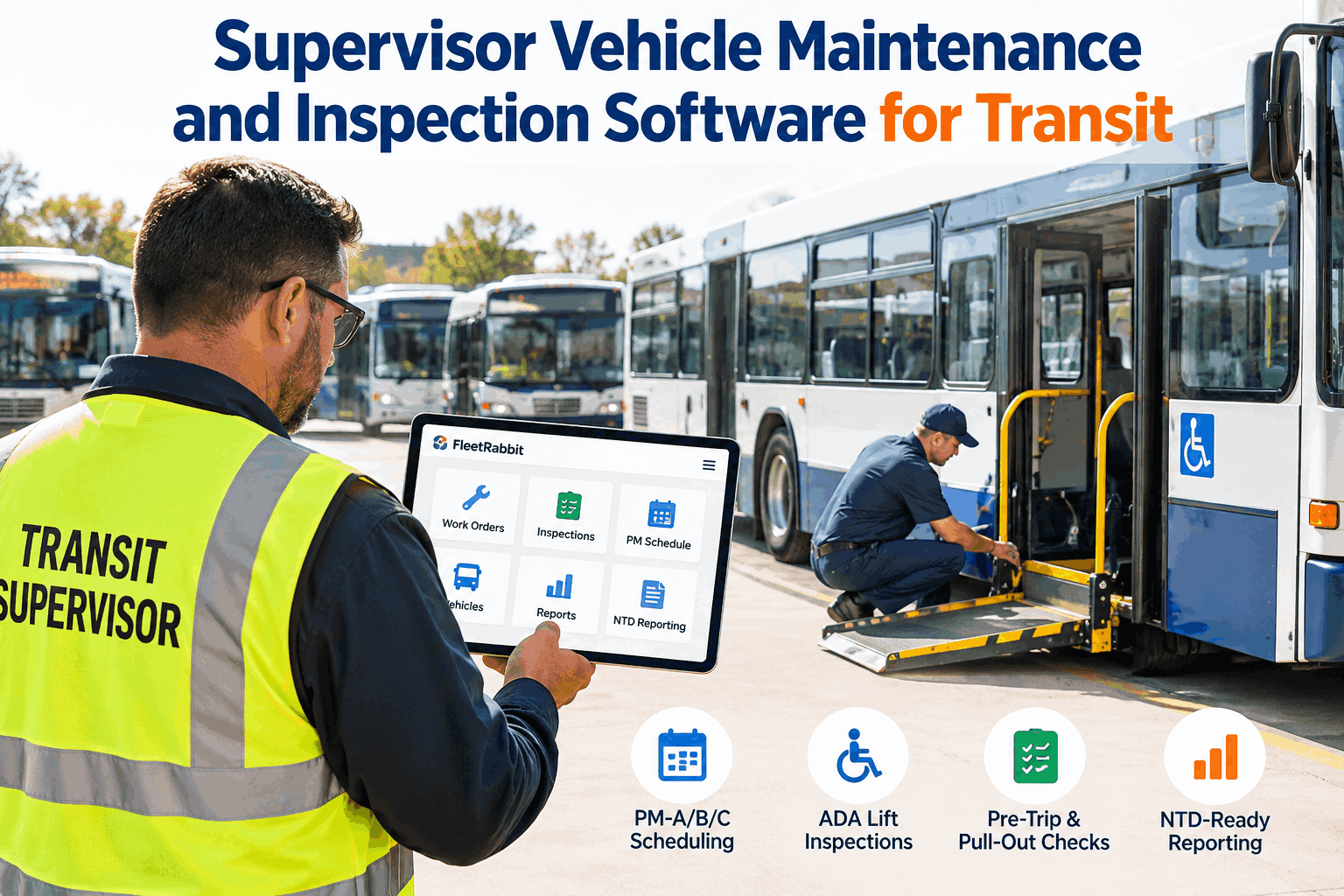
Transit operations directors, field supervision superintendents, bus maintenance managers, and regional transit authority coordinators manage safety-critical non-revenue service fleets under intense scrutiny: responding to en-route revenue bus breakdowns, staging emergency incident command scenes, monitoring operator route relief, conducting curbside ADA compliance verifications under 49 CFR Part 38, and reporting capital asset condition benchmarks under Federal Transit Administration (FTA) National Transit Database (NTD) Form A-35 asset inventory rules. While public transit authorities commit rigorous resources to maintaining 40-foot transit buses, transit supervisor support vehicles (typically Ford Explorer Interceptor utilities, Chevrolet Tahoe PPVs, Ford Transit connect vans, and specialized mobile incident command rigs) are frequently neglected until sudden mechanical breakdown occurs. A field road supervisor cannot afford a dead secondary battery during an intersection traffic control detail, an overdue brake pad caliper drag during priority code-3 accident response, or an unrecorded pull-out inspection before morning peak service begins. When transit agencies track supervisor fleet maintenance on loose clipboard checklists, paper DVIR binders, and separate spreadsheets, maintenance tracking fractures. Auxiliary equipment like lightbars, two-way mobile land radios, laptop docking inverters, and emergency first-responder push-bumpers place continuous electrical and mechanical strain on vehicles, accelerating component fatigue far beyond standard commercial passenger car intervals. FleetRabbit provides dedicated transit supervisor vehicle maintenance software engineered specifically for municipal transit systems and regional authorities. By combining automated PM-A/B/C dual engine-hour scheduling, digital mobile pre-trip and pull-out inspections, ADA audit logging, and audit-ready NTD Form A-35 export capabilities into an operations platform priced at $5 per asset per month, FleetRabbit guarantees field supervisor readiness. Protect your field incident response capabilities, slash unbudgeted garage downtime by up to 34%, and conduct inspections completely offline inside reinforced concrete bus depots, below-grade transit concourses, and rural terminal sheds with zero cellular reception. Discover how our supervisor fleet software streamlines public transit operations when you book a demo or start tracking your agency's service fleet immediately when you sign up for our platform.
Maintain 100% field readiness across your transit supervisor and non-revenue service fleet. Automate PM-A/B/C service tiers based on engine hours and auxiliary electrical draw, enforce mobile pre-trip and morning pull-out inspections, track roadside ADA verification events, and generate 1-click NTD-compliant audit exports without administrative friction.
The 4 Operational Demands That Differentiate Transit Supervisor Vehicles
Transit supervisor vehicles endure a significantly harsher mechanical duty profile than standard municipal staff cars or commercial fleet sedans; FleetRabbit synchronizes maintenance around these four operational realities.
Stationary Idling & Oil Thermal Shearing
Supervisor units idle up to 65% of their active shifts while monitoring bus transfer points, running auxiliary climate controls, and providing on-scene radio command, destroying motor oil viscosity long before standard odometer mileage limits.
Heavy Auxiliary Electrical Inverter Draw
Continuous parasitic loads from high-output emergency LED lightbars, multi-band 800MHz land radios, mobile CAD laptop docks, and video surveillance download links push factory alternators and dual-battery isolators to thermal limits.
Code-3 Response & Heavy Upfit Braking
Equipped with front push bumpers, rear equipment lockboxes, traffic cones, and mobile spill kits, supervisor vehicles carry 800+ pounds of permanent payload, increasing brake pad friction wear and suspension component strain during priority calls.
Curbside ADA & Revenue Fleet Safety Auditing
Road supervisors conduct curbside compliance verifications across revenue buses, requiring mobile checklists to document wheelchair lift cycle tests, securement tie-down checks, and clean walkaround audits under 49 CFR Part 38.
Recommended PM-A/B/C Maintenance Tiers for Transit Service Fleets
Structuring supervisor vehicle servicing around dual engine-hour and mileage thresholds prevents premature powertrain failure; deploy these standardized transit agency maintenance tiers.
Minor Lubrication, Electrical & Safety
- Change engine crankcase oil and replace OEM synthetic filter element
- Load-test primary and secondary auxiliary AGM battery banks under full inverter draw
- Inspect front and rear brake friction lining thickness and caliper slider pins
- Verify functionality of emergency lightbar, siren, PA system, and 800MHz transit radio
- Inspect tires for uneven shoulder scrubbing and torque lug nuts to factory specification
Intermediate Powertrain & Suspension
- Inspect and rotate tires; conduct dynamic wheel balancing to protect steering components
- Replace engine air intake filter, cabin air filter, and clean throttle body assembly
- Inspect steering tie-rod ends, ball joints, sway bar bushings, and front strut mounts
- Test alternator diode AC ripple voltage and inspect auxiliary serpentine drive belt tension
- Audit onboard emergency safety gear: fire extinguisher, first aid kit, and reflective triangles
Major Drivetrain, Cooling & Fleet Audit
- Drain and flush automatic transmission fluid, transfer case fluid, and front/rear differentials
- Perform complete engine cooling system flush and pressure-test radiator core and hoses
- Inspect driveshaft universal joints, CV half-shaft boots, and rear subframe mounting bushings
- Conduct non-destructive weld inspection on push-bumper brackets and rear lockbox mounts
- Execute complete FTA NTD Form A-35 Useful Life Benchmark (ULB) physical condition scoring
The Real Costs of Neglecting Transit Supervisor Fleet Maintenance
Managing support vehicles as an afterthought on paper binders and reactive repair tickets creates operational bottlenecks that disrupt passenger transit operations. Review our agency ROI models when you book a demo or start testing our cloud tools directly when you sign up for immediate platform access.
Delayed Incident Response and Transit Route Stalls
When a 40-foot passenger bus suffers an accident or mechanical failure along a major urban corridor, a field road supervisor must arrive immediately to manage traffic safety, coordinate passenger transfers, and document scene evidence. A supervisor vehicle breaking down with a dead alternator leaves revenue transit lines paralyzed, delaying thousands of commuters.
FTA Triennial Audit Findings and Disallowed Federal Grants
Federal Transit Administration (FTA) Triennial Reviews evaluate maintenance records across all federally funded assets, including non-revenue service vehicles reported on NTD Form A-35. Incomplete preventive maintenance documentation, missing pre-trip walkarounds, or unrecorded safety defect repairs lead to audit findings that jeopardize capital transit grant funding.
Unbudgeted Outside Emergency Repair Invoices
Allowing supervisor pursuit utility vehicles to miss basic 250-hour oil and cooling services leads to catastrophic camshaft failures and transmission slips. Emergency towing and dealership sublet repairs cost $4,500 to $8,000 per breakdown, draining municipal transit contingency operating funds.
Reinforced Concrete Bus Barns & Terminal Dead Zones
Municipal bus staging yards, centralized maintenance barns, and subterranean downtown transit terminals are built with reinforced steel and concrete, creating cellular dead zones. Cloud-only tools crash, causing supervisors to abandon digital pre-trips and leaving emergency equipment undocumented.
Built Specifically for Transit Supervisor & Support Fleets
FleetRabbit connects mobile pull-out walkarounds, auxiliary engine-hour tracking, garage work orders, and federal compliance reporting into a unified transit command platform. Discover how our software simplifies supervisor fleet management when you book a demo with our transit engineering specialists.
Digital Morning Pull-Out Workflows
Supervisors complete rapid pre-trip walkaround inspections on standard mobile devices, verifying vehicle roadworthiness, emergency lightbar operability, and safety equipment in under 3 minutes.
Engine-Hour & Mileage Dual PM
Triggers service work orders based on whichever threshold occurs first—engine run hours or odometer mileage—protecting high-idle field supervisor vehicles from severe oil thermal degradation.
eDVIR Defect Dispatch Lockout
Vehicles tagged with critical safety defects—such as worn brake pads, steering play, or defective warning lights—are automatically blocked from morning pull-out dispatch until certified by a mechanic.
Roadside ADA Verification Forms
Equips field supervisors with mobile compliance forms to log curbside revenue bus wheelchair lift cycle tests, ramp slope checks, and securement strap condition under 49 CFR Part 38.
Transit Depot Offline Mobile Sync
Supervisors and garage mechanics complete inspections and sign off work orders inside reinforced concrete bus barns with zero cellular connectivity; all data auto-syncs securely on departure.
1-Click NTD Form A-35 Reporting Dossiers
Generate certified annual service vehicle inventory reports, Useful Life Benchmark (ULB) calculations, and condition ratings matching FTA National Transit Database requirements in under 60 seconds.
Direct Mapping to Federal Transit Administration & DOT Directives
Operating a transit supervisor and non-revenue support fleet under automated maintenance governance ensures full compliance with federal transit safety guidelines, accessibility rules, and motor carrier laws.
Mandates that public transit agencies report all non-revenue service vehicles for which they have capital responsibility, documenting vehicle type, manufacture year, active status, and Useful Life Benchmark (ULB) performance targets.
Establishes accessibility standards for public transit vehicles: requires verified operating capability of wheelchair lifts, ramps, slip-resistant surfaces, priority seating signs, and mobility aid securement systems during daily transit operations.
Standardizes daily pre-trip and post-trip driver walkarounds (§ 396.11), qualified mechanic corrective action signatures (§ 396.13), and statutory 90-day electronic maintenance record retention across commercial support vehicles.
Requires transit authorities to maintain a strategic Transit Asset Management (TAM) plan, documenting capital asset inventories, condition assessments, analytical lifecycle modeling, and investment prioritization.
Transit Supervisor Fleet Maintenance Software Benchmark Comparison
A feature-level comparison evaluating transit support fleet maintenance depth, pull-out readiness gating, and offline resilience as of 2026. Schedule a personalized walkthrough when you book a demo with our transit team.
| Management Capability | FleetRabbit | Legacy Transit CAD/AVL Systems | Standard Telematics Portals | Paper Clipboards & Spreadsheets |
|---|---|---|---|---|
| Pricing (per asset/month) | $5/month flat | $45–$85/month | $20–$40/month | High emergency repair invoices |
| Dual Engine-Hour & Mileage Schedulers | Native automated whichever-first engine | Focuses on bus odometer only | Basic sensor ping only | Mileage only (Neglects high idle) |
| Morning Pull-Out Inspection Gating | Instant lockout on safety defect | Manual supervisor note | Not supported | None (Compromised vehicles roll) |
| Curbside ADA Audit Checklists | Integrated mobile compliance forms | Separate paper audit book | Not available | Loose paper checklists |
| FTA NTD Form A-35 Export | 1-click automated reporting export | Requires custom database query | Not supported | Weeks of manual spreadsheet assembly |
| Transit Depot Offline Mobile Sync | Full store-and-forward | Network dependent | Data dropped offline | Paper logs only |
| Free Trial Access | 14 days, up to 3 assets | Sales demonstration only | Limited sandbox demo | None |
| Contract Terms & Procurement | Monthly or annual (No lock-in) | 3 to 5-year mandatory contract | 2 to 3-year contract | None |
5-Step Transit Supervisor Fleet Implementation Pathway
FleetRabbit embeds cleanly into your municipal transit maintenance garage, dispatch center, and supervisor mobile devices in under two weeks without operational disruptions. Begin testing immediately when you sign up for our free trial.
Supervisor Roster & Upfit Asset Ingestion
Import supervisor utility SUVs, sedans, incident command vans, auxiliary alternator specs, inverter ratings, emergency lightbar models, and historical maintenance ledgers via automated CSV tools.
Dual Engine-Hour & PM Tier Configuration
Set up automated service schedules based on manufacturer guidelines: establish engine-hour PM thresholds (250-hour oil services) alongside mileage intervals to account for high stationary idling ratios.
Pull-Out & ADA Inspection Checklist Setup
Configure digital mobile inspection walkaround checklists tailored to transit supervisor vehicles, establishing automated dispatch lockouts for safety-critical defects and curbside ADA revenue bus audit forms.
Field Supervisors & Shop Technicians Mobile Rollout
Equip transit road supervisors and garage mechanics with the offline-first mobile app on standard iOS or Android smartphones for rapid pre-trip walkarounds and shop work order tracking.
Transit Readiness Command Go-Live
Activate live fleet status dashboards, automated shop work order queues, parts inventory reorder triggers, and 1-click FTA NTD Form A-35 compliance audit archives across all operational desks.
2-Week Deployment Plan & Milestones
A structured timeline designed to transition transit support operations from paper binders to digital maintenance governance with zero disruption to daily scheduled transit services. Review our full onboarding plan when you book a demo today.
Week 1: Vehicle Ingestion & Inspection Setup
- Audit paper work orders, auxiliary equipment upfit specs, and historical maintenance receipts
- Configure vehicle profiles with dual tracking: chassis mileage and auxiliary engine run-hours
- Set up digital morning pull-out checklists, emergency lighting tests, and ADA audit templates
- Assign user access permissions for Transit Operations Directors, Field Supervisors, and Shop Mechanics
Week 2: Depot Rollout & Live Verification
- Distribute mobile app to road supervisors and conduct 15-minute training on digital pull-out pre-trips
- Validate store-and-forward offline syncing inside concrete bus maintenance bays and underground depots
- Simulate an overdue engine-hour PM threshold to verify automated dispatch lockout gating and shop routing
- Launch live fleet management dashboard and 1-click FTA NTD Form A-35 export reporting archives
Documented Public Transit Support Fleet Results
Operational improvements documented by regional transit authorities who deployed digital supervisor vehicle maintenance software. Review the complete transit case study when you book a demo with our team.
34% Reduction in Roadside Stalls Across 22 Supervisor Vehicles
A regional public transit authority operating 22 supervisor pursuit utility vehicles was experiencing frequent electrical alternator burnouts and dead auxiliary batteries during field accident command details. FleetRabbit deployed automated 250-hour dual PM scheduling and electrical load checks, cutting roadside supervisor stalls by 34% and saving $28,000 in outside towing and repair fees in year one.
Zero FTA Audit Exceptions and 100% Verified Pull-Outs
A county transit agency managing 16 supervisor SUVs and service vans previously faced state audit scrutiny over unrecorded non-revenue fleet maintenance. FleetRabbit automated digital pull-out inspections and 1-click NTD Form A-35 reporting, passing the agency's FTA Triennial Review with zero maintenance findings.
In a municipal transit authority running hundreds of buses every day, everyone pays attention to the big 40-foot revenue buses, while the supervisor vehicles that keep those buses moving are treated like standard company cars. That was our biggest mistake. Our road supervisors spend twelve hours a day sitting at busy intersections managing bus headways, responding to passenger medical calls, and running heavy emergency lightbars and radios while idling. We had supervisor SUVs with only forty thousand miles on the odometer having complete engine camshaft seizures and alternator meltdowns because they had accumulated over three thousand operating hours without a proper service. Before FleetRabbit, our supervisor fleet maintenance was recorded on random paper clipboards that never matched our bus garage software. FleetRabbit completely changed our support operations. It tracks our vehicle engine hours automatically, enforces our morning pull-out safety checks right on our supervisors' phones, and locks out any vehicle with an overdue service or a mechanical defect before it leaves the yard. It has eliminated our emergency breakdowns, protected our federal audit compliance, and ensured our field supervisors are always ready to respond when our revenue buses need help.
Frequently Asked Questions
Ensure 100% Transit Supervisor Fleet Readiness in Less Than 2 Weeks
Automate engine-hour PMs, enforce morning pull-out readiness, and guarantee FTA NTD compliance at $5/asset/month with a 14-day free trial.