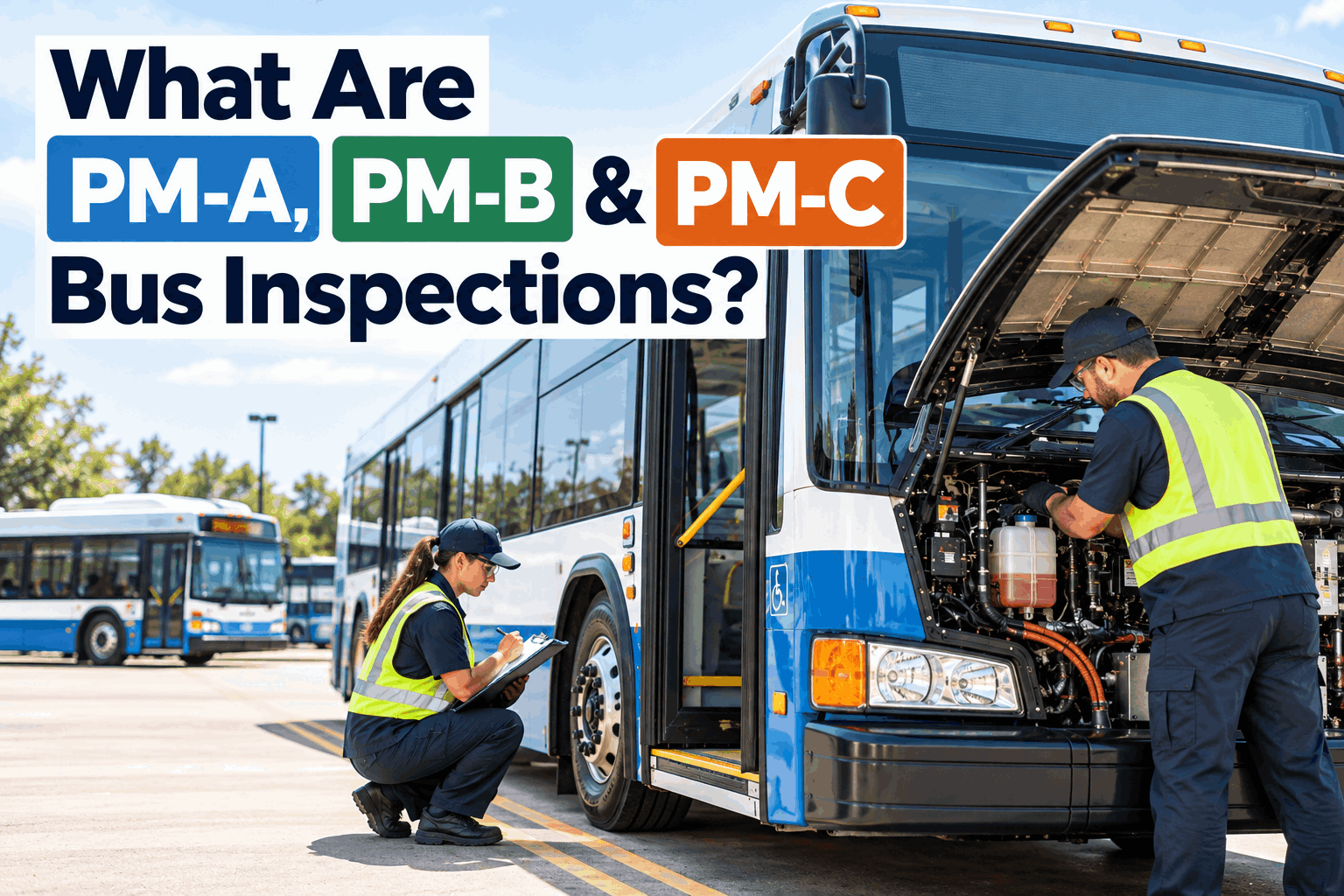
Every transit bus needs regular preventive maintenance, and most agencies organize it into three tiers called PM-A, PM-B and PM-C. Each tier goes deeper than the one before it, and together they catch small problems long before they turn into road calls. If you are new to the system, or you are tightening up a program that has grown messy, this guide explains what each inspection covers and how the schedule fits together. Book a demo to see how FleetRabbit runs PM-A, PM-B and PM-C for an entire fleet.
What Are PM-A, PM-B and PM-C Bus Inspections
A complete guide to how the three tiers work, what each one covers and how transit fleets keep the schedule on track.
The Short Answer
PM-A, PM-B and PM-C are tiered preventive maintenance inspections for transit buses. PM-A is the short, frequent service. PM-B is a deeper mid-interval service. PM-C is the major inspection, often lined up with the annual cycle. The tiers stack, so PM-B includes everything in PM-A, and PM-C includes everything in A and B. Sign up free and give every bus its own PM clock.
The A, B and C labels are an industry convention. Your agency defines its own intervals and checklists based on manufacturer recommendations.
What Each Inspection Covers
Scope varies by bus type, engine and manufacturer, but the depth of work follows a common pattern. Read each row left to right and notice how the check gets deeper. The example below is a starting point, not a substitute for your maintenance manuals. See how checklists attach to each vehicle in FleetRabbit.
Put PM-A, PM-B and PM-C on autopilot
Give every bus its own PM clock, automatic work orders and audit-ready history. Free for your first three vehicles.
How the Schedule Works
Each tier runs on its own interval, and the trigger can be miles, engine hours or calendar days, whichever arrives first. Many agencies run PM-A somewhere between 3,000 and 6,000 miles, PM-B around 12,000 and PM-C between 24,000 and 30,000, but the right numbers come from your manufacturer guidance and duty cycle. Start tracking miles, hours and days together so no trigger slips by unnoticed.
Because the tiers overlap, the same odometer reading can trigger more than one interval. The rule is simple: do the higher tier, and it already includes the lower one. The lookup below shows how one bus moves through the cycle.
Example using 6,000-mile A, 12,000-mile B and 30,000-mile C intervals. Book a short demo to build yours.
Why FTA and NTD Reviewers Care
Agencies that receive FTA funding are expected to have a maintenance plan and to follow it. During Triennial Reviews and other oversight, reviewers commonly ask for proof that preventive maintenance was completed on schedule, and many agencies use 80 percent on-time completion as a working benchmark. ADA lift and ramp checks are one of the most scrutinized parts of that record, and asset and maintenance data also feed National Transit Database reporting. Confirm the current expectations for your agency with the FTA. See audit-ready PM records in action.
Where PM Programs Go Wrong
Most of these come down to visibility. When every bus has its own live PM status, gaps show up early and are easy to fix. Sign up free and see every due date in one place.
How FleetRabbit Runs the Cycle
FleetRabbit gives each bus its own PM-A, PM-B and PM-C clocks the moment it is added, and turns every threshold into a work order automatically. Start with your first three vehicles free.
Frequently Asked Questions
PM-A is the short, frequent preventive maintenance service. It usually covers oil and fluids, tires, brakes, lights and a quick lift or ramp cycle test.
Often, but not always. Many agencies align PM-C with the annual cycle, while others use a mileage interval such as 24,000 to 30,000 miles.
Yes. The tiers stack, so PM-B covers everything in PM-A and PM-C covers everything in A and B.
Start with manufacturer recommendations, then adjust for your duty cycle, route type and vehicle age. Book a demo and we will show how to configure them.
Yes. Each vehicle can have its own intervals and checklists, so a mixed fleet stays organized in one place.
Keep Every Bus On Schedule, Every Tier Covered
Tiered PM scheduling, automatic work orders, lift checks and audit-ready records in one system. Free for your first three vehicles.