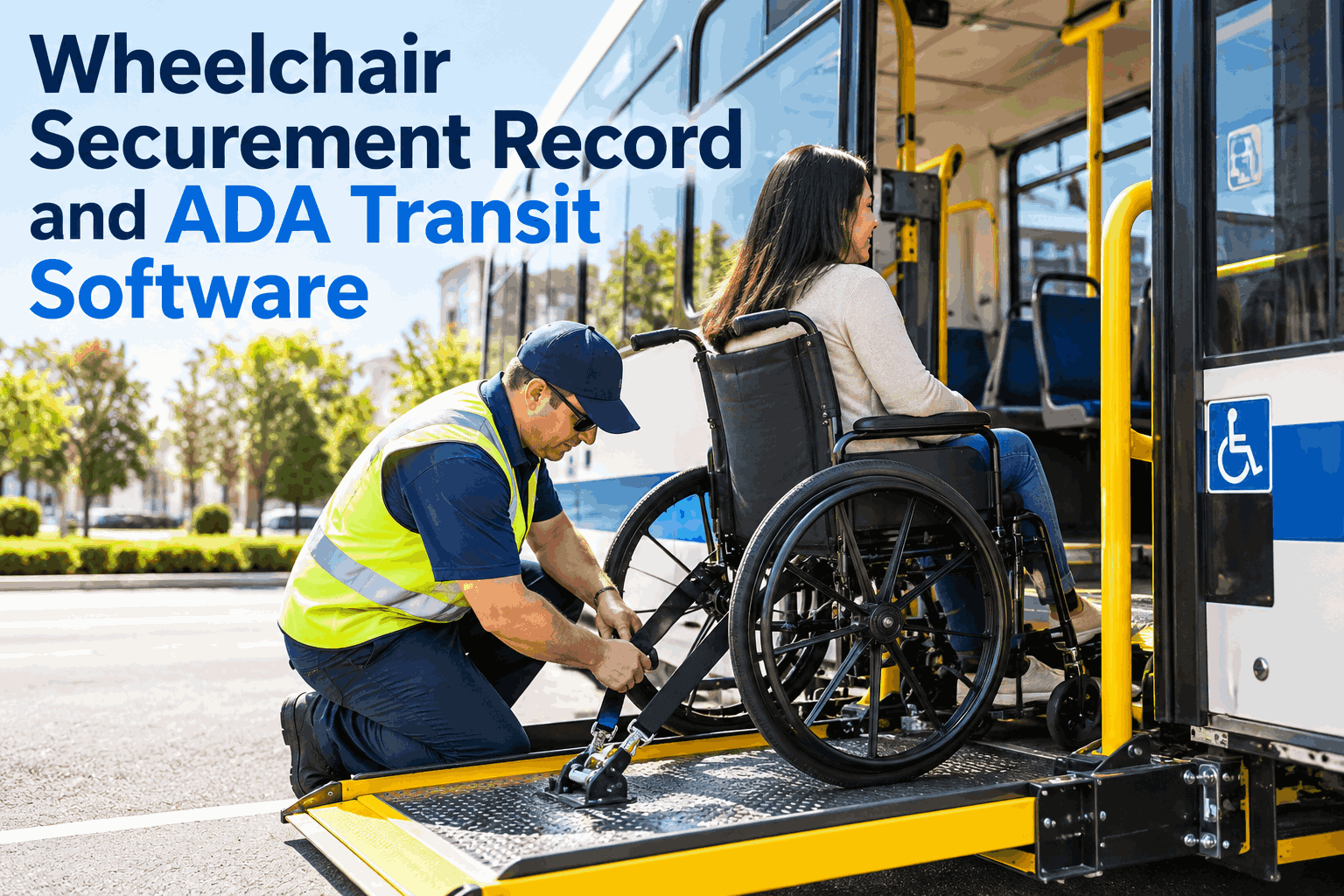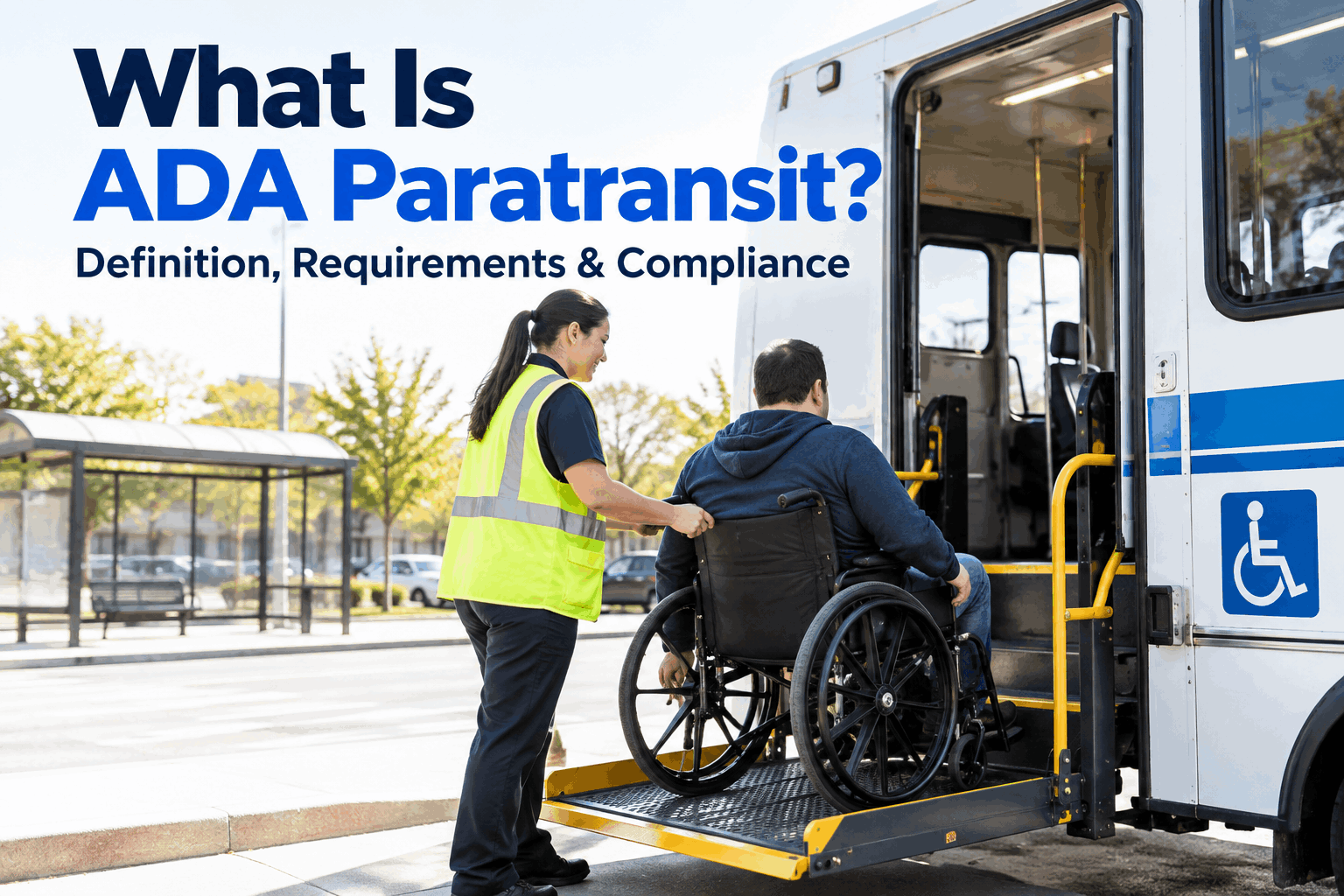
ADA paratransit is the door-to-door ride service that transit agencies must offer to people whose disabilities keep them from using regular buses and trains. It is one of the most closely reviewed parts of public transit, and it works only when accessible vehicles are clean, working and on the road when riders book them. See how FleetRabbit supports the vehicle side of ADA paratransit, from lift inspections to PM and service records.
What Is ADA Paratransit: Definition, Eligibility and Compliance Requirements
A plain-language guide to who qualifies, what service agencies must provide and what records back it up.
A Complement to Fixed-Route Service, Not a Separate Program
The Americans with Disabilities Act requires most fixed-route transit agencies to provide complementary paratransit. That means a shared-ride service that mirrors the regular route network, for riders who cannot use it because of a disability. The rules sit in 49 CFR Part 37, and the FTA explains how to apply them in its ADA circular. Eligibility depends on what a rider can do, not on a diagnosis or on whether they use a wheelchair.
Three Ways a Rider Can Be Eligible
Federal rules describe three eligibility categories. An agency reviews each application against them and, in general, must decide within 21 days of a complete application or treat the person as eligible until it does. Eligibility can be full, conditional on certain trips or conditions, or temporary. Start free to keep the vehicles behind those trips organized.
Eligible riders may also bring a personal care attendant and, in general, at least one companion. Confirm current details with the FTA and your legal counsel.
Six Service Criteria Paratransit Must Match
Complementary paratransit has to be comparable to fixed-route service. Federal rules set six criteria that agencies are measured against.
Keep every accessible vehicle ready for the next booked trip
Track lift and ramp inspections, PM and repairs for your paratransit and fixed-route fleet in one system. Free for your first three vehicles.
Which Agencies Are Covered
This is a general summary, not legal advice. Coverage rules have exceptions, so confirm how they apply to your agency.
Five Records a Reviewer May Ask For
The FTA reviews ADA paratransit during Triennial Reviews and other oversight. Strong records make those conversations short. Some belong to scheduling and eligibility software, and some belong to your fleet.
Book a demo to see how FleetRabbit organizes the vehicle records in row three.
The Vehicle Side of ADA Paratransit
FleetRabbit does not replace your scheduling or eligibility software. It keeps the vehicles behind every trip inspected, maintained and documented.
Frequently Asked Questions
It is a shared-ride service that transit agencies with fixed routes must offer to riders whose disabilities prevent them from using the regular bus or train.
Eligibility is based on functional ability. Riders who cannot use the fixed route, cannot get an accessible vehicle for a trip, or cannot reach the stop because of a specific condition may qualify.
The required minimum is trips within 3/4 mile of fixed routes, at the same days and hours. Many agencies choose to serve more.
No. Federal rules do not allow restrictions or priorities based on trip purpose for required service.
No. FleetRabbit covers vehicle tracking, inspections, PM and maintenance records, and works alongside your scheduling and eligibility tools.
Make Every Accessible Vehicle Ready and Documented
Lift inspections, PM scheduling, live tracking and audit-ready records in one system. Free for your first three vehicles.