It is 7:52 AM, the bus is halfway through its route and the temperature gauge climbs. Within minutes the driver pulls over, dispatch scrambles a spare, a mechanic heads out and three trips run late. Transit teams call that a road call and every one of them costs more than the repair itself. The good news is that most road calls leave warning signs in inspections, PM history, and repair records long before the bus stops. See how FleetRabbit helps you catch those signs early and keep more buses on the road.
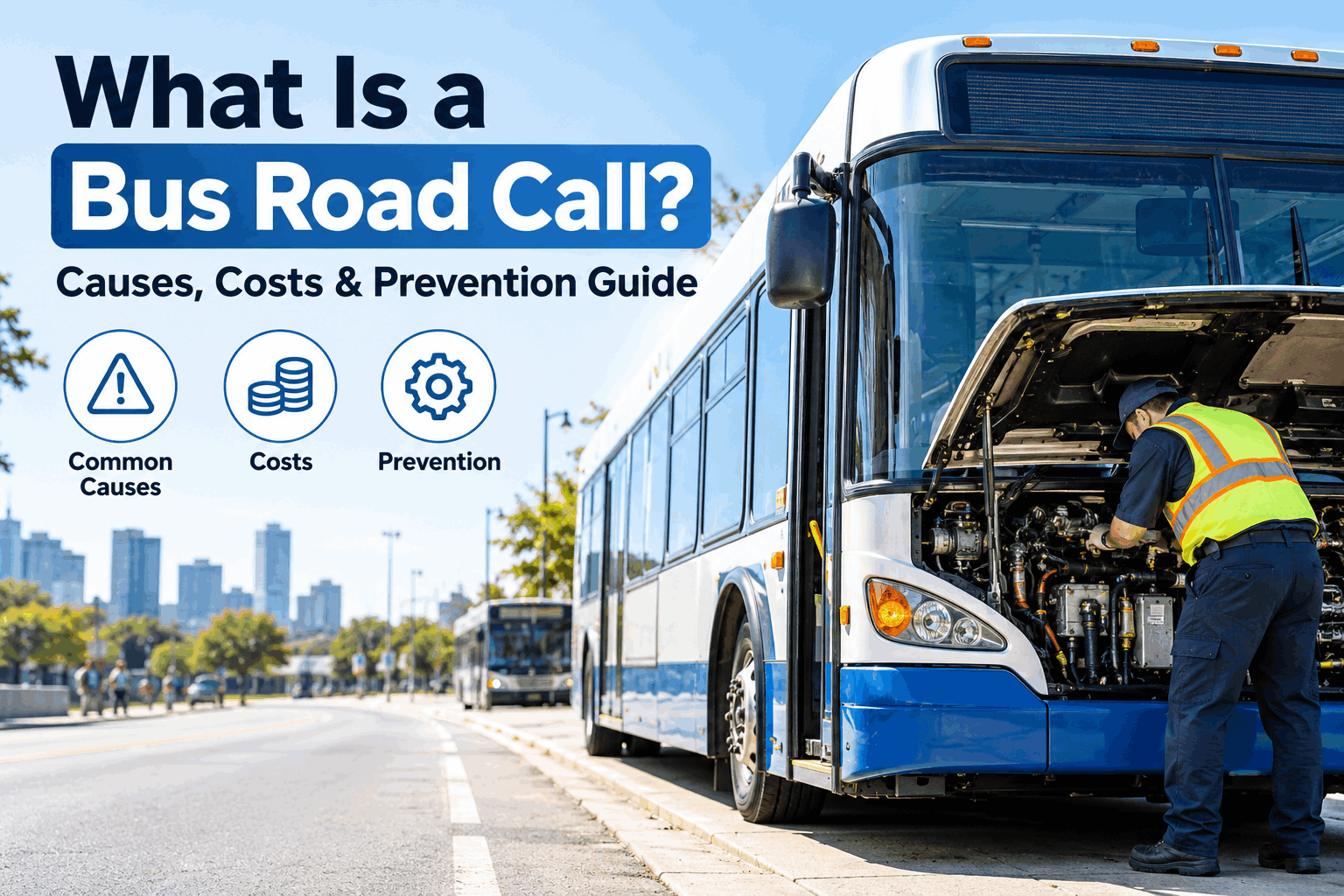
What Is a Bus Road Call? Causes, Real Costs and How to Prevent Them
A road call pulls a bus out of service mid-route. Learn what counts, what it really costs and which maintenance habits bring the number down.
What Counts as a Road Call
A road call is an unplanned breakdown in service that needs a mechanic, a tow or a replacement bus. Not every one is counted the same way, so it helps to see how the terms nest.
The NTD counts major failures such as brakes, doors, engine cooling, steering, axles and suspension. Full reporters also log "other" mechanical failures, where agency policy pulls a bus that could still move. Your internal road call count will usually be higher than the NTD figure.
Every Road Call Leaves a Clue
Most breakdowns give notice. The trick is to look at the right place, at the right time, and to write it down so the next shift can see it.
What One Road Call Really Costs
The tow bill is the part you can see. Published estimates range from about $1,200 to $8,500 per event, mainly because agencies count different things. Count all of it and the number grows.
Do the Math for Your Fleet
Use your own numbers. This example assumes 12 road calls a month at $2,500 each, which sits inside the published range.
Illustrative only. Savings depend on your cost per event, your fleet and how much of each road call cost you can actually avoid.
Stop Paying for Breakdowns You Could Have Seen Coming
Track inspections, PM, repairs and downtime for every bus in one place. Free for your first three vehicles.
Four Habits That Bring Road Calls Down
Paper Trail vs FleetRabbit
The gap between a reactive shop and a proactive one is mostly visibility. Start free and see the difference on your first three vehicles.
Frequently Asked Questions
A road call is an unplanned breakdown while a bus is in service that requires a mechanic, a tow or a replacement bus to keep service running.
A major mechanical failure is the NTD's narrower definition: a failure that stops the bus from completing or starting a scheduled revenue trip. Many road calls are counted internally but not reported as major failures.
Brakes, doors, engine cooling, steering, axles and suspension are the NTD's examples. Tires, electrical systems and wheelchair lifts also pull buses often. Your own repair history shows which systems dominate.
Published estimates range from about $1,200 to $8,500 per event, depending on whether hidden costs such as delayed trips and spare bus time are counted. Calculate your own number from your records.
On-time PM and pre-trip inspections find worn or failing parts before they leave a bus stranded, and repair history shows which faults keep coming back.
Yes. You can start free with three vehicles and add more as your fleet grows.
Fewer Road Calls Start With Better Records
Inspections, PM, work orders, downtime and live tracking for your whole transit fleet in one system. Free for your first three vehicles.