Every rider knows the feeling of watching the clock while the bus does not come. Behind that moment is one simple number: how far the bus was from the time on the timetable. Transit agencies call it schedule adherence, and GPS now lets them measure it at every timepoint on every trip, not just when a dispatcher happens to look. Agencies that read those numbers well spot late pull-outs, tight running times and unreliable vehicles before riders start to complain. See how FleetRabbit connects GPS tracking to vehicle readiness and keep the whole fleet on schedule.
What Is Schedule Adherence? How Transit Agencies Measure It With GPS
Schedule adherence tells you how many minutes a bus ran early or late against its timetable. Learn how GPS measures it, how it differs from on-time performance and headway, and what really causes misses.
The Definition, in One Line
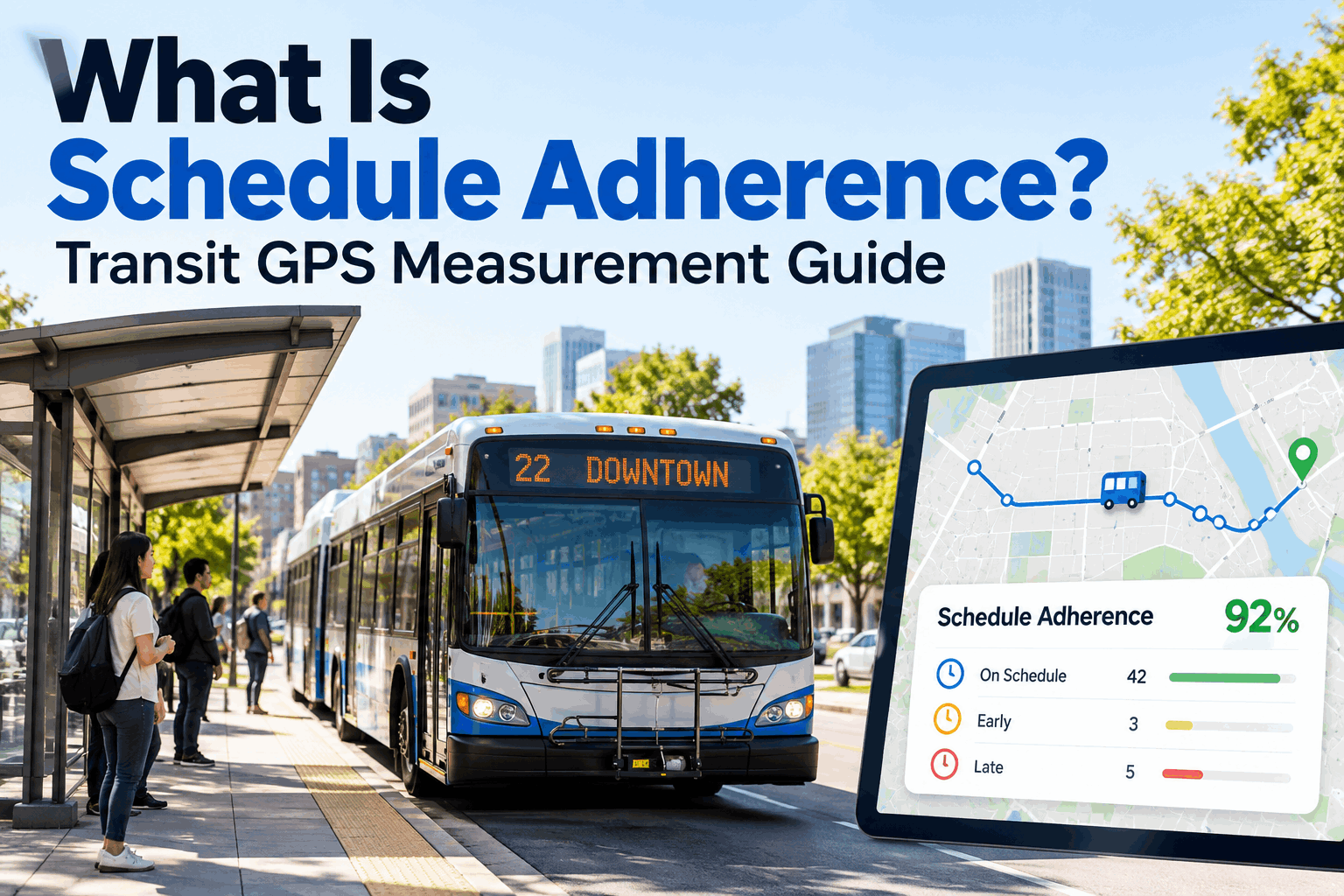
Schedule adherence is the gap between the time a vehicle was scheduled to arrive or depart and the time it actually did, usually shown in minutes. A positive number means late and a negative number means early.
Four Terms People Mix Up
These measures are related, but each answers a different question. Knowing which one you are looking at keeps your reports honest.
How GPS Measures It, Step by Step
A dot on a map only shows where a bus is. Schedule adherence needs that position compared with the timetable.
How Wide Is the On-Time Window?
There is no single national definition. The most common window runs from 0 minutes early to 5 minutes late, but agencies set their own, so always publish yours next to the number.
The third window is used by WMATA and Maryland MTA. Same trip, three windows, three different on-time percentages.
What Does a Good On-Time Rate Look Like?
The Transit Capacity and Quality of Service Manual grades on-time performance from A to F. It suggests keeping no more than 15% of trips outside the window to stay at grade C or better.
Know Where Every Bus Is and Whether It Is Ready to Roll
Live GPS, inspections, PM and repair history for every vehicle in one place. Free for your first three vehicles.
Why Buses Miss Their Times
Some causes sit on the road. Others start in the garage, and those are the ones a maintenance team can fix.
What FleetRabbit Adds to the Picture
Schedule data shows the late trip. Fleet records show why the bus was not ready. Start free and see both in one system.
Frequently Asked Questions
It is the difference between a vehicle's scheduled and actual arrival or departure time, usually in minutes. It shows how closely service follows the published timetable.
Schedule adherence is a time difference for one event. On-time performance turns many of those events into a percentage of trips that fall inside the on-time window.
GPS reports vehicle position and time. The system matches it to the route and timepoint, compares it with the scheduled time and labels the trip early, on time or late.
It compares the actual gaps between buses with the planned gaps. It suits frequent routes where riders do not check a timetable, and it helps catch bunching.
Yes. Breakdowns, late pull-outs and buses held out for repairs all create late or missed trips. Strong PM and inspection habits reduce them.
Yes. You can start free with three vehicles and add more as your fleet grows.
Keep Every Bus on Time by Keeping Every Bus Ready
GPS tracking, inspections, PM, work orders and downtime for your whole transit fleet in one system. Free for your first three vehicles.