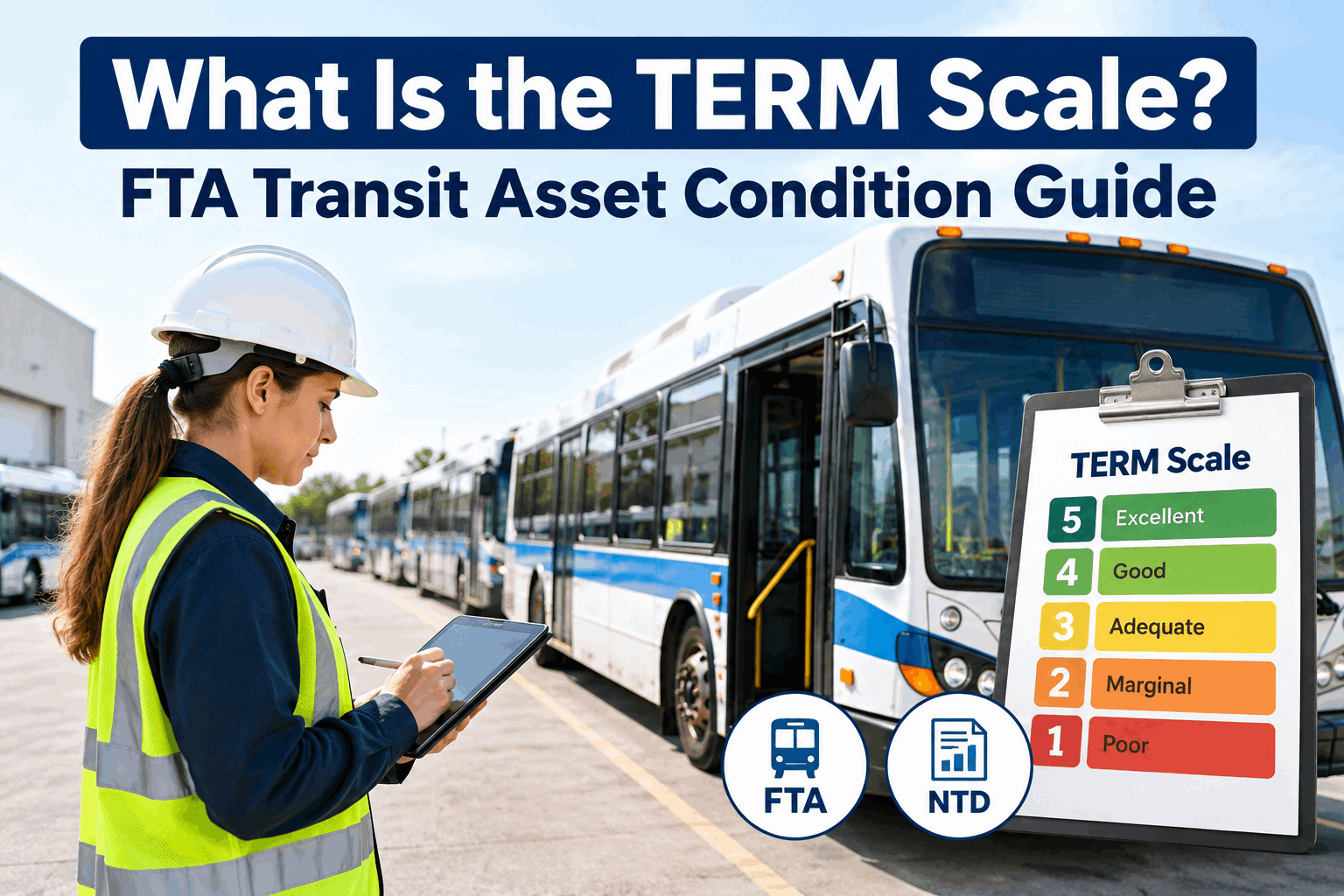
The TERM Scale is the five-point rating system the Federal Transit Administration uses to describe the condition of a transit asset, from 1 for poor to 5 for excellent. It sits at the center of transit asset management and state of good repair reporting, and it is often misunderstood, especially by fleet teams who wonder whether it applies to their buses. This guide explains what the scale means, which assets it actually measures and how vehicle data supports the bigger picture. Book a demo to see how FleetRabbit keeps vehicle asset records ready for TAM and NTD work.
What Is the TERM Scale: FTA Transit Asset Condition Explained
The 1 to 5 rating behind state of good repair, what each score means and where your vehicles fit.
The Short Answer
TERM stands for the Transit Economic Requirements Model, the FTA tool that first used this rating. The federal Transit Asset Management rule, 49 CFR Part 625, adopted the scale to describe asset condition: 5 is excellent, 4 is good, 3 is adequate, 2 is marginal and 1 is poor. For facilities, an asset rated below 3.0 counts as not in a state of good repair. Sign up free to keep the vehicle records that support your own condition reviews.
The Five Ratings
Descriptions are simplified. Agencies use FTA guidance and their own assessment procedures to assign ratings.
Which Assets Use the TERM Scale
This is the part most fleet teams miss. The TERM Scale is the required measure for facilities, but vehicles are measured differently. FTA's performance measures look at the percentage of revenue vehicles and non-revenue vehicles that have met or exceeded their useful life benchmark. FTA's default benchmark for a bus is 14 years, though agencies can set their own. Book a demo to see how FleetRabbit tracks vehicle age against your benchmark.
Summary of the performance measures in 49 CFR 625.43. Confirm current requirements with the FTA.
Keep vehicle age, condition and history in one place
Track every bus and van from in-service date to retirement, with PM, repairs and inspections attached. Free for your first three vehicles.
Using 1 to 5 Thinking on Your Own Vehicles
Even though FTA measures vehicles by age, many agencies build an internal 1 to 5 condition score for each bus to decide which ones to fix, keep or replace first. There is no single federal formula for this, so treat the example below as a simple starting point. Start free and gather the inputs in one system.
Illustrative internal score. It is not an FTA formula and does not replace useful life benchmark reporting.
What TAM Plans and NTD Reports Need
Under the TAM rule, a plan must include an asset inventory, condition assessments and a prioritized list of investments. Agencies then report the share of assets not in a state of good repair to the National Transit Database and set targets for the year ahead. FTA has described those targets as expectations of an agency's ability to keep assets in good repair. See audit-ready asset records in FleetRabbit.
Where FleetRabbit Fits
FleetRabbit does not assign facility TERM ratings, which come from facility condition assessments. It manages the vehicle side of asset records so your inventory, condition evidence and replacement plan are backed by real data.
Frequently Asked Questions
It is a 1 to 5 rating of asset condition used by the FTA, where 1 is poor and 5 is excellent.
It means adequate. A rating of 3.0 or higher counts as a state of good repair, and below 3.0 counts as not.
Not for the federal performance measure. Vehicles are measured against their useful life benchmark, though agencies may also use internal condition scores.
Recipients and subrecipients of federal transit funds that own, operate or manage public transportation capital assets. Requirements differ by agency size, so confirm your tier.
FleetRabbit organizes vehicle age, usage, maintenance and cost data that supports condition reviews. Facility ratings come from formal assessments.
Build Asset Records You Can Stand Behind
Vehicle profiles, PM history, repair costs and lifecycle planning in one system. Free for your first three vehicles.