Every fleet manager wants the same thing: drivers who show up, drive safely, and follow the rules without someone standing over their shoulder. The problem is most fleets only know one lever to pull when performance slips, watch closer. More cameras, more alerts, more check-ins. It feels like accountability, but drivers experience it as suspicion, and suspicion is exactly what pushes good drivers out the door in an industry that already can't afford to lose them.
Long-haul trucking turnover sits near 94 percent annually, and nearly 40 percent of drivers say they are actively looking for a new job. Losing one driver costs 6000 to 15000 dollars in replacement expense alone. Fleets that replace constant monitoring with transparent scorecards and coaching-first accountability see stronger safety records and meaningfully lower turnover within the first year.
Why Micromanagement Backfires in Trucking Fleets
Every fleet has a version of the same instinct: something went wrong, so the answer must be tighter control. Add another check-in, review more footage, question more decisions. It feels productive, but it treats every driver like the exception rather than the rule, and drivers notice the difference between being supported and being surveilled.
The Surveillance Trap
It's vital to validate driver concerns about privacy and micromanagement, because when a driver feels like they're under constant, unjustified surveillance, morale drops and turnover rates spike. The instinct to add more oversight after one bad incident often makes the problem worse, not better, since the entire team absorbs a policy built to catch one outlier.
What Drivers Actually Fear
Most drivers don't object to being tracked, they object to being tracked without a clear reason and no say in how the data is used. Fleets must adopt human-centered tech policies, focusing on fair camera policies and avoiding micromanagement, because technology should support safety and compliance, not penalize drivers for minor infractions.
FleetRabbit gives every driver visibility into their own scores, coaching notes, and progress, so accountability feels like support instead of surveillance. Sign up free and start building trust-based accountability today.
Micromanagement vs Real Accountability
The difference between the two approaches isn't the data you collect, it's what you do with it and how openly you share it. The table below breaks down where fleets typically go wrong and what a healthier accountability system looks like instead.
| Situation | Micromanagement Approach | Accountability Approach | Why It Matters |
|---|---|---|---|
| Harsh Braking Event | Immediate written warning, no context requested | Coaching conversation with the clip shown to the driver | Coaching improves behavior; punishment breeds resentment |
| Route Delay | Constant dispatcher check-in calls | Automated ETA tracking with exception-based alerts only | Removes unnecessary interruptions while catching real problems |
| Camera Footage | Reviewed only to find fault after complaints | Shared as a shield to exonerate drivers from false claims | Data becomes protection, not a threat, changing how drivers see it |
| Performance Scores | Kept private, shared only during discipline | Visible to drivers in real time through a shared dashboard | Transparency lets drivers self-correct before issues escalate |
| New Technology Rollout | Installed with no explanation of purpose | Introduced with training and clear reasoning | Explained tools get adopted willingly instead of resisted |
Building an Accountability Framework That Works
Strong accountability isn't a single tool, it's a sequence of habits that reinforce trust every time they're used. The fleets that get this right follow roughly the same order every time.
Step One: Give Drivers Transparent Scorecards
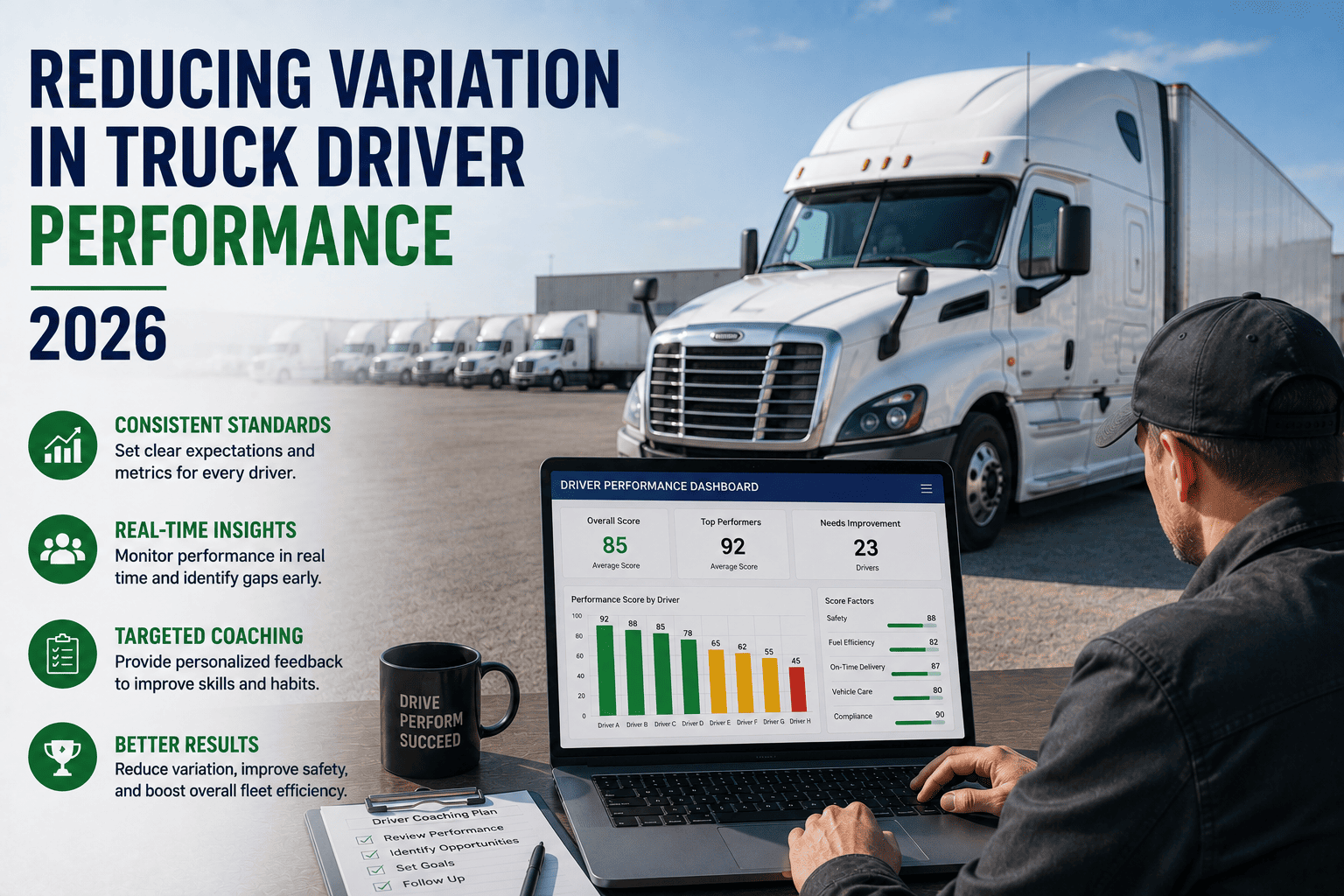
Every driver should be able to see their own safety score, fuel efficiency, and compliance status at any time, not just when something goes wrong. When drivers see their own numbers alongside fleet averages, most correct their own behavior before a manager ever needs to say a word.
Step Two: Coach First, Discipline Second
There's a direct correlation between behavioral coaching and lower maintenance costs, because when drivers understand how harsh braking and rapid acceleration impact vehicle health, they tend to treat the equipment with more care. Leading with a conversation instead of a write-up turns a data point into a teaching moment.
Use Specific, Timely Feedback
Vague feedback like "drive safer" doesn't change behavior. Specific feedback tied to an actual event, delivered soon after it happens, is what actually shifts habits over time.
Step Three: Make the Data a Shield, Not a Leash
High-quality telematics data serves as an objective witness in disputed claims or traffic violations, exonerating drivers from false accusations. When drivers see the tech as their shield rather than a leash, adoption happens naturally, and resistance to monitoring drops sharply.
FleetRabbit's driver-facing dashboards turn accountability into a two-way conversation instead of a one-sided review. Book your demo to see how transparent scorecards change driver behavior.
Technology That Builds Trust Instead of Fear
The right platform doesn't just collect driver data, it changes who gets to see it and when. Real-time alerts, automated compliance tracking, and driver scorecards enhance safety and simplify workflows, and companies using this kind of shared visibility report better driver behavior alongside improved retention. That combination only happens when drivers feel like partners in the system rather than subjects of it.
Reduce Administrative Friction, Not Just Behavior
Managing hours of service logs, compliance paperwork, and dispatch messaging can overwhelm drivers just as much as any safety concern. Reducing that administrative burden through automated logs and intuitive workflows lets drivers focus on driving safely instead of fighting the system meant to support them.
Metrics That Prove Accountability Is Working
Accountability without micromanagement is measurable, not just a feel-good philosophy. Track driver-initiated issue reports, since a rising number usually signals growing trust rather than growing problems. Track voluntary scorecard check-ins, since drivers who view their own data regularly are actively engaging with feedback instead of avoiding it. Track coaching-to-discipline ratio, aiming for the large majority of interactions to be coaching conversations rather than formal write-ups.
Watch Turnover Trend Against the Industry Baseline
With turnover hovering near 94 to 100 percent annually across much of the industry, even a modest improvement against that baseline represents real competitive advantage. Fleets pairing transparent data with coaching-first culture consistently outperform fleets relying on strict monitoring alone.
ROI of Getting Accountability Right
The financial case is direct. Each driver departure costs 6000 to 15000 dollars in recruiting, screening, and onboarding, and each vacant seat costs a fleet roughly 3000 to 5000 dollars monthly in lost productivity. For a 20-driver fleet, unmanaged turnover alone can exceed a million dollars annually once every cost is accounted for. Reducing turnover by even a handful of drivers a year through better accountability practices returns tens of thousands of dollars in avoided recruiting and onboarding costs.
Indirect returns compound the savings. Fewer accidents from proactive coaching lower insurance exposure. Better-maintained vehicles from drivers who trust their equipment reduce downtime. Stronger safety records improve CSA standing, which affects insurance premiums and shipper confidence alike.
Key Takeaways on Driver Accountability
Accountability and micromanagement are often confused because they can look identical from the outside, both involve tracking, both involve data, both involve consequences. The difference is entirely in how the data is shared and why. Fleets that hide performance data until discipline time build fear. Fleets that share it openly and lead with coaching build trust, and trust is what keeps drivers in an industry where turnover routinely exceeds 90 percent.
With a driver shortage of tens of thousands and replacement costs running into the thousands per departure, the fleets that solve accountability without surveillance aren't just running a friendlier operation, they're running a more profitable one. The tools already exist to make this shift; the decision to use them transparently is what separates the fleets drivers want to stay with from the ones they're quietly job hunting away from.
Stop choosing between safety and driver trust. FleetRabbit gives your team transparent scorecards, coaching tools, and shared visibility that improve performance without making drivers feel policed. Start your free trial today with no credit card required.