Most compliance violations in trucking are not born on the road. They are born in the first thirty days of a driver's employment, buried in a stack of paperwork that never quite got finished. A missing safety performance history response, a medical certificate that expired before anyone noticed, a Clearinghouse query that was never followed up on. None of it looks dangerous in the moment. All of it looks exactly like the violation an auditor writes up eighteen months later. Onboarding is where compliance either gets built into a driver's file for good, or gets skipped and quietly waits to become a problem.
Driver Qualification File violations account for nearly 17 percent of all FMCSA violations, with more than 62,000 issued in the past five years. A single missing document can trigger a fine of 7,000 dollars or more, and the average carrier still takes about 28 days to get a new driver from application to the road. Fleets that digitize onboarding routinely cut that timeline to under a week while closing the exact gaps auditors look for first.
The Onboarding Window Where Compliance Gaps Actually Form
Federal requirements do not arrive all at once. They land on a schedule, and every missed date on that schedule becomes a gap sitting in the driver's file, waiting to surface.
Application and Pre-Hire Screening
CDL verification, a 10-year license history check, the driver application itself, and the pre-employment Clearinghouse query all need to be collected and confirmed before the driver's first shift.
Drug Testing and Medical Certification
Pre-employment drug and alcohol testing must clear before dispatch, and a valid medical examiner's certificate has to be on file and linked to the driver's CDL.
MVR and Safety Performance History
The motor vehicle record and written safety performance history requests to prior employers are due within 30 days of hire, and every attempt to obtain them must be documented, even if a former employer never responds.
Ongoing Monitoring Begins
Random drug testing pool enrollment, annual MVR review dates, and medical card expiration reminders all need to be calendared now, or they quietly become next year's violations.
Why These Gaps Keep Showing Up, Fleet After Fleet
The pattern repeats across fleets of every size for a simple reason: onboarding compliance depends on dozens of small deadlines tracked by hand, and hand-tracked deadlines slip.
A fleet hiring drivers every month is running this entire checklist over and over, often for several drivers at once. Even a well-intentioned safety manager will lose track of a 30-day deadline buried in a spreadsheet column when three new hires start in the same week. That is not a training failure. It is a process built to fail under normal hiring volume, and it is exactly why so many fleets discover their onboarding gaps only when an auditor points them out. Closing that loop starts with a system built to track every onboarding deadline automatically instead of relying on memory.
FleetRabbit collects driver documents digitally, tracks every DQF deadline automatically, and flags gaps before they turn into a citation. Start your free trial with 3 vehicles today.
Manual Onboarding vs. Digital Onboarding
The requirements are identical either way. What changes is whether anything falls through the cracks.
| Onboarding Step | Manual Process | Digital Process |
|---|---|---|
| Collecting driver documents | Paper forms, scanned copies, and emailed PDFs scattered across folders | Drivers upload documents directly into a secure profile from any device |
| Tracking the 30-day MVR deadline | A note in a spreadsheet or a calendar reminder someone has to remember to set | Automatic deadline tracking with alerts before the window closes |
| Documenting safety history requests | Email chains that get lost when a prior employer never responds | Every request and response logged automatically with date and method |
| Verifying the file is complete | A manual checklist review, often only caught right before an audit | Real-time completion status visible for every driver at any time |
Closing the Gap Before It Ever Opens
Reducing onboarding compliance gaps is less about adding more steps and more about removing the places where existing steps get lost.
Digital Document Collection
When a driver uploads their CDL, medical certificate, and application directly into a system, there is no scanned copy sitting in an inbox and no folder that gets misplaced during a busy hiring week.
Why This Matters More Than It Sounds
Most missing documents were never actually lost. They were collected once and never filed anywhere an auditor could find them again. Digital collection removes that step entirely.
Automated Deadline Tracking
Every 30-day and annual requirement gets a due date the moment a driver is hired, and the system tracks it without needing anyone to remember it manually.
Centralized Verification
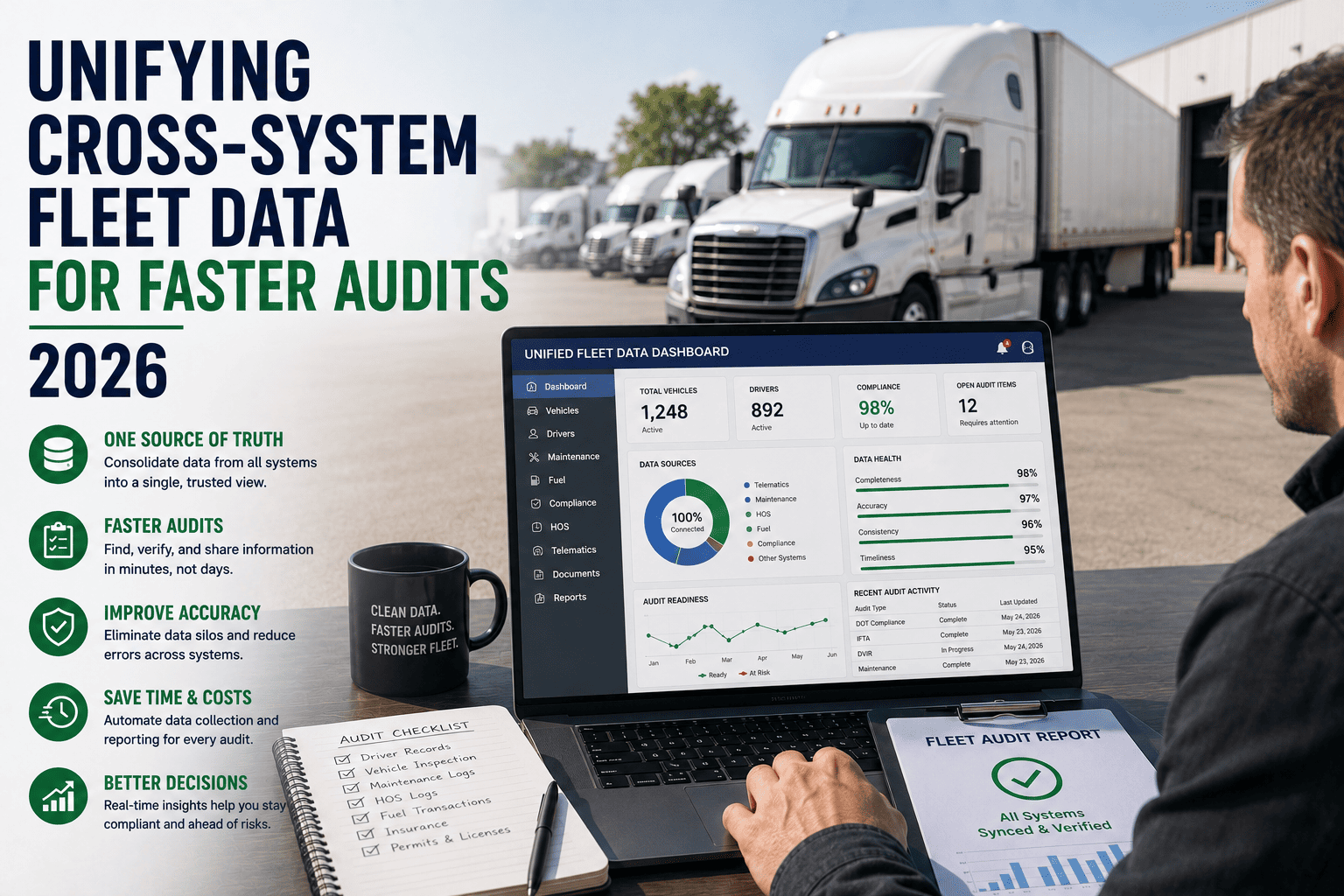
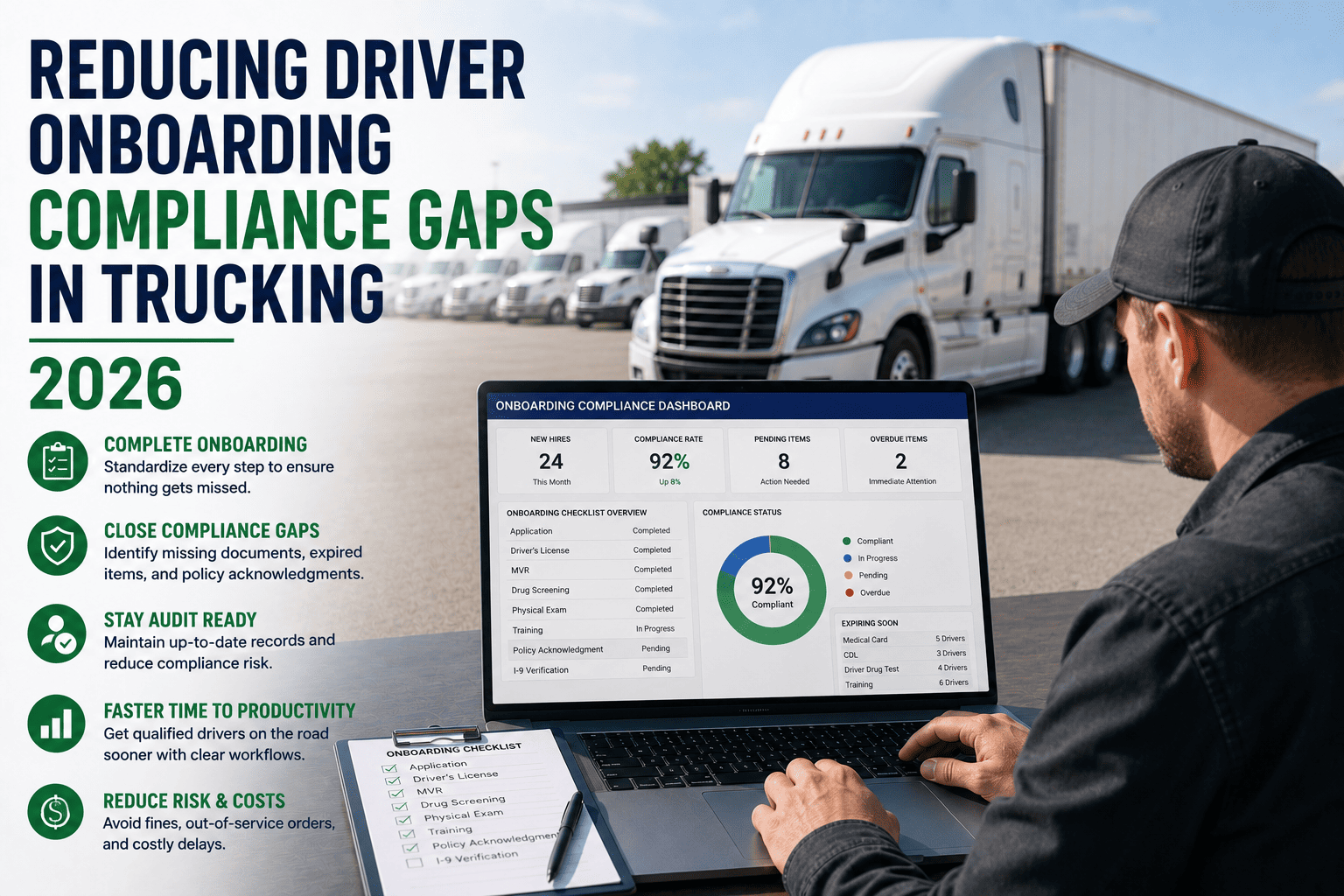
A single dashboard showing exactly which drivers have complete files and which have open items turns a once-a-year audit scramble into a daily five-minute check.
Turning Onboarding Into an Ongoing Safety Net
Onboarding compliance does not end on day one. Medical cards expire, annual MVRs come due, and Clearinghouse status can change. A system that tracks these dates continuously catches an expiring document weeks before it becomes an audit finding, rather than the day the auditor asks for it. Fleets ready to see this in action can book a demo and walk through a real driver file from application to road-ready.
Onboarding gaps are cheap to fix on day one and expensive to discover during an audit. FleetRabbit turns the entire onboarding checklist into a tracked, automated process, so every driver file is complete before their first mile.