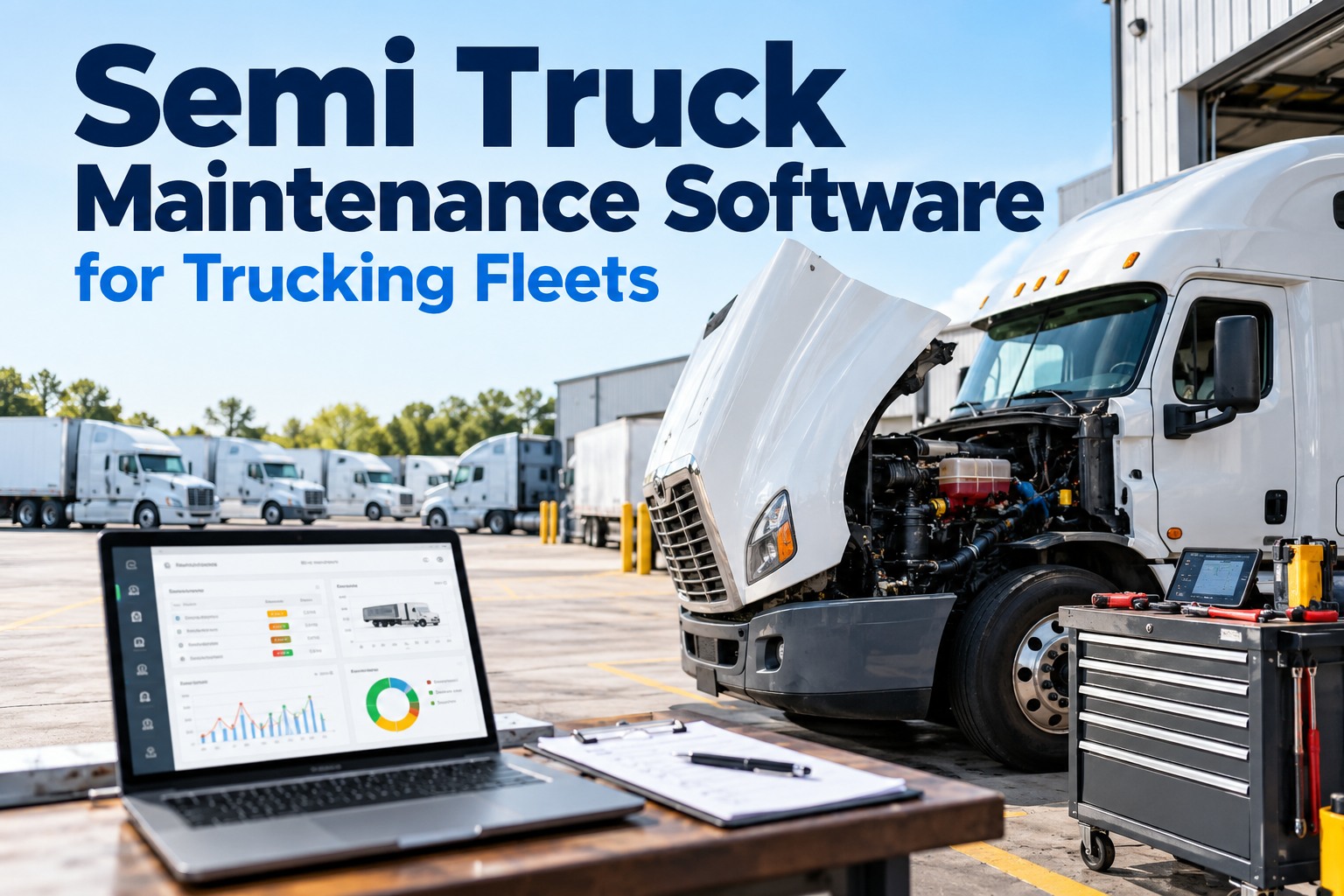
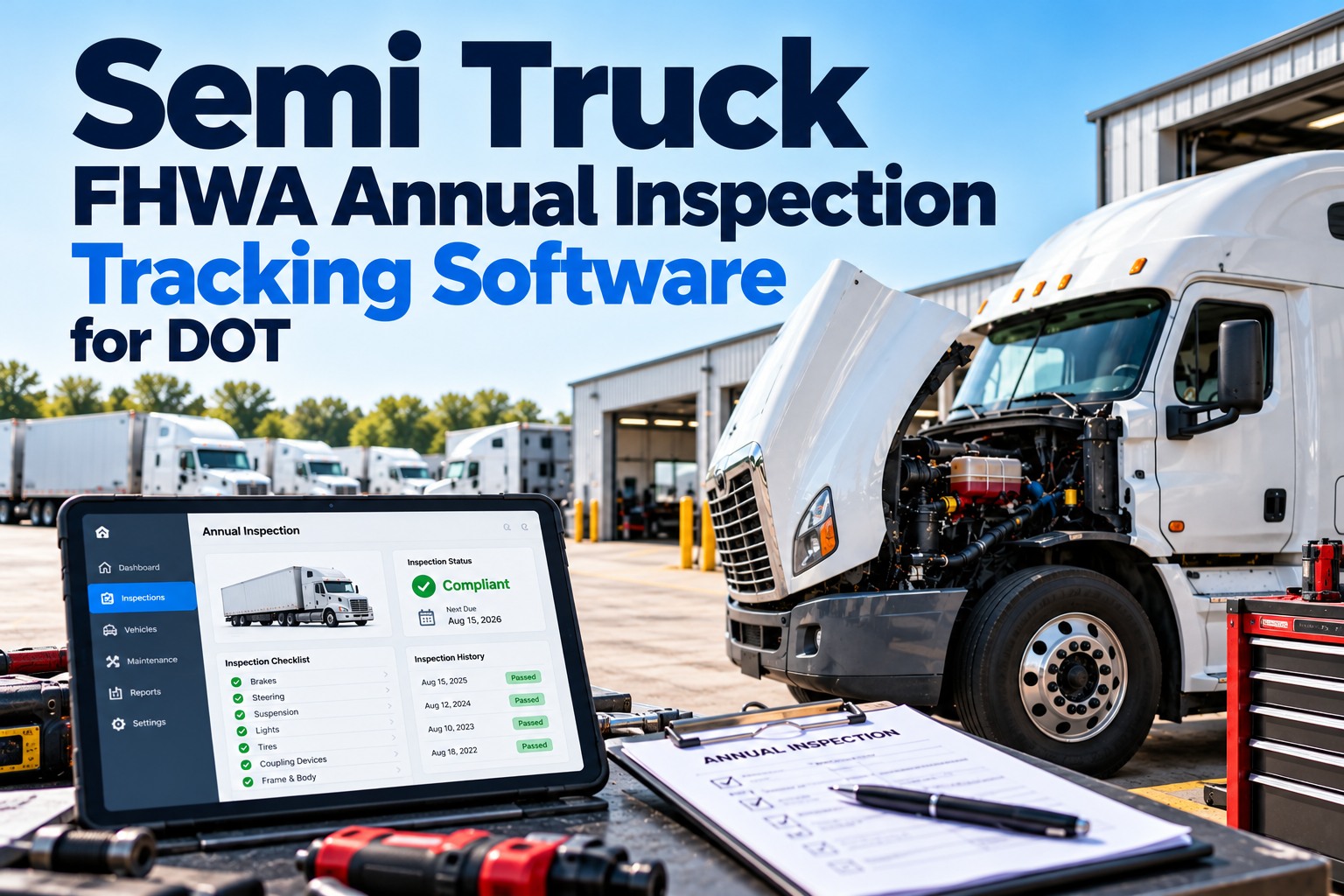
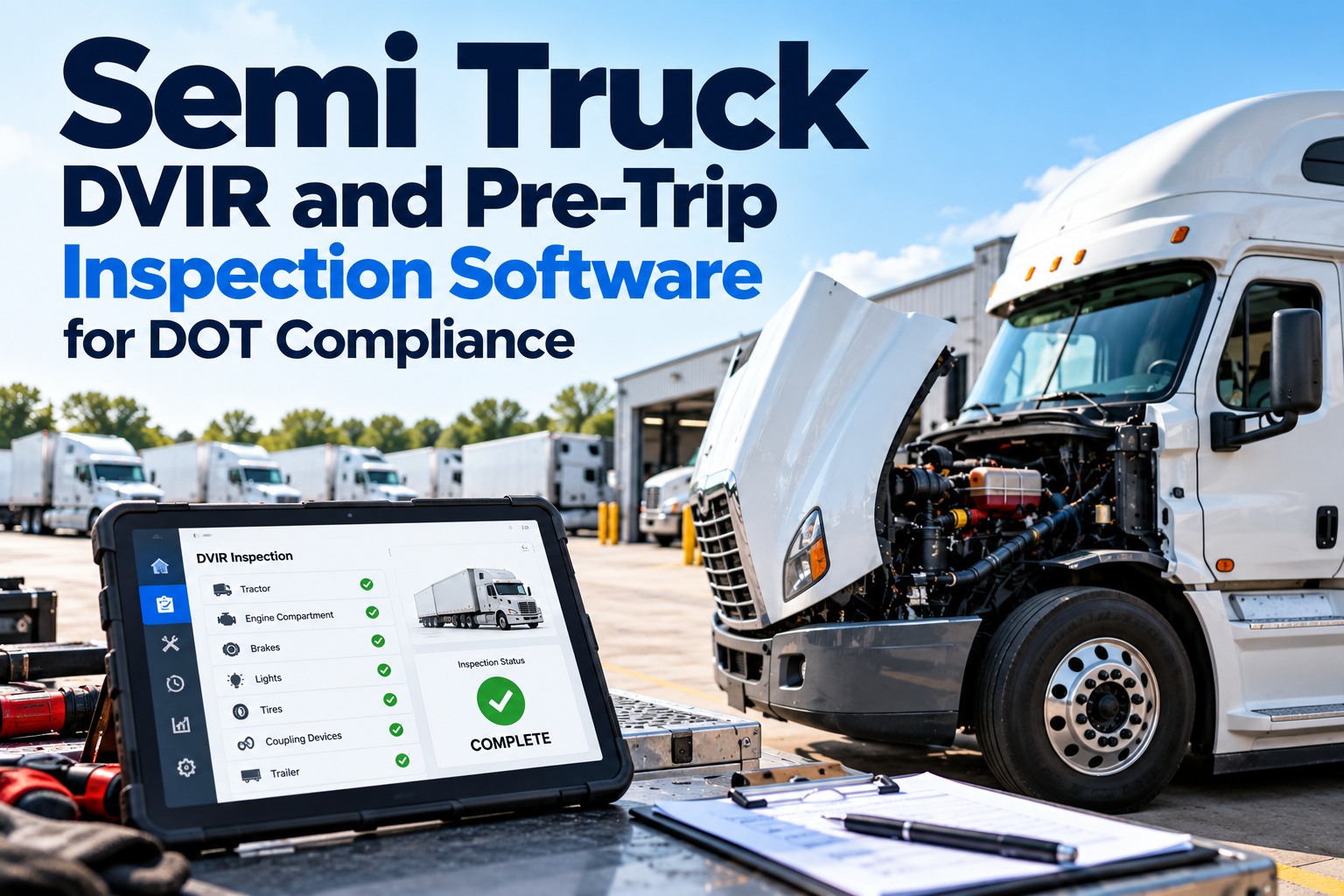
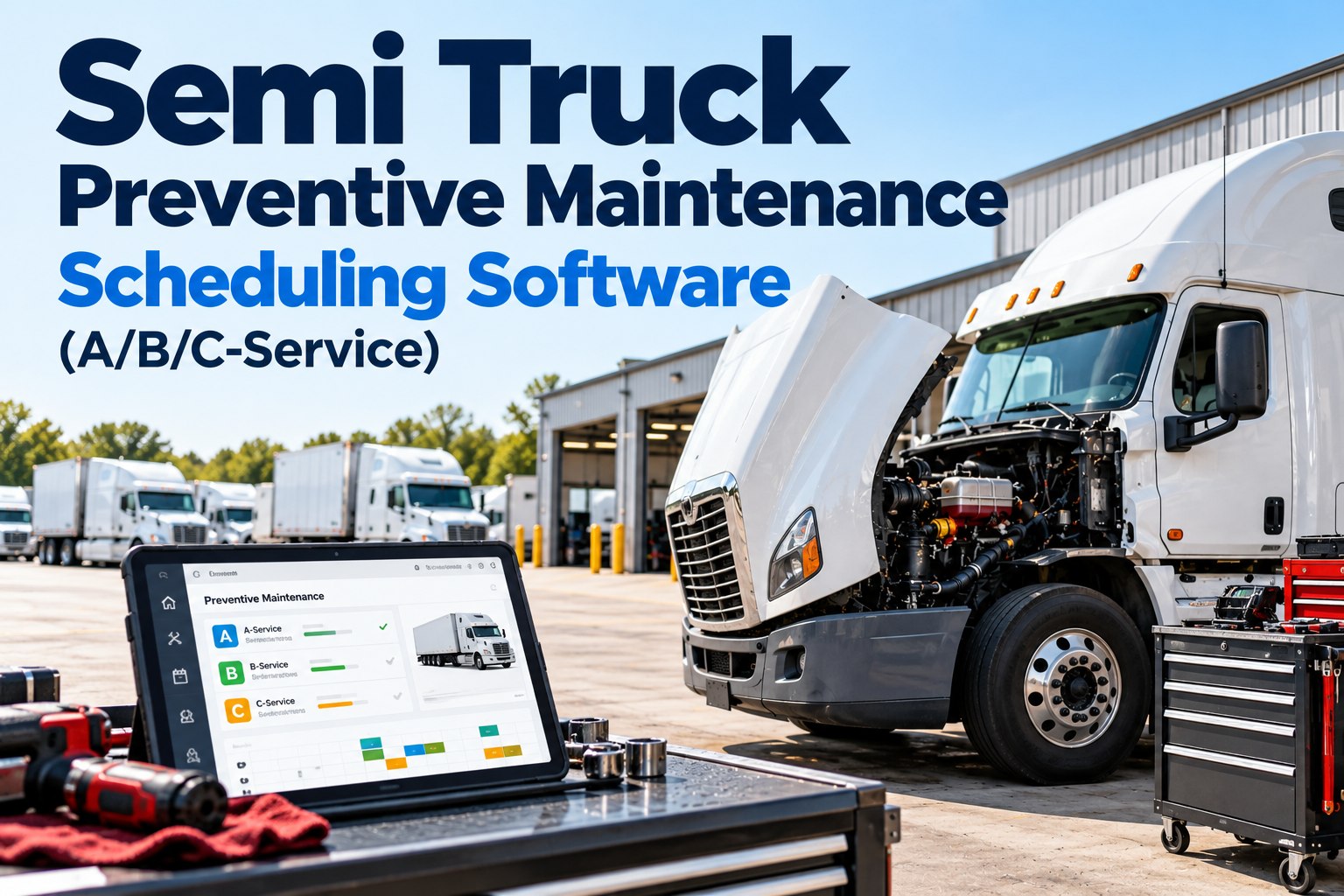
Semi truck maintenance software has one job: make sure the defect a driver finds at 5 a.m. reaches the shop, the PM due next week shows up on the dispatch board, and every repair leaves the record FMCSA expects. That sounds simple, but most breakdowns happen in the handoffs between driver, dispatcher and shop. This guide covers what maintenance costs per mile, where those handoffs fail, what roadside inspectors keep finding, and the best practices that close the gaps. Book a 20-minute FleetRabbit demo to see it set up for your tractors.
Transportation & logistics · Class 8 tractors
A semi truck rarely breaks down without warning. Usually someone wrote it down — and the note never reached the person who could act on it.
For carriers, maintenance managers and dispatchers running over-the-road and regional tractor fleets.
✎
Driver
Finds the defect on the DVIR
⚙
Shop
Repairs, runs PM, signs off
⇄
Dispatcher
Assigns only ready trucks
Semi Truck Repair and Maintenance Climbed to 21.5 Cents a Mile in 2025 as Fleets Kept Trucks Longer
The American Transportation Research Institute's 2026 operational costs report put the average cost of running a truck at a record $2.336 per mile in 2025. Repair and maintenance rose faster than the total, and the average fleet tractor got older for the first time since 2022.
Per tractor, per year
At ATRI's 2025 average of 85,991 miles, 21.5¢ a mile works out to roughly $18,500 in repair and maintenance per truck, before tires.
ATRI, An Analysis of the Operational Costs of Trucking, 2026 edition (2025 data), as reported by FreightWaves and FleetOwner. Average truck age rose from 3.4 to 3.6 years.
Older trucks need more maintenance, and that makes the timing of each repair matter more. A failure fixed in your own bay at a planned PM costs less than the same failure fixed by a roadside service and a tow after a missed load. If you want to see where that money goes for each truck, you can track cost per mile for free.
Where Semi Truck Maintenance Breaks Down: The Driver, Dispatcher and Shop Handoffs
Most carriers have a capable shop and careful drivers. Trucks still break down because information sits in the wrong place: a defect in a paper DVIR in the cab, a PM due date on a shop whiteboard, a load assigned to a truck the shop wanted Friday.
What goes wrong
A defect is noted on the post-trip but sits in the cab until the truck comes back days later.
What fixes it
An electronic DVIR that opens a work order with a photo the moment it's submitted.
What goes wrong
PM comes due mid-trip because dispatch never saw the date and sent the truck on a five-day run.
What fixes it
PM due dates and miles visible to dispatchers, so service is planned around loads.
What goes wrong
A truck with an open safety defect gets assigned because nobody flagged it as not ready.
What fixes it
A clear ready / not-ready status on every truck before it's assigned.
Each fix is a shared record, not a new process. Drivers keep doing their inspections, the shop keeps doing PM, and dispatch keeps assigning loads; they just work from the same record. A quick walkthrough shows that shared record on a real truck.
Roadside Inspectors Keep Finding the Same Semi Truck Defects: Brakes, Tires, Lights and Cargo Securement
During CVSA's 2025 International Roadcheck, held May 13–15, inspectors completed 56,178 inspections across North America. In Level I, II and V inspections, 22.6% of vehicles were placed out of service. Here's what put them there.
Top vehicle out-of-service violations · share of all vehicle OOS violations
Source: Commercial Vehicle Safety Alliance, 2025 International Roadcheck results.
Every item on that list can be caught on a pre-trip. Brake adjustment, air leaks, tire tread and inflation, and lights take minutes to check and longer to explain to an inspector. Make them required, photographed items on the DVIR record, and you can start running those inspections free.
For dispatchers
Stop finding out a truck is due for service after it's already loaded and on the road
The FMCSA Maintenance Records a Trucking Carrier Must Be Able to Produce, and How Long to Keep Them
FMCSA Part 396 is short, but auditors read it closely. Each rule below is a record you either have or don't when an investigator asks for a truck's file.
§396.3
Inspection, repair and maintenance
A systematic program plus records for each vehicle: identification, the schedule, and what was done
Keep 1 year where the truck is kept, and 6 months after it leaves your control
§396.11
Driver vehicle inspection report
Post-trip DVIR when a defect is found, with repair certification
Keep 3 months
§396.13
Driver review before driving
The next driver reviews the last DVIR and confirms repairs before driving
Signed with the DVIR
§396.17
Annual periodic inspection
Every truck inspected at least once every 12 months by a qualified inspector
Keep the report 14 months (§396.21)
New in 2026
FMCSA's electronic DVIR final rule, published February 19, 2026 and effective March 23, 2026, states plainly that DVIRs and driver reviews may be completed and kept electronically under 49 CFR 390.32. Paper is still allowed.
The hard part isn't knowing the rules; it's producing a clean file for any truck on request. Keeping inspections, repairs and annual reports together in a DOT compliance record turns an audit into a search.
Semi Truck Maintenance Software Best Practices That Dispatchers and Shop Leads Both Sign Off On
These practices come up again and again in fleets that keep tractors on the road. None of them needs a bigger shop; they need a shared record.
Trigger PM on whichever comes first
Miles, engine hours or days. Idle-heavy and city trucks reach their hours long before their miles.
Nest your A, B and C services
Every B includes the A tasks and every C includes the B tasks, so tiers never drift apart.
Show PM due on the dispatch board
Dispatchers plan service into a home time or a short run instead of losing a long load.
Lock trucks with open safety defects
A truck with an unresolved brake or tire defect shows as not ready until the shop signs it off.
Photograph every defect
The technician sees the problem before the truck arrives and stages the right parts.
Track the annual inspection date per truck
A 12-month clock that's easy to miss on a growing fleet, and an obvious audit finding when it is.
Review cost per mile, per truck, monthly
The trucks costing far more than the fleet average are your replace-or-repair decisions.
Building A, B and C services as nested templates on a preventive maintenance schedule is usually the first step. A 20-minute demo shows one set up on your intervals.
How FleetRabbit Connects the Driver, Dispatcher and Shop on Every Semi Truck
FleetRabbit gives each tractor one maintenance record that the driver writes to, the shop works from and dispatch reads before assigning a load.
Truck 1142 · timeline
Sample
Mon 05:10
Pre-trip DVIR
Air leak at trailer glad hand · photo attached
Mon 05:12
Work order opened
Truck marked not ready for dispatch
Mon 06:05
Repaired and signed off
Seal replaced from stock · driver review recorded
Thu
B-service due in 1,200 miles
Dispatcher sees it and plans the truck home Friday
FMCSA-ready DVIRs
Pre- and post-trip on a phone, with photos, signatures and driver review, online or offline
A/B/C-service PM
Nested service tiers due on miles, engine hours or days, whichever comes first
Dispatch-ready status
Ready, PM due soon or not ready, visible before a load is assigned
Audit-ready records
Inspections, repairs, annual reports and cost per mile on one file per truck
What the 20-minute demo covers
Driver
A DVIR defect becoming a work order with a photo
Shop
Your A, B and C services built on your intervals
Dispatch
Ready and PM-due status before assigning loads
Audit
One truck's full FMCSA file pulled in seconds
Semi Truck Maintenance Software: Questions From Carriers and Dispatchers
How often should a semi truck get preventive maintenance?
Follow the engine and chassis makers' intervals for your duty cycle, and trigger each service on miles, engine hours or days, whichever comes first. Most fleets organize this into nested A, B and C services.
Why should dispatchers see maintenance data?
Because dispatch decides where a truck is when its PM comes due. When due dates and open defects are visible, service is planned around loads instead of interrupting them.
Are electronic DVIRs allowed by FMCSA?
Yes. FMCSA's final rule effective March 23, 2026 confirms DVIRs and driver reviews may be completed and kept electronically under 49 CFR 390.32.
How long must maintenance records be kept?
Under §396.3, one year where the truck is housed or maintained and six months after it leaves your control. DVIRs are kept three months, and annual inspection reports 14 months.
What do roadside inspectors find most often?
In CVSA's 2025 International Roadcheck, brake systems, tires, brake adjustment, lights and cargo securement led vehicle out-of-service violations.
How fast can a carrier get started?
Driver · Shop · Dispatch
Keep Every Semi Truck Inspected, Serviced on Time and Ready When Dispatch Needs It
One maintenance record per truck that the driver writes to, the shop works from and dispatch checks before every load.
Free for up to 3 trucks · No credit card required
October 22, 2026
By Derek Goes
All Posts