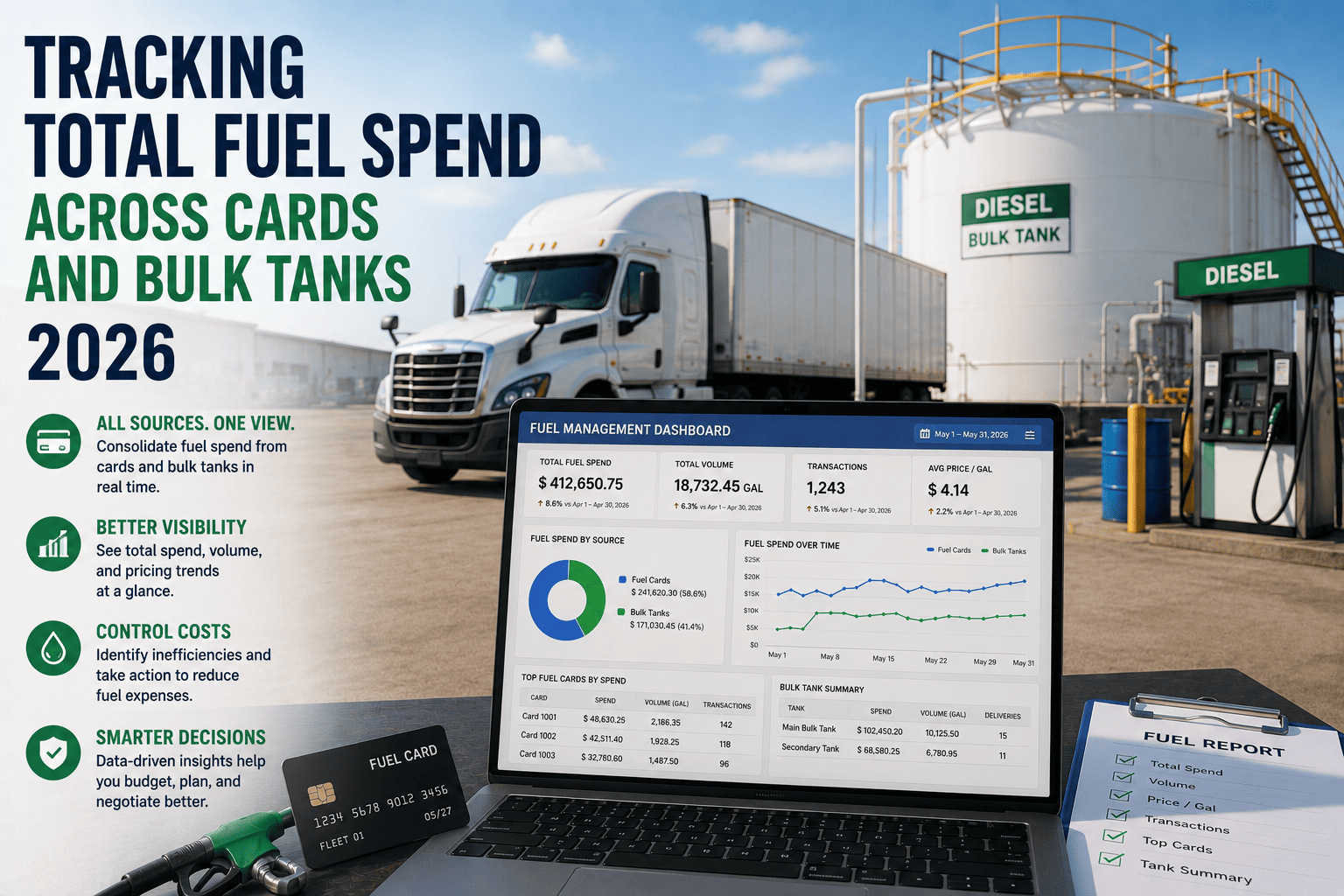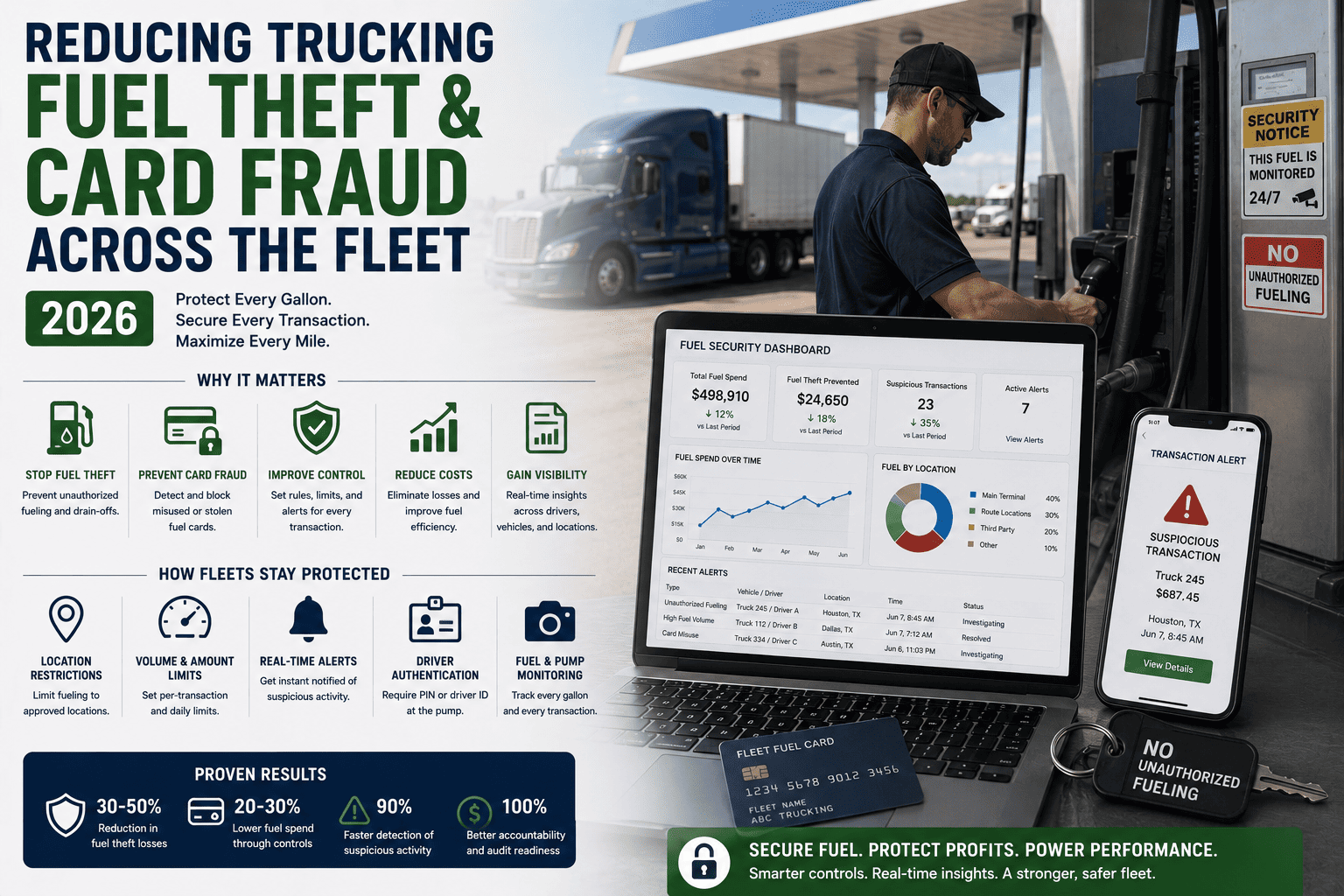
A fuel card transaction posts in Dallas. Your truck's GPS shows it was in Houston at that exact moment. On a monthly statement, that transaction looks exactly like every other fill-up, legitimate, ordinary, paid. Nobody notices the mismatch until someone happens to go looking for it, and by then the same cloned card has usually already been used two or three more times.
Industry estimates put fuel card misuse and outright theft at 5 to 15 percent of total fuel spend for fleets without GPS cross-referencing. Closed-loop verification, matching every transaction against real vehicle location, catches the large majority of fraudulent fuel purchases in real time, and fleets that switch from monthly reconciliation to live monitoring commonly uncover 8,000 to 22,000 dollars in existing, previously invisible losses within the first week.
How Fuel Theft Slips Past Monthly Reports
Fuel fraud isn't hard to catch because it's clever. It's hard to catch because most fleets are only looking at the data once a month, long after the transaction has cleared and the fraudster has moved on. A monthly reconciliation compares a fuel receipt to a card statement, and both will match perfectly even when the fuel never touched the truck it was supposedly purchased for.
The Location Gap Nobody Checks
The single biggest blind spot is the gap between where a card says fuel was purchased and where the truck's GPS actually shows it was at that moment. Without an automatic cross-check between those two data points, a transaction 40 miles from the vehicle's real position sails through completely unnoticed.
Volumes That Don't Match Reality
A fill-up that exceeds a truck's tank capacity, or fuel usage that doesn't line up with reported mileage, is one of the clearest signs of side fueling or phantom purchases. On paper, though, that transaction looks like any other line item unless someone is actively comparing volume against vehicle capacity and route history.
FleetRabbit cross-references every fuel transaction against real-time GPS location and odometer data, flagging mismatched purchases the instant they occur instead of weeks later on a statement.
Fraud Types And The Controls That Actually Stop Them
Not every fuel loss comes from the same source, and each type of fraud responds to a different kind of control. Matching the right control to the right red flag is what turns fuel security from a vague policy into something that actually reduces losses.
| Fraud Type | Warning Sign | Effective Control |
|---|---|---|
| Card Skimming | Rapid, repeated transactions far from the truck's normal routes | Migrate to EMV chip or contactless cards that can't be cloned |
| Side Fueling | Fuel volume exceeding the vehicle's tank capacity | Set per-transaction volume limits tied to each vehicle's tank size |
| Off-Route Purchases | Transaction location doesn't match GPS position at time of purchase | Closed-loop GPS verification with instant mismatch alerts |
| Odometer Or Mileage Fraud | Fuel usage inconsistent with reported mileage or expected MPG | Set a per-vehicle consumption baseline and flag deviations past 8 percent |
| Unauthorized Purchases | Non-fuel items or purchases outside approved hours | Restrict cards by product type, time window, and location |
Building Real-Time Fraud Detection
Stopping fuel theft isn't about reviewing statements more carefully. It's about shifting from a once-a-month review to a system that checks every transaction the moment it happens, against data the fleet already has.
Closed-Loop GPS Verification
The highest-value fraud control comes from connecting fuel card data directly to telematics. When a purchase posts, the system checks it instantly against the vehicle's actual GPS location and odometer reading. A mismatch triggers an alert immediately, not at the end of the month when the charge has already cleared.
Per-Vehicle Consumption Baselines
Every truck has a normal fuel consumption pattern based on its route, load, and engine condition. Setting a baseline for each vehicle and flagging deviations beyond roughly 8 percent surfaces both fraud and mechanical issues long before either shows up as a bigger problem.
Instant Alerts Beat End-Of-Month Reviews
A fraud alert that arrives the moment a mismatched transaction occurs gives a fleet manager the chance to freeze a card immediately, often stopping a fraudster after one attempt instead of the usual three. Signing up for FleetRabbit connects your fuel card data and telematics automatically, so this kind of real-time checking starts working from day one.
FleetRabbit sets per-vehicle consumption baselines, flags mismatched locations instantly, and gives you the alerts you need to freeze a compromised card after the first attempt, not the third.
Metrics That Show Your Fuel Program Is Actually Secure
A short set of numbers, tracked consistently, tells you whether your fuel security is working or just looking fine on a spreadsheet.
Fraud Rate As A Percentage Of Fuel Spend
Calculate flagged and confirmed fraudulent transactions as a percentage of total fuel spend each month. A rate above roughly 5 percent signals your current controls aren't catching enough activity before it clears.
Time To Detection
Measure how long it takes from a fraudulent transaction occurring to someone actually noticing it. Moving this from weeks, common in monthly reconciliation, to seconds, through real-time GPS matching, is the single biggest lever for reducing total losses.
Consumption Variance By Vehicle
Track how often each vehicle's fuel consumption deviates from its own baseline beyond the 8 percent threshold. Vehicles flagged repeatedly deserve investigation whether the cause turns out to be fraud or a developing mechanical issue.
Booking a demo shows exactly how these numbers would look against your fleet's actual fuel data, often surfacing losses that have been sitting there unnoticed.
Key Takeaways
Fuel theft and card fraud aren't rare events that happen to unlucky fleets. They are a steady, ongoing drain that hides inside normal-looking transactions because most fleets only check their fuel data once a month, long after a fraudulent purchase has already cleared. The fraud isn't sophisticated. It's simply invisible to a review process built around monthly statements instead of real-time data.
Closing that gap doesn't require replacing your fuel card program. It requires connecting the data you already have, GPS location, odometer readings, and transaction records, so mismatches surface the moment they happen instead of weeks later. Fleets that make this shift typically uncover thousands of dollars in existing losses within their first week of real monitoring, and keep that recovery going every month after.
FleetRabbit connects your fuel card data to real-time GPS and odometer readings, flagging mismatched transactions instantly instead of at month-end. Start free and see what's hiding in your own fuel spend.