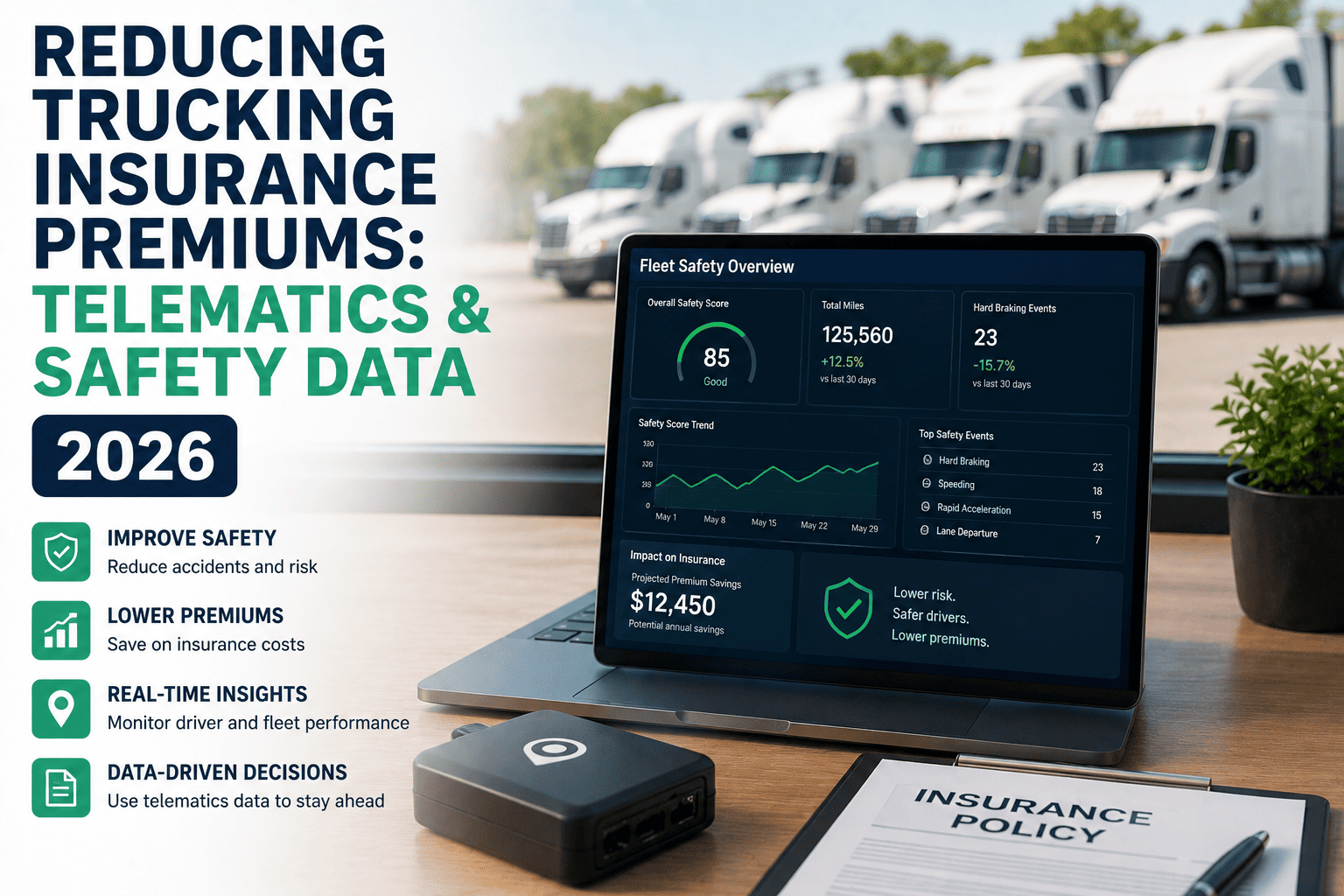
Commercial trucking insurance has stopped being a once-a-year paperwork exercise. Premiums have climbed for years in a row, some carriers have pulled out of commercial auto entirely, and the fleets still getting fair rates are the ones who can hand an underwriter actual proof of how safely they operate. Telematics data is that proof, and in 2026 it's becoming the difference between a renewal that stings and one that actually rewards you.
Why Underwriters Suddenly Care About Your Data
For decades, commercial auto underwriting ran on a handful of blunt inputs, years in business, claims history, vehicle count, and zip code. None of that tells an insurer whether your drivers brake hard at intersections or whether someone's been on their phone at highway speed. Nuclear verdicts against trucking companies have climbed sharply, and insurers responded the only way they could, by pricing risk more conservatively across the board. The fleets that escape that blanket pricing are the ones who can prove, with data, that they're not the risk the average implies.
The Shift From Guessing to Measuring
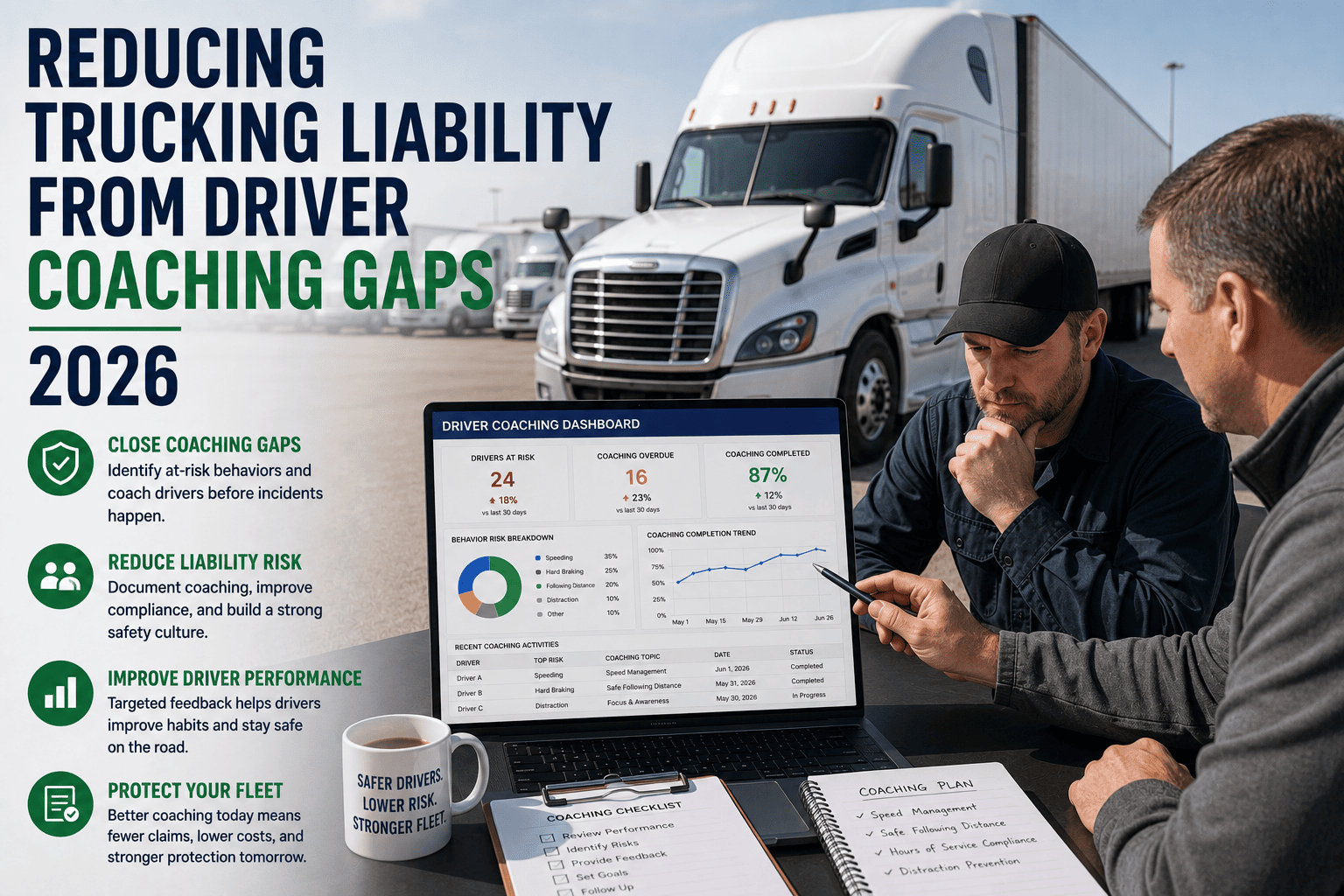
Underwriters today are looking past simple mileage tracking and into the specific behaviors that actually predict claims. Hard braking, rapid acceleration, and aggressive cornering are treated as near-misses, a driver who brakes hard repeatedly is statistically more likely tailgating, which raises rear-end collision risk. Seatbelt use and phone-distraction alerts, often pulled from AI dash cams, add proof of a genuine safety culture rather than a policy that exists only on paper.
Why this works in your favor
Once an insurer can see the difference between a fleet with frequent harsh events and late-night speeding versus one that coaches drivers and corrects unsafe habits quickly, the pricing conversation changes. You stop being judged on industry averages and start being judged on your own evidence. That's the entire premise behind every telematics discount program on the market right now.
FleetRabbit captures the exact behavior data underwriters ask for, hard braking, speeding, distraction events, and HOS compliance, all in one exportable safety report. Sign up free to see your fleet's current safety profile, or book a demo before your next renewal conversation.
The Five Data Points Underwriters Actually Weigh
Not all telematics data carries the same weight in a rate review. Some signals correlate strongly with claims, others are interesting but rarely move a number. Knowing which is which lets you focus your safety program where it actually pays off.
How the Discount Math Actually Breaks Down
Telematics discounts aren't one flat number, they typically stack across a few distinct categories, and understanding the structure helps you see exactly where your fleet's effort translates into savings.
| Discount Category | Typical Range | What Triggers It |
|---|---|---|
| Enrollment Discount | 5-10% | Simply having telematics or dash cam hardware installed and reporting data |
| Safety Performance Discount | 15-30% | Documented low rates of hard braking, speeding, and distraction events over a policy term |
| Mid-Term Adjustment | Varies by carrier | Demonstrated improvement in safety data during an active policy period, not just at renewal |
| Claims Defense Credit | Indirect, via lower claim costs | Video evidence that exonerates drivers in disputed claims, avoiding costly settlements |
Roughly 60 percent of insurers were already using telematics data across multiple parts of their business by early 2026, and that share keeps climbing. The fleets capturing the larger end of these ranges aren't necessarily the ones with the most expensive hardware, they're the ones who can show a clean, consistent safety trend over time rather than a single good month.
FleetRabbit tracks the exact metrics carriers reward and packages them into a renewal-ready report, so your agent walks into the negotiation with evidence instead of estimates. Book a 30-minute demo and see what your fleet's safety report would look like today.
Building a Safety Program That Carriers Actually Reward
Installing hardware is the easy part. The discount comes from what you do with the data afterward. Insurers aren't just checking whether you have telematics, they're checking whether your fleet visibly responds to what it shows.
A Four-Step Path to a Stronger Renewal
Why the trend matters more than any single number
An underwriter reviewing one strong month has no way to know if that was real change or a lucky stretch of easy routes. A six-month downward trend in harsh events tells a completely different story, one that supports a real, lasting rate adjustment rather than a temporary courtesy discount.
Common Mistakes That Quietly Cost Fleets the Discount
Plenty of fleets install telematics and still see flat or rising premiums. It's rarely the hardware's fault. It's almost always how the data gets used, or doesn't.
The fleets that fix these gaps tend to see the clearest results, since the underlying technology was never the problem. You can sign up today to start building that trend now rather than scrambling the week before your renewal call.
Frequently Asked Questions
The Bottom Line
Insurance carriers aren't pricing trucking risk the way they did five years ago, and fleets that keep relying on the old conversation, claims history and a handshake, are the ones absorbing the steepest increases. Telematics data gives you something far more persuasive than a good safety reputation, it gives you proof, dated, specific, and hard for an underwriter to argue with.
None of this requires ripping out your existing systems or starting from zero. It requires capturing the right behavior data consistently, coaching on what it shows, and walking into your next renewal with a report instead of a story.
FleetRabbit tracks the exact safety signals underwriters reward, hard braking, speeding, distraction, and HOS compliance, and turns them into a clear report you can bring straight to your insurance conversation.