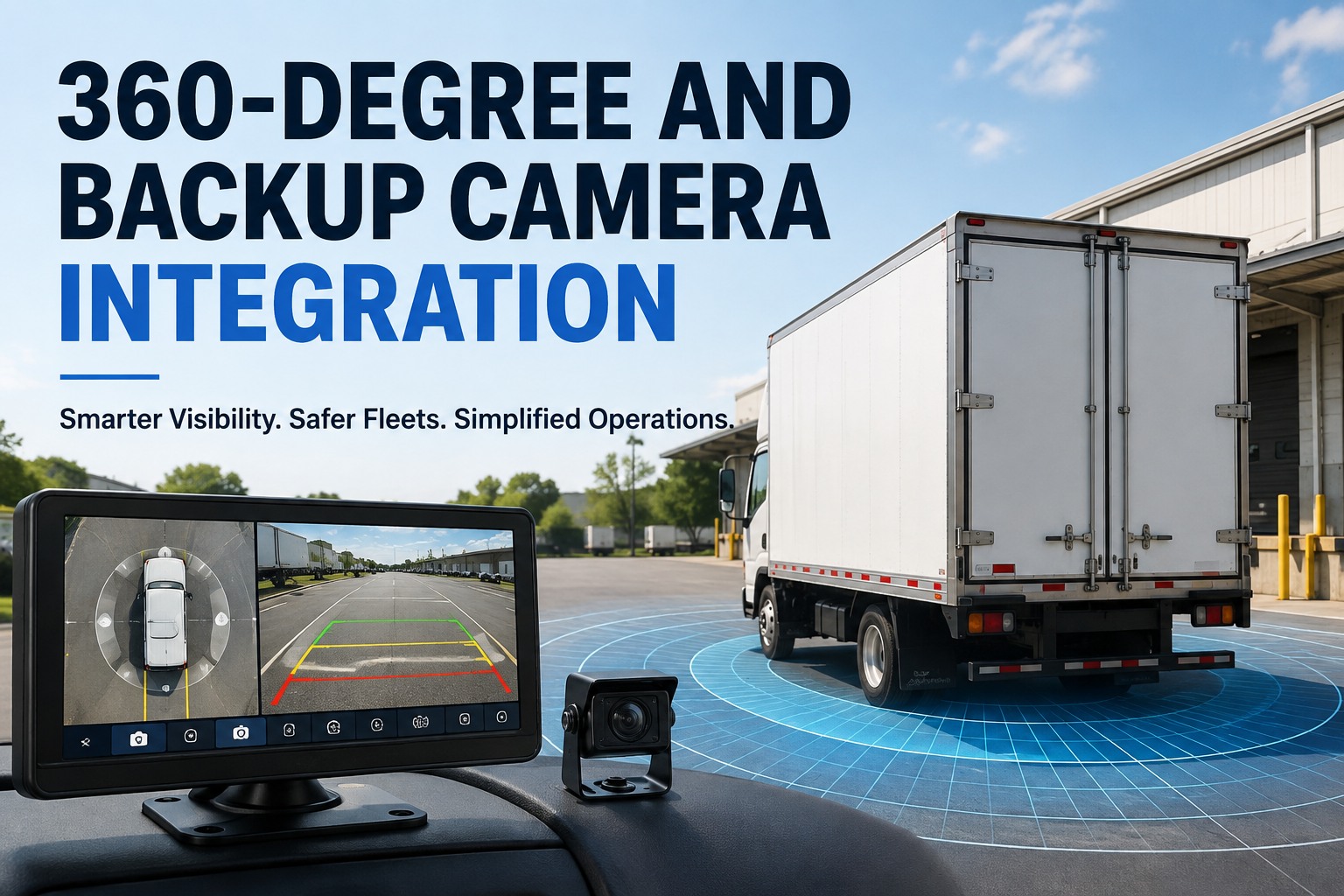
A 360-degree or backup camera system is one of the best safety investments a fleet can make. By stitching feeds from cameras at the front bumper, rear, side mirrors, and cab roof into a single bird's-eye view, these systems eliminate the blind spots that cause a staggering number of accidents — nearly 840,000 blind-spot crashes happen in the US every year, and reversing is a leading cause of struck-by fatalities involving large commercial vehicles. Some fleets have cut accidents and insurance payouts by more than 90% after deploying camera systems. But here's what a camera can't do: it can't inspect itself, schedule its own maintenance, or file the compliance record when its footage matters in a claim. A dirty lens, a failed rear camera, or drifted calibration is a safety system that's quietly not working — and the incident footage it captures needs to live with the vehicle's history, not in a separate silo. That's the gap FleetRabbit closes. Get more from your 360 backup camera by unifying inspections, maintenance, and compliance in one place. Start free with 3 vehicles or book a demo to see the camera integration live.
INTEGRATION · SAFETY CAMERAS & MAINTENANCE
360-Degree and Backup Camera Integration for Fleets
Your cameras eliminate blind spots on the road. FleetRabbit keeps them working and their records audit-ready — unifying camera inspections, maintenance, and compliance footage in one place, alongside the rest of your fleet.
840K
blind-spot accidents in the US every year (NHTSA)
300+
people killed yearly in backover accidents
14%
of large-truck crashes from inadequate surveillance
418 → 24
one fleet's accident drop after camera systems
Why Fleets Add 360 and Backup Cameras
Standard mirrors were never designed to cover the blind zones of a large commercial vehicle. A surround-view system replaces guesswork with a complete, real-time picture — and the safety case is overwhelming.
Full Surround Visibility
Four or more HD cameras stitch into a seamless bird's-eye view, giving the driver front, rear, and side coverage on one screen — eliminating the blind spots mirrors miss during backing, turns, and lane changes.
AI Object Detection
Modern systems distinguish a stationary cone from a moving worker, alerting the driver before a struck-by incident — critical in chaotic construction yards and tight loading zones.
Night Vision & Durability
Infrared and low-light processing keep footage clear after dark, and units rated from −40°C to +70°C withstand the vibration, dust, and temperature extremes of real fleet work.
Incident Evidence
Recorded footage protects against false claims and nuclear verdicts — but only if it's retained and tied to the right vehicle and incident, which risk advisors recommend keeping for years.
A Camera Is Safety Hardware — and Hardware Needs Upkeep
Here's the honest limitation: a 360 or backup camera prevents accidents only while it's actually working. A lens caked in road grime, a rear camera that quietly failed, a calibration that drifted after a curb strike — each is a safety system that looks installed but isn't protecting anyone. Cameras are physical assets that need inspection, cleaning, and repair like any other component, and the incident footage they capture needs to live with the vehicle's record for compliance and claims. A camera can't inspect itself, generate its own work order, or file its own compliance trail. That's exactly what FleetRabbit adds — turning a standalone safety device into a maintained, documented part of one fleet system.
See how the integration keeps cameras working.
How FleetRabbit Unifies Your Camera Data
Connecting your camera system to FleetRabbit turns a safety device into part of your maintenance and compliance workflow. Inspections, upkeep, and footage all live with the vehicle instead of in a separate silo.
Your Camera System Provides
Camera health & fault signals
Object-detection & safety events
Incident & backing footage references
Vehicle & asset identification
FleetRabbit Turns It Into
Camera inspection checklist items
Repair & cleaning work orders
Footage linked to vehicle records
One audit-ready compliance trail
1
Cameras in Every Inspection
FleetRabbit builds camera checks — lenses clean, all feeds live, calibration intact — into the DVIR and PM checklist, so a failed or dirty camera is caught during inspection instead of discovered after an incident.
2
Faults Become Work Orders
A camera fault or failed feed becomes a routed repair work order with the vehicle's history attached, so a broken safety system is fixed on a schedule — not left non-functional for weeks.
3
Footage With the Record
Incident and backing footage references attach to the vehicle's maintenance and compliance record, so when a claim or audit arises, the evidence and the vehicle history are in one place, retained as long as risk advisors recommend.
4
Proof for Insurance Discounts
Insurers offer premium discounts for documented camera and ADAS systems. FleetRabbit keeps the inspection and maintenance proof that shows the systems are installed and functioning across your fleet.
A safety camera nobody maintains is a liability that looks like protection.
FleetRabbit puts your cameras into every inspection, turns faults into work orders, and keeps footage audit-ready — so the safety system you paid for actually works. Start free with 3 vehicles or book a demo to see it.
What Connects Between Your Cameras and FleetRabbit
Camera systems that support standard interfaces — J1939, CAN bus, RS232/RS485, or APIs — connect smoothly into FleetRabbit's maintenance and compliance workflow. Swipe the table horizontally on mobile.
← Swipe to see all columns →
Keep Your Safety Cameras Working — and Documented
Connect your 360 or backup camera system to FleetRabbit and unify camera inspections, maintenance, and compliance footage in one place — camera faults becoming work orders, camera checks built into every DVIR, and incident footage linked to the vehicle record. Turn a standalone safety device into a maintained, audit-ready part of your fleet. At $5/vehicle/month, no hardware, live within 72 hours, free for up to three vehicles.
Cameras in every inspection
Faults to work orders
Footage audit-ready
Insurance-discount proof
Why the Pairing Beats Cameras Alone
A camera system prevents accidents in the moment. Unifying it with maintenance and compliance is what keeps it working and turns its footage into protection you can prove.
A Working Camera, Not Just an Installed One
Building camera checks into every inspection means a dirty lens or dead feed is caught and fixed — so the system is actually protecting drivers, not just mounted on the truck.
Evidence You Can Actually Find
Footage tied to the vehicle record and retained for the recommended years means that when a claim or nuclear verdict looms, the exonerating video is exactly where you need it.
One Fleet System, Not a Silo
Cameras, inspections, maintenance, and compliance in one platform means managers stop juggling a camera dashboard, a maintenance spreadsheet, and a footage archive that don't talk.
Lower Premiums, Proven
Insurers discount documented camera and ADAS systems; FleetRabbit keeps the maintenance and inspection proof that the systems are functioning fleet-wide, so the discount sticks.
Frequently Asked Questions
What does the camera integration with FleetRabbit do?
It connects your 360 or backup camera system to FleetRabbit so the camera becomes part of your maintenance and compliance workflow. Camera checks are built into every DVIR and PM inspection, a camera fault becomes a routed repair work order, and incident footage links to the vehicle record for audit-ready retention. Instead of a safety device that lives in its own silo, the camera is maintained, documented, and tied to the rest of your fleet. Seeing exactly how that works on your own vehicles is what you can
book a demo to do, or you can
start free with 3 vehicles and try it directly.
Does FleetRabbit replace my camera system?
No — it complements it. Your 360 or backup camera is best-in-class safety hardware that eliminates blind spots and records incidents in real time. FleetRabbit is the maintenance and compliance platform that keeps that hardware working — building camera inspections into your DVIR, turning faults into work orders, and keeping footage tied to the vehicle record. You keep the camera system you invested in and add the layer that ensures it stays functional and its evidence stays findable, which you can
book a demo to see in practice.
Why does a safety camera need maintenance tracking?
Because a camera only protects while it's working, and cameras fail quietly. A lens caked in road grime, a rear camera that stopped feeding, or a calibration that drifted after a curb strike all leave a driver with a safety system that looks installed but isn't functioning. Without inspection tracking, nobody notices until an accident happens. FleetRabbit builds camera health into every inspection so problems are caught and fixed on a schedule, which is exactly what you can
book a demo to see, or
start free with 3 vehicles to set up yourself.
How does a camera fault become a work order?
When your camera system reports a fault or a failed feed — or a driver flags a dead camera during a DVIR — that signal becomes a routed repair work order in FleetRabbit with the vehicle's history attached. It's assigned to a technician and tracked to completion, so a broken safety system is repaired promptly instead of sitting non-functional for weeks. That turns a camera alert into a scheduled fix rather than a note someone has to remember, which you can
book a demo to see run from fault to completed repair.
Does it help retain footage for insurance and litigation?
Yes. Risk advisors recommend retaining fleet footage for several years because complaints can evolve into litigation, and camera footage protects against false claims and nuclear verdicts. FleetRabbit links incident and backing footage references to the vehicle's record so the evidence is organized, retained, and findable alongside the maintenance and inspection history when a claim or audit arises. Seeing how footage is tied to the vehicle record for audit readiness is something you can
book a demo to explore.
Will this help lower my insurance premiums?
It can support it. Several major insurers now offer premium discounts for fleets with documented camera and ADAS systems, and one fleet saw insurance payouts drop from over $9 million to under $200,000 after deploying camera technology. The key word is documented — you need proof the systems are installed and functioning. FleetRabbit keeps the inspection and maintenance records that demonstrate your cameras are working fleet-wide, which is exactly the documentation those discounts require, and you can
start free with 3 vehicles or
book a demo to set it up.
Which camera systems can connect to FleetRabbit?
Camera systems that support standard fleet interfaces integrate most smoothly — those using J1939, CAN bus, RS232 or RS485, or offering APIs, which most modern commercial 360 and backup systems do. FleetRabbit focuses on the maintenance and compliance layer, so whether you run a surround-view kit, a reversing camera, or an AI-powered multi-camera system, the integration puts camera inspections, faults, and footage into one fleet workflow. Discussing your specific camera setup and how it connects is something you can
book a demo to walk through.
How quickly can we get started?
Fast — FleetRabbit goes live within 72 hours with no hardware to install, running on devices your team already has, so you can start building camera inspections and maintenance into your workflow almost immediately. You keep your existing camera hardware and simply add the maintenance and compliance layer on top, with no rip-and-replace. It's free for up to three vehicles, so you can
start free with 3 vehicles today, or
book a demo to map how your camera data should drive your inspections and work orders first.
Make Every Camera a Maintained, Documented Asset
Connect your 360 or backup camera system to FleetRabbit and unify camera inspections, maintenance, and compliance footage in one place — faults becoming work orders, cameras verified in every DVIR, and footage linked to the vehicle record. Keep the safety system you invested in actually working, and prove it. Integrated in 5–7 working days, at $5/vehicle/month, free for up to three vehicles, with no hardware required.
Free tier for up to 3 vehicles · No credit card required · No hardware installation
August 10, 2026By Emily Parker
All Blogs