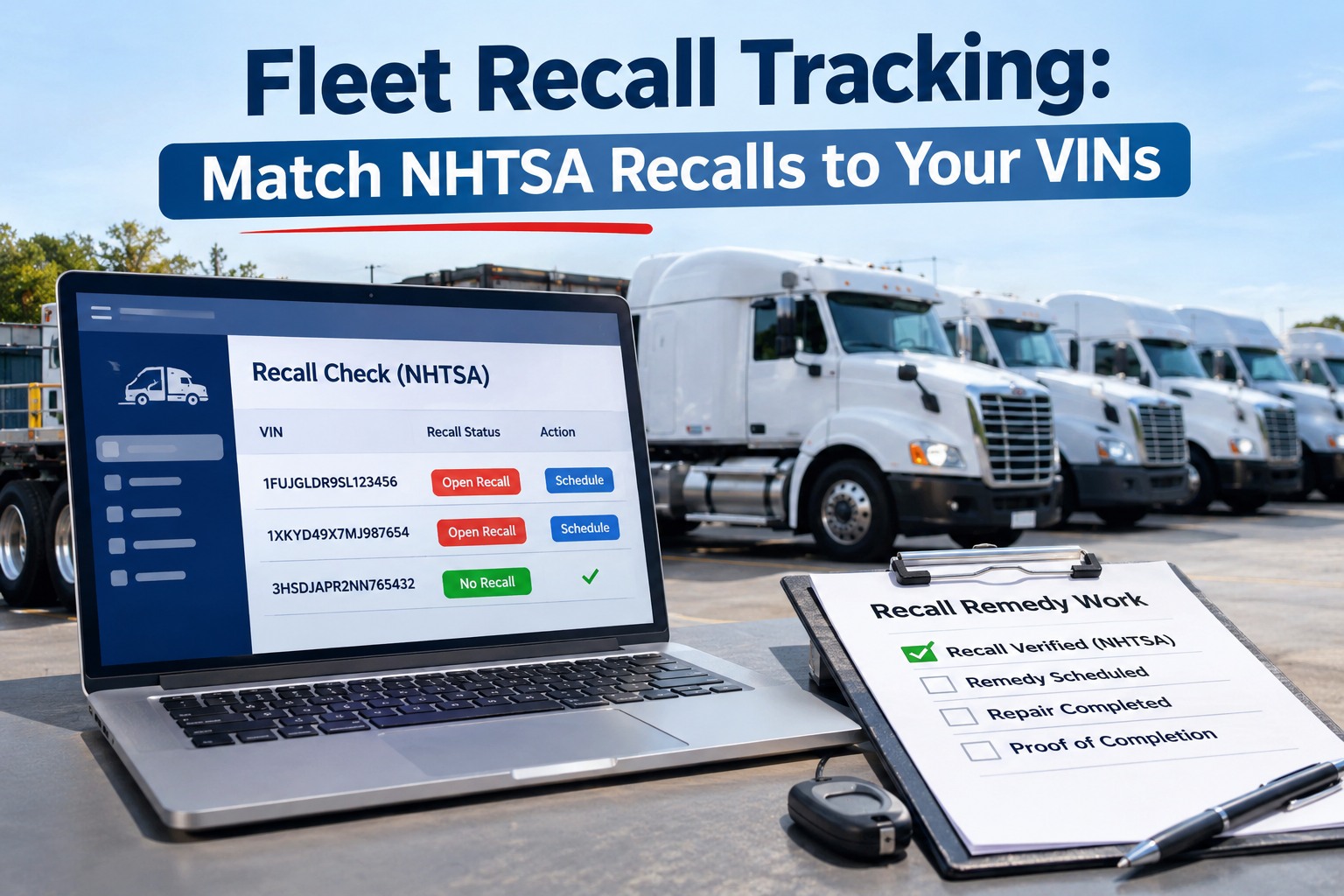
Fleet recall tracking means checking every truck's VIN against NHTSA recall data, alerting the right person, scheduling the remedy and keeping proof it was done. This guide covers what the NHTSA lookup shows and misses, how to build a tracking process and what records to keep for safety and insurance. Schedule a call to check your fleet's VINs.
Fleet Recall Tracking Explained: How NHTSA Recalls Reach Your Trucks and Why Checking VINs by Hand Falls Behind
The NHTSA lookup is useful, but it only shows a slice of what a fleet needs
NHTSA lets you search by VIN or license plate and see unrepaired safety recalls for vehicles from participating manufacturers. Fleets get no separate guidance on that page, so the checking schedule is up to you.
| NHTSA VIN lookup | What it does | What it leaves out |
|---|---|---|
| Coverage | Shows unrepaired recalls for vehicles from participating manufacturers | Small manufacturers, international vehicles and some specialty brands |
| Scope | Safety recalls tied to a VIN | Manufacturer customer service and non-safety campaigns |
| Age | Recalls up to 15 years old | Older recalls, unless the manufacturer offers more coverage |
| Timing | VINs are added continuously | Recently announced recalls may not have every VIN identified yet |
| Repaired recalls | Not shown | Proof that you completed a repair, which you keep yourself |
What a Fleet Recall Tracking Process Needs: VIN Matching, Alerts, Remedy Scheduling and Proof of Completion
Four ways fleets check recalls, and where each one runs out
| Method | How it works | Limit for a fleet |
|---|---|---|
| Manual VIN lookup | Enter up to 100 VINs on the NHTSA page and read the results | You must repeat it, and nobody is told when a new recall lands |
| Manufacturer or dealer notice | Mailed or emailed to the registered owner | Goes to the registered owner, which may not be your maintenance team |
| NHTSA recall API | Documented lookups by model year, make, model and by campaign number | The page we reviewed documents no VIN endpoint, so matching your VINs takes extra work |
| Recall tracking software | Matches your VIN list to recall data and alerts your team | Ask which data sources it uses and how often it checks |
Schedule Recall Remedy Work Without Parking the Fleet: Triage by Severity, Parts Availability and Service Window
Not every recall needs the same response, so sort them on the day they arrive
Under 49 U.S.C. 30120 the manufacturer must remedy a required recall at no charge when the vehicle is presented for remedy. The free remedy does not apply to a vehicle first bought more than 15 calendar years before the notice, so check older trucks with the manufacturer. The triage below is our suggestion, not a legal standard.
FleetRabbit says Do Not Drive warnings mean the truck should come out of service, and that standard recalls can be scheduled around the next service window. Follow the manufacturer notice for each recall.
Keep Proof of Recall Completion for Safety and Insurance: The Fleet Recall Tracking Records to Store by VIN
Three gaps in a recall process, and what closes them
Ask your insurer or auditor what recall records they expect. We found no rule that sets a format, so keep what lets you show a recall was identified and closed.
How to Set Up Fleet Recall Tracking in a Week: Clean VIN List, Named Owners and a Checking Schedule
A recall process only works if the VIN list is right and someone owns the result
How FleetRabbit Handles Fleet Recall Tracking: Automatic VIN Matching, Alerts, Scheduling and a Completion Record
What FleetRabbit says its recall tracking does, in the same terms as the process above
| Recall need | What FleetRabbit pages describe |
|---|---|
| Match every VIN | FleetRabbit says it checks every VIN in your fleet against current NHTSA recall data automatically |
| Ongoing checks | The page describes continuous monitoring instead of manual lookups |
| Alerts | The maintenance manager and dispatcher are notified when a new recall matches a truck, including whether it carries a Do Not Drive warning |
| Remedy scheduling | Recall repairs are added to the maintenance calendar, timed to the next service window when severity allows |
| Proof of completion | Every recall, notice date and completion record is logged against the VIN, giving an audit-ready history |
Ask in a demo which recall data sources FleetRabbit uses and how often it checks, and whether a remedy appears as a work order or a calendar item, because the pages describe a maintenance calendar.
Fleet Recall Tracking FAQs: NHTSA Lookups, VIN Checks, Remedy Scheduling and Records
Short answers for fleet managers
How do I check my fleet for NHTSA recalls?
Use the VIN search on the NHTSA recalls page, which accepts up to 100 VINs at once and shows unrepaired recalls from participating manufacturers. Repeat it on a schedule, because VINs are added continuously and new recalls appear. Software can run the check for you.
Does the NHTSA lookup show every recall?
No. It shows unrepaired recalls from participating manufacturers, not repaired ones, recalls older than 15 years unless the manufacturer offers more, small manufacturers, international vehicles or non-safety campaigns. Recently announced recalls may not list every VIN yet, so recheck them and ask the manufacturer about anything you cannot find.
Who pays for a recall repair?
Under 49 U.S.C. 30120 the manufacturer must remedy a required recall at no charge when the vehicle is presented. The free remedy does not apply to vehicles first bought more than 15 calendar years before the notice, so check older trucks directly.
Can I drive a truck with an open recall?
It depends on the notice. A stop-use or Do Not Drive warning means the truck should leave service, while other recalls may be scheduled around service. FleetRabbit says standard open recalls are generally legal to drive. Always follow the manufacturer notice.
What records should I keep?
Keep the campaign number, notice date, severity, repair date, the shop or dealer, and the repair order, all tied to the VIN. We found no rule setting a format, so ask your insurer or auditor what they expect, and keep the records for as long as you keep the truck.
Where do I start with FleetRabbit?
Start by loading your VIN list and seeing which trucks match open recalls, then set who receives alerts and book the remedy work. Ask which data sources are used and how often checks run before you rely on it. Try recall tracking in FleetRabbit.