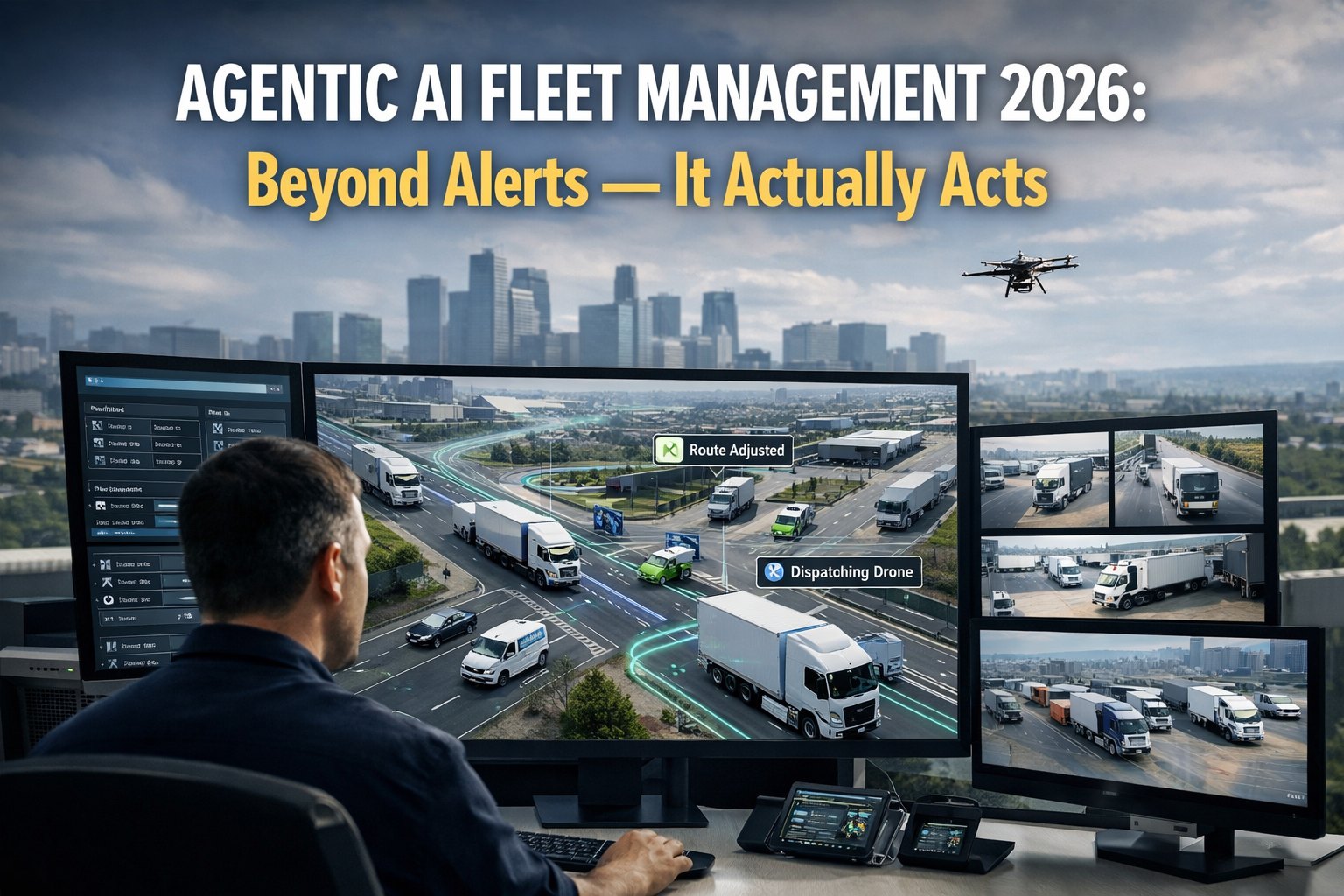
Your fleet management software sends alerts. Hundreds of them. Engine warning at 6 AM. Overdue inspection at 8 AM. Driver HOS violation at 10 AM. But here's the problem: alerts require you to act. Agentic AI doesn't wait for you - it acts autonomously. When a DTC code triggers, agentic AI creates the work order, schedules the appointment, notifies the driver, and orders the part. No dispatcher intervention. No dropped balls. No 3 AM phone calls. This is the fundamental shift happening in fleet operations in 2026. Book a demo to see agentic AI in action.
Agentic AI Doesn't Alert You. It Acts For You.
From auto-creating work orders to rerouting dispatch and generating compliance packages before audits - agentic AI replaces manual fleet coordination entirely.
Traditional Alerts vs Agentic AI: The Fundamental Difference
Most fleet software stops at notification. Agentic AI starts where alerts end - it takes action autonomously based on predefined rules, learned patterns, and real-time context.
Traditional Alert Systems
- Sends notification to dispatcher
- Waits for human to read alert
- Requires manual work order creation
- Dispatcher calls shop for appointment
- Manual parts lookup and ordering
- Driver notification via separate call/text
Agentic AI Systems
- Detects issue and assesses severity
- Creates work order automatically
- Schedules shop based on availability
- Orders required parts from vendors
- Notifies driver with instructions
- Updates dispatch for coverage
See Agentic AI Handle Fleet Operations
Watch autonomous workflows create work orders, schedule maintenance, and coordinate dispatch - without human triggers.
5 Workflows Agentic AI Handles Autonomously
These aren't future concepts - they're running in production fleets today. Each workflow eliminates hours of manual coordination weekly. Sign up free to implement these in your operation.
Maintenance Work Orders
DTC codes, telematics alerts, and inspection failures automatically generate work orders with parts lists, labor estimates, and shop assignments.
PM Scheduling
Based on mileage, engine hours, and historical patterns - AI schedules preventive maintenance during optimal windows without dispatcher input.
Dynamic Rerouting
Traffic delays, weather events, or delivery changes trigger automatic route optimization and driver notifications with updated ETAs.
Compliance Packages
Before DOT audits, AI assembles DQ files, inspection records, HOS logs, and maintenance documentation into audit-ready packages automatically.
Driver Escalation
HOS violations approaching, medical card expirations, or safety events trigger graduated escalation - driver notification, then supervisor, then ops manager.
The ROI of Autonomous Fleet Operations
Agentic AI doesn't just save time - it prevents the costly mistakes that happen when humans are overwhelmed, distracted, or simply unavailable. Book a demo to calculate your potential savings.
From hours to seconds for maintenance escalation
Eliminated manual coordination tasks
Automatic scheduling eliminates oversight
Reduced downtime and labor costs
How Agentic AI Actually Works
Understanding the architecture helps you evaluate solutions. True agentic AI requires three components working together:
Event Detection Layer
Continuously monitors telematics, ELD data, maintenance records, compliance calendars, and external data sources. Identifies events that require action based on configurable rules and learned patterns.
Decision Engine
Evaluates event severity, considers historical context, checks resource availability, and determines optimal response. Uses ML models trained on fleet-specific patterns to make intelligent decisions.
Action Execution Layer
Takes autonomous action across connected systems - creates records, sends notifications, updates schedules, orders parts, and coordinates with external vendors via API integrations.
Ready to Automate Fleet Operations?
FleetRabbit's agentic AI handles maintenance, compliance, and dispatch coordination autonomously.
Implementation Requirements
Agentic AI isn't plug-and-play magic. Successful implementation requires data infrastructure, integration capabilities, and organizational readiness.
Data Foundation
- Connected telematics (GPS, engine data)
- Digital inspection records (DVIRs)
- ELD/HOS integration
- Historical maintenance records
Integration Layer
- API access to core systems
- Shop management connectivity
- Parts vendor integrations
- Communication platforms (SMS, email)
Organizational Readiness
- Defined escalation hierarchies
- Approval thresholds documented
- Vendor relationships established
- Staff trained on new workflows
What Agentic AI Can't Do (Yet)
Setting realistic expectations prevents disappointment. Current agentic AI excels at structured repeatable workflows but has limitations:
Unusual breakdowns, customer disputes, or edge cases still need human decision-making
Rate negotiations, vendor contracts, and customer retention require human touch
Fleet expansion, route territory changes, and major capital investments need executive input
HR issues, legal matters, and finance decisions remain outside agentic AI scope
Frequently Asked Questions
AI alerts notify humans who then take action. Agentic AI takes action autonomously - creating work orders, scheduling appointments, sending notifications, and coordinating resources without waiting for human intervention. The human reviews outcomes rather than triggering each step.
Agentic AI operates within configurable guardrails. You set approval thresholds (e.g., auto-approve work orders under $500, require approval above), define escalation paths, and specify which actions require human confirmation. Full audit trails show every autonomous decision. Book a demo to see guardrail configuration.
Minimum requirements: telematics/GPS data and digital inspection records. Enhanced capabilities require ELD integration, maintenance history, parts inventory systems, and vendor APIs. FleetRabbit connects to major telematics providers, ELD platforms, and shop management systems out of the box.
Basic autonomous workflows (maintenance work orders, PM scheduling) can go live in 2-4 weeks with proper data connections. Advanced workflows (compliance packaging, multi-vendor coordination) typically require 6-8 weeks including integration work and workflow customization.
No - it replaces repetitive coordination tasks, not roles. Dispatchers shift from reactive firefighting to proactive optimization. Fleet managers focus on strategy and exception handling rather than manual data entry. Most fleets report increased job satisfaction as tedious work disappears.
Typical results: 73% faster response to maintenance issues, 4+ hours saved per dispatcher daily, 89% reduction in missed PM intervals. For a 50-vehicle fleet, this translates to approximately $2,400/month in reduced downtime and labor costs. Sign up free to calculate your specific ROI.
Stop Managing Alerts. Start Managing Outcomes.
FleetRabbit's agentic AI handles the coordination so you can focus on growth.
No credit card required. Free for up to 3 vehicles.