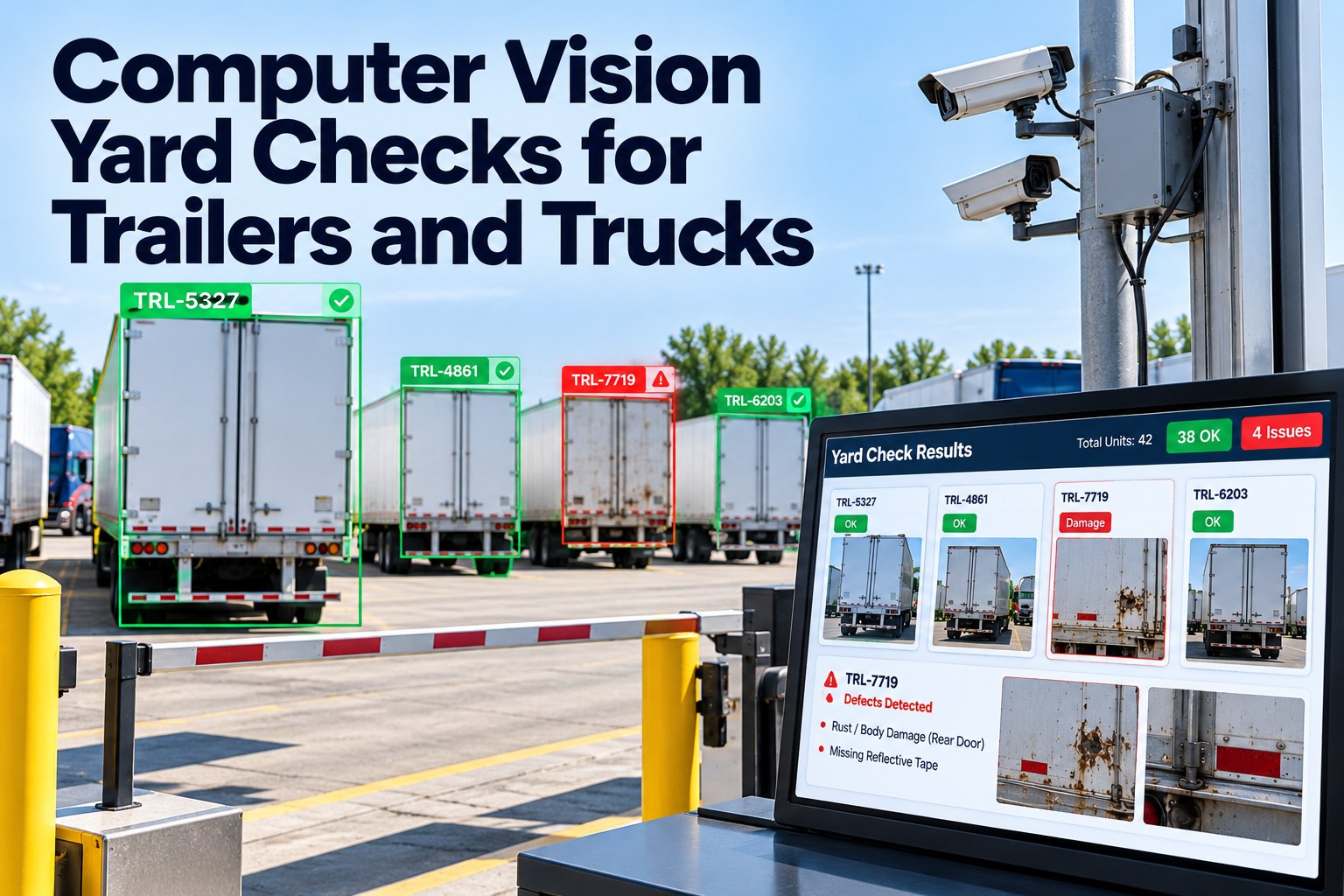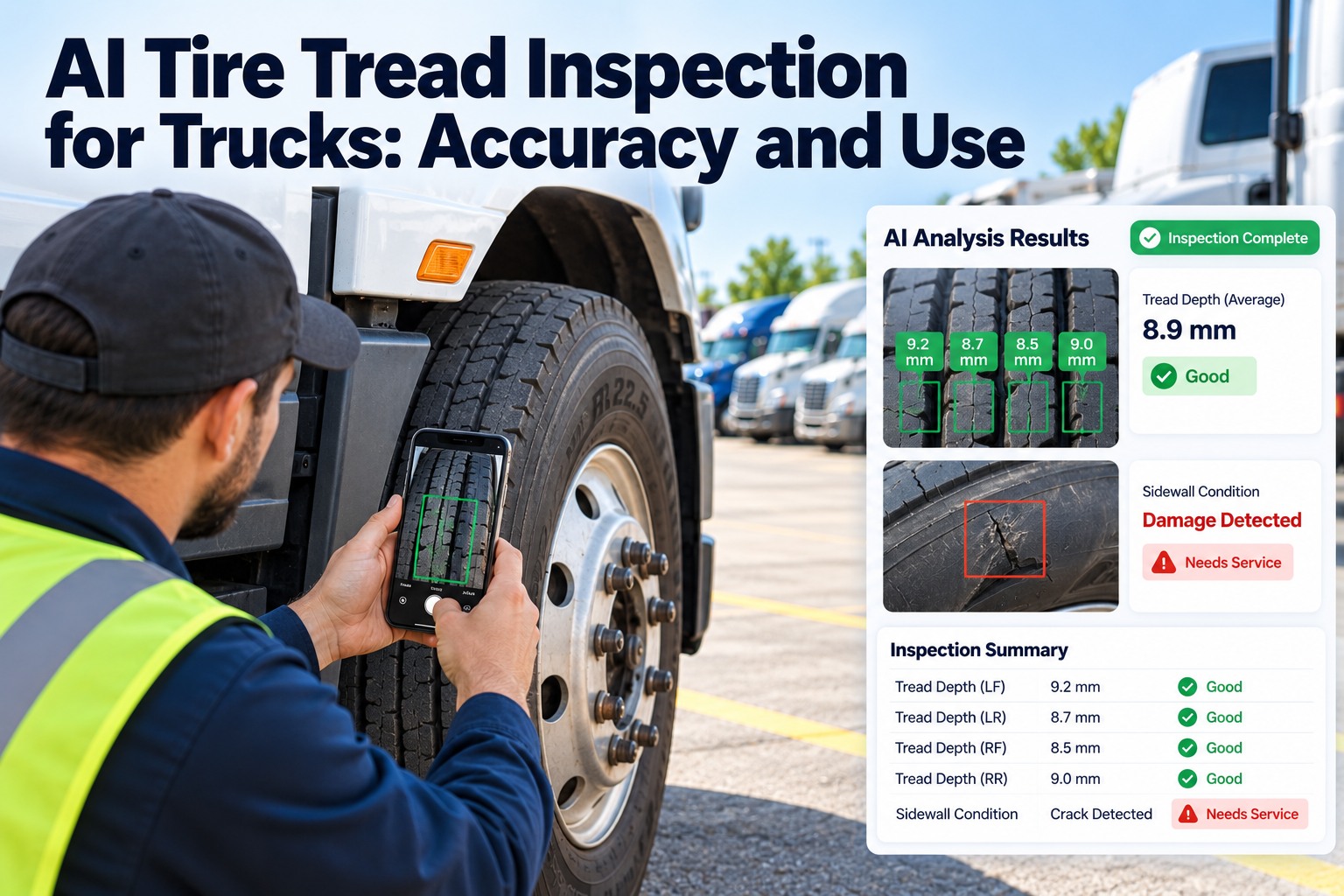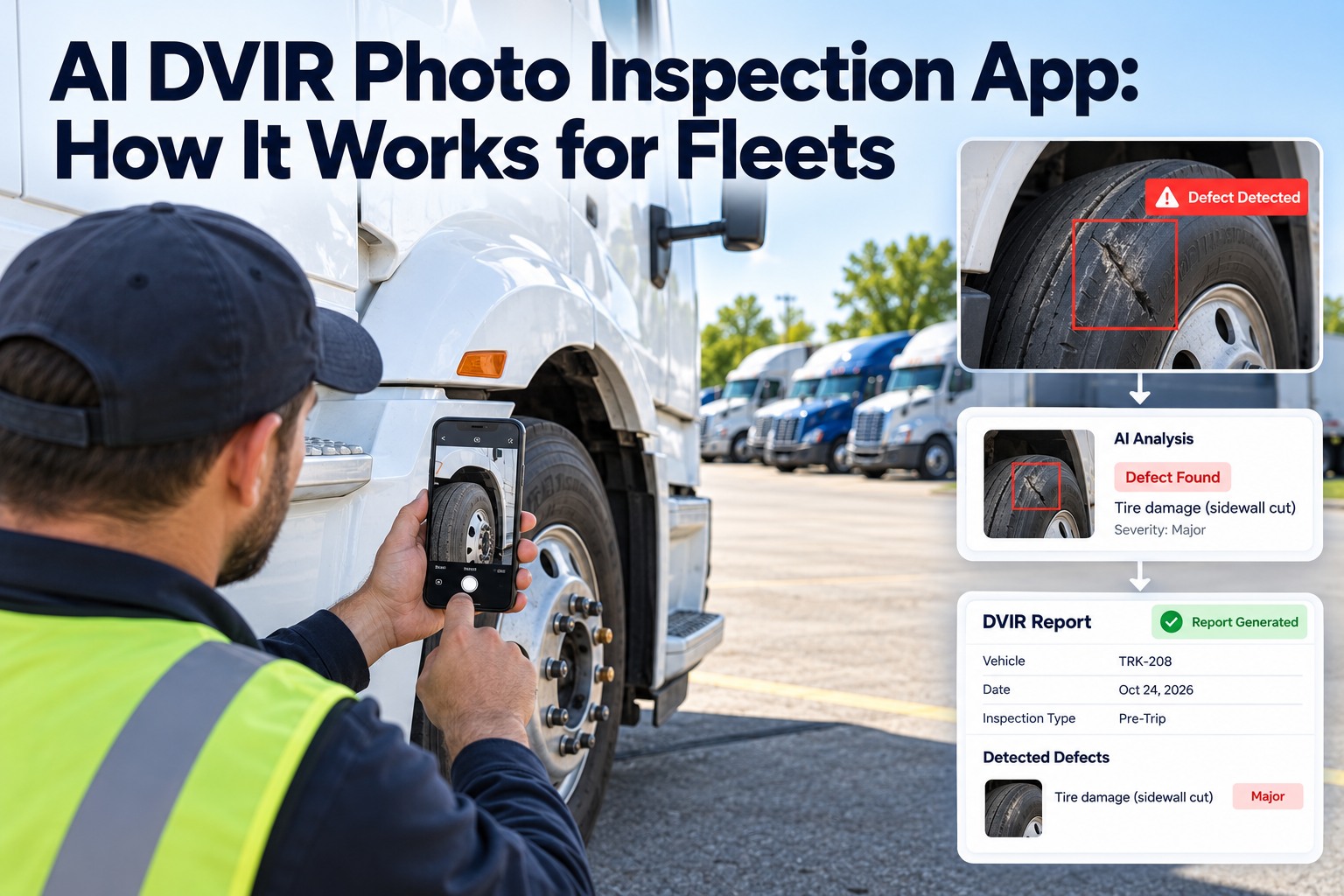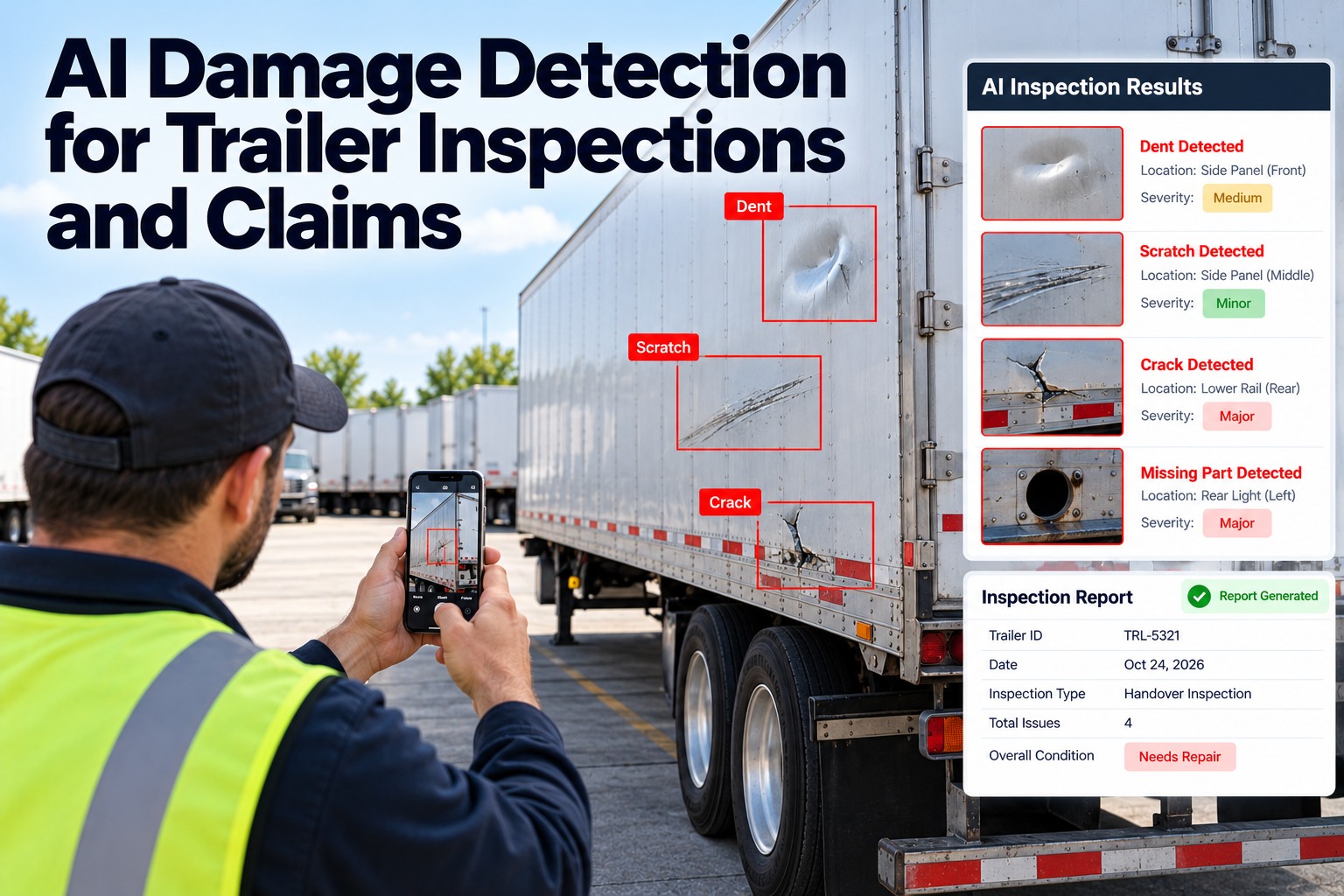
AI damage detection for trailer inspections works by photographing the trailer at every handover, comparing what the images show and keeping timestamped evidence you can use when a damage charge arrives. It does not decide who pays, but it changes what you can prove. This page covers what the interchange rules ask for, how AI damage detection works, where it over- or under-reports and how to build a claim packet. Schedule a call to set up trailer handover inspections.
Why Trailer Damage Disputes Come Down to Evidence Captured at the Moment of Handover
Interchange rules ask for observable damage at the time, with photos allowed in place of written notes
The rules below come from the Uniform Intermodal Interchange and Facilities Access Agreement, as described on the IANA arbitration page. They apply to intermodal equipment such as chassis and containers. For a dry van or reefer moved between carriers under a separate trailer interchange agreement, check that contract, since its terms may differ.
| UIIA rule for intermodal equipment | What it says |
|---|---|
| EIR content | Must describe observable damage at interchange, reasonable wear and tear excepted |
| Recorded images | May replace written damage notes if the EIR states that damage is captured on recorded images |
| Image access | Both parties can get the images free for one year |
| Disputes | Invoiced party disputes in writing within 30 days of the invoice |
| Invoice deadline | Within 165 days of interchange at a manned gate, 120 at an unmanned gate |
| Repair invoice | Needs the actual repair bill and documents showing the motor carrier is responsible |
| Small items | Repair invoices of $50 or less per unit per period are not permitted |
How AI Damage Detection Works on Trailer Photos, From Gate Cameras to a Reviewed Condition Record
Cameras capture the trailer, OCR reads the numbers, AI flags damage and staff confirm before the record is final
Racklify describes six steps for creating an equipment interchange receipt with vision tech, and Loadsmart's help article describes 360 degree cameras that flag dents and broken lights and log each finding with a timestamp and location. Eagle Vision announced a multi-camera damage reporting tool in May 2026. All three are vendor descriptions without independent test results.
What AI Can Document on a Trailer and Where It Over- or Under-Reports Damage
Visible dents and broken parts suit cameras, while weather, wear and subtle damage need a person
| What AI can document | Where it can go wrong |
|---|---|
| Dents, scratches, bent or missing parts, broken seals | Rain, glare, night and dust degrade images |
| Cracked or broken lights | Subtle or complex damage can be misclassified |
| Identifiers read by OCR, with timestamp and location | Systems tuned never to miss can over-report damage |
| A consistent set of photos at every handover | Wear and tear is not damage, so a person has to triage |
The left column reflects what Racklify and Loadsmart say their systems detect. The right column reflects limits those sources name, such as image quality and over-reporting, plus our point that wear and tear is excepted under the UIIA, so a flag is not yet a charge.
A Handover Inspection Routine: Same Angles at Pickup and Return, Then Compare What Changed
Consistency matters more than the number of photos, and every flagged difference gets a human decision
Building a Damage Claim Packet From Inspection Photos, Records and the Repair Bill
A claim stands on images of the condition at that handover plus the repair paperwork
| Claim packet item | Why it matters |
|---|---|
| Images showing condition at that interchange | The UIIA asks for them when images replace written notes |
| The inspection record with time and location | Shows when the damage was documented |
| Matching pickup and return photos | Shows what changed between handovers |
| Actual repair bill | Required detail on the repair invoice |
| Documents supporting responsibility | The invoicing party must show why the other party is liable |
Keep images at least through the dispute and invoice windows above. The UIIA gives both parties image access for one year, so a year is a sensible minimum, but check your own contract.
How Accurate Is AI Trailer Damage Detection? No Independent Figures, and the Vendor Numbers Differ
Treat every accuracy claim as something to test on your own trailers at your own gate
| Source | Claim | Status |
|---|---|---|
| Eagle Vision, May 2026 | Multi-camera scan finds visible damage, even small scratches | Company claim; no accuracy rate or customer result given |
| Loadsmart SmartGate help article | 360 degree cameras flag dents and broken lights at the gate | No accuracy rate; says it can over-report damage |
| FleetRabbit article on visual defect detection | 95 to 98% on exterior damage over 2 mm | Unsourced, and tied to controlled camera arrays not phones |
| 2024 conference abstract | CNN 91% accuracy on vehicle damage | Dataset not described |
How FleetRabbit Handles Photos, Incident Reports and Work Orders for Trailer Damage
Photo evidence and severity ratings are supported, and you confirm any AI damage detection on a call
FleetRabbit's inspection page lists one-tap photo capture, incident reports with up to 6 photos and severity ratings, downloadable reports, offline mode with auto-sync and work orders created from inspection faults. It does not describe AI damage detection or a trailer-specific workflow there. A separate FleetRabbit article describes three scanning tiers, from smartphone photos to fixed cameras, with unsourced accuracy figures, so confirm what is built and how it is tested. Free for up to 3 vehicles, then $5 per vehicle per month.