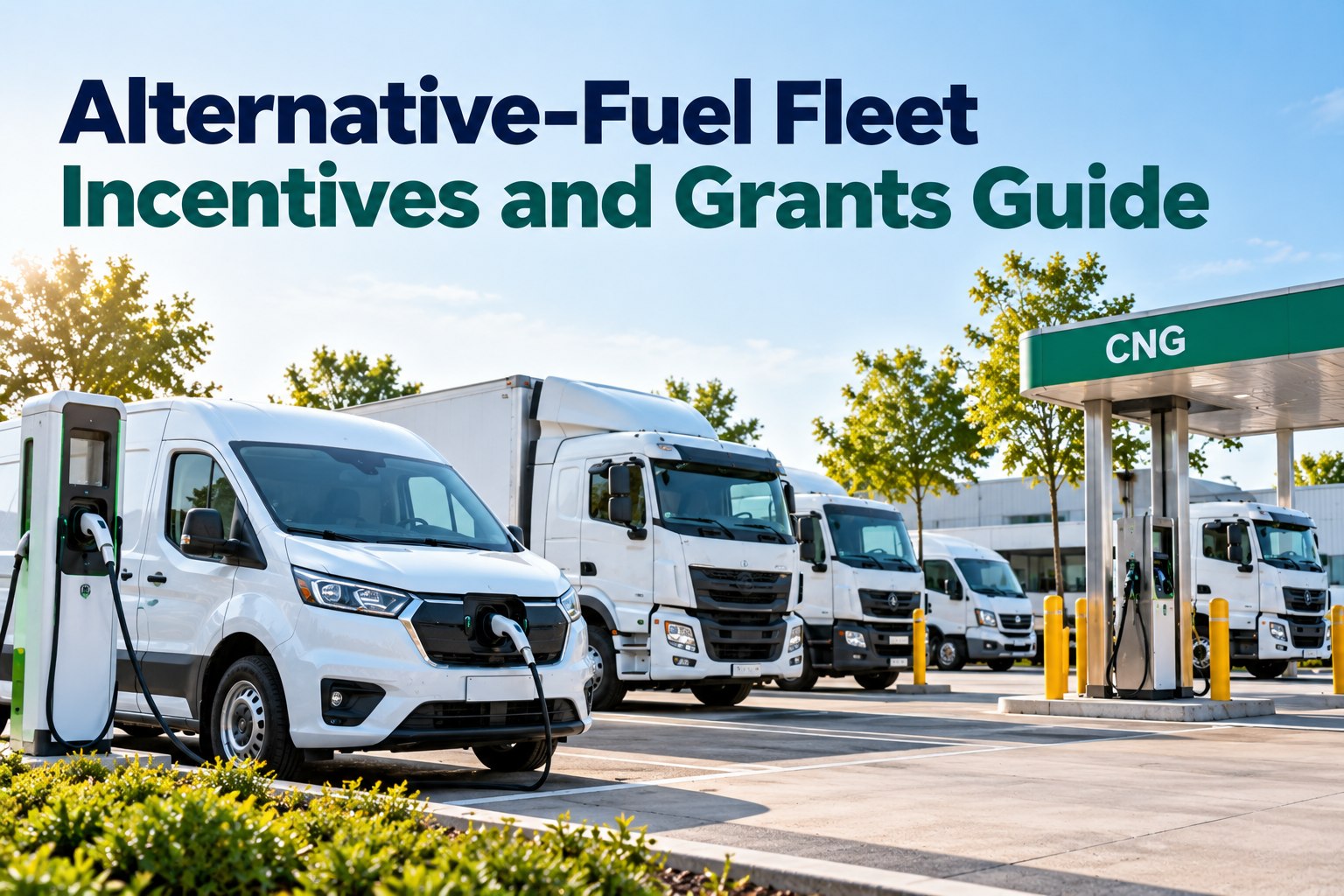
Alternative-fuel fleet incentives can lower the cost of vehicles and chargers, but the landscape changed sharply: the main federal vehicle credits have ended, and many state and regional programs fund battery-electric trucks and not diesel or natural gas. This guide shows what has ended, what some programs still offer, and how to check eligibility before you buy. Schedule a call to track incentive deadlines and vehicle records together.
FLEET INCENTIVES · FEDERAL, STATE AND UTILITY FUNDING
Federal Fleet Credits Have Ended, So Check State, Utility and Port Programs Before You Buy
What has ended, what some regional programs still offer, and a checklist to confirm eligibility before you sign a purchase order.
WHERE FLEET FUNDING STANDS
Federal vehicle creditsEnded
Federal charger creditEnded July 2026
State, utility, portCheck each
Programs change often. Verify before you buy.
What Happened to the Federal Fleet Credits
The commercial vehicle and charger credits were terminated early by the 2025 tax law
Accounting-firm summaries of the 2025 law say the new and used clean vehicle credits and the commercial clean vehicle credit ended for vehicles acquired after September 30, 2025. The alternative fuel refueling property credit ended for property placed in service after June 30, 2026. A vehicle bought under a written binding contract with a nominal payment by September 30, 2025 can still qualify even if it is delivered later, but the deposit amount is not defined.
Commercial clean vehicle credit (45W)Ended
Terminated for vehicles acquired after Sept. 30, 2025
Applied to qualifying commercial EVs. A vehicle counts as acquired when a written binding contract and a nominal payment were made by the deadline, even if delivered later.
Source: law and accounting firm summaries
New and used clean vehicle credits (30D, 25E)Ended
Terminated for vehicles acquired after Sept. 30, 2025
Mainly relevant to light-duty and employee vehicles, with the same acquisition rule.
Alternative fuel refueling property credit (30C)Ended
Only for property placed in service before July 1, 2026
Covered charging and other alternative fuel refueling equipment. The date has now passed, so it applies only to equipment already in service by then.
Not tax advice. These dates come from summaries of the law. Confirm your own situation with a tax professional before you rely on any credit.
State, Utility and Port Programs Still Offering Money
Many current programs fund zero-emission trucks only, and California has the most examples
Most of the examples below are in California, which has the most truck incentives, and they come from a charging company's blog dated August 2026, so amounts and status may already have changed. They are here to show the kinds of programs that exist. For other states, search the U.S. Department of Energy's Alternative Fuels Data Center, which lists laws and incentives by state, utility and fuel technology.
California HVIP vouchersOpen (per vendor)
$120K standard Class 8 battery electric; $150K Class 8 drayage; up to $330K small business
Point-of-sale discounts through dealers, first-come, first-served. Covers zero-emission heavy-duty trucks and buses, so diesel and CNG are not covered.
Amounts from a vendor blog, Aug 2026. CARB lists about $135M for FY 2026-27 for the administrator.
California Clean Fuel RewardOpen (per vendor)
$7,500 to $120,000 per vehicle; about $250M in 2026
Battery-electric Class 2b to 8. Scrappage not required.
Vendor figures, Aug 2026.
Port of LA zero-emission truck incentiveOpen (per vendor)
Up to $300K per battery-electric drayage truck; $75M total
Competitive RFP for battery-electric Class 8 drayage. Leases not eligible.
Proposals due Dec. 3, 2026, per vendor. Cannot be combined with some other funding.
SCAQMD last-mile fleet rebatesClosed
$67K to $108K by vehicle size
Battery-electric Class 4 and 5. Requires scrapping an older vehicle.
Vendor listed an Oct. 5, 2026 deadline, which has passed.
Carl Moyer Program (South Coast)Not open
Up to $410K per Class 8 zero-emission truck, based on the 2025 round
Replacement or repower of in-use diesel with zero-emission trucks.
Vendor said not open in 2026 as of July.
SCE drayage rebatePaused
Amounts not given
Utility rebate in SCE territory.
Vendor says paused June 2026, though its own table said open.
Mixed fleets get less
HVIP and Clean Fuel Reward cover zero-emission or battery-electric vehicles, so diesel and CNG units in the same fleet are largely left out.
First-come, first-served
HVIP vouchers and several other programs run first-come, first-served, so waiting can mean no funds.
Stacking is limited
One port program cannot be combined with certain other funding, so read the rules before applying to several.
Applying for fleet incentives? Schedule a call and we will set up the vehicle records they ask for.
Purchase dates, deployments and service history in one place per vehicle.
Where to Look for Incentives
Start with these six places and confirm each one is still open
The Alternative Fuels Data Center page itself advises checking with the listed contacts to confirm that a law or incentive still applies, and points to the DSIRE database for more.
Eligibility Checklist Before You Buy
Most lost incentives come from a missed rule, not a missing program
What Incentives Do Not Cover: Keeping the Fleet Running
A voucher lowers the purchase price, not the cost of maintaining the vehicle
The nonprofit Center for Sustainable Energy says incentives should accelerate a project and not become its foundation. After purchase, the fleet still pays for inspection, preventive maintenance and charger upkeep, so those costs belong in the same model.
Costs to include in the model
Preventive maintenance by fuel type
Charger inspection and repair
Downtime and towing
Fuel or electricity
Insurance and registration
Reporting rules differ by program, so confirm what each one requires. The record list above is a practical suggestion and not a requirement from any program named here.
Keep Every Incentive-Funded Vehicle Documented and Maintained: Manage Mixed Diesel, EV and CNG Fleets in FleetRabbit
FleetRabbit keeps one record per vehicle, whatever the fuel: purchase and deployment details, PM schedules, inspections, work orders and cost. Mixed fleets share one calendar, and the service history is ready when you need it.
Record per vehicle
PM and inspection schedules
Cost by fuel type
Service history on demand
Frequently Asked Questions
Quick answers on alternative-fuel fleet incentives
Are there still federal incentives for fleet EVs?
The commercial clean vehicle credit ended for vehicles acquired after September 30, 2025, and the charger credit for property placed in service after June 30, 2026, per accounting-firm summaries. Confirm with a tax professional.
Can I still claim a credit if my truck was delivered late?
One summary says a vehicle acquired under a binding contract with a nominal payment by September 30, 2025 may still qualify when delivered later. The deposit amount is not defined.
Do incentives cover diesel or CNG trucks?
Many current programs, such as California HVIP and the Clean Fuel Reward, fund zero-emission or battery-electric vehicles only.
Where can I search for incentives by state?
The Alternative Fuels Data Center lists laws and incentives by state, utility and fuel technology, and points to DSIRE for more.
Are vouchers guaranteed?
No. HVIP vouchers are first-come, first-served, and several programs close or pause when funds run out.
Should the business case depend on incentives?
One nonprofit guide says incentives should accelerate a project, not be its foundation.
What does FleetRabbit cost?
FleetRabbit is free for up to three vehicles and $5 per vehicle per month after that.
Track 3 vehicles free.
Fund the Purchase, Then Protect It With a Clean Maintenance Record
Check every program's rules before you buy, and keep one record per vehicle from deployment through every service.
Free tier for up to 3 vehicles · No credit card required · Records stored per vehicle
October 16, 2026By Derek Goes
All Blogs